Review: Amulet by Roberto Bolaño

Amulet Book Cover

Amulet [1999/2006] – ★★★★★

“…those who can see into the past never pay. But I could also see into the future and vision of that kind comes at a high price: life, sometimes, or sanity” [Roberto Bolaño, 1999/2006: 64]. 

Last year I had a goal to read a certain number of books by Asian authors (see my YARC), and so, this year, I set myself a similar goal, but, this time, I will travel to another part of the world and try to read as many books as possible by Latin American authors. I will begin my Latin America Reading Challenge with a short book by Chilean author Roberto Bolaño (1952 – 2003) titled Amulet.

In this vivid “stream of consciousness” account, our narrator is Auxilio Lacouture, a woman from Uruguay and the “mother of Mexican poetry”. She works part-time at one university in Mexico City and at one point realises that her university (National Autonomous University of Mexico) is being surrounded by an army (event that happened two months before the infamous Tlatelolco massacre of 1968). Auxilio finds herself alone and hiding in the lavatory of the university as the army rounds up the staff and students. At that point she starts to recall her own past, talking to us about her dedication to nurturing the artistic talent of others. As time passes and her hunger and exhaustion increase, her account becomes increasingly hectic and imaginative. Amulet is an unusual novella with one unusual narrator at its heart, which is also strangely compelling as it tries to tell us the truth of the situation in the country and the state of Latin America’s literary talent and tradition through an unconventional and slightly dreamlike voice.

Continue reading “Review: Amulet by Roberto Bolaño” →

Review: The Big Oyster by Mark Kurlansky

the big oyster

The Big Oyster: A Molluscular History of New York [2006] – ★★★★★

Kurlansky’s book is an engaging, quirky historical account of one of the most famous cities in the world told through the story of once one of the most misunderstood salt-water mollusc.

“The history of New York oysters is a history of New York itself – its wealth, its strength, its excitement, its greed, its thoughtlessness, its destructiveness, its blindness and – as any New Yorker will tell you – its filth. This is the history of the trashing of New York, the killing of its great estuary” [2006: xvi], so begins this marvellous non-fiction book by Mark Kurlansky, who is also the author of such popular books as Cod [1997] and Salt [2002]. The Big Oyster tells the story of the city of New York through the prism of once one of its most famous and prized commodities – its unparalleled oysters. Currently, New York is known for its skyscrapers, its shopping and its business (among other things), but for a long time in history when you thought of New York, you first thought of its delicious and plentiful oysters [2006: xvii]. There was, indeed, a time when New York was known for its “sweet air”, enviable water and tidal systems, and its marine produce, especially its oysters. Through engaging historical accounts, literary anecdotes, culinary recipes and some of the most famous New Yorkers, Kurlansky tells a story of New York like you have never read or known it before and one we should never forget, especially in today’s ever-rising environmental and climate change concerns. 

Continue reading “Review: The Big Oyster by Mark Kurlansky” →

My 5 Most Anticipated Books of 2020

First, I would like to wish a Merry Christmas to all my followers and may the New Year bring happiness and only the best to you and your families! Here is the list of my 5 most anticipated books of 2020. I wanted to draw attention to a diverse range of books, so I am presenting a literary thriller, a fantasy, a family saga, a contemporary novel and a non-fiction book.  

I. The Truants by Kate Weinberg (Release Date: 28 January 2020)the truants books

This book is supposed to have similarities with both Agatha Christie and Donna Tartt’s works, so it immediately shot to my list of anticipated books. I first spotted The Truants on Rachel’s site Pace, Amore, Libri, and this debut thriller is “set in an English [sic] university, [following] a group of friends as they become entangled under the influence of a mesmerizing professor” (Goodreads). The description hints at Tartt’s The Secret History, and I hope there will be more instances of originality in the book and maybe something unexpected even. I do not really want to see a second If We Were Villains [2017], which, in my opinion, strayed too closely to Tartt’s novel. Maybe that is what I will get, but the mention of Agatha Christie keeps me hopeful. 

piranesi clarkeII. Piranesi by Susanna Clarke (Release Date: 15 September 2020)

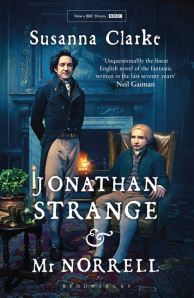
Words cannot describe my excitement for this book. I am a huge fan of Susanna Clarke’s Jonathan Strange & Mr Norrell [2004], which I recommend to everyone, and Piranesi is a novel coming after the 15 years’ wait. I think it is unrelated to Jonathan Strange’s story and the summary is as following: “Piranesi has always lived in the House. It has hundreds if not thousands of rooms and corridors, imprisoning an ocean. A watery labyrinth. Once in a while he sees his friend, The Other, who needs Piranesi for his scientific research into A Great and Secret Knowledge. Piranesi records his findings in his journal. Then messages begin to appear; all is not what it seems. A terrible truth unravels as evidence emerges of another person and perhaps even another world outside the House’s walls” (Bloomsbury).  Continue reading “My 5 Most Anticipated Books of 2020” →

Review: Quantum Enigma by Bruce Rosenblum & Fred Kuttner

Quantum Enigma Book Cover

Quantum Enigma: Physics Encounters Consciousness [2011] – ★★★★ 

“Ask, and it shall be given you; seek, and ye shall find; knock, and it shall be opened unto you” (Matthew 7: 7- 8, The King James Version of the Bible).

“The universe begins to look more like a great thought than a great machine” (Sir James Jeans).

Did you know that it has been experimentally proven in physics that the way you decide to look at something (your observation) changes that something or dictates/creates its locality/position? This happens on the atomic level and no one disputes that finding in the scientific community because this has been proved through the so-called “double-slit” experiment. However, virtually no one in the scientific community wants to consider what this finding means beyond its practical application. Quantum Enigma is a book that explores the divide that has emerged in science between Einstein’s theory of relativity, governing big objects in the universe and, the quantum theory that governs objects on the atomic level. The book provides a good historical overview of the knowledge so far on quantum mechanics, delving into the famous “double-slit” experiment and the Schrödinger’s Cat Paradox. In this sense, it is a great book for those completely unacquainted with the topic because it explains concepts in a very clear and unhurried way. The downside of this, of course, is that the book is needlessly repetitive and provides very few, if any, fresh ideas beyond the already established knowledge. 

Continue reading “Review: Quantum Enigma by Bruce Rosenblum & Fred Kuttner” →

25 Music Hits from the 1980s

tapes-everywhereThis will be an unusual post for me, but since I have heard of the death of Marie Fredriksson (1958 – 2019), once lead singer in Swedish band Roxette, I thought I would also pay tribute on my blog to the music (and love ballads) of the 1980s by compiling a list of memorable songs from that decade. In the 1980s, Roxette had a hit song – “The Look” [1989] and it is also the band behind song “It Must Have Been Love” [1987], featured in a film Pretty Woman [1990]. Even though I do not listen to the 1980s music much anymore, I recognise that that decade produced some of the greatest hits ever, especially in pop music, and, in my humble opinion, no music could compare to the instantly recognisable beat of the 1980s. This was also the decade that produced the best love songs, whose quality (and cheesiness!) is unmatched to this day. In no particular order (trying to feature different genres without repeating artists):  

I. Pet Shop Boys – “West End Girls” [1984]

II. A-Ha – “Take On Me” [1985]  Continue reading “25 Music Hits from the 1980s” →

My Life in Books: 2019

I saw this bookish meme on Laura, Rachel & Callum’s blogs and have decided to post my answers to it, too (the creator of this tag is Roof Beam Reader). The rule is that you must use only books you have read this year to answer the questions below without repeating any of the book titles. It looks like my version of this tag came off much darker than I initially intended it to be (so my answers contain dark humour). As usual, I am not tagging anyone, and anyone is free to participate. 

In high school I was Quantum Enigma (Bruce Rosenblum & Fred Kuttner)

People might be surprised by The Rise and Fall of Ancient Egypt (Toby Wilkinson)

I will never be The Architect’s Apprentice (Elif Shafak)

My fantasy job is The Editor (Steven Rowley) – not really, but it fits! Continue reading “My Life in Books: 2019” →

My 10 Favourite Graphic Novels

I do not read many graphic novels/comic books, but, once in awhile, I love reading thought-provoking or emotional graphic novels that introduce me to another culture, way of seeing the world, an interesting central character or to a mystery to consider and possibly solve. Below are ten comic books that I enjoyed reading in recent years (they are in no particular order).

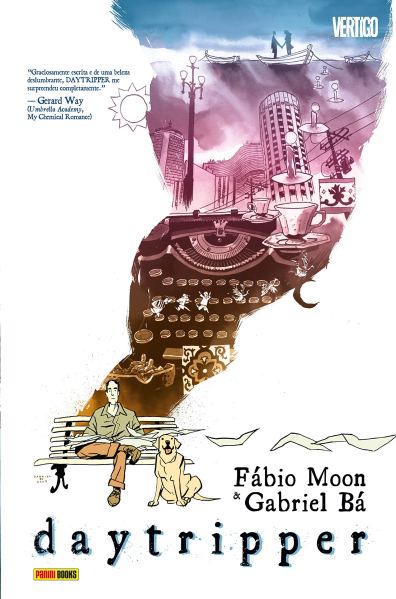
Daytripper Comics CoverI. Daytripper [2010/2011] by Gabriel Bá & Fábio Moon

The creators of this graphic novel are twin brothers from Brazil who were ambitious enough to make their graphic novel about life and what it means to live, hope, love and have no regrets in life. The opposite of this is to despair and not be brave enough to follow one’s dreams. The creators’ slightly transcendental journey centres on one obituary writer in Sao Paulo who learns his life lessons by experiencing his life in reverse or sometimes jumping through his life events. Emotional, with deep and important messages, Daytripper is a very memorable book that stays with you.

V for VendettaII. V for Vendetta [1982 – 1989] by Alan Moore & David Lloyd

I am not indifferent to the vision of Alan Moore, a British comic writer. His graphic novels are often very insightful and thought-provoking, grappling with interesting issues (such as personal revenge and redemption), and introducing intricate, often misunderstood and complex characters. They also provide for great film adaptations. V for Vendetta may now be better known as the 2005 film, but, in my opinion, the graphic novel has a subtler and more realistic vision, as well as more coherent picture in place, as it introduces a dystopian setting that can rival Orwell’s 1984 and – V, a mysterious character whose extreme methods at doing away with the unfair regime would push our sympathies for him and his cause to the very limit.  Continue reading “My 10 Favourite Graphic Novels” →

Martin Eden

Martin Eden Jack London“The vistas he saw were vistas of green foliage and forest glades, all softly luminous or shot through with flashing lights. In the distance, detail was veiled and blurred by a purple haze, but behind this purple haze, he knew, was the glamour of the unknown, the lure of romance. It was like wine to him. Here was adventure, something to do with head and hand, a world to conquer-and straightaway from the back of consciousness rushed the thought: conquering, to win to her, that lily-pale spirit sitting beside him”

Jack London, Martin Eden [1909: 52].

The Year of the Asian Reading Challenge – Completed!

year of the asian reading challenge

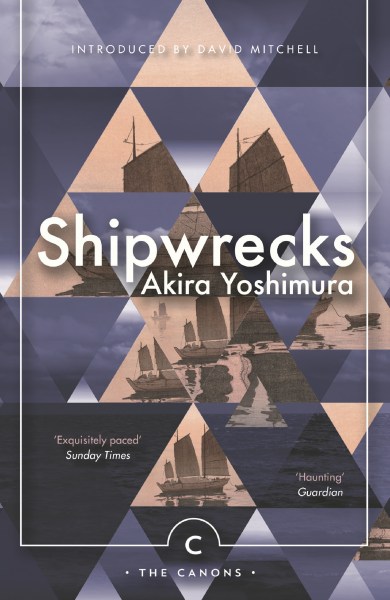
I am happy to inform my followers that I have completed my Year of the Asian Reading Challenge for 2019. My initial, very modest, goal was to read 12 books by Asian authors in 2019, and I managed to read 15 (coupled with time pressure and my other reading challenges). I know that there is still one month left before this challenge officially expires, but since I do not plan on reading Asian authors in December, I thought I would make an official concluding announcement. My mascot for this challenge was an Indian cobra (corresponding to the level of between 11 and 20 books), and, in 2019, I read authors from the following six countries: South Korea, Pakistan, Japan, China, India and Afghanistan. The books that impressed be the most during this challenge came from the Japanese writers Kobo Abe (The Woman in the Dunes/The Face of Another), Durian Sukegawa (Sweet Bean Paste), Akira Yoshimura (Shipwrecks) and Yoko Ogawa (The Memory Police), as well as from the Chinese-born author Eileen Chang (Half a Lifelong Romance). Below are all the books with the corresponding links to reviews.  Continue reading “The Year of the Asian Reading Challenge – Completed!” →

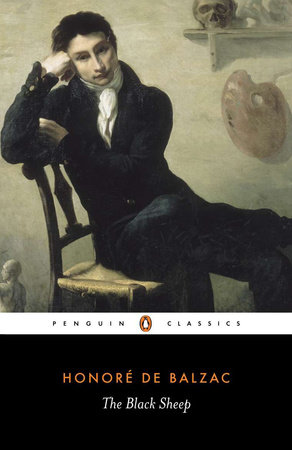
Review: The Black Sheep by Honoré de Balzac

The Black Sheep Balzac

The Black Sheep (La Rabouilleuse) [1842/1970] – ★★★★★

The Black Sheep is an outstanding novel by Balzac (Lost Illusions [1837]) that tells of a remarkable battle for inheritance. At the centre of this story are two brothers, Joseph and Philippe, who could not be more different from one another: the modest and studious Joseph is the complete opposite of the bold and physically-imposing Philippe. They become the protagonists in the fight against their uncle’s supposed will to leave his fortune to mere strangers that coveted his attention for years. As in other novels, Balzac masterfully concocts a tale that is based on contrasts – the provincial life in Issoudun vs. the town life in Paris, the consequences of immense wealth vs. the results of poverty, the life of the upper classes vs. the destitution of the working class, while his moral spins around the fleeting nature of success, the extent of the individual ruthlessness and cunningness, and the consequences of a mother’s blind love for her child. More than any other Balzac novel, The Black Sheep is all about appearances often deceiving us and the fact that “a leopard never changes its spots”. 

Continue reading “Review: The Black Sheep by Honoré de Balzac” →

A Trip to Edinburgh, Scotland

thumbnail_IMG_20191106_111534764_HDR

This November I visited Edinburgh, Scotland, enjoying the medieval city centre in particular and exploring the city’s history and literary tradition. Below are my highlights from this fantastic trip (all photos are mine).

IMG_0738[9128]I. Edinburgh Castle

Situated on the Castle Rock, Edinburgh Castle “has been the centre of Scottish life for more than 900 years, serving as a royal palace, arsenal, gun foundry, state prison and infantry barracks”. Now, it hosts a number of museums, showcasing Scotland’s rich, complicated and dramatic history. I thought the experience of Edinburgh Castle was just amazing, and it is worth its entry price. There is much to explore inside, from the Royal Palace (where Mary Queen of Scots gave birth to James VI), the magnificent Great Hall and the museum that preserves the crown jewels to the National War Museum, Museum of the Royal Scots and the new barracks. Continue reading “A Trip to Edinburgh, Scotland” →

Review: The Blazing World by Siri Hustvedt

The Blazing World Book Cover

The Blazing World [2014] – ★★★★1/2 

This longlisted for a Man Booker Prize book traces the story of Harriet Burden, a small artist and once the wife of eminent art dealer Felix Lord. Through the statements from Burden’s family, close friends and acquaintances, we get to know the story behind Burden’s decades-long experiment to hide behind three male identities in the production of her art. Burden chose to create art and pass it as works by someone else, thereby, exposing the anti-female bias in the art world, but also the subconscious perception that male artists are more brilliant than their female counterparts.

The Blazing World is bursting with creativity, intelligence and originality. It touches on many philosophical and psychological issues, while also debating the nature of art, the process of its creation and human perception. At the heart of the story is one misunderstood individual whose depth and intellectuality may just signal her doom. This unusual book invites us, readers, to be archivists, observers, art critics, judges and psychologists, but above all, it invites us to look at the situation as human beings, trying to understand the feelings and thoughts of another. 

Continue reading “Review: The Blazing World by Siri Hustvedt” →

Review: If the Universe Is Teeming with Aliens…Where is Everybody? by Stephen Webb

Book Cover

If the Universe is Teeming with Aliens…Where is Everybody?: Seventy-Five Solutions to the Fermi Paradox and the Problem of Extraterrestrial Life [2015] – ★★★★1/2  

I am continuing with my Non-Fiction November Reading Challenge with this curious book on the Fermi paradox. This paradox states that, if there are billions of stars out there in galaxies, and they are similar to and much older than our Sun, there is a high probability that those distant systems have planets that resemble our planet Earth. In turn, the typical nature of our planet means life must have developed and accelerated on other planets too, and, if beings there developed interstellar travel, they should have visited Earth already (or at least sent their probes). The paradox is that we do not see/perceive any extraterrestrial activity. Dr Stephen Webb is a theoretical physicist who proposes and discusses seventy-five solutions to the Fermi paradox in this book, solutions which he divides into three sections: (i) Alien Are (or Were) Here; (ii) Aliens Exist, but We Have Yet to See or Hear from Them; and (iii) Aliens Do Not Exist. This is an enjoyable, mentally-stimulating book that impresses with the number and diversity of different solutions and theories that may explain the Fermi Paradox.

Continue reading “Review: If the Universe Is Teeming with Aliens…Where is Everybody? by Stephen Webb” →

7 Fascinating Books on Human Mind & Mental Illness

Since it is Non-Fiction November, I thought I would make a list of non-fiction book recommendations on some of my favourite subjects to explore – the human mind, mental illness and psychiatry. Even though some of the books below border academic and are dated, they still reman very insightful. Some of them were also initially seminal works that opened a new way of thinking about the topic. This list is in no particular order.

Goffman AsylumsI. Asylums [1961] by Erving Goffman 

Erving Goffman (1922 – 1982) is considered to be “the most influential American sociologist of the twentieth century”. His work Asylums is a compelling study on mental institutions, in particular, which he terms “total institutions” since, in his view, they insist on certain patterns of behaviour making people inside to conform to certain roles, such as “guards” or “captors”. This is a thought-provoking book which gave way to the whole new theory behind the confinement of mentally ill. 

History of Melancholy BookII. History of Melancholy [2009/2011] by Karin Johannisson 

History of Melancholy talks about melancholic feelings throughout history – how people viewed melancholy and what forms it took through the ages. It has always been my favourite book on the subject, because it dips into history, literature, psychology and modern psychiatry. It also talks about fugue states, amnesia, anxiety, loneliness and fatigue, emphasising how people were diagnosed with that or this illness depending which one of them was also “in vogue” at that time. I read this book translated (from Swedish) to Russian, and I am not sure whether it is available in the English translation.  Continue reading “7 Fascinating Books on Human Mind & Mental Illness” →

Alchemy in Art

“Alchemy is not merely an art or science to teach metallic transmutation, so much as a true and solid science that teaches how to know the centre of all things, which in the divine language is called the Spirit of Life” (Stanislas Klossowski de Rola).

Before alchemy became the modern practice of “consciousness” transmutation, it was an occult art through which people tried to know the secrets of nature and, in the process, discover the “philosopher’s stone” that would grant them immortality or turn ordinary metals into gold. It was a very complicated and obscure process that involved many uneasy steps and sometimes years of work. The six paintings below completed by six different artists can be divided into two camps – (i) those that portray alchemy as a practice of charlatans or the ignorant that leads to poverty, and (ii) those that portray alchemy as a serious and noble intellectual pursuit that laid the foundations of modern chemistry.  

steen

Continue reading “Alchemy in Art” →

José Saramago (16 November 1922 – 18 June 2010)

Jose Saramago PictureSome of my favourite and most beloved people were born in November (my twin brother too!), as well as a parade of my favourite authors: Albert Camus (7th), Kazuo Ishiguro (8th), Margaret Mitchell (8th), Kurt Vonnegut (11th), Robert Louis Stevenson (13th), Vera Caspary (13th), Arundhati Roy (24th), etc. Jose Saramago, a Portuguese author and a Nobel Prize winner, is known for his through-provoking fiction stories that often ask philosophical questions and detail interesting psychological situations. My favourite books of his are The Cave [2000], The Double [2002], Blindness [1995] and Death with Interruptions [2005], which I all recommend.

“Some people spend their entire lives reading but never get beyond reading the words on the page, they don’t understand that the words are merely stepping stones placed across a fast-flowing river, and the reason they’re there is so that we can reach the farther shore, it’s the other side that matters.”

“Words that come from the heart are never spoken, they get caught in the throat and can only be read in one’s eyes” (José Saramago).

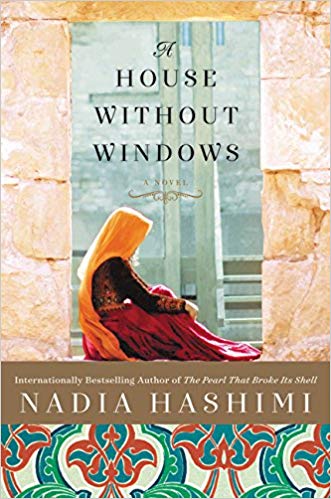
Review: A House Without Windows by Nadia Hashimi

A House Without Windows Book Cover

A House Without Windows [2016] – ★★★★

I am progressing with my YARC 2019 with this novel by an American author whose Afghan parents immigrated to the US from Afghanistan in the 1970s. In this tale, a terrible crime shook a small community in Afghanistan – Kamal, a husband and a father of four, has been found murdered with a hatchet plunged into his skull. At the scene of the crime is his wife Zeba who is covered in blood and numb with shock. But, was she really the one who committed the crime? Yusuf, a lawyer from the US, arrives to his native land Afghanistan and is immediately tasked with defending his reticent client Zeba, trying to seek justice in this seemingly open-and-shut case. This is a tale of two families – one traditional Afghan, rooted in its community, and another immigrant, with Nadia Hashimi making observations on the Afghan culture, Afghanistan’s criminal justice system and on the plight of women living in that country, paying a special tribute to their strength and resilience.

Continue reading “Review: A House Without Windows by Nadia Hashimi” →

My 3 Favourite Bookshops in Paris

I think it is now time to conclude my “European Bookshops” trilogy. Previously, I posted a list of My 3 Favourite Bookshops in Brussels and a list of My 3 Favourite Bookshops in London, and I am concluding with this list of My 3 Favourite Bookshops in Paris. Unlike Brussels and London, I have not lived in Paris for an extensive period of time, but have had a number of interesting visits to the city to compile this list of my favourite (maybe obvious, but still) bookstores that I like to go to if I want to read or browse books in English.

Shakespeare and Co PictureI. Shakespeare and Company

This may be a very obvious first choice and a very touristy place, but I still love this charming store whose windows look out on the Notre-Dame Cathedral that is situated opposite. The shop has a great selection of English-language books, and is labyrinthic and cosy. It also has a nice café next door that sells delicious coffee, pastries and store souvenirs. Shakespeare and Co. itself is considered a literary landmark of Paris, founded by George Whitman in 1951. Its twin store, opened in 1919, once hosted such literary giants as Ernest Hemingway, James Joyce and F. Scott Fitzgerald. The great thing about Whitman’s store is that it is open until late hours; hosts many literary events that showcase Anglophone writers; and, if you purchase a book there, it will be stamped with a unique Shakespeare and Company Kilometre Zero stamp. The Kilometre Zero of France, or the location from which historically all distances are measured, is located on the square that faces the Notre-Dame Cathedral. Continue reading “My 3 Favourite Bookshops in Paris” →

The End of the Year Book Tag

I spotted this tag first on youtube since I follow one book reviewer there – Eric, and decided to post my answers to this tag, too. The creator of this tag is Ariel Bessett, and I have also seen this tag at Whimsy Pages (Alex’s blog) and at The Book Prescription. I am not tagging anyone for this tag, and everyone is welcome to participate. 

The Maias Book CoverI. Is there a book that you started that you still need to finish by the end of the year?

The Maias (Os Maias) [1888] by José Maria de Eça de Queiroz. After I enjoyed The Crime of Father Amaro, I thought I would read another book by this author – Os Maias, a realist family saga, which was also recommended to me by Susana at A Bag Full of Stories. I am still to finish this Portuguese classic even though I started it about three weeks ago, but I do have an excuse – it is 715 pages long! I am enjoying it so far and I think it will be a five-star read for me. 

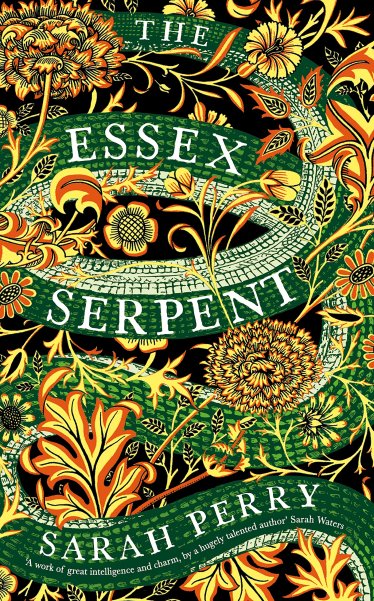
The Essex Serpent Book CoverII. Do you have an autumnal book to transition to the end of the year?

Every time I think of autumn or winter, I think of some nice crime mystery to read. I think it is so nice to read something like that in a warm home when there is snow or rain falling outside. I will be reading some detective stories by Andrea Camilleri (The Shape of Water and The Snack Thief will probably be my next reads). I also want to re-read The Essex Serpent [2016], which I enjoyed very much when I first read it. Given its slightly gothic, dark atmosphere and setting, it will also be the perfect autumnal transition.  Continue reading “The End of the Year Book Tag” →

Robert Louis Stevenson (13 November 1850 – 3 December 1894)

dl-portrait-npg-robert-louis-stevenson Today marks 169 years since the birth of Robert Louis Stevenson, a Scottish author behind such books as Treasure Island [1883], Strange Case of Dr Jekyll and Mr Hide [1886], Kidnapped [1886] and The Black Arrow: A Tale of the Two Roses [1888]. I started reading his books at a very early age and continue to admire Stevenson’s power of imagination and a sense of wonder in his books and short stories. He has also been admired by many famous writers, including Henry James, Ernest Hemingway and Vladimir Nabokov, who included Stevenson’s tale Strange Case of Dr Jekyll and Mr Hide in his famous Lectures on Literature. 

“To become what we are capable of becoming is the only end in life” 

“Life is not a matter of holding good cards, but of playing a poor hand well“

“Don’t judge each day by the harvest you reap but by the seeds that you plant” (Robert Louis Stevenson).

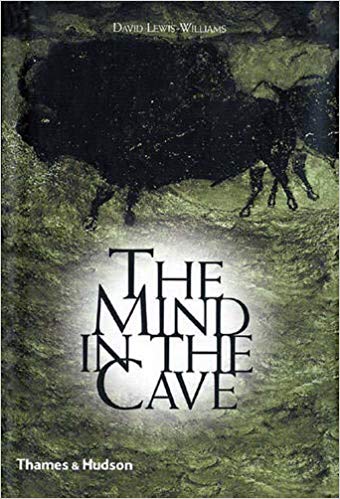
Review: The Mind in the Cave by David Lewis-Williams

The Mind in the CaveThe Mind in the Cave: Consciousness and the Origins of Art [2002] – ★★★

A chaotic and repetitive account on cave art and its origin, which is also not as insightful as one would have hoped, focusing primarily on shamanism and altered states of consciousness.

The Mind in the Cave is by David Lewis-Williams, a South African archaeologist known for his research into South African rock art, and, in his book, he describes the most breath-taking cave art from the Upper Palaeolithic Period (examples found in the Cave of the Trois-Frères, France and in the Altamira Cave, Spain), tracing the way people thought about cave art through the ages and trying to theorise on the question why Upper Palaeolithic people made such art and what it represented for them. Although the book is engaging, with interesting case studies and beautiful illustrations, it is also problematic and only sporadically informative on the question of consciousness itself – its origin and how this relates to the first known cave art. Continue reading “Review: The Mind in the Cave by David Lewis-Williams” →

October 2019 Wrap-Up: From The Memory Police to The Axeman’s Jazz

The Memory Police [1994/2019] by Yōko Ogawa – ★★★★★

This book is the one that surprised me the most this month. I found myself enchanted and slightly disturbed by Ogawa’s world of disappearing objects. It was very interesting to read about the uncertainty and characters’ determination to live normal lives despite the disappearances and the Memory Police’s harassment.

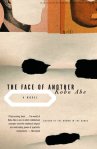
The Face of Another [1964] by Kōbō Abe – ★★★★★ 

Kōbō Abe’s unusual book proved to be a great read for me. When a scientist in this story becomes facially disfigured, he vows to become “normal” again and have a face to fit into the Japanese society again. Abe explores the mental torment of someone who no longer sees himself as part of a society, making insightful observations on the power of personal transformation. 
Continue reading “October 2019 Wrap-Up: From The Memory Police to The Axeman’s Jazz” →

Review: The Memory Police by Yōko Ogawa

The Memory Police Book Cover

“They say you die twice. One time when you stop breathing and a second time…when somebody says your name for the last time” (Banksy, re-quoting Ernest Hemingway). Yōko Ogawa (The Housekeeper and the Professor [2003/08]) wrote The Memory Police in 1994, and it was translated from the Japanese by Stephen Snyder in 2019. In this beautiful dystopian book, our young female character works as a writer on one curious island – there, things sometimes simply disappear from time to time, and with those “disappearances” come another interesting element – people soon forget these things completely, how they looked and what they felt like. For them, these things simply cease to exist. The enforcement of the memory erosion is the task for the special Memory Police, that ruthlessly detects and investigates any traces of disappearing objects, as well as hunts people that are still able to remember them. When one man, R, a book editor, is in danger of being caught for remembering disappeared things, our lead character vows to do everything in her power to save him from a terrible fate.

Continue reading “Review: The Memory Police by Yōko Ogawa” →

10 Books On My TBR I’m Avoiding Reading

I spotted this meme at Kath Reads (it was created by The Broke and the Bookish), and decided to also post my answers to it. We may be avoiding reading certain books on our TBR lists for a variety of (rational and not-so-rational) reasons. We may feel that we simply must be in the right mood for certain books or have enough time in our planners to finish really heavy tomes. Below are ten books from my TBR list which I have been avoiding reading because (i) they are too big and/or complex; or (ii) I receive conflicting messages whether I would love them; or (iii) I want to love them, but I am afraid I will not (for example, because I loved an author’s previous work), etc.

I. 2666 [2004] by Roberto Bolaño  

The sheer size and complexity of 2666 mean that I keep avoiding reading it. Bolaño’s last book is 1126 pages’ long, and its themes are manifold. It talks about ongoing murders of women in one violent city, but also touches upon the World War II, mental illness, journalism and the breakdown of relationships and careers, among other themes – a monumental work, in many respects.

Continue reading “10 Books On My TBR I’m Avoiding Reading” →

The Mystery of the Nazca Lines, Peru

nazca lines
The geoglyph of a hummingbird (hermit)

Since Halloween is the time to celebrate the unknown and mysterious, I thought I would talk about one of the greatest mysteries in South America. The Nazca Lines are a series of geoglyphs or large land designs made by pre-Inca settlers (the Nazca people) in the Peruvian desert. The designs, made between 400 BC and 10th century AD, stretch around 200 square miles, and include straight lines and geometrical figures. The most astounding of the designs are around 70 giant (up to 370 meters in size) designs of animals and plants (as well as some unrecognisable figures). Some of the well-known depictions are that of a hummingbird (hermit), a monkey, a spider, a heron, a dog, a tree and a flower, but there are also designs of human hands and a “giant”.

Continue reading “The Mystery of the Nazca Lines, Peru” →

Review: The Face of Another by Kōbō Abe

The Face of Another Book Cover
Continue reading “Review: The Face of Another by Kōbō Abe” →

Review: Hillbilly Elegy by J. D. Vance

Hillbilly Elegy Book Cover

Hillbilly Elegy: A Memoir of a Family and Culture in Crisis [2016] – ★★★★1/2

This memoir on how class and family affect the poor, as seen through the eyes of one boy raised in one disadvantaged family, is a book hard to forget.

“Whenever people ask me what I’d most like to change about the white working class, I’d say “the feeling that our choices don’t matter” [Vance, 2016: 177].

Hillbilly Elegy is a memoir of a man named J. D. Vance, who talks about his childhood (being raised by his single, troubled mother with two children), adolescence and early adulthood, growing up in one of the poorest regions in America. This deeply personal, eye-opening book, which is also both sad and inspirational, provides a glimpse into the Appalachian culture and various (historical, socio-economic, psychological and cultural) circumstances that shape its people. It is about the state of one part of America some would not like to acknowledge fully or whose issues some misunderstand. J. D. sheds away some of the stereotypes surrounding his people, while, at the same time, fairly and bravely acknowledges (people’s) personal and societal responsibilities for many disastrous societal and economic circumstances.

Continue reading “Review: Hillbilly Elegy by J. D. Vance” →

Ira Levin’s Novels: Ranked

I think it is the perfect time in the year to get cosy in a warm place with one’s preferred hot beverage and read a novel by Ira Levin (1929-2007), an American master of psychological suspense, who was capable of expertly evoking the horror out of the mundane and everyday situations, providing thrills and surprises no one expects. I have always been a fan of his books, which also translate marvellously onto the screen (for example, see Polanski’s film Rosemary’s Baby [1968] or Forbes’ film The Stepford Wives [1975]). Below are Levin’s novels in the order of my enjoyment of them (meaning that the ranking is not based on any objective criteria, but on my own perception of their merit).

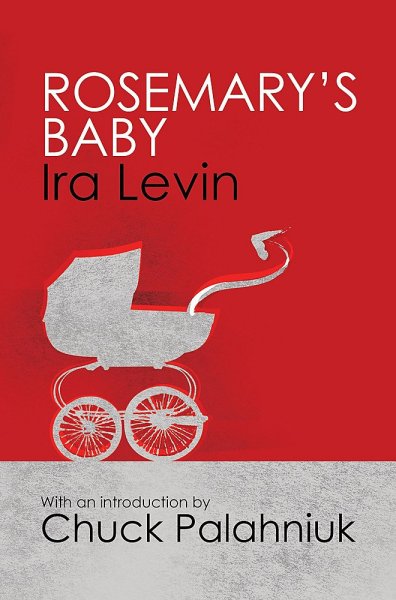
Rosemary's Baby Book CoverI. Rosemary’s Baby [1967]

This is my favourite novel of Ira Levin. It is masterfully suspenseful and completely immersive. In this story, Rosemary Woodhouse is a happily married woman living in New York City with her husband Guy, who is an aspiring actor. Upon moving into a prestigious apartment block Bramford, the couple makes friends with their neighbours next door Minnie and Roman Castevet, an elderly couple. Soon after, Rosemary notices strange, overly-friendly behaviour of their neighbours, and Guy’s demeanour also changes. When Rosemary’s becomes pregnant with her first child, her suspicions escalate also because of her very unusual pregnancy; but are her suspicions simply the result of her active imagination or stem from some fact she simply finds hard to accept?  Continue reading “Ira Levin’s Novels: Ranked” →

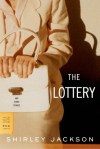
Halloween Reads: The Legend of Sleepy Hollow, & The Lottery

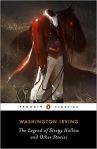
The Legend of Sleepy Hollow Book Cover

The Legend of Sleepy Hollow [1820] by Washington Irving – ★★★★★

The Legend of Sleepy Hollow is a short story by American author Washington Irving. Drawing inspiration from folklore that dates back to the Middle Ages and which concerns the sightings of the Headless Horseman, Irving wrote a haunting tale of one strange village, ghostly apparitions and unrequited love. At the centre of this tale is Ichabod Crane, an odd and superstitious young man who teaches at a local school in one Dutch settlement in New York State. When he sets his eyes on local beauty Katrina Van Tassel, the daughter of a rich local farmer, he does not even imagine the extent of the competition in place to claim her hand, a competition that stems especially from Katrina’s suitor Brom Van Brunt. Nor does our young hero imagine the extent of the horror that can be experienced by one who is actually confronting the central figure of many horror stories told by a cosy fireplace.

Continue reading “Halloween Reads: The Legend of Sleepy Hollow, & The Lottery” →

Utagawa Kuniyoshi: Ukiyo-e Woodblock Prints of Ghosts

Utagawa Kuniyoshi (1798 – 1861) was a Japanese painter in the late Edo period specialising in Ukiyo-e woodblock painting (he was a contemporary of Hokusai). Kuniyoshi was known for his very detailed, “full-of-action” woodblock paintings (triptychs), showing the scenes from the Japanese life, mythology (the supernatural, including monsters), as well as the actions of the samurai. Some of his paintings are very graphic and rather violent. Below are three paintings of Kuniyoshi that depict ghosts.

Kuniyoshi Painting

I. Takiyasha the Witch and the Skeleton Spectre

The background story to this macabre print has is that there was once the war-lord Taira no Masakado (living in the 10th century) who was killed after he started a rebellion against the court at Kyoto. The daughter of Taira, Princess Takiyasha (who was also a witch), was devastated that her father was killed and the rebellion proved unsuccessful. Thus, she (positioned to the left in this print) magically summoned the ghosts of the dead rebellious soldiers of her father by reading through the magical scroll. The ghosts she summoned then took the form of one giant skeleton (Gashadokuro). On the foreground of the print, one can see the remaining plotter, as well as the leading warrior Oya no Taro Mitsukuni, trying to subdue the ghostly rebellion once again.  Continue reading “Utagawa Kuniyoshi: Ukiyo-e Woodblock Prints of Ghosts” →

Katsushika Hokusai: Ukiyo-e Woodblock Prints of Ghosts

Katsushika Hokusai (1760-1849) was a Japanese painter during the Edo period best known for the work he created after the age of sixty. His most famous woodblock prints completed in the prevalent style of Ukiyo-e (“Picture[s] of the Floating World”) are a series of paintings Thirty-Six Views of Mount Fuji (among which is The Great Wave). In 1831, Hokusai began a series of prints titled A Hundred Horror Stories (Hyaku-monogatari). Traditionally, Hyaku-monogatari denotes a game whereby people gather to listen to and tell ghost stories. Below, are three of the five surviving paintings in that series, presenting some of the well-known ghosts from the Japanese folklore. 

Okiku Ghost Hokusai

I. A Woman Ghost Appeared From a Well (The Mansion of the Plates)

This is the depiction of the aftermath of the death of Okiku, a story that first appeared as a play Bancho Sarayashiki [1741]. There are a number of versions to this story, and in one of them, there was a beautiful servant girl Okiku who worked for Aoyama Tessan, a samurai. The samurai wanted Okiku as his lover and tricked her into believing that one of the ten invaluable Delft plates have been lost in the household. Normally, this would result in the servant’s death, but Aoyama stated that he would not hurt Okiku if she agrees to become his lover. When Okiku refused, he killed her by throwing her down the well. The Okiku ghost depicted by Hokusai comes from the well with the purpose of tormenting her murderer, sometimes screaming after counting to nine, or trying to find the final tenth plate. Hokusai painted Okiku as was customary at that time in painting ghosts: pale faces without lower limbs. 

Continue reading “Katsushika Hokusai: Ukiyo-e Woodblock Prints of Ghosts” →

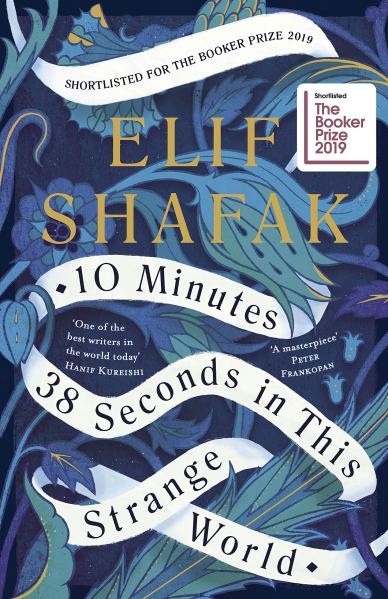
Review: 10 Minutes 38 Seconds in This Strange World by Elif Shafak

10 Minutes 38 Seconds in This Strange World Book Cover

10 Minutes 38 Seconds in This Strange World [2019] – ★★★1/2

“10 Minutes 38 Seconds in This Strange World” is a shortlisted for the Booker Prize 2019 book by the Turkish-British author Elif Shafak (The Architect’s Apprentice [2013])). In this story, Tequila Leila is found dead in a trash bin on the outskirts of Istanbul, but her mind keeps working for another ten minutes and thirty-eight seconds, during which time we are introduced to Leila’s childhood, her meetings with the- dearest-to-her people, and, finally, to the events leading up to her death. As Leila’s mind starts to race through her life events, we get to know Istanbul and its dark history, as well as the plight of the most marginalised people living within the city walls. Shafak’s “mind-slipping-away” concept is intriguing, and she does try to make her book as evocative as possible. However, the second half of the book is nowhere near as interesting as the first half, and the prose is sometimes sentimentally-inclined and even pretentious. There is this feeling when reading this book that the “mind-slipping-away” element is a gimmick introduced by Shafak to get our attention so that we can finally read what she wants us to understand: that Istanbul has had many faces through history, and that there are, and have always been, marginalised people living there, especially women, who suffered much and now deserve attention, recognition and, above all, dignity – even after their death. 

Continue reading “Review: 10 Minutes 38 Seconds in This Strange World by Elif Shafak” →

Gabriel Yared: The English Patient

My favourite film composer Gabriel Yared (1949-) is 70 years old today, and I am taking this opportunity to pay tribute by sharing his musical masterpiece below. Born in Beirut, Yared gained his law degree before switching to music composition while studying in France. Apart from The English Patient, Gabriel Yared is also known as a composer for such films as Betty Blue, Camille Claudel, The Talented Mr Ripley and Cold Mountain.

The Non-Fiction Book Tag

I read a lot of non-fiction books (see also my list of 10 Fascinating Non-Fiction Books), so I decided to create this tag to draw attention to some fascinating books in the non-fiction genre. As usual, I do not tag specific bloggers and, if you read non-fiction, feel free to participate.

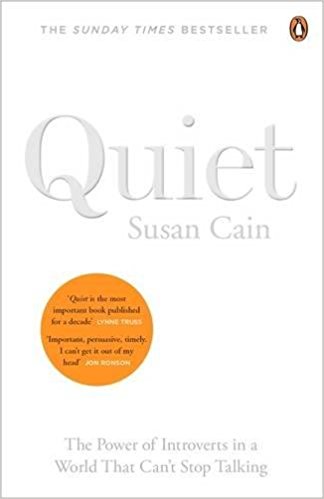
QuietI.  What non-fiction book would you recommend to everyone? 

Quiet [2012] by Susan Cain; introverts will feel at home with this book – more so than with any other book out there. This book is about introversion and how introverts can make a real impact in this world, especially if others differentiate them from shy people and let introverts flourish and achieve things in an environment that suits them best. Modern society is so preoccupied with “fast-business”, “first impressions” and with “immediate, loud success” that there is often no place for the quietness of thought, and deep analysis and insight that come from prolonged thinking and solitude. Our modern, commercialised society also does not seem to concern itself that much with honesty or loyalty (something that can only be seen through long-term relationships – a forte of introverts), but is all about expert communication skills, fast advertising and the “right” kind of external presentation (a forte of extroverts). Susan Cain makes it clear that, unlike in the West, Asian countries regard silence as a sign of deep intelligence, while talking is a sign of that in the West, and makes examples of introverted people who revolutionised the world or became leaders. The thesis of Susan Cain is that introverts have much to offer, including in the positions of leadership, if only others can shed stigma concerning “quiet” people and realise that they too can make an invaluable societal contribution.  Continue reading “The Non-Fiction Book Tag” →

Review: The Axeman’s Jazz by Ray Celestin

the axeman's jazz

The Axeman’s Jazz [2014] – ★★★

This is a debut historical fiction book that fictionalises real serial killer murders that shook New Orleans in 1918 and 1919 and were dubbed the Axeman’s murders. The book is a winner of the 2014 John Creasey (New Blood) Award, and I just could not pass by an opportunity to read this book since it is set in New Orleans of all places, a city that has been fascinating me for a long time and so much I have previously mentioned/talked on my blog about its history, art and notable celebrations.

This atmospheric book follows three people investigating the gruesome murders of the Axeman: (i) professional investigator Detective Lieutenant Michael Talbot; (ii) nineteen year-old amateur sleuth and secretary at a local detective agency Ida Davis, and (iii) recent convict and once detective Luca D’Andrea. Each one of them is under pressure to discover the identity of the murderer before anyone else, and the task is not easy since the murderer taunts the police and leaves strange clues behind, such as Tarot cards. Soon corruption in high places, the Mafia and false leads all complicate the case, as well as the most recent strange demand of the murderer: “play Jazz on one particular Tuesday and you will be safe”. Charmingly evoking the atmosphere of one-of-a-kind place in the world which was New Orleans in the early twentieth century, Ray Celestin concocts a worthy-of-a-read crime thriller, even if it is at times slow, overwritten, unnecessarily confusing and wobbly in its logic. 

Continue reading “Review: The Axeman’s Jazz by Ray Celestin” →

The Pumpkin Spice Latte Book Tag

I spotted this tag on Katie Jane Gallagher and Strangely Pop Cultured, and decided to try it because I just could not resist doing an autumn-themed book tag.

Osceola the Seminole Book CoverI. Pumpkin Spice Latte: A Book That Everyone Criticises But Is Actually Delicious:

Osceola, the Seminole by Mayne Reid.

This is a book that some say is only “for children” and “cannot be compared to the works of Jack London or Robert Louis Stevenson”. Well, I have another opinion. This book is THE book of my childhood, alongside other books by Mayne Reid, such as The Quadroon [1856] and The Scalp Hunters [1851]. Osceola, the Seminole has a great sense of adventure and induces warm feelings of friendship and romance. If you liked Jack London’s The Sea-Wolf [1903], then you should also check out The Boy Tar [1859] by Mayne Reid.  Continue reading “The Pumpkin Spice Latte Book Tag” →

Review: Mysteries by Knut Hamsun

Mysteries Book Review

Mysteries [1892] – ★★★★

In Mysteries, Hamsun makes it clear that there are no easy answers when it comes to the spontaneity of the human nature or the restlessness of the human spirit.

“Is there any way of knowing? There are so many strange things between heaven and earth, beautiful, inexplicable things, presentiments that can’t be explained, terrors that make your blood freeze” [Knut Hamsun/Gerry Bothmer [1892/1971: 161].

Translated from the Norwegian by Gerry Bothmer, Mysteries begins with the following lines: “In the middle of the summer of 1891 the most extraordinary things began happening in a small Norwegian coastal town. A stranger by the name of Nagel appeared, a singular character who shook the town by his eccentric behaviour and then vanished as suddenly as he had come” [Knut Hamsun/Gerry Bothmer [1892/1971: 3]. Nagel is a total stranger to the little town, but he soon makes an unforgettable impression on its inhabitants, and people are taken aback by his unusual opinions and contradictory nature. But, who is he really? And, what is his agenda in this ordinary little town in Norway? We are taken on a journey into the mind of this eccentric character as he meets a typical-to-every-small-town parade of characters: a local beauty, a town’s misfit/clown and a proud deputy, among others. A journey is probably the word for our experience of this main character because Hamsun was truly the author ahead of his time in terms of creating characters that disrupt societal status quo, making this story particularly intriguing, even if uneasy to consider. Nagel is a man of extraordinary visions and eccentric ideas, but what is the real truth here, and what should we really expect?

Continue reading “Review: Mysteries by Knut Hamsun” →

The 14th Readers Imbibing Peril Reading Challenge

rip14 imageIt is not long now until that spooky period of the year begins when we have to be careful if we do not want to become victims of witches, goblins and vampires. Halloween has always been my favourite festivity, maybe because I was born near this period and have always been fascinated by mysteries and the unknown. Thus, this year I have decided to participate in The Fourteenth Readers Imbibing Peril (R.I.P.) Reading Challenge hosted by Andi, and this challenge is all about reading books of mystery, horror, dark fantasy, or the supernatural. There are numerous levels of participation, such as Peril on the Screen and Peril of the Short Story, and I am going for Peril The First – which means my goal is to read four books of any length in the broad horror genre in the month of October 2019. I do not have a preliminary list of books, but I do have a goal to cover the works of Shirley Jackson and Edgar Allan Poe. Does this challenge sound interesting to you? Would you like to participate?

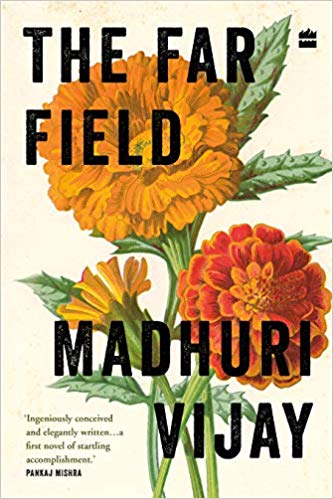
Review: The Far Field by Madhuri Vijay

The Far Field Book Cover The Far Field [2019] – ★★★

The Far Field is a debut book of Indian author Madhuri Vijay. It tells of a privileged young woman (Shalini) who embarks on a journey from her home town Bangalore, India to the Kashmir region in search of a man (Bashir Ahmed) who was once her family’s friend. While we follow Shalini’s journey into one region filled with political instability and conflict, we are also taken back and introduced to Shalini as a child. When Shalini was a small girl, she and her mother had a frequent visitor in their house while Shalini’s father was at work. Handsome Bashir Ahmed lavished Shalini and her mother with his affection and kindness, and his departure from Bangalore is still something the family cannot accept. Madhuri Vijay describes the location and her characters vividly, trying to make her story poignant, and we may assume that we will be reading a beautiful story of one girl on a redemptive pursuit of a man (Bashir Ahmed) in the mountains of the Kashmir region. However, unfortunately, The Far Field ends up to be an unrealistic story of much ado about nothing. There is no real mystery to uncover here nor is there any special insight to be gained from the characters. Perhaps, only Shalini’s random actions surprise and even shock, and not in a positive way at all.  Continue reading “Review: The Far Field by Madhuri Vijay” →

Review: The Blackwater Lightship by Colm Tóibín

The Blackwater Lightship Book Review

The Blackwater Lightship [1999] – ★★★1/2

In 1999, Paul Binding from The Independent on Sunday wrote that “we shall be reading and living with The Blackwater Lightship in twenty years”. Twenty years have now passed, and, this year, The Blackwater Lightship by Irish author Colm Tóibín (Brooklyn [2009]) is twenty years old. Therefore, I am taking this opportunity to review this book that was also shortlisted for the Booker Prize in 1999. In this story, three generations of women (daughter Helen, mother Lily and grandmother Dora) come together to try to cement their uneasy relationships with each other after Helen’s brother Declan is taken gravely ill as a result of his AIDS diagnosis. Tóibín makes his writing effortlessly beautiful, and there is a special sense of sadness and a desire for redemption permeating this story, with the characters trying hard to accept and forgive each other while they remain united in their shared tragedy. However, The Blackwater Lightship is still rather bland and can be described as “playing it safe”, sometimes veering off from the main drama into other topics (changing societal views on homosexuality and difficulty of finding romance) and according its secondary characters (Declan’s friends) an undeserved place in the story. 

Continue reading “Review: The Blackwater Lightship by Colm Tóibín” →

5 “The Last Supper” Paintings

In past centuries, many artists have depicted the Last Supper scene found in the Gospels. This is a scene where Jesus shares a meal with his Apostles before his crucifixion, making his prophetic announcement. It is very easy to see why it is one of many favourite Biblical scenes to depict. There is a special dynamism to this scene since the Apostles can be presented having their own personalities, and their interaction with each other, their reaction to Jesus’s words, as well as a sense of foreboding, can give a painting a special aura/interest. The interesting thing for many when looking at these paintings is how Judas “The Traitor” is depicted in this scene, and most artists paid special attention to ensure that he stands out from the scene. Below are five “The Last Supper” paintings which I personally find particularly interesting (they are not necessarily the most famous ones).


Continue reading “5 “The Last Supper” Paintings” →

The Astrology Book Tag

I saw this tag on Kristin Kraves Books (the original creator is Peace, Love, Veggies), and decided to give it a go because astrology is a fascinating esoteric study area (I am a Scorpio, btw). Each of the twelve zodiac signs has its own core personality description, and the headings below roughly reflect these descriptions. For example, the Libra sign is associated with balance in life, and, therefore, below is a request to name a book that is neither good nor bad (an equilibrium between good and bad is reached), and the sign of Leo is associated with power, pride and bravery, and, thus, there is a request below to name courageous characters in a book. As usual, I am not tagging anyone in particular, and everyone is welcome to participate. 

Como Agua Para Chocolate Book CoverI. ARIES – Name a book you’ve read that was full of fire, desire, and passion aries

Como Agua Para Chocolate (Like Water for Chocolate) by Laura Esquivel 

When I think about boundless passion in books, this book by Mexican author Laura Esquivel just pops into my head instantly. Pedro and Tita’s forbidden love in this story is electrifying, and this story is about cooking and delicious food, too (Mexican recipes are included).  Continue reading “The Astrology Book Tag” →

Review: Sulphuric Acid by Amélie Nothomb

Sulphuric Acid1.docx
Continue reading “Review: Sulphuric Acid by Amélie Nothomb” →

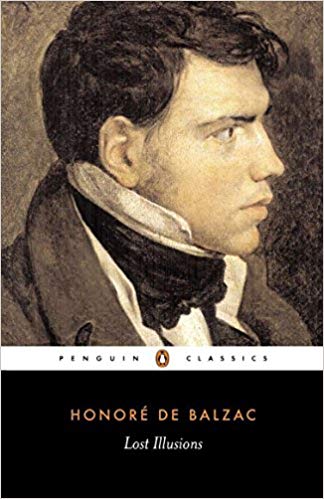
Review: Lost Illusions by Honoré de Balzac

Honore de Balzac Lost Illusions

Lost Illusions [1837 – 1843/1971] – ★★★★★

“...he was living in one of those golden dreams in which young people, cantering along on their ifs, leap over all barriers” [Balzac/Hunt, 1837/1971: 113].

“It’s hard…to keep one’s illusions about anything in Paris. Everything is taxed, everything is sold, everything is manufactured, even success” [Balzac/Hunt, 1837/1971: 387].

This week I am celebrating my first blogaversary – my blog is one year old (thank you to all my followers for following!), and this will also be my 70th full book review (see the others here). Therefore, I thought I would review a classic for a change as a way to “celebrate” and also to draw attention to the best literature has to offer.

Translated from the French by Herbert J. Hunt, Lost Illusions by Honoré de Balzac is part of his La Comedie Humaine series, and centres around Lucien Chardon, a handsome and optimistic, but very naïve, young man who desires to be successful in high society through his talent – he is a writer. He leaves his friend David Sechard, a typographist, in Angouleme and embarks on a dizzying adventure full of dramatic ups and downs in Paris, where he has to make difficult for him decisions about which path to success to follow. This is not one’s ordinary tale of a man’s fall from grace or the corruption of innocence. Balzac masterfully portrayed a story with a number of vivid characters, and his observations on the society, its hierarchy and its unspoken rules are second to none – making this work a true classic, both entertaining and insightfully profound. Through his tale, we get to understand the nuts and bolts of a printing business and journalism in the countryside and in Paris in the 1820s, as well as the consequences of unrelenting ambition and talent when they are not underpinned by solid connections and easily swayed by vanity and egocentrism. 

Continue reading “Review: Lost Illusions by Honoré de Balzac” →

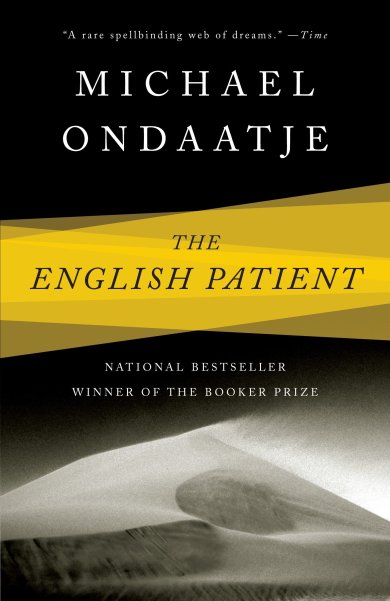
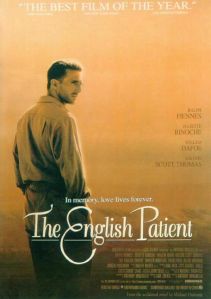
The English Patient

The English Patient Book Cover“Sometimes when she is able to spend the night with him they are wakened by the three minarets of the city beginning their prayers before dawn. He walks with her through the indigo markets that lie between South Cairo and her home. The beautiful songs of faith enter the air like arrows, one minaret answering another, as if passing on a rumour of the two of them as they walk through the cold morning air, the smell of charcoal and hemp already making the air profound. Sinners in a holy city” (Michael Ondaatje, The English Patient, 1992: 154).

August 2019 Wrap-Up: From Half a Lifelong Romance to Milk of Paradise

Half a Lifelong Romance [1950] by Eileen Chang  – ★★★★★

This novel, which was first serialised in a Shanghai newspaper in the 1950s under the title Eighteen Springs, tells the story of Gu Manzhen and Shen Shijun, their respective families, and how their love is being forcibly subdued by various circumstances arising in their lives. This story is quietly powerful and touching. Continue reading “August 2019 Wrap-Up: From Half a Lifelong Romance to Milk of Paradise” →

Review: Half a Lifelong Romance by Eileen Chang

Half a Lifelong Romance1.docx

Half a Lifelong Romance [1950/1966/2014] – ★★★★★

“Maybe a love like that came to a person only once in a lifetime? Once was enough, maybe” [Chang/Kingsbury, 1950/2014: 354].

“Of all forms of caution, caution in love is perhaps the most fatal to true happiness” (Bertrand Russell).

Half a Lifelong Romance, translated from the Chinese by Karen S. Kingsbury, is a modern classic where a timeless story, filled with passion, longing and sorrow, meets fluid and engaging writing. In this story, set in the 1930s, Manzhen, a young girl, forms friendship with her co-worker Shuhui and his friend Shijun; soon after, between Manzhen and Shijun sparks a feeling so innocent and tender that both are left speechless, floating on an island of complete happiness. However, Manzhen’s disastrous family circumstances and Shijun’s own familial duties do not let the lovers get any closer, and, in time, their circumstances only worsen as they try to fight their inner sense of duty, responsibility, tradition and lack of money. Simple misunderstandings, false pride, as well as unexpected betrayals also keep their happiness at bay.

Half a Lifelong Romance is a moving, quietly devastating and exquisite novel that may surprise you with its power (including its dark twist) in the second half. Chang wrote compellingly and beautifully, and her story of Chinese family traditions and one love torn apart by circumstances is one unputdownable read.

Continue reading “Review: Half a Lifelong Romance by Eileen Chang” →

Recent History Non-Fiction Reads: Twelve Who Ruled; Rome: A History in Seven Sackings; & Milk of Paradise: A History of Opium

twelve who ruled book coverI. Twelve Who Ruled: The Year of The Terror in the French Revolution [1941] by R.R. Palmer – ★★★★1/2

This book may be dated, but it did not lose any of its power from the time it was first published in 1941, and was re-issued many times (the last edition dates to 2013). In this book, R. R. Palmer looks at one particular time period in the history of France, and its Revolution – the year 1793-1974. But, what a year that was! Chaotic, unbelievable, bordering fantastical. After the death of Louis XVI, twelve people (virtually strangers to each other) started to govern the country and their slide into dictatorship gave the name to the year of their rule – The Year of the Terror. The year’s main symbol – the guillotine, operated alongside democratic ideas put in speeches and on paper. France has not seen anything like that before or since. Palmer’s engaging, illuminating account traces the months leading to the Year of the Terror, then focuses on the twelve men in charge of the country. The narrative further details the twelve men’s town and country policies, laws and actions, as they purported to stand for liberty, democracy, unity, justice and peace, but, actually, became the embodiment of the opposite. Foreign and civil wars, rebellions within and outside the country, as well as economic disasters, growing paranoia and the inability to maintain the central rule, are just some of the challenges that faced the twelve men after they were left in change of the country under the innocuous name “The Committee of Public Safety”.   Continue reading “Recent History Non-Fiction Reads: Twelve Who Ruled; Rome: A History in Seven Sackings; & Milk of Paradise: A History of Opium” →

A Trip to Palma, Mallorca

Palma 1

This August I went to Palma, Mallorca for holiday – one of the reasons – nice beaches in the vicinity of the city, another reason – to practice my Spanish and tour the largest city. I was pleased to discover that Palma is a vibrant city with interesting history and culture. Mallorca is the largest island in the Balearic archipelago and has a history dating to 2800 BC – it was once Roman and the Moorish settlement, and then an independent kingdom before being incorporated into Spain in the fourteen century. Below are some of my cultural highlights from the trip (apart from the vintage travel posters below, all photos in this post are mine).  Continue reading “A Trip to Palma, Mallorca” →

5 Sci-Fi/Dystopian Books I Want to Give a Second Chance

I love reading science-fiction – reading these books is like entering an exciting parallel universe where your imagination fires up (for example, see this list of My 10 Favourite Science-Fiction/Dystopian Books or my reviews of the work of Philip K. Dick –  A Scanner Darkly, The Three Stigmata of Palmer Eldritch & A Maze of Death). However, for some reason, when I started reading (read) the sci-fi books below I either did not get far or did not particularly like them after I finished them. I realise that some of the books below are very popular and beloved by many and, therefore, I want to give them a second chance – either to re-read them or pick up where I left off and finish them.

Station Eleven Book Cover

I. Station Eleven [2014] by Emily St. John Mandel 

Station Eleven is a very popular dystopian book, but I did not progress far in it. The book’s beginning did not pull me in (and only made me want to re-watch Soderbergh’s film Contagion [2011]). However, I realise it has much to offer, and I want to start it again. The synopsis to this book reads that it is “set in the days of civilisation’s collapse“…and “tells the story of a Hollywood star, his would-be saviour, and a nomadic group of actors“. The beginning is about the death of a Hollywood actor on stage, after which the story moves “back and forth in time“, becoming “a suspenseful, elegiac and spellbinding novel” (Goodreads).

Emily St. John Mandel has another novel coming in 2020 titled The Glass Hotel, and I am looking forward to reading it. The Glass Hotel is described as “a captivating novel of money, beauty, white-collar crime, ghosts, and moral compromise in which a woman disappears from a container ship off the coast of Mauritania and a massive Ponzi scheme implodes in New York…” (Goodreads).  Continue reading “5 Sci-Fi/Dystopian Books I Want to Give a Second Chance” →

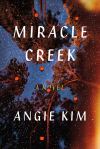
Review: Miracle Creek by Angie Kim

Miracle Creek Book Cover

Miracle Creek [2019] – ★★★★

“There are no facts, only interpretations” (Friedrich Nietzsche). 

Angie Kim centres her story around a pressurised oxygen chamber or the Miracle Submarine that is used as an experimental treatment device in Miracle Creek, Virginia. The Miracle Submarine belongs to Pak Yoo, an immigrant from South Korea, who tries to do his best in the US so that his wife and daughter can find happiness in this foreign to them country. When a fatal accident happens at Pak’s treatment facility, one leading suspect emerges, but is the case as clear-cut as it appears at first? Soon, secrets, lies, and surprising relations between Pak Yoo’s patients emerge, complicating this seemingly open-and-shut case, as Angie Kim also makes insightful points on cultural divisions, on the issue of using certain experimental, controversial treatments to treat disabled children, and on the trials of parenthood.

Continue reading “Review: Miracle Creek by Angie Kim” →

Review: The Interestings by Meg Wolitzer

The Interestings Book Cover

The Interestings [2013] – ★★★★1/2

Meg Wolitzer is an American novelist known for such books as The Wife [2003] and The Ten-Year Nap [2008]. Her novel The Interestings is also an impressive bestseller. In this book, the central stage first take six teenagers: (i) awkward, but funny Jules, our main heroine; (ii) lovable and charming Ash; (iii) Ash’s handsome, but slightly troubled brother Goodman; (iv) not particularly attractive, but friendly and ingenious Ethan; (v) dreamy and artistic Jonah; (vi) and beautiful and emotional Cathy. This reflective, character-driven book then focuses on how their first summer at an artsy camp Spirit-in-the-Woods and future inter-relationships develop, as they become adults in the fast-changing world.

The Interestings is almost nostalgic, slightly dreamy book filled with emotions, longings and reflections, making the reader pose and reflect as they step into the lives of six people who all first long to be better than they are – or, interesting – but whose different life choices, talent, past and backgrounds ultimately determine their place in the world. It becomes harder for them to preserve their feelings of love and friendship for each other, when societal pressures, financial success, lifestyle changes and losses (as well as ensued envy, hurt and disillusionment) start to dictate their lives, attitudes and perceptions, dividing the once close group of friends.

Continue reading “Review: The Interestings by Meg Wolitzer” →

Review: A Maze of Death by Philip K. Dick

A Maze of Death Book Cover

A Maze of Death [1970] – ★★★★

“People see what they want to see and what people want to see never has anything to do with the truth” [Roberto Bolaño, 2666]. 

“...we’re rats in a maze with death; rodents confined with the ultimate adversary, to die one by one until none are left” [Philip K. Dick, 1970: 97].

In this curious short novel, Philip K. Dick blends Agatha Christie’s infamous And Then There Were None premise with his own colourful world and perception ideas to produce an engaging story of fourteen people who find themselves on a remote and strange planet Delmark-O…and in danger – a mysterious force is also on the planet and is seemingly killing them one by one. A Maze of Death may be termed as a more straightforward story from Philip K. Dick, especially compared to some of his others, but there is still a mind-blowing twist to be found at the end. In this book, in a typical Philip K. Dick style, we get immersed into the world where reality is bent, where nothing is as it seems and where the chances of survival depend wholly on one’s clear and true perception of oneself and the world around. 

Continue reading “Review: A Maze of Death by Philip K. Dick” →

The Translated Literature Tag

I decided to create this tag because I read a lot of books translated from a foreign language, and sometimes I read books in Spanish and Russian. In my blog, I often try to bring attention to books translated from another language and there are many gems to discover in this category. I am not tagging anyone and everyone is free to participate. 

I. A translated novel you would recommend to everyone:

Silence Book Cover

Silence by Shūsaku Endō (translated from the Japanese) 🇯🇵

It is easy to choose some Russian classic here, but I thought I would bring attention to this novel by Shūsaku Endō. This 1966 historical fiction novel tells of a Jesuit missionary sent to Japan in the 17th century at the time when Christians were persecuted. This powerful novel explores many themes, including the strength and limits of faith and belief, betrayal, and religion vs. particular culture and history. There is also a movie of the same name directed by Martin Scorsese, who is probably the world’s biggest fan of this book. 

Continue reading “The Translated Literature Tag” →

Review: The Crime of Father Amaro by Eça de Queirós

The Crime of Father Amaro Book Cover

The Crime of Father Amaro [1875/1962] – ★★★★★

Portuguese novelist José Maria Eça de Queirós has been compared to Russian Leo Tolstoy and French Honoré Balzac, and for a good reason – his debut (without a collaboration) book The Crime of Father Amaro (translated by Nan Flanagan in 1962) is a multi-faceted novel of great ambition and skill. In it, he tells of events taking place in a small cathedral town of Leiria, north of Lisbon. Father Amaro, a handsome young priest arrives to Leiria to take the position of a parish priest and soon falls under the spell of the most beautiful girl in town – good-natured Amelia, who lives with her strict and apparently religious mother Joanneira in the heart of the city. Amaro is an honourable guest and a lodger in the comfortable house of Amelia and Joanneira, and he soon finds that his duties of a priest clash with his physical desires, and, in particular, with his burning romantic passion for Amelia. Amaro is also caught up in the town’s complex politics, in a clash between the clergy of the town and the governmental powers. The forces within Amaro, as well as from outside of his influence, conspire to lead the young parish priest to making some unprecedented choices.

Continue reading “Review: The Crime of Father Amaro by Eça de Queirós” →

Review: The Woman in the Dunes by Kōbō Abe

Kobo Abe The Woman in the Dunes
Continue reading “Review: The Woman in the Dunes by Kōbō Abe” →

The Book Blogger Confessions Tag

I saw this tag at The Orangutan Librarian and decided to post my answers to it too. I will probably end up being hated for some of my opinions below 🙂 but a confession is a confession. 

Celestial Bodies Book CoverI. Which book, most recently, did you not finish?  

Celestial Bodies by Jokha al-Harthi (translated from the Arabic by Marilyn Booth). This is the recent winner of the International Booker Prize and, naturally, I wanted to read it as soon as possible. It is a tale of three sisters and their relationships in Oman. It is told through various characters’ perspectives, not only of the sisters’ but also of their children and husbands, apparently. I read first twenty or so pages, and though I liked the beginning, reading about the perspective of Mayya, one of the sisters, when other characters started telling about themselves, my attention veered off and I did not finish the book. I promised to myself to come back to this novel to finish it. The book has all the qualities of an important novel and I especially love that it is set in Oman, portraying a different culture. Continue reading “The Book Blogger Confessions Tag” →

Francisco de Goya

Francisco de Goya (1746 – 1828) was a Spanish painter working in the style of Romanticism. He is probably best known for his paintings Saturn Devouring His Son and The Third of May 1808. Some of his other paintings have an eerie and even disturbing feel to them. The somewhat satirical paintings below portray one central figure that catches the eye and unsettles. Witches’ Sabbath is held in the Museo Lazaro Galdiano in Madrid; The Straw Manikin is held in the Prado Museum in Madrid; and Time and the Old Women resides in the Palais des Beaux-Arts de Lille, France.

witches' gathering with a he-goat at the centre.

I. Witches’ Sabbath [1798]

This painting, which is part of Goya’s “Black Paintings”, shows a coven of witches. In the centre sits the Devil represented by a he-goat, with women around him being either in awe or scared of him, some offering him their children. The he-goat is motionless, his expression is neutral, eyes wide open, betraying nothing, while women around him fuss, causing a commotion. The goat’s human-like sitting posture hints at him being endowed with human qualities.

It is possible that Francisco de Goya tried to satirise through this painting the prevalence of superstition and the belief in witches in rural parts of Spain (Francisco de Goya wanted to denounce any mass worshiping based on ignorance). This is so especially since the witches in his painting appear to be deformed and seem to be completely blinded by their belief in the entity before them (even though the he-goat appears almost like a dummy), offering their most precious “possessions” to the Devil – their children. Also, if a witches’ sabbath is usually held on a full moon at night, the painting purposefully depicts neither the full moon nor the darkness of a night (but a new moon, with the meeting taking place at dusk). 

Continue reading “Francisco de Goya” →

HYPER JAPAN Festival 2019

Hyper Japan Festival 2019 Poster

HYPER JAPAN is a festival held in London, UK twice a year to celebrate Japanese culture and all things related to Japan: from manga and Japanese video-games to traditional arts and crafts, and Japanese food. I attended this festival for the first time on Sunday 14th July, and below is the summary of my experience (apart from the official poster for HYPEP JAPAN, all pictures in this post are mine). Continue reading “HYPER JAPAN Festival 2019” →

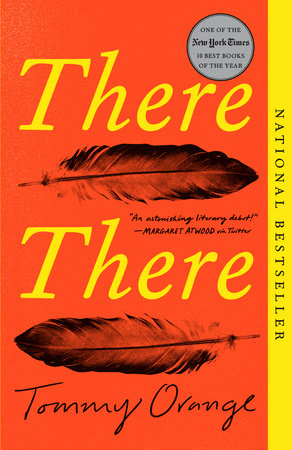
Review: There There by Tommy Orange

There There Book Cover

There There [2018] – ★★★★

There There is a debut book by Tommy Orange, a Cheyenne and Arapaho author who has a goal to draw attention to the lives of Native Americans living in an urban setting in the present day US. We follow twelve different characters who all live in Oakland, California and struggle in some form in their lives. From marginalised and criminally-minded Tony Loneman to internet-obsessed and lonely Edwin Black; and from history-inspired Dene Oxendene to poverty-stricken, troubled sisters – Opal Bear Shield and Jacquie Red Feather, Tommy Orange presents a heart-wrenching overview of the struggles of the people who want to re-connect with their families and their Native American heritage. The characters’ lives are intertwined and there is a feeling like they are all moving towards an explosive finale in the story. The result is a powerful tribute to Native Americans living in big US cities today, trying to make their heritage feel relevant and important, even if Orange’s story as a narrative falls short of its mark because of its overly-ambitious multiple perspectives’ focus, as well as its dissatisfying ending.

Continue reading “Review: There There by Tommy Orange” →

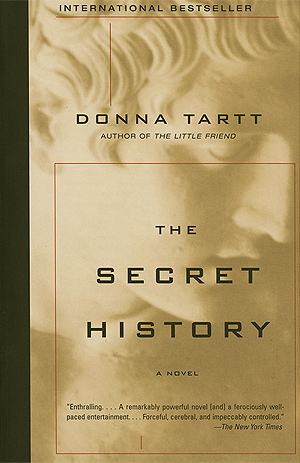
Donna Tartt’s “The Secret History” VS. Patricia Highsmith’s “The Talented Mr Ripley”

The Secret History Donna Tartt The Talented Mr Ripley Cover

I have decided to make my own detailed comparison between these two books – Donna Tartt’s bestseller of 1992 – The Secret History and Patricia Highsmith’s thriller The Talented Mr Ripley, published in 1955. Although they have completely different plot lines (though both deal with a murder and its cover-up), I also believe there are some very telling, nuanced similarities between the two books. It is not fantastic to suggest that, perhaps, when writing her first debut, Donna Tartt drew some inspiration from Highsmith’s genius. Continue reading “Donna Tartt’s “The Secret History” VS. Patricia Highsmith’s “The Talented Mr Ripley”” →

Review: Daytripper by Fábio Moon & Gabriel Bá

Daytripper Book Cover

Daytripper [2010/11] – ★★★★★

An exhilarating journey to uncover the mysteries of life and death. 

Fábio Moon and Gabriel Bá are twin brothers from Brazil who are the creators of Daytripper, an ambitious comic book about Bras de Oliva Domingos, an obituaries’ writer living in São Paulo. We follow and experience his life in a non-chronological order and witness everything from Bras’s “unusual” birth, his first kiss, his major break-up, his career change, to the birth of his child and the death of his parent. Bras learns important life-lessons along the way, and it is his relationships with other people that come to define him and his most memorable life moments. Daytripper may be dealing with very uncomfortable issues of life and death, but this beautiful comic book is also eye-opening, inspirational and moving. Gabriel Bá and Fábio Moon invite you to step into their colourful, slightly transcendental world of one’s memorable life moments, into the world of “what ifs”, ups and downs, hopes and despairs. Their message is clear: we have one shot at this thing called life and should prioritise the most important things in it, including the people we cherish and the relationships we hold dear.

Continue reading “Review: Daytripper by Fábio Moon & Gabriel Bá” →

Review: Solaris by Stanisław Lem

Solaris Book Cover

Solaris [1961/70] – ★★★★★

“Man has gone out to explore other worlds and other civilisations without having explored his own labyrinth of dark passages and secret chambers, and without finding what lies behind doorways that he himself has sealed” [Stanisław Lem/Kilmartin/Cox, 1961/70: 164].

Solaris is considered to be the most influential and significant work of a Polish writer Stanisław Lem. Also made into a movie [1972] by Andrei Tarkovsky, the book tells of Kelvin, a psychologist, who arrives to a station orbiting the mysterious planet called Solaris. On board of the station are supposed to be three other researchers, and Kelvin joins them to know about their progress in trying to understand the planet, and, in particular, the ocean on Solaris that may or may not have consciousness of its own. Then, Kelvin starts to experience something coming from the mysterious planet no one has warned him about. The so-called “visitors” frequent the station and Kelvin begins to think he is losing his grip on reality when his dead wife makes an appearance, opening his emotional wounds. But, what is this strange force that plays tricks on the inhabitants of the station? What is the meaning of this psychic phenomenon coming from Solaris? Can researchers really understand its workings?

Continue reading “Review: Solaris by Stanisław Lem” →

Celtic Mythology

Celtic mythology is fascinating and includes tales from Wales, Scotland, Ireland, England’s south-west and Brittany. The legends of King Arthur (including of such figures as Lancelot and Merlin) are probably the most famous example, but the romance between Tristan and Iseult is also well-known. Below are three figures from the Celtic mythology whose stories perhaps influenced modern literature. 

caer

I. Caer (Ibormeith)

Caer is a pan-Celtic goddess/fairy maiden (worshipped in Ireland, Scotland and Wales), who is associated with dreams, sleeping and prophecy. She takes the form of a swan and lives on a lake called The Dragon’s Mouth. Caer was a love interest of Aonghus, the Irish love god, who first saw her in a dream. Aonghus wanted to marry Caer, but he first had to pass one challenge – to recognise Caer, who took the form of a swam, among other seemingly identical one hundred and fifty swans. Caer and her sisters take the form of swans every second Samhain (a pagan festival celebrated on 31 October), and remain like that for a year. Aonghus successfully completed this challenge, and he and Caer were married. Swans feature in many Continental fairy-tales too, most famously in Hans Christian Andersen’s fairy-tale The Wild Swans [1838], where a wicked witch turns the main character’s brothers into swans, and in Tchaikovsky’s ballet Swan Lake [1876], where Prince Siegfried falls for the Swan Princess Odette. Interestingly, tasks to recognise someone and mistaken identities feature in many similar stories.

Continue reading “Celtic Mythology” →

My 3 Favourite Bookshops in London

Waterstones (Piccadilly) and Foyles (Charing Cross Road) may be the largest bookshops in London, but, when it comes to bookstores, I prefer smaller, cosier places, where the customer approach is more personable and one feels almost at home. Here is the list of my 3 favourite bookshops in London, UK: 

HatchardsI. Hatchards

Hatchards is supposed to be the oldest bookshop in London, established in 1797. It has a rich history and royalty connections (it currently has “three royal warrants”). It may appear relatively small on the outside, but inside it has five floors full of books, with special sections and bookcases dedicated to classics, history, science fiction, rare editions and foreign literature. Despite its grand reputation, it is very cosy and welcoming inside, and feels almost like one’s friendly shop-around-the-corner with armchairs for reading on some floors and readers’ privacy guaranteed for simple browsing at one’s leisure. The staff is always very knowledgeable, friendly and helpful, and those Hatchards shopping bags look absolutely amazing.

Address: 187 Piccadilly, London, W1J 9LE, UK (they also have another store at St. Pancras International).  Continue reading “My 3 Favourite Bookshops in London” →

June 2019 Wrap-Up: From Miracle in the Andes to Black Sugar

Miracle in the Andes [2006] by Nando Parrado – ★★★★★

This non-fiction book impressed me the most in June. Nando Parrado tells of his survival journey when he became one of the people breathing after their plane crashed high in the mountains of Andes in 1972. Parrado and others had to confront and battle inhumane conditions to stay alive and then finally have the courage to venture outside their crash site to seek help. Parrado’s account is modest, moving and unforgettable.

A Visit to Don Otavio: A Mexican Odyssey [1953] by Sybille Bedford – ★★★★1/2

Sybille Bedford wrote about her experience of Mexico in the early 1950s in the format of an exciting story full of larger-than-life characters and colourful descriptions. Insightful, humorous and beautifully-written, Bedford’s account of her journey throughout Mexico is a true classic of travel writing.  Continue reading “June 2019 Wrap-Up: From Miracle in the Andes to Black Sugar” →

The Totally Should’ve Book Tag

I saw this book tag at Nut Free Nerd and decided to have a go at it (I changed slightly the original tag). I am not nominating specific people for this tag and anyone who wishes to participate is free to do so.

jonathan strange & mr norrell book coverI. Totally should’ve gotten a sequel

This is easy – Susanna Clarke’s amazing fantasy book Jonathan Strange & Mr Norrell should get a sequel. There are still some questions that remain about the story and the story finished in such a way as to hint that there may be a continuation. 

Harry Potter and the Chamber of Secrets CoverII. Totally should’ve had a spin-off series

The Harry Potter book series. Ok, I know what everybody is thinking, but, please, hear me out. We had Harry’s story in seven books; we had additional books published by Rowling on quidditch and fantastic beasts; and we had screenplays that showed the magical world of America in the eighteenth century. But, I think it would be a great idea to have a spin-off series where we can see the magical world in a historical context. Hogwarts was founded in 990 A.D., and it will be interesting to see students studying at some historical point in time, such as maybe in the middle ages and to see how fashion changed and what spells were in fashion – to see the magical world as a historical fiction with new characters. Perhaps, references can be made to magical schools in Latin America or Africa, etc. The great thing about this is that the Harry Potter events would not be muddled with or changed since the action in any spin-off can take place centuries before Harry Potter.  Continue reading “The Totally Should’ve Book Tag” →

Review: Miracle in the Andes by Nando Parrado

Miracle in the Andes

Miracle in the Andes [2006] – ★★★★★

“…the mountains showed me there were many forms of bravery, and, for me, even the quietest ones among us showed great courage simply by living from day to day” [Nando Parrado, 2006: 79].

The author of this book – Nando Parrado – is one of the sixteen survivors of the crash of the Uruguayan Air Force Flight 571 deep in the Andes in 1972. After the crash, twenty-eight survivors battled inhumane conditions high in the mountains to survive and only sixteen made it alive after seventy-two days. Even though the previous book Alive [1974] detailed the story, Parrado’s book, which came out in 2006, is a completely different account of this experience which enables us to understand what it is really like to face death every minute of one’s life period, and then  – after surviving the unsurvivable –  do it all again twice. Paying a special tribute to the determination and courage of others, Parrado’s moving and personal book is a “must-read” for everyone – so life-changing its observations and conclusions can be for a reader.

Continue reading “Review: Miracle in the Andes by Nando Parrado” →

Mini-Review: Trap for Cinderella by Sébastien Japrisot

Trap for Cinderella Book Cover

Trap for Cinderella [1963/65] – ★★★★

Sébastien Japrisot (1931-2003) was an award-winning French author probably best known in the English-speaking world for his book A Very Long Engagement (Un long dimanche de fiançailles) [1991], which was adapted into a well-known film by Jean-Pierre Jeunet. Japrisot’s Trap for Cinderella, translated by Helen Weaver, is an inventive psychological thriller which plays with one very curious scenario: two girls are found in a burnt down beach house – one dead and one alive. The survivor is burnt beyond recognition and remembers nothing about herself or her previous life. Who is she? And what was her relationship with the dead girl? The investigation into the fire uncovers evil intentions, and our main character begins to question everything she is told about herself. Japrisot’s tale of obsession, strange friendship and mistaken identity is a wild literary ride: intense and mentally-stimulating, even if it does rely on an unbelievable and slightly preposterous turn of events. 

Continue reading “Mini-Review: Trap for Cinderella by Sébastien Japrisot” →

Review: Bitter Orange by Claire Fuller

Bitter Orange Book Cover

Bitter Orange [2018] – ★★★1/2 

Bitter Orange is Claire Fuller’s third novel in which she mixes a crime mystery, antique house drama (a hint on a love triangle) and melancholic nostalgia for the past. Her main character Frances feels like she was given a new lease of life when, at the age of thirty-nine, her previously bedridden mother is dead and she is assigned a task to catalogue garden architecture in a semi-abandoned mansion – Lyntons. At the house, she befriends a couple who rents the first floor of the building, and their present relationships and past come head to head to result in something explosive. Bitter Orange is an oddly evocative book, but also an oddly imperfect one. Sometimes frustratingly uneventful and slow, the book’s main fault is still its underwhelming, under-thought and already unoriginal characters, premise and ending. 

Continue reading “Review: Bitter Orange by Claire Fuller” →

10 Great Debut Novels

On this blog, I reviewed some debut books which I loved (such as When Rain Clouds Gather, Moth Smoke, The People in the Trees and The Disappearance of Adele Bedeau) and which I hated/disliked (such as The Miniaturist, The Seven Deaths of Evelyn Hardcastle, Idaho and A Pale View of Hills), and this got me thinking about debut novels – what are the chances of writing/publishing one’s first novel and it becoming a straight “literary masterpiece”? Apparently for the authors below exactly that happened. For the purposes of this list, a debut book is the first published (not written) novel of an author (excluding poems, plays, non-fiction and short stories). This list of 10 great debut novels is in no particular order:

The God of Small Things CoverI. The God of Small Things [1997] by Arundhati Roy

It is hard to believe that this Booker Prize-winning novel is a debut of Arundhati Roy, but it is true. This book changed my perception of literature and what it can do. The tale of a pair of twins growing up in India in the late 1960s is a powerful and exceptionally beautifully account. Roy’s language is inventive as she explores in this book such themes as hope, love, loss and despair. A modern classic.  Continue reading “10 Great Debut Novels” →

Review: A Visit to Don Otavio: A Mexican Odyssey by Sybille Bedford

A Visit to Don Otavio Book Cover

A Visit to Don Otavio: A Mexican Odyssey [1953] – ★★★★1/2

“The first impact of Mexico City is physical, immensely physical. Sun, Altitude, Movement, Smells, Noise. And it is inescapable. There is no taking refuge in one more insulating shell, no use sitting in the hotel bedroom fumbling with guide books: it is here, one is in it” [Bedford, 1953: 39].

Sybille Bedford wrote about her year-long adventure in Mexico in 1953, and her book, initially titled The Sudden View: A Mexican Journey, became a classic in travel writing. In it, Bedford portrays colourfully her stay with her friend E. all over Mexico, taking journeys from Mexico City to Morelia and Guadalajara, and then to Oaxaca. At one point, Bedford visits a hacienda of one Don Otavio, situated near Lake Chapala, a place of both natural beauty and local intrigue. This is no ordinary travel writing, however – the book is written with humour and certain pathos, and Bedford ensures that there are many insightful observations on the history, geography and social conditions of the area. Even though now dated, A Visit to Don Otavio is still a very pleasurable read, not least because it often reads like an exciting adventure novel set in Mexico, rather than one’s usual travel log.

Continue reading “Review: A Visit to Don Otavio: A Mexican Odyssey by Sybille Bedford” →

Review: Golden Child by Claire Adam

Golden Child Claire Adam
Continue reading “Review: Golden Child by Claire Adam” →

May 2019 Wrap-Up: From When Rain Clouds Gather to Idaho

This is Bessie Head’s debut novel and what a debut it is! Set in Botswana, the story tells of a refugee from South Africa Makhaya who, together with idealistic Englishman Gilbert Balfour, helps to transform the village of Golema Mmidi, finally seeing it rising above the tyranny and oppression. Head’s writing style means that the plot is easy to follow, and every character is complex and multi-dimensional. 

  • Hunger [1890] – ★★★★★

Written before famous existentialist writers put their pens to paper, including Kafka and Camus, this short novel by Knut Hamsun is a convincing portrayal of one man trying to find his way and survive in a big city. Having no money, the unnamed narrator’s hunger and lack of shelter are palpable in the story as he also faces other hardship and absurdities of life. An introspective novel, Hunger focuses on such themes as loneliness and the oppression of the human spirit. Continue reading “May 2019 Wrap-Up: From When Rain Clouds Gather to Idaho” →

Review: Idaho by Emily Ruskovich

Idaho Book Review
Continue reading “Review: Idaho by Emily Ruskovich” →

Siena, Tuscany

Siena Italy

Awhile ago I wrote a post on Florence, Italy, one of the most culturally and historically rich cities in the world, and I thought I would follow it up now with a post on Siena, a medieval town in Tuscany that is situated some seventy kilometres away by car or one and a half hour ride by train from Florence. One of the reasons I love Siena is that it retained its medieval landscape; it is rich in history and its citizens still practice traditions dating to the twelve century. One legend says that Siena was founded by Remus’s sons Senius and Aschius, who hid there from their uncle Romulus (Remus and Romulus are infamous twin brothers that are characters in the legend on the founding of Rome). Even Siena’s symbol is a she-wolf, that is often pictured caring for Romulus and Remus. One other piece of information is that Siena was founded by Emperor Augustus in the 1st century BC as Sena Julia. In this post, I will briefly describe Siena’s main sights, and comment on the culture of the place. Apart from the header photo, all photos in this post are mine (again, excuse my phone camera).  Continue reading “Siena, Tuscany” →

Review: French Exit by Patrick DeWitt

French Exit Book Cover

French Exit [2018] – ★★★

This tragicomedy of manners comes from the author of Man Booker Prize nominee The Sisters Brothers [2011]. In French Exit, Patrick DeWitt centres on mother Frances, a fussy and bossy woman of sixty-five, and her good-for-nothing thirty-two year-old son, Malcolm, who see their fortune fade away after the ill-publicised death of the family provider Franklin Price, once an eminent lawyer in New York City. Once rich and admired, the family of two now face financial ruin and decide to go to Paris, perhaps, for a change of scenery. Frances’s only friend Joan provides an apartment to rent in Paris for them, and the duo of unlikely central characters embark on their French exploit enthusiastically, meeting eccentric characters along the way. This slightly surreal tragicomedy is an amusing enough read, but it is also often somewhat dull, with its emotional punch coming too late in this curious book. 

Continue reading “Review: French Exit by Patrick DeWitt” →

Review: Serena by Ron Rash

Serena Book Cover

Serena [2008] – ★★★★1/2

Will at Coot’s Reviews suggested that I read Serena by Ron Rash for my Appalachia Reading Challenge, and both H.P from Hillbilly Highways and Emma at Book Around the Corner also recommended that I read Rash’s work, so thank you! Serena pleasantly surprised me. This novel tells the story of a newly-wed couple the Pembertons who arrive to a logging community high up in North Carolina Mountains to take over a timber business there. Every worker at the camp is awed by Mrs Serena Pemberton, a woman so strong-willed and determined she can match any man’s will power or shrewdness. Masterfully-executed and beautifully-written, Serena evokes vividly both the beauty of North Carolina’s landscape and horrors involved in the business of cutting trees to make profit. Ron Rash even packs in the novel “slow-burn” suspense since Mr Pemberton’s past actions give rise to unforeseen consequences, and, as the couple arrive to North Carolina, with them also descends upon the village something disturbing and sinister.

Continue reading “Review: Serena by Ron Rash” →

The Literary Adaptation Book Tag

Since my two recent book reviews were of books that resulted in major films – Fried Green Tomatoes at the Whistle Stop Café and The Night of the Hunter – I have decided to have a go at this book tag about literary adaptations, slightly changing the original book tag seen at Milibroteca (a Spanish language book blog).

The English Patient Film PosterI. What is your favourite literary adaptation? 

Anthony Minghella’s The English Patient [1996] adapted from the novel of the same name [1992] by Michael Ondaatje.

The English Patient is far from being the most faithful adaptation, but Minghella (The Talented Mr Ripley [1999]) conveyed the spirit and atmosphere of the novel perfectly, and the film boasts great performances from Ralph Fiennes, Kristin Scott Thomas and Juliette Binoche. The score by Gabriel Yared (Betty Blue [1986]) is one of the most beautiful ever produced, too.

Virgin Suicides Film PosterII. What do you consider to be the best book-to-film adaptation?
Sofia Coppola’s The Virgin Suicides [1999] adapted from the novel of the same name [1993] by Jeffrey Eugenides. 

In my opinion, some of the best ever literary adaptations include Gone with the Wind [1939], Rosemary’s Baby [1968], and Harry Potter and the Philosopher’s Stone [2001], but there is still something very special about Sofia Coppola’s The Virgin Suicides. It is a beautiful, haunting adaptation which remains largely faithful to the source material. Coppola did an amazing job conveying the suburban claustrophobia, and hidden despair and tension of the girls. Continue reading “The Literary Adaptation Book Tag” →

Review: The Night of the Hunter by Davis Grubb

The Night of the Hunter Book Cover

The Night of the Hunter [1953] – ★★★★★

The Night of the Hunter is best known as a film of 1955 by Charles Laughton, but it was first a great book by Davis Grubb, who based his story on a true case of serial killer Harry Powers, a deranged psychopath who preyed on and killed lonely widows in the late 1920s. In the book by Davis Grubb, Willa Harper is a recently widowed mother of two whose husband, Ben Harper, has recently been convicted and executed for killing two men in armed robbery. After the execution, Willa and her two children, John and Pearl, are the centre of sympathy in their community until their “salvation” arrives in the form of Harry Powell or “Preacher”. Preacher knows that Ben Harper disclosed to his children before his execution the location of ten thousand dollars he gained through robbery, and Preacher will use any means – kindness or more disturbing pressure to discover the location of the money. It is safe to say now that The Night of the Hunter was unjustly overshadowed by its cinematic counterpart. American writer Julia Keller called Davis Grubb’s book a “lost masterpiece”, and there is truth in that. The Night of the Hunter is a chilling, unforgettable tale of crime and evil set in the background of a Depression-hit community on a riverbank in West Virginia. The novel is suspenseful and thrilling, with great characterisations and an eerie atmosphere. 

Continue reading “Review: The Night of the Hunter by Davis Grubb” →

Review: Fried Green Tomatoes at the Whistle Stop Café by Fannie Flagg

Fried Green Tomatoes Book Cover

Fried Green Tomatoes at the Whistle Stop Café [1987] – ★★★★

I may be sitting here at the Rose Terrace Nursing Home, but in my mind I’m over at the Whistle Stop Café having a plate of fried green tomatoes, Mrs. Cleo Threadgoode, June 1986 (preface quote to Flagg’s Fried Green Tomatoes at the Whistle Stop Café). This book is about two women – Evelyn Couch, a middle-aged housewife, and Ninny Threadgoode, an elderly woman in a nursing home, – meeting in 1985, and Ms Threadgoode starts to tell Evelyn about her youth spent in Whistle Stop, Alabama during the Depression era. Evelyn goes back in her mind to that time when Ms Threadgoode’s wild, free-spirited sister-in-law Idgie and her beautiful, soft-spoken friend Ruth ran a café in Whistle Stop, discovering the hardship they went through and the happiness they found. Mrs Threadgoode also hints at a murder mystery which got everyone talking in the 1930s in Whistle Stop. Fried Green Tomatoes at the Whistle Stop Cafe is a “feel-good” book at the centre of which is a powerful story of two women whose friendship and love enabled them to overcome obstacles in their way. Originally presented, paying special attention to the connecting power of food and cooking, the book also touches on such themes as racism, aging, marital violence, and finding hope in difficult times.

Continue reading “Review: Fried Green Tomatoes at the Whistle Stop Café by Fannie Flagg” →

Paintings of Remedios Varo I

Remedios Varo (1908 – 1963) was a Spanish/Mexican surrealist artist best known for her enigmatic, mystical and “alchemical” paintings, that “[blended] surrealist techniques and images, Freudian and Jungian psychology, science, magic, and the occult” [Vosburg N. (2005) Strange Yet “Familiar”: Cats and Birds in Remedios Varo’s Artistic Universe. In: Figuring Animals, 2016]. Below, I present and briefly discuss her three paintings.Remedios Varo Paintings

I. Hacia la Torre (Towards the Tower) (1960)

Towards the Tower depicts a number of identical girls dressed in identical clothing that are whisked away by a man and a woman on bicycles. They are moving away from houses that resemble a beehive. Given Varo’s catholic upbringing, the wide interpretation of the painting is that the woman leading the girls on the bicycle is a nun and the girls are pupils in a convent. The girls share similar features as the artist wanted to underline the rigid conformity of the place. The beehive-shaped houses also underline the idea that the girls work towards one common goal (like bees) and their individuality is supressed or ignored. The “magic” numbers are also present here – we see twelve houses (for example, there are also twelve months), and seven girls (there are also seven days in a week). This is the first painting in the series of three paintings that depict the same women who first flee the houses (the convent) to get to the Tower, and then escape. The third painting (The Escape) shows a girl on a journey with her love.  Continue reading “Paintings of Remedios Varo I” →

Review: Hunger by Knut Hamsun

Hunger Cover

Hunger [1890/1996] – ★★★★★

Knut Hamsun is a Nobel Prize Winner for Literature whose existentialist literary work Hunger predates Franz Kafka’s The Trial [1925] and Albert Camus’ The Stranger [1942]. Translated from the Norwegian by Sverre Lyngstad, Hunger explores the daily life of one lonely and desperate man on the brink of starvation in a large city. Our unnamed narrator is a freelance writer who has one “ambition” in his life: not to die from hunger. He is hard-working and not demanding, with food and shelter being his main wishes. Hamsun explores mental and physical traumas of the character in a masterful work that inspired some of the greatest philosophical fiction authors of the twentieth century, emphasising in his work that the fight to survive in a big city may take a shape of complete absurdity.

Continue reading “Review: Hunger by Knut Hamsun” →

Review: The Disappearance of Adèle Bedeau by Graeme Macrae Burnet

The Disappearance of Adele Bedeau Cover

The Disappearance of Adèle Bedeau [2014] – ★★★★★

Graeme Macrae Burnet is a Scottish author best known for his Man Booker Prize nominated novel His Bloody Project [2015]. The Disappearance of Adèle Bedeau is his debut novel written in the style of a French mystery novel and film noir. Dark and intriguing, the novel tells the story of thirty-six-year old Manfred Baumann, a reclusive, lonely and socially awkward bank worker who spends his evenings in local Restaurant de la Cloche, Saint-Louis, France. When one attractive waitress of the restaurant – Adèle Bedeau – disappears after a night-out, Detective Georges Gorski’s suspicions soon fall on Manfred Baumann and one unsolved past criminal case regains its spotlight. The Disappearance of Adèle Bedeau is written in that nostalgic style of old French mystery novels, echoing the works of Georges Simenon (Burnet’s favourite book is Simenon’s The Little Man from Archangel [1957]) or existential literature, such as Ernesto Sabato’s El Tunel [1948]. The Disappearance of Adèle Bedeau is an impressive, understated literary mystery with many subtle elements, convincing psychological character study, and one atmospheric setting.

Continue reading “Review: The Disappearance of Adèle Bedeau by Graeme Macrae Burnet” →

Unpopular Opinion: Hergé’s “Prisoners of the Sun (Le Temple du Soleil)” [1949]

I will begin by saying that I love The Adventures of Tintin comic albums. They are exciting and entertaining stories. I lived in Brussels for some time, and that is the place to be if you want to be converted into a fan of Franco-Belgian comics (for example, there is a Tintin shop in Brussels and murals depicting Tintin adventures). Even though I realise that the comics are products of their time, and are supposed to be fun, light-hearted stories not to be taken seriously, I still find Herge’s Prisoners of the Sun a problematic one, especially in what it ultimately suggests and implies, as well as in the main message it sends out in the end (for other articles hinting at the comics’ problematic nature, including allegations of racism, see here and here). Continue reading “Unpopular Opinion: Hergé’s “Prisoners of the Sun (Le Temple du Soleil)” [1949]” →

Review: The Editor by Steven Rowley

The Editor Book Cover
Continue reading “Review: The Editor by Steven Rowley” →

Review: When Rain Clouds Gather by Bessie Head

When Rain Clouds Gather Book Review

When Rain Clouds Gather [1969] – ★★★★★

“You may see no rivers on the ground but we keep the rivers inside us. That is why all good things and all good people are called rain. Sometimes we see the rain clouds gather even though not a cloud appears in the sky. It is all in our heart” [Bessie Head, 1969: 191]. 

This is a tale of Makhaya, a refugee from South Africa, who desires to build his life anew in a small village of Golema Mmidi, Botswana. There, he meets eccentric Englishman Gilbert Balfour, who would like to revolutionise farming methods to help people of the village. Both men are running away from the past and are in search of wives. However, before both start to live free lives, trying to help others, they have to face and fight political corruption, unfavourable climatic conditions and village prejudice. When Rain Clouds Gather tells an important story of finding hope in the most hostile and dangerous conditions, and can really be considered a modern classic.

Continue reading “Review: When Rain Clouds Gather by Bessie Head” →

Review: The Lost Steps by Alejo Carpentier

Los Pasos Perdidos Cover

The Lost Steps [1953/1989] – ★★★★1/2 

“…we let ourselves succumb to the world of wonder, eager for still greater portents. There arose beside the hearth, conjured up by Montsalvatje, the medicine men who healed the wounds with the magic incantation of Bogotá, the Amazon Queen, Cicanocohora, the amphibious men who slept at night in the bottoms of the lakes, and those whose sole nourishment was the scent of flowers” [Carpentier/de Onis, 1954/89: 144].

Los Pasos Perdidos or The Lost Steps was translated from the Spanish by Harriet de Onis and represents what is believed to be one of the most important Latin American novels to come out in the twentieth century. In this story, our unnamed narrator (believed to be in New York) is sent on a mission to a jungle (believed to be in Venezuela) to discover and collect some ancient musical instruments for a museum. By accepting this request, the narrator has no idea that he is about to embark on one extraordinary journey of self-realisation and self-discovery, which will force him to rethink his previous inculcated beliefs. The Lost Steps is a complex literary work which sometimes slides into being rather metaphysical in nature, but without losing its conviction or power. Carpentier weaves his story in a beautiful, even though enigmatic, language, and the result is a book which puzzles, impresses and astonishes.

Continue reading “Review: The Lost Steps by Alejo Carpentier” →

Review: Shipwrecks by Akira Yoshimura

Shipwrecks Book Cover

Shipwrecks [1982/96] – ★★★★★

Yoshimura’s observational novel is fascinating and subtly powerful, uncovering a different way of looking at life.

Shipwrecks is a short novel translated from the Japanese by Mark Ealey. It tells the story of one village in rural medieval Japan, following one boy Isaku, as his family struggles to get food essential for their survival. The village has numerous rituals, but one is particularly eerie: the village does everything it can to summon O–Fune-Sama (the Sea God) or shipwrecks to their coast. This phenomenon is often essential for the survival of the village (since ships carry the necessary food and other commodities), and Isaku and his family are always eagerly awaiting the season when O-Fune-Sama or shipwrecks occur. One day, such a ship does come to the shore where Isaku lives, but will it be a blessing or curse for the village? Those who like books with discernible plot points and fast-paced action should look elsewhere. Shipwrecks by Yoshimura is rather slow and contemplative as it follows day-to-day activities of one village that has one strange, but understandable desire.

Continue reading “Review: Shipwrecks by Akira Yoshimura” →

Review: A Little Life by Hanya Yanagihara

A Little Life Book Cover

A Little Life [2015] – ★★★★1/2 

“Once we are lost unto ourselves, everything else is lost to us” (Johann Wolfgang von Goethe, The Sorrows of Young Werther).

Initially, this Man Booker Prize Nominee is about four friends who try to succeed in New York City after their graduation. Willem is a kind soul and an aspiring actor, JB is a gregarious party-goer and carefree artist, Malcolm is a grounded man, but increasingly disillusioned architect, and, finally, Jude is a brilliant lawyer, but also a man who harbours a secret past which torments him every day and every night. Will friendship and love triumph over the traumas and cruelties of life? This book does depict trauma, distress and violence stemming from the abuse of a child in the past, but, like Yanagihara’s debut, A Little Life is also a beautifully-written and intelligently-constructed novel with significant themes that must have their place in literature. Like the author’s debut, it is sometimes a painfully repetitive read, and Yanagihara drives her main message too torturously in it. However, it is incorrect to view the book as being solely about bad things happening. No person should be defined (or should feel to be defined) by the past trauma that was unfairly inflicted upon them, and the book sends an important message out, becoming a touching and emotional tribute to the power, loyalty and sacrifices of friendship and love, even if that tribute is too thickly wrapped in the pain of our main atypical and mysterious character – Jude St. Francis. 

Continue reading “Review: A Little Life by Hanya Yanagihara” →

Florence, Tuscany

2015-05-09 12.55.49

I was lucky enough to live for three months in Florence (or Firenze), Italy a couple of years previously and every time it is middle of April I keep thinking about this beautiful, wonderful city, my favourite in the whole world. The city is really the cradle of the Renaissance, and it has practically remained unchanged from the Middle Ages, ensuring that each visit is one of a kind cultural and historical experience. Dante Alighieri (poet), Leonardo da Vinci (painter), Niccolò Machiavelli (philosopher), Galileo Galilei (physicist), Giovanni Boccaccio (writer), Filippo Brunelleschi (architect) and Donatello (sculptor) were all born in Florence or in its environs, among many other famous people. It is also a city of beautiful Catholic churches: Santa Maria Novella, Santa Croce and San Lorenzo, to name just a few, and the sites of natural beauty around the city (such as Fiesole hills) are also worth visiting and appreciating. Everybody knows about the landmark sites of the city – The Duomo, Piazza della Signoria, Palazzo Vecchio, The Uffizi, Ponte Vecchio and Palazzo Pitti, and, in this post, I would like to share some of my favourite, slightly off-the-beaten-path locations in Florence. All photos on this post are mine (though, at that time, I had a very terrible camera).  Continue reading “Florence, Tuscany” →

Review: The Three Stigmata of Palmer Eldritch by Philip K. Dick

The Three Stigmata Philip K Dick Cover

The Three Stigmata of Palmer Eldritch [1964] – ★★★★1/2 

This is my fourth Philip K. Dick novel (previously, I read Do Androids Dream of Electric Sheep? [1968], A Scanner Darkly [1977] and Ubik [1969]). This story is set in future and follows Barney Mayerson, an employee of P.P (Perky Pat) Layouts, a firm which specialises in providing layouts which can be used for drug experience when customers (those in space colonies) take illegal hallucinatory drug Can-D, which can recreate a perfect life when one takes it. Mayerson finds out that Palmer Eldritch, a man who went to another star system some years previous, has returned to the Solar System and is bringing with him an even more potent drug than Can-D, and it is called Chew-Z. However, soon suspicions mount that the experience with Chew-Z may not be what everybody thinks it is. The Three Stigmata of Palmer Eldritch is messier and more chaotic that some of the author’s later, better known novels, but it is still an entertaining read with all the expected typically Philip K. Dick philosophical considerations and thought-provoking situations. Even if the world he presents this time is tackier and crazier than usual, the author still manages to suspend our disbelief as we plunge deep into this addictive and well-constructed futuristic world where our usual understanding of reality is turned upside down. 

Continue reading “Review: The Three Stigmata of Palmer Eldritch by Philip K. Dick” →

Review: Narconomics: How to Run a Drug Cartel by Tom Wainwright

Narconomics Book Cover

Narconomics: How to Run a Drug Cartel [2016] – ★★★★1/2 

In this book, Wainwright looks at the functioning of a drug cartel from the point of view of an ordinary business. If we view drug operations through the same prism that we use to evaluate an ordinary company then maybe it will be possible to devise solutions that will actually reduce mobsters’ business and stop the reach of their operations. Wainwright embarks on his own exciting investigative work to show us how a drug cartel, like any other legal business, seeks to control the supply side, diversify, multiply its offshore locations to reduce its cost, as well as makes movements into the domain of the Internet to reach a wider pool of customers. Interesting comparisons are made with McDonalds, Walmart, Coca-Cola and Amazon, and, in light of these, Wainwright proposes unorthodox solutions to change policies to better tackle the issue. A dramatic and interesting picture emerges of the situation and functioning of drug cartels in the world. 

Continue reading “Review: Narconomics: How to Run a Drug Cartel by Tom Wainwright” →

Victor Hugo – Notre-Dame de Paris

The Hunchback of Notre Dame Cover“Each face, each stone, of this venerable monument, is a page of the history, not only of the country, but of the science and the art” (Victor Hugo, The Hunchback of Notre-Dame [1831: 110]).
“It was a singular destiny…for the church of Notre-Dame, at that period, to be thus beloved in two different ways, and with so much devotion, by two beings so unlike as Claude and Quasimodo – loved by the one, a sort of half-human creature, instinctive and savage, for its beauty, for its stature, for the harmonies dwelling in the magnificent whole; loved by the other, a being of cultivated and ardent imagination, for its signification, its mystic meaning, the symbolic language lurking under the sculpture on its front, like the first text under the second in a palimpsestus – in short, for the enigma which it eternally proposes to the understanding” (Victor Hugo, The Hunchback of Notre-Dame [1831: 155]). 

Review: The Twin by Gerbrand Bakker

The Twin Book Cover

The Twin [2006/08] – ★★★★

The Twin, translated from the Dutch by David Colmer, is that type of a book which should not work, but somehow it does. It should not work because it is too introspective and has the drama and suspense which are way too subtle. In this book, Helmer van Wonderen is a fifty-seven year old man who is living on an isolated farm in the Netherlands, carrying for his aging father. His identical twin brother Henk, a farmer, died many years before, forcing Helmer to return home to work as a farm hand, helping his father. When his brother’s ex fiancée Riet arrives to the area, bringing her unruly son with her (who is also named Henk), Helmer is forced to confront his painful past, as well as his choices in life. The Twin may be a very “slow” novel, but where it lacks in pace, it makes up for in atmosphere and landscape descriptions. It also has barely perceivable emotional resonance that can be felt in the main character’s words and actions. 

Continue reading “Review: The Twin by Gerbrand Bakker” →

Review: Sweet Bean Paste by Durian Sukegawa

Sweet-Bean-Paste-cover

Sweet Bean Paste [2013/17] – ★★★★★

“The aroma seemed to leap up at him, as if it were alive, racing through his nose to the back of his head. Unlike the ready-made paste, this was the smell of fresh, living beans. It had depth. It had life. A mellow, sweet taste unfurled inside Sentaro’s mouth” [Sukegawa/Watts, 2013: 33]. 

This book, translated from the Japanese by Alison Watts (see also the film trailer here), tells a story of Sentaro, a middle-aged man who spends his time unenthusiastically selling dorayaki, a kind of pancake filled with sweet bean paste, to customers at the Doraharu shop, while consuming alcoholic drinks in his spare time. When an elderly woman Tokue approaches his shop and asks to work there, Sentaro first thinks it is a joke. However, Sentaro also tastes the bean paste cooked by Tokue and he is amazed by the flavours she can produce. What follows is a touching human story filled with the passion for food and the importance of appreciating small pleasures in life. Sweet Bean Paste is also so much more than a book about Japanese culinary delights and culture. It is a quietly beautiful book with the message of coming to terms with history, accepting people and recognising their talents no matter how small they may appear. Each person can contribute something to this world if others are willing to listen, learn and accept. 

Continue reading “Review: Sweet Bean Paste by Durian Sukegawa” →

Review: The Decagon House Murders by Yukito Ayatsuji

The Decagon House Murders Cover
Continue reading “Review: The Decagon House Murders by Yukito Ayatsuji” →

March 2019 Wrap-Up: From Killers of the Flower Moon to The Night Circus

I have seen bloggers posting their monthly wrap-ups and have decided to follow suit (I do not guarantee it will be my usual blog feature, though). In terms of books read, I had a busy month (I want to believe since I read twelve books) and tried to read widely, an effort which resulted in me reading a Russian classic, a Canadian detective thriller, a Polish mystery, a romantic fantasy, a short story and three non-fiction books, among other genres. Here is my summary:      

Continue reading “March 2019 Wrap-Up: From Killers of the Flower Moon to The Night Circus” →

Review: Drive Your Plow Over the Bones of the Dead by Olga Tokarczuk

Drive Your Plow Book Cover

Drive Your Plow Over the Bones of the Dead [2009/18] – ★★★★1/2 

This book by Olga Tokarczuk (the winner of the International Booker Prize Award for Flights) was translated from the Polish in 2018 by Antonia Lloyd-Jones. In this story, an eccentric elderly woman Janina Duszejko recounts a series of murders happening in her small village near Kłodzko, Poland. Her neighbour’s death follows that of other hunting men in the vicinity, and suspicions begin to mount. Janina has her own unusual theories about the murders, and these involve animals. But, is she really a new Polish Miss Marple? Tokarczuk did not just write a detective story – her book combines existential philosophy, animal rights and village politics (small people vs. big power) theses, unchangeable horoscope arguments and literary (William Blake) references to produce one of a kind story whose main narrator steals every other page with her insightful and often bizarre observations. Drive Your Plow Over the Bones of the Dead is a strange literary concoction, but also an atmospheric and intelligent one. 

Continue reading “Review: Drive Your Plow Over the Bones of the Dead by Olga Tokarczuk” →