Review: Grand Hotel by Vicki Baum

Continue reading “Review: Grand Hotel by Vicki Baum”

Review: The Kingdom of This World by Alejo Carpentier

Continue reading “Review: The Kingdom of This World by Alejo Carpentier”

Damascus Nights by Rafik Schami + Reading Around the World (Vol. 2)

Continue reading “Damascus Nights by Rafik Schami + Reading Around the World (Vol. 2)”

Review: The Rainbow by Yasunari Kawabata

Continue reading “Review: The Rainbow by Yasunari Kawabata”

Japanese Fiction: Schoolgirl, & The Little House

Continue reading “Japanese Fiction: Schoolgirl, & The Little House”

Review: Dandelions by Yasunari Kawabata 

Continue reading “Review: Dandelions by Yasunari Kawabata “

Review: Alien Hearts by Guy de Maupassant

Continue reading “Review: Alien Hearts by Guy de Maupassant”

Review: Waiting for the Barbarians by J. M. Coetzee

Waiting for the Barbarians [1980] ★★★★

What does J. M. Coetzee’s third book Waiting for the Barbarians have in common with Dino Buzzati’s novel The Tartar Steppe (1940)? Arguably, much more than their shared source of inspiration – C.P. Cavafy’s poem titled Waiting for the Barbarians (1904), whose first two lines go like this: “What is it that we are waiting for, gathered in the square?/The Barbarians are supposed to arrive today.” The ironic poem tells of the idleness and passivity of authorities who wait for the realisation of their grandiose expectations – the coming of the Barbarians. While Buzzati’s book primarily focuses on the self-imposed inertia and what it may mean to an individual spirit, similar to Mann’s novel The Magic Mountain, Coetzee book emphasises the ignorance of a blood-thirsty, ruthless power out of touch with reality and the way of life of its own people, but adamant to prove itself in the face of any, however slight and imaginary, hint of an external threat.

Continue reading “Review: Waiting for the Barbarians by J. M. Coetzee”

Review: How Do You Live? by Genzaburo Yoshino

How Do You Live? [1937/82/2021] – ★★★★★

Often compared to Antoine de Saint-Exupéry’s The Little Prince [1943], How Do You Live? is an unforgettable book with a heart and a soul.

This story focuses on naturally inquisitive high-school student Junichi Honda (nicknamed “Copper”) and his three friends: quiet Mizutani, outspoken Kitami and kind Uragawa. With his uncle acting as a guide, Copper learns important life lessons and discovers things that would enable him to become a better human being in future. We are shown little episodes in Copper’s life as the boy starts to understand the importance of friendship, kindness, thankfulness and acceptance, and the wrongs of bullying, cowardice and discrimination.

In an often typical Japanese literary style, there is hardly any “action” narrative in Yoshino’s book. Rather, the main “action” takes place inside Copper as he finds himself at “moral crossroads” in his life, forced to make decisions, and matures, learning certain things in life which can only be understood through experience. One such life lesson concerns the importance of humility and the need to be thankful for small things in one’s life. Copper’s uncle explains to our hero how there is a general human tendency to view oneself at the very centre of the world. This view is mistaken. We are all people who think, feel and dream, and are all connected to each other in a multitude of different ways, even if we do not see this directly. Only by thinking “globally” and from the point of view of other people, can we understand this life’s true nature, as well as become better human beings, making a positive impact on this world. Everything is inter-connected in nature and society, and no matter how small a thing or a person is, or how small their actions, its/their impact can still be felt on others/environment.

Continue reading “Review: How Do You Live? by Genzaburo Yoshino”

Review: The Faithful Executioner by Joel F. Harrington

The Faithful Executioner: Life and Death, Honour and Shame in the Turbulent Sixteenth Century [2013] – ★★★1/2

A technically proficient and reliable executioner was himself the very embodiment of the sword of justice in action – swift, unwavering, deadly, but never appearing susceptible to arbitrary or gratuitous cruelty” [Harrington, Farrar, Straus and Giroux Publications, 2013: 67].

This book is a biography of Franz Schmidt (1555-1634), a public executioner who lived in what is now Germany in the Renaissance period. He kept a diary for the majority of his professional life, which lasted some forty-five years and included the execution of at least three hundred and sixty one people. Harrington traces Schmidt’s life, from his apprenticeship to him becoming a master of his craft, a healer, a family man and, finally, “an honourable member of society”, grounding his research in Schmidt’s dairy. After gaining technical skills, Schmidt travelled several years across the country, performing executions for a fee (as was customary), and though associating with a dishonourable profession, always tried to challenge the social stigma and strived to be part of the honourable society, taking pains to avoid associating with the world of immorality, including gambling, drinking and fighting. Harrington’s non-fiction is not for the squeamish and the biography presented is a bit misguided, but those who are interested in the history of criminal punishment will find much here to consider at length.

Continue reading “Review: The Faithful Executioner by Joel F. Harrington”

Review: The Magic Mountain by Thomas Mann

The Magic Mountain [1924/27] – ★★★★★

But mind, the mountain’s magic-mad tonight,
And if you choose a will-o’-the-wisp to light
Your path, take care, ’twill lead you all astray

(Goethe, Faust (tran. H. T. Lowe-Porter)).

Hans Castorp is a young man on a threshold of a very successful career of an engineer at a prestigious shipping firm in Germany when he enters an international sanatorium Berghof in the picturesque Swiss Alps for three weeks and only to support Joachim Ziemssen, his sick cousin, and keep him company. Little does Castorp suspect that the sanatorium, with its orderly routine and confused sense of time, will start working insidiously on his mind the moment he steps onto its premises and he will end up living there for the next 7 years. During that time, Castorp will make friends with the most extraordinary individuals, engage almost daily in deep philosophical discussions on virtually every topic under the sun, fall hopelessly in love, and in that whole process entangle his body, mind and spirit so deeply in this “enchanted” place with its own particular passage of Time that any disentanglement will become out of the question. In this story, matters of science and spirituality converge, forces of time sweep people off their feet and then the re-consideration of what is Life and what is Death, and what is to be healthy and what is to be sick, may lead to some divine insights and instances of ultimate self-discovery. Translated from the German, The Magic Mountain is a masterpiece of the world literature, a splendid study of a man undergoing inner transformations in an environment of perpetual unchangeability.

Continue reading “Review: The Magic Mountain by Thomas Mann”

Review: The Japanese: A History in Twenty Lives by Christopher Harding

In this new book, Dr Harding traces the history of Japan through the lives of twenty remarkable people that helped to shape the country, making a powerful impact on either its politics, business, religion, science, culture or just society at large, and – more often than not – against all odds and in very challenging times. From heroic personalities from mythology and ancient politics to people who changed business, music or literary scene, the author introduces each extraordinary individual in turn, focusing on their childhood, on Japan of their time and on their contribution to the country, with the result being that Japan finally became what it is now – a culturally rich country full of so many paradoxes, intricacies and hidden treasures that a lifetime will not be sufficient to know and understand them all. In this book, we get to know royalties, warlords, samurai, Buddhist monks, politicians, businessmen, scientists, poets, singers, revolutionists and Manga creators. Dr Harding’s book is a history of Japan in a bright new form that is a pure pleasure to read.

Continue reading “Review: The Japanese: A History in Twenty Lives by Christopher Harding”

Hiroshima & Nagasaki – The Truth

Hiroshima Nagasaki [2011] – ★★★★★

An eye for an eye leaves the whole world blind.” M. K. Gandhi (attributed)

The Japanese collectively were to blame…Truman drew no distinction between civilian and soldier; mother and murderer; child and monster”; “America [sic] annihilated 100.000 persons, most of them civilians, at Hiroshima…and then…,in spite of the “universal horror”, repeated the performance at Nagasaki” [Paul Ham quoting, 2011: 420, 422].

Paul Ham is an Australian author and correspondent, who in his non-fiction Hiroshima Nagasaki presents a true account of what happened to the two Japanese cities in 1945, dispelling myths that still persist about the Hiroshima and Nagasaki bombings, including that the bombs were somehow “necessary”, or that their usage led to Japan’s surrender. Starting in winter 1945, when “Roosevelt and Churchill arrived bound by a private agreement…not to share with the Soviet Union…the development of an extraordinary new weapon” [Ham, 2011: 15], continuing to the secret development of the world’s first atomic bomb, and ending with the aftermath of the tragedy, the author goes into incredible depth about what happened in the final year of the war, demonstrating the situation through statistics, broader situation invoking key actors and through personal accounts. The result is a well-researched book about one of the most unbelievable and traumatic events in the world history. Since the scope of the book and the topic is so broad, I have decided to structure my review in the following manner: (i) Events leading up to the atomic bombings; (ii) Four myths and four corresponding realities; (iii) Immediate aftermath; and (iv) Long-term consequences.

Continue reading “Hiroshima & Nagasaki – The Truth”

Review: The Minds of Billy Milligan by Daniel Keyes

The Minds of Billy Milligan [1981/2018] – ★★★★1/2

This non-fiction book comes from Daniel Keyes, the writer of classic sci-fi Flowers for Algernon [1959]. The Minds of Billy Milligan tells the amazing story of Billy Milligan, the first man in the US history to successfully plead the insanity defence in court based on his proven multiple personality disorder and, therefore, be held not responsible for his major crimes (three counts of robbery and rape). Billy Milligan had twenty-four personalities (or “people”) living inside him, competing for spotlight (or consciousness) at any one time, and some of them developed when he was a toddler and suffering from trauma. This is no fiction as numerous eminent psychiatrists who observed Milligan for years testified repeatedly to his condition and the chances that Milligan could have somehow faked all twenty-four personalities over so many years are close to zero. This is because his personalities were truly different people, observed to have different body temperatures, hand-writing, accents, vocabulary, speech patterns, mannerism, IQ, skills, knowledge, experience and even brain waves. Daniel Keyes traces Milligan’s case, beginning from his arrest and childhood and culminating with Milligan being dragged from one hospital to another, battling public prejudice. This is a mind-blowing account of the most remarkable case of a disorder that lies at the very heart of uncovering the mystery of the human mind and consciousness.

Continue reading “Review: The Minds of Billy Milligan by Daniel Keyes”

Review: Beethoven: A Life in Nine Pieces by Laura Tunbridge

Beethoven: A Life in Nine Pieces [2020] – ★★★★★

Through just nine musical pieces, Laura Tunbridge places Beethoven in one particular time and place in her well-researched book, presenting an intimate and detailed image of the great composer.

Did you know that one music piece (a Septet) that made Beethoven’s name in the nineteenth century is hardly ever played today, or that later pieces by Beethoven that are now known to everyone were considered in the composer’s time too complex and brazen to merit any attention? Beethoven’s elusive “Immortal Beloved” is still without identity, and his attempts at self-promotion were not always successful. Rather than Beethoven being an isolated genius making music masterpieces on his own, Laura Tunbridge talks in her book of Beethoven as a gifted person who was very much depended on others (such as on his friends and patrons), on the particular time, norms and politics, as well as on the musical tradition in which he lived. The author demonstrates how Vienna and Beethoven’s own personal life affected his music, and how changing perceptions, as well as tastes of nobility, ultimately shaped and dictated the man and his music that is now admired by millions.

Continue reading “Review: Beethoven: A Life in Nine Pieces by Laura Tunbridge”

Review: Miraculous Mysteries by Martin Edwards (ed.)

Miraculous Mysteries: Locked-Room Murders and Impossible Crimes [2017] ★★★★1/2

Continue reading “Review: Miraculous Mysteries by Martin Edwards (ed.)”

Review: Mad in America by Robert Whitaker

Mad in America: Bad Science, Bad Medicine and the Enduring Mistreatment of the Mentally Ill [2002] ★★★★1/2

Robert Whitaker opens his book with this quote by David Cohen: “We are still mad about the mad. We still don’t understand them and that lack of understanding makes us mean and arrogant, and makes us mislead ourselves, and so we hurt them”. His book is an engaging overview of the methods to treat mentally ill patients through centuries (starting in the pre-1750s period and continuing to the present day), and how changes in societal attitudes and perceptions, as well as in psychiatry politics and business considerations impacted the treatment. “Scientific” and “therapeutic” approaches to treating mentally ill had competed with each other for centuries, and Whitaker shows how politics of this or that time period ultimately dictated what mentally ill patients were supposed “to need”, with mentally ill people often caught in a trap of doctors and businesses’ ambitions to make a mark in science or earn money respectively.

Continue reading “Review: Mad in America by Robert Whitaker”

Review: Letter from an Unknown Woman by Stefan Zweig

The opposite of love is not hatred, it’s indifference. This novella by an Austrian author, which was adapted into a major film of 1948 directed by Max Ophüls and starring Joan Fontaine and Louis Jourdan, tells the story of a man who receives a strange letter one morning penned by one unknown-to-him woman. What this woman tells him is something much more than a mere confession. It is a soul-searching, gut-wrenching effort at personal liberation, a last cry to be finally understood in life and one fearful culmination of a life lived with one endless hope, a fruitless succession of attempts at happiness and one final tragic resignation. R. is a handsome man and a celebrated novelist who always had a lot of affection from women. The unknown woman is a dreamy and impressionable person from a much more modest family. What ties them together? From his point of view: three, very brief life episodes which can be counted by mere hours and which he forgot the moment they happened. From her point of view: absolutely everything, including three most important moments in her life, her whole world-view and the very point of her existence. Stefan Zweig wrote a powerful, sincere and moving account of one unrequited love and close examination of a person on the very fringes of another person’s life always looking in, hoping in vain to become a full-time participant.

Continue reading “Review: Letter from an Unknown Woman by Stefan Zweig”

Mini-Review: Tuesday Nights in 1980 by Molly Prentiss

Tuesday Nights in 1980 [2016] – ★★★★

I would like to thank Cathy at 746books for recommending this book to me after I compiled list 7 Great Novels Revolving Around Visual Art. Tuesday Nights in 1980 presents New York City’s art scene of 1980. At the centre are three people whose destinies collide in the background of creative bohemia filled with liberties of all kinds, boundless artistic inspiration and ambition, and spurs of unusual creativity: James Bennett is a misunderstood person and a renowned art critic who has synaesthesia, a condition which means that he experiences ideas, people and objects as colours or a combination of colours; Raul Engales is a “free spirit” and up-and-coming Argentinean artist who left behind in his country one past better not recalled; and Lucy Olliason is a girl from Idaho who has just recently arrived to NYC and is open to everything and anything. Evocatively, even if exaggeratedly, Molly Prentiss captures in her story the thrill of being young and artistic in NYC, which itself starts to undergo many changes. Amidst obsessive art-making and pleasures of falling in love, there are also a transitory nature of success, creative doubts and personal tragedies.

Continue reading “Mini-Review: Tuesday Nights in 1980 by Molly Prentiss”

Review: Fires on the Plain by Shōhei Ōoka

Winner of the prestigious Yomiuri Prize, Fires on the Plain details the experience of a Japanese soldier in the Philippines during the last months of the World War II (the Leyte island landing). This sometimes gruesome and traumatic, but vividly introspective and unputdowanable novel full of conviction is filled with psychological and philosophical insights. Drawing from his own experience of the WWII, Shōhei Ōoka wrote about the degradation, futility and meaninglessness of war through the experience of one injured and stranded soldier who gets suspended between complete despair, increasing apathy and little choice, but to commit war crimes, on the one hand, and glimpses of hope and religious visions, on the other. Plagued by contradictions and irrational thoughts, Private Tamura finds himself psychologically distancing from war horrors around him, as Ōoka makes a powerful statement on one situation where such concepts as morality or rationality no longer seem to have any meaning.

Continue reading “Review: Fires on the Plain by Shōhei Ōoka”

Review: Klara and the Sun by Kazuo Ishiguro

In Kazuo Ishiguro’s new book, Klara is an AF (Artificial Friend) or a highly advanced girl-robot created to be a companion for a child. Together with another AF Rosa, Klara spends her time shifting positions inside the store in a hope that some child will eventually choose her and she will fulfil her destiny. Relying on and worshipping the Sun, Klara never misses an opportunity to catch its rays: “…the big thing, silently understood by us all, was the Sun and his nourishment” [Ishiguro, 2021: 5]. She is both puzzled by and interested in humans. Then comes Josie, a kind, but sick child. As Klara enters Josie’s world, she gets to know more about humans and life, including its sorrows and unpredictability.

Klara and the Sun is Toy Story (together with the toy’s existential crisis) meets Never Let Me Go by way of one robot’s obsession with the Sun. It is a bitter-sweet and curious book with one fascinating narrator and a theme of hope. However, it also has a very “thin” story with vague world-building, severely under-explored themes, and characters and topics “recycled” from the author’s Never Let Me Go. A torrent of never-ending and sometimes pointless dialogues in the story does little service to Ishiguro, an author who is capable of far greater depth, nuance, subtlety, emotion, evocativeness and intelligence, than he delivered in this latest trendy, crowd-pleasing, YA-like book.

Continue reading “Review: Klara and the Sun by Kazuo Ishiguro”

Review: Property by Valerie Martin

Property [2003] – ★★★★

Louisiana, 1828. Manon Gaudet, the wife of a domineering owner of a sugar plantation, tells us about her life, at times recalling her past. Her husband rules the house and the plantation with an iron fist, signalling slave girl Sarah as his lover. However, their stable life is soon repeatedly threatened by slaves’ rebellions in their region, making both re-evaluate their life positions. Although the novel is uneven and the narrator is made intentionally unlikeable, Valerie Martin still wrote a chilling, eye-opening and interesting account of slavery and the meaning of ownership in the mid-nineteenth century US, not least because of her particular focus on the perspective of a slave-owner.

Continue reading “Review: Property by Valerie Martin”

Review: Death Comes for the Archbishop by Willa Cather

Death Comes for the Archbishop [1927] – ★★★★

This novel, which spans from 1848 to 1888, focuses on Jean Marie Latour, a young Frenchman recently appointed as Vicar Apostolic in the state of New Mexico, a part of land which has only recently been annexed to the US. The Father becomes a new Bishop in the region and he came there with his loyal friend and compatriot Father Joseph Vaillant. The two priests face a whole array of problems in establishing a religious jurisdiction in the new area, from the region’s isolation and merciless climate to authority challenges on the part of Mexican priests. This historical novel can be called a “descriptive tour de force”, rather than a straightforward narrative story. It is more of an anthropological/historical travelogue, focusing on the nature of land and on the people living on it, rather than a linear story. However, this does not make this book a “lesser” novel. On the contrary, Cather leaves plenty of space in the book for colourful descriptions of exotic environs, paying attention to the particular themes, including the ardour of religious duty and the dilemmas of missionary work.

Continue reading “Review: Death Comes for the Archbishop by Willa Cather”

Review: The House of Mirth by Edith Wharton

Continue reading “Review: The House of Mirth by Edith Wharton”

Review: The Woodlanders by Thomas Hardy

In this novel, Grace, an impressionable, recently-educated girl, “who has been around cultivated folks” arrives home to a small village of Little Hintock after a long absence and to the delight of her father Mr Melbury, a timber merchant. She soon rekindles her friendship with her childhood sweet-heart Giles Winterborne, an apple and cider farmer. However, as soon as she does so, she also notices a much more promising suitor who starts to intrigue her more than anyone else in this world: an educated, ambitious and “irresistible” doctor Edred Fitzpiers.

Thomas Hardy’s narrative is like an exquisite painting created in the style of Old Masters, where money, ambition, sophistication, self-interest and the excess of knowledge clash violently with rural simplicity, kindness, loyalty and naïve mentality. The beauty/mastery of the prose is matched by the gripping plot full of vivid characters and psychological nuances. Emphasising the unbridgeable gap between the social classes and drawing attention to the iron confines of a marriage, while evoking the atmosphere of the old rural England, Hardy created with The Woodlanders the work that is on a par with some of his greatest literary creations – Tess of the d’Urbervilles [1891] and Far from the Madding Crowd [1874].

Continue reading “Review: The Woodlanders by Thomas Hardy”

Review: Monarchs of the Sea by Danna Staaf

This book is about the magnificent, enigmatic and elusive cephalopods (a class of molluscs to which octopuses and squid belong), their origin and 500-million-year history. Danna Staaf, a marine biologist, traces their evolution from the very origins of life on Earth in the sea, to the demise of some cephalopods in the Cretaceous period and our modern age. From the causes of the “Great Dying” that happened in the Permian period (when up to ninety-six percent of all marine species perished) to our present day threat of global warming and dangers that face nautiluses, Dr Staaf explains clearly the many issues that concern cephalopods, as well as introduces a whole variety of weird and fascinating sea creatures: from the first sponges and worms, to now extinct ammonoids and a variety of curious present-day octopuses and squid (for example, the pygmy squid and the mimic octopus). This well-illustrated book, which is written with surprising humour and succinctness, will completely delight all those who are interested in marine evolution and curious about the history of present-day cephalopods.

Continue reading “Review: Monarchs of the Sea by Danna Staaf”

Mini-Review: The Thousand Autumns of Jacob de Zoet by David Mitchell

The Thousand Autumns of Jacob de Zoet [2010] – ★★1/2

In this tale by David Mitchell (Cloud Atlas (2004)) the year is 1799, and Jacob de Zoet, a Dutch clerk, arrives with the Dutch East India Company to the trading post of Dejima, an artificial island in Nagasaki, Japan at the time of the sakoku, when Japan permitted only very limited contact with foreigners. Engaged to be married, de Zoet seeks a fortune and a high position to impress the family of his fiancée in Europe. However, “inadvertently”, he falls under the spell of one disfigured midwife Miss Aibagawa, who, in turn, aspires to knowledge and then freedom. In times of all kinds of persecutions and discriminatory policies, de Zoet has to navigate a very uneasy road in the foreign country through cultural differences and alleged conspiracies.

Continue reading “Mini-Review: The Thousand Autumns of Jacob de Zoet by David Mitchell”

Review: The Roots of Heaven by Romain Gary

The Roots of Heaven [1956] – ★★★★1/2

Through Romain Gary’s dense narrative and second-hand accounts, we can still piece together a powerful story about the resilience of human spirit and the power of an unshakeable belief.

The Roots of Heaven, winner of the prestigious Prix Goncourt, is set deep in the wilderness of Africa just after the WWII when the complex geopolitical situation meant the world on the brink of explosion from the collusion of different interests, values and opinions. In this world, amidst all the criticisms levelled at colonialism, cries for African independence and still fresh horrors of the Nazi regime, there emerges a candle of “hope” in the form of one idealistic Frenchman named Morel, whose passion for the protection of elephants soon reaches mythical proportions in the region around Chad.

The hero soon gathers around the most unlikely champions to ban the slaughter of elephants, including Minna, a woman who suffered much during the Fall of Berlin, and Forsythe, an American who was dishonourably discharged from the army. Morel, equipped only with the belief that his cause will attract public sympathy, faces a lot of adversaries, such as reality itself, as well as numerous people who hunt elephants for business, pleasure and trophies. However, because of our protagonist’s parade of eccentricities and naïve outlooks, he is soon converted into a symbol of dignity and liberation, even if his enemies are already closing in on his noble campaign and it is far from certain what will be the real consequences of his increasingly drastic actions.

Continue reading “Review: The Roots of Heaven by Romain Gary”

Review: Piranesi by Susanna Clarke

Piranesi is a new fantasy novel by the author of Jonathan Strange & Mr Norrell [2004]. This time, we have a diary-like narrative and our narrator observes, records and catalogues a curious World around him – the House. In the House, architectural splendours meet natural wonders – sea Tides, bringing marine life and vegetation, often flood the seemingly infinite number of opulent Halls, where numerous enigmatic statues of all sizes daze and confuse. Our narrator’s only human contact is the man only known as the Other, who also often frequents the Halls and who sees the World very differently from our narrator. Then, cryptic messages start to appear in some Halls, and our narrator witnesses strange visions. What other mysteries does the House hold, and is there really a Sixteenth Person who may be residing in the Far-Distant Halls? These are the questions that start to bother our narrator as he is slowly forced to question the very nature of his existence in this bewildering World of Tides and Architectural Beauty.

In Piranesi, Susanna Clarke invented one mysterious, otherworldly place whose pull is irresistible, powerful and inescapable, and whose charm works like magic, saturating the reading experience with endless wonder, delight and fascination. Amidst all the watery and architectural beauty, though, there is a want for slightly more meaning and depth, and it is unfortunate that the second part of the book falls into some very familiar and overused literary “thriller” tropes.

Continue reading “Review: Piranesi by Susanna Clarke”

Review: 1Q84 by Haruki Murakami

This is going to be a very honest review of Haruki Murakami’s twelfth novel. 1Q84 is presented as a whimsical romance epic with elements of magical realism, and, in its proportion, has been linked to such extremely ambitious works as Roberto Bolano’s 2666 and Don DeLillo’s Underworld. In 1Q84, the year is 1984 and the location is Tokyo, Japan. Aomame, a thirty year old woman, becomes entangled in one strange affair involving a manuscript titled Air Chrysalis, a charity that seeks to help battered women seek revenge, and a menacing and unrelenting religious cult called Sakigake. In parallel to her story, we read the story of Tengo, a thirty year old man and Aomame’s alleged lost “love” whom she has not seen in twenty years. Tengo inexplicably gets implicated in the same affair of “another world” when he agrees to re-write Air Chrysalis. His fateful encounter with beautiful Fuka-Eri, original author of Air Chrysalis, soon makes him question his reality, as well as makes him reconsider his relationship with his estranged father. Soon, we read about the world where the so-called Little People have the upper hand and where there are two moons in the sky. Pursued by dangerous forces, will Tengo and Aomame ever meet again?

Continue reading “Review: 1Q84 by Haruki Murakami”

Review: Apollo’s Angels: A History of Ballet by Jennifer Homans

This book is about once purely aristocratic and social dance that was elevated to an art of purest form and principles, which then required almost inhuman perseverance and training, and whose spectacle simply takes one’s breath away – classical ballet. From France and Russia, to Denmark and the US, and from Giselle [1841] and Swan Lake [1877], to Cinderella [1945] and Spartacus [1956], Jennifer Homans traces the history and tradition associated with classical ballet in this book, from its origins in the royal courts of France and Italy to its modern variations of the twenty-first century. The result is a well-researched book that pays as much attention to the dates and principles as it does to the aesthetics and social context.

Continue reading “Review: Apollo’s Angels: A History of Ballet by Jennifer Homans”

Review: Fruit of the Drunken Tree by Ingrid Rojas Contreras

This image has an empty alt attribute; its file name is fruit-of-the-drunken-tree-book-cover.jpg
Continue reading “Review: Fruit of the Drunken Tree by Ingrid Rojas Contreras”

Review: Le Père Goriot by Honoré de Balzac

This image has an empty alt attribute; its file name is old-goriot-balzac.jpg

Le Père Goriot [1835/1991] – ★★★★★

This is my fourth Balzac (after Lost Illusions, The Black Sheep & Cousin Bette) and it is probably the best of the other novels I have read so far. Le Père Goriot (Father Goriot or Old Goriot) centres on one young man from France’s provinces, Eugène de Rastignac, who has just settled in Paris and set his sights on becoming a lawyer. He desires to climb the social ladder fast and his impatience for money, status and power soon makes him cross paths with one impoverished father of two daughters (old Goriot) who selflessly devotes his remaining time to them (or, more accurately, to the memory of them). From richly-decorated Parisian drawing-rooms to the bedlam that reigns in a poverty-stricken lodging house, the result of this crossing of the paths is a thrilling head-to-head collision of reality and illusion, youth and old age, ruthless selfishness and selfless devotion, all happening at the very heart of turbulent and exploitative Paris of 1819.

Continue reading “Review: Le Père Goriot by Honoré de Balzac”

Mini-Review: A Year in Marrakesh by Peter Mayne

A Year in Marrakesh [1953] – ★★★

This non-fiction book is Peter Mayne’s account of his life in Marrakesh, Morocco in the 1950s. Mayne recounts his bewilderment and mishaps as he tries to live the life of a local in a country that is very different from his own. He tries to learn Arabic and make friends with local people only to find that his attempts lead him to the myriad of unsaid etiquette rules and cultural intricacies still to be learnt. Though Mayne tries his best to capture the mentality of people living in Morocco and their culture, his account turns out to be predictable and exasperating, though with welcoming doses of humour.

Continue reading “Mini-Review: A Year in Marrakesh by Peter Mayne”

Review: Fear and Trembling by Amélie Nothomb

fear-and-trembling
Continue reading “Review: Fear and Trembling by Amélie Nothomb”

May 2020 Wrap-Up: From Stoner to Smoking Poppy

Stoner [1965] – ★★★★1/2 

This American classic by John Williams is a great, even if heart-breaking read. It tells the story of university professor Stoner as he finds his way through life. He means to lead a simple life, but certain tragedies and disappointments in it get the better of him. The book is beautifully-written and is a quiet meditation on life and its meaning. The book can be compared to Thomas Hardy’s Jude the Obscure [1895] and to Jack London’s Martin Eden [1909].  Continue reading “May 2020 Wrap-Up: From Stoner to Smoking Poppy”

Review: Shamanism: Archaic Techniques of Ecstasy by Mircea Eliade

shamanism eliadeShamanism [1951/64] – ★★★★

Mircea Eliade’s book is a fascinating, albeit dated, account of shamanism that focuses on the application of the tradition in different world regions.

Shamanism is by Romanian historian and author Mircea Eliade (1907 – 1986), and is considered to be one of the first proper attempts to approach shamanism systematically and scholarly. From costumes and drums to spirit animals and dreams, Eliade elucidates one of the most misunderstood practices/traditions in the world. The great thing about the book is that it talks about shamanism as it is applicable in different regions of the world, from Siberia and India, to South America and Oceania, attempting to draw parallels between them and talking about their general concepts, including similarities in initiation processes.  Continue reading “Review: Shamanism: Archaic Techniques of Ecstasy by Mircea Eliade”

Review: The Power of the Dog by Thomas Savage

the power of the dog coverThe Power of the Dog [1967] – ★★★★

“…there was no doubt in Phil’s mind of the end of [the] pursuit. The dog would have its prey. Phil had only to raise his eyes to the hill to smell the dog’s breath [Thomas Savage, 1967: 76].

This book is by an underappreciated American author Thomas Savage, and Jane Campion (The Piano (1993)), one of my favourite film directors, is currently shooting an adaptation of it. The story takes place in a small town in Montana in the 1920s where two brothers’ interests clash when one of them unexpectedly decides to marry a widow with a son. Raw, uncanny and psychological, The Power of the Dog is probably known for its intense character study of Phil Burbank, whose brooding and quietly menacing presence haunts the pages of this book, making it virtually unforgettable. Thomas Savage undoubtedly drew from his own previous experience of working as a ranch hand to produce a different kind of a western, whose deep sensitivity to the characters and their dynamics is nicely offset by the “harsh” authenticity of the language.  Continue reading “Review: The Power of the Dog by Thomas Savage”

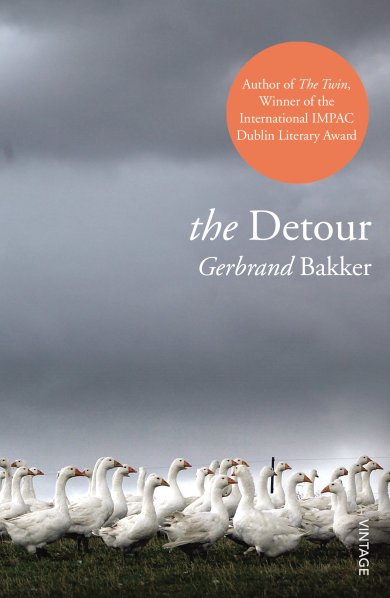
Review: The Detour by Gerbrand Bakker

the Detour Book Cover

The Detour [2010/2012] – ★★★★

This is a book by Dutch writer Gerbrand Bakker, whose previous book The Twin [2006] won the International Dublin Literary Award. The Detour (also known as Ten White Geese), translated from the Dutch by David Colmer, is about a Dutch woman who moves from her country and starts to live alone on a farm in rural Wales. Some of her nearby neighbours are badgers, cows and ten white geese whose number declines rapidly and mysteriously the longer she lives on her rented farm. Equipped with a poetry book by Emily Dickinson, the woman seems to be on the run from her past, trying to either delay or solve her immediate problems by seeking refuge in an unknown and isolated location. Her peace is soon disturbed by those with curiosity and inquisitiveness. With elegance and delicacy, Bakker draws on the nature in his book to shed light on the mystery that is this woman and her past, with his book becoming a quiet and poignant exploration of loneliness, pain and human connection.

Continue reading “Review: The Detour by Gerbrand Bakker”

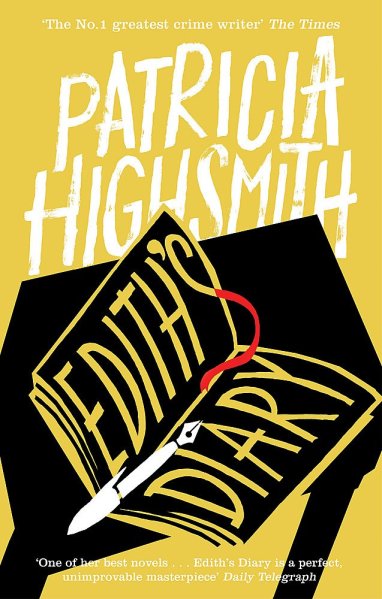
Patricia Highsmith: Edith’s Diary and The Tremor of Forgery

American novelist Patricia Highsmith (1921 – 1995) is probably known for her Tom Ripley thrillers (among which is The Talented Mr Ripley [1955]), as well as for psychological suspense/thriller books that later also became films – Strangers on a Train, The Price of Salt or The Two Faces of January. Below are the reviews of her two books, novels that showcase the depth of this author’s psychological character studies and her admirable, low-key stream of suspense. 

edith's diary

I. Edith’s Diary [1977] – ★★★★1/2

The difference between dream and reality is the true hell” [Highsmith, 1977: 291].

I first spotted this great book on Radhika’s Reading Retreat (check out her amazing blog and book recommendations!) and I knew I had to read it. In this story, Edith Howland moves with her husband Brett and her young son Cliffie from New York City to Pennsylvania. The family is not rich and hopes for the best in their new community. Edith starts to run a political newspaper in the new place, while keeping in touch with her old neighbours in New York and her wealthy aunt Melanie. Pressure on Edith intensifies as her son Cliffie becomes first troublesome then passive and aimless in life and Brett’s uncle George arrives to demand attention to himself. Soon, it is evident that the life that Edith imagined for herself and her family does not quite accord with reality and Edith finds herself increasingly prone to fantasising as she writes in her dairy. What will be the cost of this fantasy? – Simple paranoia and mental health concerns, or maybe the complicity in the death of another person? Edith’s Diary is a nuanced, psychological novel full of hidden, but real fears, and a quietly disturbing account of a woman whose repressed despair caused by social and personal expectations may just surface to lead to tragic results. 

Continue reading “Patricia Highsmith: Edith’s Diary and The Tremor of Forgery”

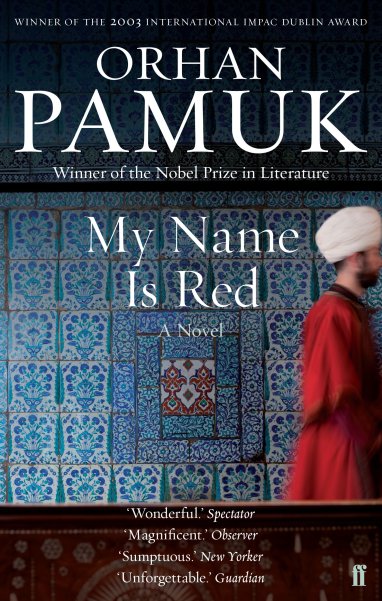
Review: My Name is Red by Orhan Pamuk

my name is red My Name is Red [1998/2001] – ★★★★★

A rich, tightly-woven literary tapestry whose secrets lie in elaborate details, red herrings and in the depth of the soul of its maker, celebrating the beauty, imagination and intelligence of ancient artworks and methods of painting. 

Why does man not see things? He is himself standing in the way: he conceals things.” “What are man’s truths ultimately? Merely his irrefutable errors“. (Friedrich Nietzsche) 

In My Name is Red by Nobel Laureate Orhan Pamuk, the murder of one miniaturist – Elegant Effendi – was committed within the circle of miniaturists working for the Sultan in medieval Istanbul. At the same time, thirty-six year old Black returns to his hometown of Istanbul after the absence of twelve years to seek once again the hand of his beloved Shekure, an opportunity that was denied to him twelve years previously. Unwittingly, Black becomes entangled in the intrigues of miniaturists working under Enishte Effendi, Black’s uncle and Shekure’s father. Masterfully, Pamuk takes us deep within the art circle of medieval craftsmen who labour to produce a mysterious new book, a circle replete with professional jealousy, narcissism, hidden love and, above all, differences as to the proper way of painting and representing pictures under one strict religious canon. In this historical novel, Persian art-forms clash violently with rising Venetian art influences as Black starts to realise that, in order to find the murderer of Elegant Effendi, it is necessary to go deep into the worldviews and art opinions of each of the three suspected miniaturists – “Stork”, “Olive” and “Butterfly”, testing their loyalties and beliefs.

Continue reading “Review: My Name is Red by Orhan Pamuk”

Review: The Way of Zen by Alan Watts

The Way of Zen [1957] – ★★★★★ the way of zen book cover

The book is a short and remarkably lucid account of Zen, which is also both – informative and a pleasure to read.

“…the true practice of Zen is no practice, that is, the seeming paradox of being a Buddha without intending to be a Buddha” [1957: 95, 96]. “The basic position of Zen is that it has nothing to say, nothing to teach. The truth of Buddhism is so self-evident, so obvious that it is, if anything, concealed by explaining it” [1957: 163].

This non-fiction book by a British philosopher and writer illuminates one of the least understood concepts in the world – Zen. Patiently, Watts traces the origins of Zen Buddhism– its Mahayana Buddhism and Taoism foundations, and then explains very clearly some of its basic principles and practices (such as the nature of direct experience, “no-mind”, the present “Now” and sitting meditation). The last chapter in this book is devoted to the application of Zen to a number of arts: from haiku (a form of Japanese poetry) to archery, with the author explaining how Zen started to permeate virtually every aspect of life. Continue reading “Review: The Way of Zen by Alan Watts”

Review: Melmoth by Sarah Perry

A15Zne-lCL Melmoth [2018] – ★★1/2 

First, I would like to say that I loved Sarah Perry’s The Essex Serpent [2016], its historical context, its beautiful prose, its main character, its plot – it read (almost, perhaps) like a modern classic, and it was a very enjoyable experience. Melmoth is Perry’s third book in which she focuses on the legend of Melmoth the Wanderer as it is seen through the eyes of modern-day characters living in Prague. In this story, Helen Franklin is a forty-something-year-old woman living in the Czech Republic in 2016 and working as a translator. She strikes up a friendship with one “posh” couple Karel and Thea, and it is through them that she reads a mysterious manuscript that details the confessions of certain people who allegedly had an encounter with Melmoth or Melmotka (a lonely woman who once denied the resurrection of Christ and is doomed to wander the Earth forever bearing witness to the humanity’s cruelty). The obsession with the manuscript soon makes Helen confront her own past. Even though there is an attempt made by the author to make this book deep and philosophical by touching upon such issues as sin, guilt, regret and atonement, these messages never get across in a compelling manner, and, overall, the book feels dull and very contrived. As in The Essex Serpent, Perry uses one intriguing and spooky legend here as a bait to entice her readers into picking up this “Gothic and unsettling” book only for those readers to then discover that they, instead, have been served with merely a collection of sad personal historical accounts that the author never even managed to bring convincingly together to make her final important point on history, witnessing and responsibility. Continue reading “Review: Melmoth by Sarah Perry”

Review: The Silent Cry by Kenzaburō Ōe

the silent cry The Silent Cry [1967/88] – ★★★★★

Full of uneasiness and foreboding, The Silent Cry is a subtly powerful work that masterfully evokes the unsaid, the forbidden and the terrifying, getting us close to the real Truth and to the final Hope.

In The Silent Cry, we are presented with the early 1960s and Mitsu, a disillusioned husband to an alcoholic wife and a father to a child who is now in an institution. Mitsu sees his life changing when his estranged brother Takashi arrives from America and together they travel to their native village in Shikoku, one of the main islands in Japan. There, they find that there is a shift in local power and one rich Korean magnate is proposing to buy what remains of Mitsu and Takashi’s land inheritance – their storehouse. Reluctantly, Mitsu finds himself drawn into a complicated political situation of the village, while also realising that Takashi starts to wield the unprecedented power over the village inhabitants. The Silent Cry is a slow-paced descent into one kind of a nightmare where the violent history of the village is about to be re-enacted and other grim discoveries made as the relationship between the two brothers takes an unexpected turn. Continue reading “Review: The Silent Cry by Kenzaburō Ōe”

Review: The Fishermen by Chigozie Obioma

the fishermen book review The Fishermen [2015] – ★★★★  

The things my brother read shaped him; they became his visions. He believed in them. I have now come to know that what one believes often becomes permanent, and what becomes permanent can be indestructible.”

This debut book, which was shortlisted for the Man Booker Prize 2015, is set in a quiet neighbourhood of Akure in Nigeria in the 1990s and centres on four young brothers (Ikenna, Boja, Obembe and Benjamin) whose lives change when their father gets a job transfer to another city and they hear a prophecy made about the death of one of them. Though the parents plan a big future for each and every one of their sons, they soon have to confront unimaginable horrors as the brothers take their fishing nets and hooks and head down to a local river. Steeped in local superstition and African folklore, The Fishermen explores the relationship between brothers from a curious perspective, and, although it may be dragging its narrative for its first half, by the end, the book strangely redeems itself to become a story with purpose and conviction. Continue reading “Review: The Fishermen by Chigozie Obioma”

Review: Bird in a Cage by Frédéric Dard

bird in a cage book cover

Bird in a Cage [1961/2016] – ★★★★

This short existential noir thriller tells of Albert, a thirty-year-old man, who arrives to his Paris apartment where he grew up. His mother died some years before, and, feeling nostalgic, Albert wonders around his Parisian quartier, trying to recall happy memories from his childhood. His day-dreaming is cut abruptly short when he meets a beautiful and enigmatic young woman with her daughter at the restaurant he never dared to go into before. Like some nightmare that he is unable to shake off, Albert soon finds himself trapped in a mystery so confusing and layered it is beyond his wildest imaginings – a dead body and a seemingly impossible crime emerge, and accounts of what happened are all as numerous as they are all improbable. Recalling the work of Georges Simenon, Bird in a Cage is a disturbingly delightful read, which is also suspenseful. Perhaps Dard is not as clever as he thinks he is with his big reveal, and much is left both unaccounted for and unbelievable in the story, but his concise and stylish approach to telling the story, that includes both existential and erotic themes, is rather fitting and appealing.

Continue reading “Review: Bird in a Cage by Frédéric Dard”

Review: Before We Were Free by Julia Alvarez

before we were free
Continue reading “Review: Before We Were Free by Julia Alvarez”

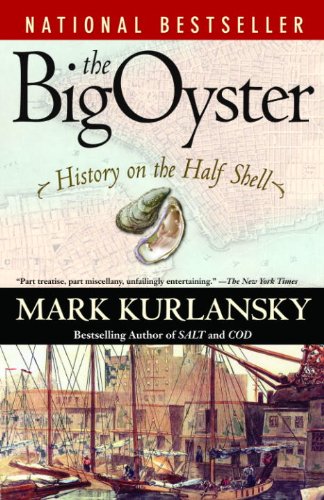
Review: The Big Oyster by Mark Kurlansky

the big oysterThe Big Oyster: A Molluscular History of New York [2006] – ★★★★★

Kurlansky’s book is an engaging, quirky historical account of one of the most famous cities in the world told through the story of once one of the most misunderstood salt-water mollusc.

The history of New York oysters is a history of New York itself – its wealth, its strength, its excitement, its greed, its thoughtlessness, its destructiveness, its blindness and – as any New Yorker will tell you – its filth. This is the history of the trashing of New York, the killing of its great estuary” [2006: xvi], so begins this marvellous non-fiction book by Mark Kurlansky, who is also the author of such popular books as Cod [1997] and Salt [2002]. The Big Oyster tells the story of the city of New York through the prism of once one of its most famous and prized commodities – its unparalleled oysters. Currently, New York is known for its skyscrapers, its shopping and its business (among other things), but for a long time in history when you thought of New York, you first thought of its delicious and plentiful oysters [2006: xvii]. There was, indeed, a time when New York was known for its “sweet air”, enviable water and tidal systems, and its marine produce, especially its oysters. Through engaging historical accounts, literary anecdotes, culinary recipes and some of the most famous New Yorkers, Kurlansky tells a story of New York like you have never read or known it before and one we should never forget, especially in today’s ever-rising environmental and climate change concerns.  Continue reading “Review: The Big Oyster by Mark Kurlansky”

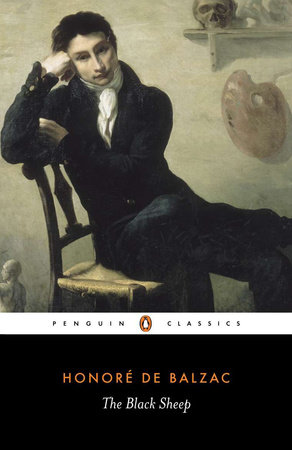
Review: The Black Sheep by Honoré de Balzac

The Black Sheep Balzac

The Black Sheep (La Rabouilleuse) [1842/1970] – ★★★★★

The Black Sheep is an outstanding novel by Balzac (Lost Illusions [1837]) that tells of a remarkable battle for inheritance. At the centre of this story are two brothers, Joseph and Philippe, who could not be more different from one another: the modest and studious Joseph is the complete opposite of the bold and physically-imposing Philippe. They become the protagonists in the fight against their uncle’s supposed will to leave his fortune to mere strangers that coveted his attention for years. As in other novels, Balzac masterfully concocts a tale that is based on contrasts – the provincial life in Issoudun vs. the town life in Paris, the consequences of immense wealth vs. the results of poverty, the life of the upper classes vs. the destitution of the working class, while his moral spins around the fleeting nature of success, the extent of the individual ruthlessness and cunningness, and the consequences of a mother’s blind love for her child. More than any other Balzac novel, The Black Sheep is all about appearances often deceiving us and the fact that “a leopard never changes its spots”

Continue reading “Review: The Black Sheep by Honoré de Balzac”

Review: The Blazing World by Siri Hustvedt

The Blazing World Book Cover

The Blazing World [2014] – ★★★★1/2 

This longlisted for a Man Booker Prize book traces the story of Harriet Burden, a small artist and once the wife of eminent art dealer Felix Lord. Through the statements from Burden’s family, close friends and acquaintances, we get to know the story behind Burden’s decades-long experiment to hide behind three male identities in the production of her art. Burden chose to create art and pass it as works by someone else, thereby, exposing the anti-female bias in the art world, but also the subconscious perception that male artists are more brilliant than their female counterparts.

The Blazing World is bursting with creativity, intelligence and originality. It touches on many philosophical and psychological issues, while also debating the nature of art, the process of its creation and human perception. At the heart of the story is one misunderstood individual whose depth and intellectuality may just signal her doom. This unusual book invites us, readers, to be archivists, observers, art critics, judges and psychologists, but above all, it invites us to look at the situation as human beings, trying to understand the feelings and thoughts of another. 

Continue reading “Review: The Blazing World by Siri Hustvedt”

Review: If the Universe Is Teeming with Aliens…Where is Everybody? by Stephen Webb

Book Cover If the Universe is Teeming with Aliens…Where is Everybody?: Seventy-Five Solutions to the Fermi Paradox and the Problem of Extraterrestrial Life [2015] – ★★★★1/2  

I am continuing with my Non-Fiction November Reading Challenge with this curious book on the Fermi paradox. This paradox states that, if there are billions of stars out there in galaxies, and they are similar to and much older than our Sun, there is a high probability that those distant systems have planets that resemble our planet Earth. In turn, the typical nature of our planet means life must have developed and accelerated on other planets too, and, if beings there developed interstellar travel, they should have visited Earth already (or at least sent their probes). The paradox is that we do not see/perceive any extraterrestrial activity. Dr Stephen Webb is a theoretical physicist who proposes and discusses seventy-five solutions to the Fermi paradox in this book, solutions which he divides into three sections: (i) Alien Are (or Were) Here; (ii) Aliens Exist, but We Have Yet to See or Hear from Them; and (iii) Aliens Do Not Exist. This is an enjoyable, mentally-stimulating book that impresses with the number and diversity of different solutions and theories that may explain the Fermi Paradox. Continue reading “Review: If the Universe Is Teeming with Aliens…Where is Everybody? by Stephen Webb”

October 2019 Wrap-Up: From The Memory Police to The Axeman’s Jazz

The Memory Police [1994/2019] by Yōko Ogawa – ★★★★★

This book is the one that surprised me the most this month. I found myself enchanted and slightly disturbed by Ogawa’s world of disappearing objects. It was very interesting to read about the uncertainty and characters’ determination to live normal lives despite the disappearances and the Memory Police’s harassment.

The Face of Another [1964] by Kōbō Abe – ★★★★★ 

Kōbō Abe’s unusual book proved to be a great read for me. When a scientist in this story becomes facially disfigured, he vows to become “normal” again and have a face to fit into the Japanese society again. Abe explores the mental torment of someone who no longer sees himself as part of a society, making insightful observations on the power of personal transformation. 
Continue reading “October 2019 Wrap-Up: From The Memory Police to The Axeman’s Jazz”

Review: The Memory Police by Yōko Ogawa

The Memory Police Book Cover

They say you die twice. One time when you stop breathing and a second time…when somebody says your name for the last time” (Banksy, re-quoting Ernest Hemingway). Yōko Ogawa (The Housekeeper and the Professor [2003/08]) wrote The Memory Police in 1994, and it was translated from the Japanese by Stephen Snyder in 2019. In this beautiful dystopian book, our young female character works as a writer on one curious island – there, things sometimes simply disappear from time to time, and with those “disappearances” come another interesting element – people soon forget these things completely, how they looked and what they felt like. For them, these things simply cease to exist. The enforcement of the memory erosion is the task for the special Memory Police, that ruthlessly detects and investigates any traces of disappearing objects, as well as hunts people that are still able to remember them. When one man, R, a book editor, is in danger of being caught for remembering disappeared things, our lead character vows to do everything in her power to save him from a terrible fate.

Continue reading “Review: The Memory Police by Yōko Ogawa”

Review: The Face of Another by Kōbō Abe

The Face of Another Book Cover
Continue reading “Review: The Face of Another by Kōbō Abe”

Review: Hillbilly Elegy by J. D. Vance

Hillbilly Elegy Book CoverHillbilly Elegy: A Memoir of a Family and Culture in Crisis [2016] – ★★★★1/2

This memoir on how class and family affect the poor, as seen through the eyes of one boy raised in one disadvantaged family, is a book hard to forget.

Whenever people ask me what I’d most like to change about the white working class, I’d say “the feeling that our choices don’t matter” [Vance, 2016: 177].

Hillbilly Elegy is a memoir of a man named J. D. Vance, who talks about his childhood (being raised by his single, troubled mother with two children), adolescence and early adulthood, growing up in one of the poorest regions in America. This deeply personal, eye-opening book, which is also both sad and inspirational, provides a glimpse into the Appalachian culture and various (historical, socio-economic, psychological and cultural) circumstances that shape its people. It is about the state of one part of America some would not like to acknowledge fully or whose issues some misunderstand. J. D. sheds away some of the stereotypes surrounding his people, while, at the same time, fairly and bravely acknowledges (people’s) personal and societal responsibilities for many disastrous societal and economic circumstances. Continue reading “Review: Hillbilly Elegy by J. D. Vance”

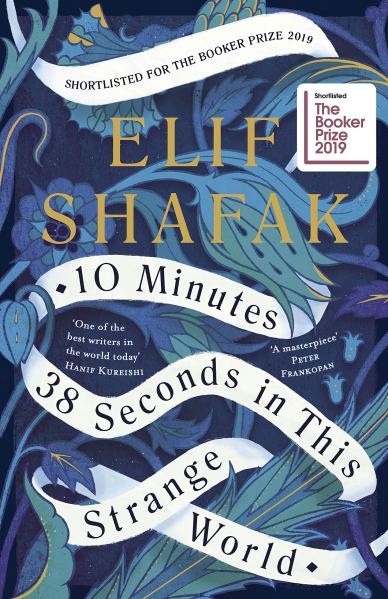
Review: 10 Minutes 38 Seconds in This Strange World by Elif Shafak

10 Minutes 38 Seconds in This Strange World Book Cover 10 Minutes 38 Seconds in This Strange World [2019] – ★★★1/2

10 Minutes 38 Seconds in This Strange World” is a shortlisted for the Booker Prize 2019 book by the Turkish-British author Elif Shafak (The Architect’s Apprentice [2013])). In this story, Tequila Leila is found dead in a trash bin on the outskirts of Istanbul, but her mind keeps working for another ten minutes and thirty-eight seconds, during which time we are introduced to Leila’s childhood, her meetings with the- dearest-to-her people, and, finally, to the events leading up to her death. As Leila’s mind starts to race through her life events, we get to know Istanbul and its dark history, as well as the plight of the most marginalised people living within the city walls. Shafak’s “mind-slipping-away” concept is intriguing, and she does try to make her book as evocative as possible. However, the second half of the book is nowhere near as interesting as the first half, and the prose is sometimes sentimentally-inclined and even pretentious. There is this feeling when reading this book that the “mind-slipping-away” element is a gimmick introduced by Shafak to get our attention so that we can finally read what she wants us to understand: that Istanbul has had many faces through history, and that there are, and have always been, marginalised people living there, especially women, who suffered much and now deserve attention, recognition and, above all, dignity – even after their death.  Continue reading “Review: 10 Minutes 38 Seconds in This Strange World by Elif Shafak”

Review: The Axeman’s Jazz by Ray Celestin

the axeman's jazz

The Axeman’s Jazz [2014] – ★★★

This is a debut historical fiction book that fictionalises real serial killer murders that shook New Orleans in 1918 and 1919 and were dubbed the Axeman’s murders. The book is a winner of the 2014 John Creasey (New Blood) Award, and I just could not pass by an opportunity to read this book since it is set in New Orleans of all places, a city that has been fascinating me for a long time and so much I have previously mentioned/talked on my blog about its history, art and notable celebrations.

This atmospheric book follows three people investigating the gruesome murders of the Axeman: (i) professional investigator Detective Lieutenant Michael Talbot; (ii) nineteen year-old amateur sleuth and secretary at a local detective agency Ida Davis, and (iii) recent convict and once detective Luca D’Andrea. Each one of them is under pressure to discover the identity of the murderer before anyone else, and the task is not easy since the murderer taunts the police and leaves strange clues behind, such as Tarot cards. Soon corruption in high places, the Mafia and false leads all complicate the case, as well as the most recent strange demand of the murderer: “play Jazz on one particular Tuesday and you will be safe”. Charmingly evoking the atmosphere of one-of-a-kind place in the world which was New Orleans in the early twentieth century, Ray Celestin concocts a worthy-of-a-read crime thriller, even if it is at times slow, overwritten, unnecessarily confusing and wobbly in its logic. 

Continue reading “Review: The Axeman’s Jazz by Ray Celestin”

Review: The Blackwater Lightship by Colm Tóibín

The Blackwater Lightship Book Review The Blackwater Lightship [1999] – ★★★1/2

In 1999, Paul Binding from The Independent on Sunday wrote that “we shall be reading and living with The Blackwater Lightship in twenty years”. Twenty years have now passed, and, this year, The Blackwater Lightship by Irish author Colm Tóibín (Brooklyn [2009]) is twenty years old. Therefore, I am taking this opportunity to review this book that was also shortlisted for the Booker Prize in 1999. In this story, three generations of women (daughter Helen, mother Lily and grandmother Dora) come together to try to cement their uneasy relationships with each other after Helen’s brother Declan is taken gravely ill as a result of his AIDS diagnosis. Tóibín makes his writing effortlessly beautiful, and there is a special sense of sadness and a desire for redemption permeating this story, with the characters trying hard to accept and forgive each other while they remain united in their shared tragedy. However, The Blackwater Lightship is still rather bland and can be described as “playing it safe”, sometimes veering off from the main drama into other topics (changing societal views on homosexuality and difficulty of finding romance) and according its secondary characters (Declan’s friends) an undeserved place in the story.  Continue reading “Review: The Blackwater Lightship by Colm Tóibín”

Review: Sulphuric Acid by Amélie Nothomb

Sulphuric Acid1.docx Sulphuric Acid [2005/2007] – ★★★★

This book is by a Belgian author Amélie Nothomb, who was born in Japan, but now resides in Paris. Translated from the French by Shaun Whiteside, Sulphuric Acid is a short novella which quite shockingly and darkly satirises our obsession with TV, in particular with reality television, and our idolisation of celebrities. Probably taking some inspiration from Koushun Takami’s Battle Royale (1999), Sulphuric Acid is a dystopia-set story in which millions of people tune in every night for a TV programme called Concentration, which recreates a Nazi-style concentration camp with real participants. People in this programme take either the roles of guards or prisoners, with cameras catching their every move. Nothomb packs a lot of ideas into her novella of just over 120 pages, and she is very interested to explore human responses to some unthinkable situations, as we follow the main characters – a beautiful young woman Pannonique, one of the prisoners, and sadistic Zdena, one of the guards. Continue reading “Review: Sulphuric Acid by Amélie Nothomb”

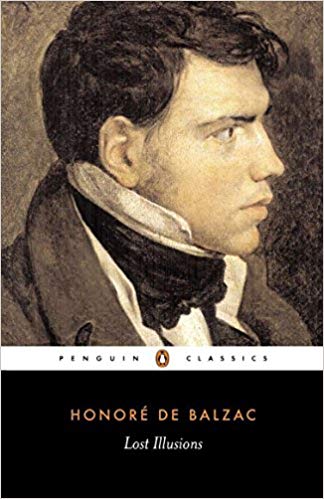
Review: Lost Illusions by Honoré de Balzac

Honore de Balzac Lost Illusions

Lost Illusions [1837 – 1843/1971] ★★★★★

“...he was living in one of those golden dreams in which young people, cantering along on their ifs, leap over all barriers” [Balzac/Hunt, 1837/1971: 113].

It’s hard…to keep one’s illusions about anything in Paris. Everything is taxed, everything is sold, everything is manufactured, even success” [Balzac/Hunt, 1837/1971: 387].

This week I am celebrating my first blogaversary – my blog is one year old (thank you to all my followers for following!), and this will also be my 70th full book review (see the others here). Therefore, I thought I would review a classic for a change as a way to “celebrate” and also to draw attention to the best literature has to offer.

Translated from the French by Herbert J. Hunt, Lost Illusions by Honoré de Balzac is part of his La Comedie Humaine series, and centres around Lucien Chardon, a handsome and optimistic, but very naïve, young man who desires to be successful in high society through his talent – he is a writer. He leaves his friend David Sechard, a typographist, in Angouleme and embarks on a dizzying adventure full of dramatic ups and downs in Paris, where he has to make difficult for him decisions about which path to success to follow. This is not one’s ordinary tale of a man’s fall from grace or the corruption of innocence. Balzac masterfully portrayed a story with a number of vivid characters, and his observations on the society, its hierarchy and its unspoken rules are second to none – making this work a true classic, both entertaining and insightfully profound. Through his tale, we get to understand the nuts and bolts of a printing business and journalism in the countryside and in Paris in the 1820s, as well as the consequences of unrelenting ambition and talent when they are not underpinned by solid connections and easily swayed by vanity and egocentrism. 

Continue reading “Review: Lost Illusions by Honoré de Balzac”

Review: Half a Lifelong Romance by Eileen Chang

Half a Lifelong Romance1.docx

Half a Lifelong Romance [1950/1966/2014] ★★★★★

Maybe a love like that came to a person only once in a lifetime? Once was enough, maybe” [Chang/Kingsbury, 1950/2014: 354].

Of all forms of caution, caution in love is perhaps the most fatal to true happiness” (Bertrand Russell).

Half a Lifelong Romance, translated from the Chinese by Karen S. Kingsbury, is a modern classic where a timeless story, filled with passion, longing and sorrow, meets fluid and engaging writing. In this story, set in the 1930s, Manzhen, a young girl, forms friendship with her co-worker Shuhui and his friend Shijun; soon after, between Manzhen and Shijun sparks a feeling so innocent and tender that both are left speechless, floating on an island of complete happiness. However, Manzhen’s disastrous family circumstances and Shijun’s own familial duties do not let the lovers get any closer, and, in time, their circumstances only worsen as they try to fight their inner sense of duty, responsibility, tradition and lack of money. Simple misunderstandings, false pride, as well as unexpected betrayals also keep their happiness at bay.

Half a Lifelong Romance is a moving, quietly devastating and exquisite novel that may surprise you with its power (including its dark twist) in the second half. Chang wrote compellingly and beautifully, and her story of Chinese family traditions and one love torn apart by circumstances is one unputdownable read.

Continue reading “Review: Half a Lifelong Romance by Eileen Chang”

Review: The Nickel Boys by Colson Whitehead

The Nickel Boys Book Cover The Nickel Boys [2019] – ★★★★★ 

Our lives begin to end the day we become silent about things that matter” (Martin Luther King, Jr.).

Fiction is the lie through which we tell the truth” (Albert Camus).

Colson Whitehead’s latest book is the story of Elwood Curtis, a clever and hard-working boy, who is sent to the Nickel Academy for boys after one “misunderstood” event. Drawing inspiration from the real, shocking story of the Dozier School for Boys in Florida (subsequently known for its mistreatment and abuse of boys), Whitehead paints a gruesome picture of one school that employs shocking corrective procedures that can break any human spirit and hope for the future. Through Elwood, we enter a dictatorial organisation whose rules must be obeyed at all costs because the price for not doing so is hard to put into words. Idealistic Elwood, who worships the sermons of Dr Luther King, soon has to confront one way of life filled with arbitrary violence, indifference, heartlessness and hypocrisy. In this environment, Elwood must learn fast how the place is run in order to survive, and the book is also a story of coming to terms with one’s horrific past.

Neither Elwood nor his story may seem original, but the account is heart-felt, not least because this is a story about the fight for freedom and against institutional injustice and racism. There have been many Elwoods throughout history, people who were either crippled for being who they are; whose spirits were broken before they could lead a life of peace; or those who simply did not make it alive, having gone through a system that should not have existed in the first place. Preserving the memory of these people is the point of Whitehead’s latest book. Continue reading “Review: The Nickel Boys by Colson Whitehead”

Review: Miracle Creek by Angie Kim

Miracle Creek Book Cover

Miracle Creek [2019] – ★★★★

There are no facts, only interpretations” (Friedrich Nietzsche). 

Angie Kim centres her story around a pressurised oxygen chamber or the Miracle Submarine that is used as an experimental treatment device in Miracle Creek, Virginia. The Miracle Submarine belongs to Pak Yoo, an immigrant from South Korea, who tries to do his best in the US so that his wife and daughter can find happiness in this foreign to them country. When a fatal accident happens at Pak’s treatment facility, one leading suspect emerges, but is the case as clear-cut as it appears at first? Soon, secrets, lies, and surprising relations between Pak Yoo’s patients emerge, complicating this seemingly open-and-shut case, as Angie Kim also makes insightful points on cultural divisions, on the issue of using certain experimental, controversial treatments to treat disabled children, and on the trials of parenthood.

Continue reading “Review: Miracle Creek by Angie Kim”

Review: The Interestings by Meg Wolitzer

The Interestings Book CoverThe Interestings [2013] – ★★★★1/2

Meg Wolitzer is an American novelist known for such books as The Wife [2003] and The Ten-Year Nap [2008]. Her novel The Interestings is also an impressive bestseller. In this book, the central stage first take six teenagers: (i) awkward, but funny Jules, our main heroine; (ii) lovable and charming Ash; (iii) Ash’s handsome, but slightly troubled brother Goodman; (iv) not particularly attractive, but friendly and ingenious Ethan; (v) dreamy and artistic Jonah; (vi) and beautiful and emotional Cathy. This reflective, character-driven book then focuses on how their first summer at an artsy camp Spirit-in-the-Woods and future inter-relationships develop, as they become adults in the fast-changing world.

The Interestings is almost nostalgic, slightly dreamy book filled with emotions, longings and reflections, making the reader pose and reflect as they step into the lives of six people who all first long to be better than they are – or, interesting – but whose different life choices, talent, past and backgrounds ultimately determine their place in the world. It becomes harder for them to preserve their feelings of love and friendship for each other, when societal pressures, financial success, lifestyle changes and losses (as well as ensued envy, hurt and disillusionment) start to dictate their lives, attitudes and perceptions, dividing the once close group of friends. Continue reading “Review: The Interestings by Meg Wolitzer”

Review: A Maze of Death by Philip K. Dick

A Maze of Death Book Cover

A Maze of Death [1970] – ★★★★

People see what they want to see and what people want to see never has anything to do with the truth” [Roberto Bolaño, 2666]. 

“...we’re rats in a maze with death; rodents confined with the ultimate adversary, to die one by one until none are left” [Philip K. Dick, 1970: 97].

In this curious short novel, Philip K. Dick blends Agatha Christie’s infamous And Then There Were None premise with his own colourful world and perception ideas to produce an engaging story of fourteen people who find themselves on a remote and strange planet Delmark-O…and in danger – a mysterious force is also on the planet and is seemingly killing them one by one. A Maze of Death may be termed as a more straightforward story from Philip K. Dick, especially compared to some of his others, but there is still a mind-blowing twist to be found at the end. In this book, in a typical Philip K. Dick style, we get immersed into the world where reality is bent, where nothing is as it seems and where the chances of survival depend wholly on one’s clear and true perception of oneself and the world around. 

Continue reading “Review: A Maze of Death by Philip K. Dick”

Review: The Crime of Father Amaro by Eça de Queirós

The Crime of Father Amaro Book Cover

The Crime of Father Amaro [1875/1962] – ★★★★★

Portuguese novelist José Maria Eça de Queirós has been compared to Russian Leo Tolstoy and French Honoré Balzac, and for a good reason – his debut (without a collaboration) book The Crime of Father Amaro (translated by Nan Flanagan in 1962) is a multi-faceted novel of great ambition and skill. In it, he tells of events taking place in a small cathedral town of Leiria, north of Lisbon. Father Amaro, a handsome young priest arrives to Leiria to take the position of a parish priest and soon falls under the spell of the most beautiful girl in town – good-natured Amelia, who lives with her strict and apparently religious mother Joanneira in the heart of the city. Amaro is an honourable guest and a lodger in the comfortable house of Amelia and Joanneira, and he soon finds that his duties of a priest clash with his physical desires, and, in particular, with his burning romantic passion for Amelia. Amaro is also caught up in the town’s complex politics, in a clash between the clergy of the town and the governmental powers. The forces within Amaro, as well as from outside of his influence, conspire to lead the young parish priest to making some unprecedented choices.

Continue reading “Review: The Crime of Father Amaro by Eça de Queirós”

Review: Solaris by Stanisław Lem

Solaris Book Cover

Solaris [1961/70] – ★★★★★

Man has gone out to explore other worlds and other civilisations without having explored his own labyrinth of dark passages and secret chambers, and without finding what lies behind doorways that he himself has sealed” [Stanisław Lem/Kilmartin/Cox, 1961/70: 164].

Solaris is considered to be the most influential and significant work of a Polish writer Stanisław Lem. Also made into a movie [1972] by Andrei Tarkovsky, the book tells of Kelvin, a psychologist, who arrives to a station orbiting the mysterious planet called Solaris. On board of the station are supposed to be three other researchers, and Kelvin joins them to know about their progress in trying to understand the planet, and, in particular, the ocean on Solaris that may or may not have consciousness of its own. Then, Kelvin starts to experience something coming from the mysterious planet no one has warned him about. The so-called “visitors” frequent the station and Kelvin begins to think he is losing his grip on reality when his dead wife makes an appearance, opening his emotional wounds. But, what is this strange force that plays tricks on the inhabitants of the station? What is the meaning of this psychic phenomenon coming from Solaris? Can researchers really understand its workings?

Continue reading “Review: Solaris by Stanisław Lem”

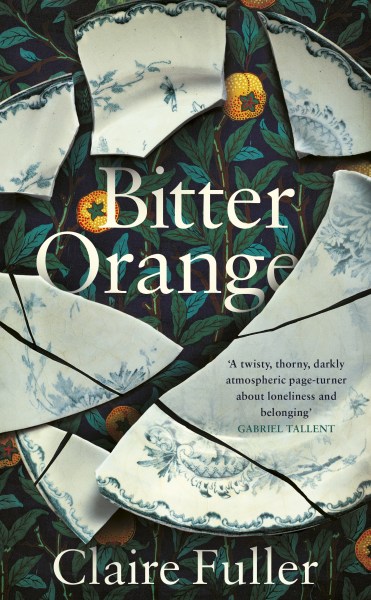
Review: Bitter Orange by Claire Fuller

Bitter Orange Book Cover

Bitter Orange [2018] – ★★★1/2 

Bitter Orange is Claire Fuller’s third novel in which she mixes a crime mystery, antique house drama (a hint on a love triangle) and melancholic nostalgia for the past. Her main character Frances feels like she was given a new lease of life when, at the age of thirty-nine, her previously bedridden mother is dead and she is assigned a task to catalogue garden architecture in a semi-abandoned mansion – Lyntons. At the house, she befriends a couple who rents the first floor of the building, and their present relationships and past come head to head to result in something explosive. Bitter Orange is an oddly evocative book, but also an oddly imperfect one. Sometimes frustratingly uneventful and slow, the book’s main fault is still its underwhelming, under-thought and already unoriginal characters, premise and ending. 

Continue reading “Review: Bitter Orange by Claire Fuller”

Review: Golden Child by Claire Adam

Golden Child Claire Adam
Continue reading “Review: Golden Child by Claire Adam”

Review: Idaho by Emily Ruskovich

Idaho Book Review
Continue reading “Review: Idaho by Emily Ruskovich”

Review: French Exit by Patrick DeWitt

French Exit Book Cover

French Exit [2018] – ★★★

This tragicomedy of manners comes from the author of Man Booker Prize nominee The Sisters Brothers [2011]. In French Exit, Patrick DeWitt centres on mother Frances, a fussy and bossy woman of sixty-five, and her good-for-nothing thirty-two year-old son, Malcolm, who see their fortune fade away after the ill-publicised death of the family provider Franklin Price, once an eminent lawyer in New York City. Once rich and admired, the family of two now face financial ruin and decide to go to Paris, perhaps, for a change of scenery. Frances’s only friend Joan provides an apartment to rent in Paris for them, and the duo of unlikely central characters embark on their French exploit enthusiastically, meeting eccentric characters along the way. This slightly surreal tragicomedy is an amusing enough read, but it is also often somewhat dull, with its emotional punch coming too late in this curious book. 

Continue reading “Review: French Exit by Patrick DeWitt”

Review: Serena by Ron Rash

Serena Book Cover Serena [2008] – ★★★★1/2

Will at Coot’s Reviews suggested that I read Serena by Ron Rash for my Appalachia Reading Challenge, and both H.P from Hillbilly Highways and Emma at Book Around the Corner also recommended that I read Rash’s work, so thank you! Serena pleasantly surprised me. This novel tells the story of a newly-wed couple the Pembertons who arrive to a logging community high up in North Carolina Mountains to take over a timber business there. Every worker at the camp is awed by Mrs Serena Pemberton, a woman so strong-willed and determined she can match any man’s will power or shrewdness. Masterfully-executed and beautifully-written, Serena evokes vividly both the beauty of North Carolina’s landscape and horrors involved in the business of cutting trees to make profit. Ron Rash even packs in the novel “slow-burn” suspense since Mr Pemberton’s past actions give rise to unforeseen consequences, and, as the couple arrive to North Carolina, with them also descends upon the village something disturbing and sinister.

Continue reading “Review: Serena by Ron Rash”

Review: Hunger by Knut Hamsun

Hunger Cover

Hunger [1890/1996] – ★★★★★

Knut Hamsun is a Nobel Prize Winner for Literature whose existentialist literary work Hunger predates Franz Kafka’s The Trial [1925] and Albert Camus’ The Stranger [1942]. Translated from the Norwegian by Sverre Lyngstad, Hunger explores the daily life of one lonely and desperate man on the brink of starvation in a large city. Our unnamed narrator is a freelance writer who has one “ambition” in his life: not to die from hunger. He is hard-working and not demanding, with food and shelter being his main wishes. Hamsun explores mental and physical traumas of the character in a masterful work that inspired some of the greatest philosophical fiction authors of the twentieth century, emphasising in his work that the fight to survive in a big city may take a shape of complete absurdity.

Continue reading “Review: Hunger by Knut Hamsun”

Review: The Disappearance of Adèle Bedeau by Graeme Macrae Burnet

The Disappearance of Adele Bedeau Cover

The Disappearance of Adèle Bedeau [2014] – ★★★★★

Graeme Macrae Burnet is a Scottish author best known for his Man Booker Prize nominated novel His Bloody Project [2015]. The Disappearance of Adèle Bedeau is his debut novel written in the style of a French mystery novel and film noir. Dark and intriguing, the novel tells the story of thirty-six-year old Manfred Baumann, a reclusive, lonely and socially awkward bank worker who spends his evenings in local Restaurant de la Cloche, Saint-Louis, France. When one attractive waitress of the restaurant – Adèle Bedeau disappears after a night-out, Detective Georges Gorski’s suspicions soon fall on Manfred Baumann and one unsolved past criminal case regains its spotlight. The Disappearance of Adèle Bedeau is written in that nostalgic style of old French mystery novels, echoing the works of Georges Simenon (Burnet’s favourite book is Simenon’s The Little Man from Archangel [1957]) or existential literature, such as Ernesto Sabato’s El Tunel [1948]. The Disappearance of Adèle Bedeau is an impressive, understated literary mystery with many subtle elements, convincing psychological character study, and one atmospheric setting.

Continue reading “Review: The Disappearance of Adèle Bedeau by Graeme Macrae Burnet”

Review: The Editor by Steven Rowley

The Editor Book Cover
Continue reading “Review: The Editor by Steven Rowley”
Review: When Rain Clouds Gather by Bessie Head

When Rain Clouds Gather Book Review

When Rain Clouds Gather [1969] – ★★★★★

You may see no rivers on the ground but we keep the rivers inside us. That is why all good things and all good people are called rain. Sometimes we see the rain clouds gather even though not a cloud appears in the sky. It is all in our heart” [Bessie Head, 1969: 191]. 

This is a tale of Makhaya, a refugee from South Africa, who desires to build his life anew in a small village of Golema Mmidi, Botswana. There, he meets eccentric Englishman Gilbert Balfour, who would like to revolutionise farming methods to help people of the village. Both men are running away from the past and are in search of wives. However, before both start to live free lives, trying to help others, they have to face and fight political corruption, unfavourable climatic conditions and village prejudice. When Rain Clouds Gather tells an important story of finding hope in the most hostile and dangerous conditions, and can really be considered a modern classic.

Continue reading “Review: When Rain Clouds Gather by Bessie Head”

Review: The Lost Steps by Alejo Carpentier

Los Pasos Perdidos Cover

The Lost Steps [1953/1989] – ★★★★1/2 

“…we let ourselves succumb to the world of wonder, eager for still greater portents. There arose beside the hearth, conjured up by Montsalvatje, the medicine men who healed the wounds with the magic incantation of Bogotá, the Amazon Queen, Cicanocohora, the amphibious men who slept at night in the bottoms of the lakes, and those whose sole nourishment was the scent of flowers” [Carpentier/de Onis, 1954/89: 144].

Los Pasos Perdidos or The Lost Steps was translated from the Spanish by Harriet de Onis and represents what is believed to be one of the most important Latin American novels to come out in the twentieth century. In this story, our unnamed narrator (believed to be in New York) is sent on a mission to a jungle (believed to be in Venezuela) to discover and collect some ancient musical instruments for a museum. By accepting this request, the narrator has no idea that he is about to embark on one extraordinary journey of self-realisation and self-discovery, which will force him to rethink his previous inculcated beliefs. The Lost Steps is a complex literary work which sometimes slides into being rather metaphysical in nature, but without losing its conviction or power. Carpentier weaves his story in a beautiful, even though enigmatic, language, and the result is a book which puzzles, impresses and astonishes.

Continue reading “Review: The Lost Steps by Alejo Carpentier”

Review: A Little Life by Hanya Yanagihara

A Little Life Book Cover A Little Life [2015] – ★★★★1/2 

Once we are lost unto ourselves, everything else is lost to us” (Johann Wolfgang von Goethe, The Sorrows of Young Werther).

Initially, this Man Booker Prize Nominee is about four friends who try to succeed in New York City after their graduation. Willem is a kind soul and an aspiring actor, JB is a gregarious party-goer and carefree artist, Malcolm is a grounded man, but increasingly disillusioned architect, and, finally, Jude is a brilliant lawyer, but also a man who harbours a secret past which torments him every day and every night. Will friendship and love triumph over the traumas and cruelties of life? This book does depict trauma, distress and violence stemming from the abuse of a child in the past, but, like Yanagihara’s debut, A Little Life is also a beautifully-written and intelligently-constructed novel with significant themes that must have their place in literature. Like the author’s debut, it is sometimes a painfully repetitive read, and Yanagihara drives her main message too torturously in it. However, it is incorrect to view the book as being solely about bad things happening. No person should be defined (or should feel to be defined) by the past trauma that was unfairly inflicted upon them, and the book sends an important message out, becoming a touching and emotional tribute to the power, loyalty and sacrifices of friendship and love, even if that tribute is too thickly wrapped in the pain of our main atypical and mysterious character – Jude St. Francis. 

Continue reading “Review: A Little Life by Hanya Yanagihara”

Review: The Three Stigmata of Palmer Eldritch by Philip K. Dick

The Three Stigmata Philip K Dick Cover

The Three Stigmata of Palmer Eldritch [1964]★★★★1/2 

This is my fourth Philip K. Dick novel (previously, I read Do Androids Dream of Electric Sheep? [1968], A Scanner Darkly [1977] and Ubik [1969]). This story is set in future and follows Barney Mayerson, an employee of P.P (Perky Pat) Layouts, a firm which specialises in providing layouts which can be used for drug experience when customers (those in space colonies) take illegal hallucinatory drug Can-D, which can recreate a perfect life when one takes it. Mayerson finds out that Palmer Eldritch, a man who went to another star system some years previous, has returned to the Solar System and is bringing with him an even more potent drug than Can-D, and it is called Chew-Z. However, soon suspicions mount that the experience with Chew-Z may not be what everybody thinks it is. The Three Stigmata of Palmer Eldritch is messier and more chaotic that some of the author’s later, better known novels, but it is still an entertaining read with all the expected typically Philip K. Dick philosophical considerations and thought-provoking situations. Even if the world he presents this time is tackier and crazier than usual, the author still manages to suspend our disbelief as we plunge deep into this addictive and well-constructed futuristic world where our usual understanding of reality is turned upside down. 

Continue reading “Review: The Three Stigmata of Palmer Eldritch by Philip K. Dick”

Review: The Twin by Gerbrand Bakker

The Twin Book Cover

The Twin [2006/08] – ★★★★

The Twin, translated from the Dutch by David Colmer, is that type of a book which should not work, but somehow it does. It should not work because it is too introspective and has the drama and suspense which are way too subtle. In this book, Helmer van Wonderen is a fifty-seven year old man who is living on an isolated farm in the Netherlands, carrying for his aging father. His identical twin brother Henk, a farmer, died many years before, forcing Helmer to return home to work as a farm hand, helping his father. When his brother’s ex fiancée Riet arrives to the area, bringing her unruly son with her (who is also named Henk), Helmer is forced to confront his painful past, as well as his choices in life. The Twin may be a very “slow” novel, but where it lacks in pace, it makes up for in atmosphere and landscape descriptions. It also has barely perceivable emotional resonance that can be felt in the main character’s words and actions. 

Continue reading “Review: The Twin by Gerbrand Bakker”

Review: Sweet Bean Paste by Durian Sukegawa

Sweet-Bean-Paste-cover

Sweet Bean Paste [2013/2017] – ★★★★★

The aroma seemed to leap up at him, as if it were alive, racing through his nose to the back of his head. Unlike the ready-made paste, this was the smell of fresh, living beans. It had depth. It had life. A mellow, sweet taste unfurled inside Sentaro’s mouth” [Sukegawa/Watts, 2013: 33]. 

This book, translated from the Japanese by Alison Watts (see also the film trailer here), tells a story of Sentaro, a middle-aged man who spends his time unenthusiastically selling dorayaki, a kind of pancake filled with sweet bean paste, to customers at the Doraharu shop, while consuming alcoholic drinks in his spare time. When an elderly woman Tokue approaches his shop and asks to work there, Sentaro first thinks it is a joke. However, Sentaro also tastes the bean paste cooked by Tokue and he is amazed by the flavours she can produce. What follows is a touching human story filled with the passion for food and the importance of appreciating small pleasures in life. Sweet Bean Paste is also so much more than a book about Japanese culinary delights and culture. It is a quietly beautiful book with the message of coming to terms with history, accepting people and recognising their talents no matter how small they may appear. Each person can contribute something to this world if others are willing to listen, learn and accept. 

Continue reading “Review: Sweet Bean Paste by Durian Sukegawa”

Review: The People in the Trees by Hanya Yanagihara

The People in the Trees CoverThe People in the Trees [2013] – ★★★★1/2  

Yanagihara fuses pseudo-factual scientific writings with some fantastical elements to rather impressive results, and it all would have been rather pleasing if the content were not also so devastatingly horrific.

The People in the Trees is a debut novel of Hanya Yanagihara, a writer now best known for her second book A Little Life, a 2015 Man Booker Prize nominee. The People in the Trees is partly an anthropological travelogue, partly a jungle adventure mystery, and party a covert character study, having enough disturbing elements to make its readers feel uncomfortable. However, these do not make the book any less masterful.

Beautifully-written, The People in the Trees reads for the most part like a memoir detailing Dr Norton Perina’s travel to an isolated Micronesian island country in the 1950s to find and study a “lost tribe”. He did so alongside a talented anthropologist Dr Tallent (who is himself a mystery) and Tallent’s colleague Esme Duff. The mysteries Perina uncovers on the island are shockingly significant, revolutionising what is known about science/medicine and having to do with immortality. The only thing that lets this ambitious book down is that Yanagihara cannot quite manage to strike a balance or make a smooth transition between the book passages that detail the implications of Perina’s island discovery and later elements which deal with Perina’s own character insights.

Continue reading “Review: The People in the Trees by Hanya Yanagihara”

Review: Moth Smoke by Mohsin Hamid

Moth Smoke Cover

Moth Smoke [2000] – ★★★★1/2    

In Moth Smoke, Darashikoh Shezad or Daru is a hash-smoking banker living in Lahore, Pakistan who rekindles his friendship with his childhood friend Ozi, who is now an influential and rich man living under the protection of his equally influential, but corrupt father. Daru also realises that he is attracted to Ozi’s wife Mumtaz, and, among his friends is also a shady character named Murad Badshah, who sometimes acts as his drugs supplier. After Daru is fired from his job, his societal divide from influential and rich Ozi grows even further, and he finds himself on the dark path towards immorality and crime. Moth Smoke is a fascinating, eye-opening journey into Lahore’s criminal underbelly, which makes observations on the societal class divisions and the east vs. west mentality conflict. But, it is also so much more than that: it has an experimental structure and style (with at least four unreliable narrators); employs symbolism and fable-like story-telling; and becomes a book about the limits of morality, friendship and love, while also exploring the nature of guilt and the malleability of truth.

Continue reading “Review: Moth Smoke by Mohsin Hamid”

Review: The World That Made New Orleans by Ned Sublette

The World That Made New Orleans Book Cover The World That Made New Orleans: From Spanish Silver to Congo Square [2008] – ★★★★★ 

Since my previous post related to Mardi Gras celebrations, it is fitting now to talk about New Orleans, and I am presenting a curious non-fiction book by Ned Sublette, the author behind Cuba and Its Music [2004]. The World That Made New Orleans is a fascinating book that traces the history of New Orleans, Louisiana, from around 1492 to the nineteenth century: from the city’s humble beginnings on swamp soils to the French Spanish, British-American colonisations, and finally the city’s growth and ultimate urbanisation in the nineteenth century. This is not one’s ordinary history non-fiction book, however. Ned Sublette pays due attention to the music tradition of the area, its unique and changing slavery regimes, and spends time explaining why New Orleans became a diverse, jazz-pioneering and carnival-hosting city it is known today. Ambitious and well-researched, this insightful book provides an eye-opening journey into historical and cultural peculiarities of New Orleans. Continue reading “Review: The World That Made New Orleans by Ned Sublette”

Review: The Night Circus by Erin Morgenstern

The Night Circus Cover

The Night Circus [2011] – ★★★1/2 

The Harry Potter generation is growing up, becoming a dominant group of consumers, and it seems that those books that contain magic or fairy-tale elements have the biggest chance of success in the market (see also Jonathan Strange & Mr Norrell [2004]). The Night Circus can be considered as yet another book which was written on the back of the success of Harry Potter and its atmosphere of magic. The Night Circus was also originally written as part the NaNoWriMo competition, and contains non-linear, multiple viewpoints narrative. In this story, two “magicians” have arranged for their protégés to compete against each other in a mysterious magic competition. Hector has bound his young daughter Celia to compete against Marco, a protégé of a mysterious man named only as Alexander. Little the “magicians” suspect that Celia and Marco may grow up to be attracted to each other romantically, meaning that the competition may end up to be far from the battle it is meant to be. Meanwhile, Chandresh Lefèvre, a theatrical producer, has plans to set up a different kind of a circus, which functions as a completely “immersive entertainment” for the crowds, providing “a unique experience, a feast for the senses” [Morgenstern, 2011: 74].

Continue reading “Review: The Night Circus by Erin Morgenstern”

Review: Texaco by Patrick Chamoiseau

texaco book cover

Texaco [1992] – ★★★★★ 

Chamoiseau’s colonial-themed magnum opus is a story of and by the generations who fought hard for their right to exist and prosper, and it is this unique perspective which makes the book so exceptional.  

You say “History” but that means nothing. So many lives, so many destinies, so many tracks go into the making of our unique path. You dare say History, but I say histories, stories. The one you take for the master stem of our manioc is but one stem among many others.…” 

Some books shine through times, forever stirring spirits” [Chamoiseau, 1992/7: 325].

Some books have such a distinct, authentic voice, telling of the plight of ordinary people, that they cannot fail to move, defying logical analyses. Martinique-born Patrick Chamoiseau wrote one such emotionally powerful book with one such distinctive voice, and it is titled Texaco, translated from the French by Rose-Myriam Rejouis and Val Vinokurov. The book, which also received the prestigious Prix Goncourt in 1992, reads almost like a fable, evading strict categorisations. 

Continue reading “Review: Texaco by Patrick Chamoiseau”

Review: The Bedlam Stacks by Natasha Pulley

The Bedlam Stacks Cover The Bedlam Stacks [2017] – ★★★

You’re not off to find the Northwest Passage on a thousand-mile plain of ice populated by six Esquimaux and an owl. It’s only Peru” [Pulley, 2017: 46].

When I found out that there is a book set in Peru, takes place in the 19th century, and concerns itself with Incan mythology, I knew immediately I had to read it because all these things appeal to me immensely. In the book by Pulley, we meet an explorer Merrick Tremayne, previously of the East India Company, who now resides in Cornwall with his brother. He has an injured leg and no prospects in England since his family fortunes are in decline. When his friend Clem visits him and suggest that he goes to Peru to fetch cinchona cuttings (which yields quinine), which can then help to cure malaria in India (on the orders of the East India Company), it seems like an impossible task. This is not least because there is a local monopoly regarding the trees in the region, and the journey can prove to be very dangerous. Merrick goes to Peru, with the aim to reach the village of Bethlehem or Bedlam, and soon finds that he needs to rethink his understanding of indigenous traditions, history and beliefs, and do it quickly if he wants to survive. The Bedlam Stacks is steeped in Incan folklore and has an eerie atmosphere, providing for a curious read. However, this book was definitely not a page-turner for me. It has a messy and confusing overall theme, caricature presentations, some unclear and dull descriptions, and – what I believe – a very unsympathetic character in the centre, all making the reading experience less enjoyable.  Continue reading “Review: The Bedlam Stacks by Natasha Pulley”

Review: Washington Black by Esi Edugyan

washington black cover

Washington Black [2018] – ★★★ 

Shortlisted for the Man Booker Prize 2018, Washington Black has certainly been on many readers’ radar. This is the tale of Washington Black, a young boy who is initially a slave on a plantation in Barbados. This is where we begin the journey: the year is 1830 and the setting is Faith Plantation, Barbados. Young Washington (or Wash) is raised by Big Kit, a female slave, who looks after him. Like the rest, Wash witnesses the death of his old master, and sees how his new master – cruel Erasmus Wilde – takes control of the farm. Wash then becomes an assistant to the eccentric brother of Erasmus – Christopher Wilde or just Titch. What follows is the adventure which Wash never imagined (but we, probably, all did). In fact, as an adventure, the story is predictable, rather boring, at times too unbelievable, and, strangely, unexciting. Edugyan introduced several exciting and even original plot lines (such as scientific endeavours), but all of them are dropped before they are allowed to continue. The characters are rather shallow, and even though the beginning and writing are strong, the issue is still that there is nothing fresh in this story – it follows a very familiar journey. The author has virtually nothing original or fascinating to add to an already long and established (“done-to-death”) literary theme of slave liberation, and hardship and discrimination experienced by a community outcast living in the early nineteenth century.

Continue reading “Review: Washington Black by Esi Edugyan”

Review: Jonathan Strange & Mr Norrell by Susanna Clarke

jonathan strange & mr norrell book cover

Jonathan Strange & Mr Norrell [2004] – ★★★★★

Neil Gaiman called Jonathan Strange & Mr Norrellthe finest English novel of the fantastic written in the last seventy years”. This hits the mark. It is a very long book, but it is totally absorbing from the very first page. The novel begins in autumn 1806 with Mr Segundus, a theoretical magician, wanting to know why there was no more magic done in England. He is a new addition to the society of magicians in York, England. Practical magic has declined in England and there are apparently no practising magicians left in the country. The profession of a practising magician has fallen in reputation, and Mr Segundus comes to inquire of another magician who lives in Yorkshire why this is the case. He finds, however, that not only the reclusive Mr Norrell has an established library filled with rare books on the practice of magic, he also claims to be a practising magician himself! Mr Norrell soon desires to establish himself as the only practising magician in the country.

The episodic-in-nature plot is delightful to read, and, in style, reminds of Dickens’s Bleak House [1853]. Delving into the British folklore, Clarke opens up a fascinating magical world, which you will not want to leave. Inside the book, one will find a gripping adventure-mystery, great characterisation, unforgettable atmosphere, humorous sequences, and the masterful use of the language. The book’s story, format, style and language all give the impression as though the book was written back when it was set – in the 19th century. In sum, Jonathan Strange & Mr Norrell is quite brilliant in every respect, and, as I would like to discuss the book here in some depth, the following review will contain spoilers.

Continue reading “Review: Jonathan Strange & Mr Norrell by Susanna Clarke”

Review: The Hour of the Star by Clarice Lispector

the hour of the star cover

The Hour of the Star [1977] – ★★★★★ 

Clarice Lispector’s finest achievement, one unusual story which is also emotional, philosophical, brave and inventive.

This thought-provoking novella by Clarice Lispector was translated from Portuguese by Benjamin Moser. It is narrated by one man Rodrigo S.M. who tells the tale of Macabéa, an ordinary girl from the northeast, who tries to make ends meet living in the slums of Rio de Janeiro, Brazil. The novella is very unusual because, before the narrator gets to the crux of the story, he spends quite some time musing on the task at hand – how to write this story (for example, should the writer undergo some “transformation” before writing?), and whether there is any point in doing so since fiction may never capture the real truth. Despite its short length, the book tells an immersive and emotional story, while the author, through her narrator, also meditates on human existence and the meaning of life.

Continue reading “Review: The Hour of the Star by Clarice Lispector”

Review: The Dry by Jane Harper

the dry cover1

The Dry [2016] – ★★★1/2

This bestseller is a debut novel of Jane Harper. It is a murder mystery with two tragedies at the heart of it. The setting is a small town of Kiewarra, Australia that was shaken by the gruesome murders of the Hadler family: Luke, Karen and their son Billy. The official version is that Luke, the father, killed his family before committing suicide. But is this open-and-shut case as straightforward as it seems? Aaron Falk, a police officer in Melbourne, arrives to his native town of Kiewarra for the funeral of his estranged pal Luke, and finds out that there is more to the deaths than first meets the eye. The Dry turns out to be a good, atmospheric book, but not necessarily because of the story. The story is actually quite typical in the genre of “small community” mysteries and not something extraordinary or special at all. What elevates this book above many others is the assured execution of the plot, the particular atmosphere conveyed, as well as some insightful character study. All this provides for an emotional and engaging read.

Continue reading “Review: The Dry by Jane Harper”

Review: The Miniaturist by Jessie Burton

the miniaturist coverThe Miniaturist [2014] – ★★

The Miniaturist, “The Sunday Times Number One Bestseller”, has received much praise, but is all the hype justified? The original idea for the book came to the author in Amsterdam, where Burton first saw Petronella Oortman’s cabinet house at the the Rijksmuseum. In her fictional story set in the 1680s, eighteen-year old Nella comes to Amsterdam after her advantageous marriage to an older rich merchant Johannes Brandt. Nella finds out that Johannes lives in a house with his domineering sister Marin, and soon begins to question the security of her husband’s finances. When Johannes gifts Nella a miniature doll house, which is the exact replica of their own home, Nella does not hesitate to ask for services from an elusive miniaturist, leading to unpredictable turns of events. This atmospheric novel is perfectly readable, but it is also too simplistic and melodramatic. Even worse, despite some obvious hints, The Miniaturist does not put its main mystery about the miniaturist or the doll house (the cabinet) at the centre for the readers to uncover; the novel’s male characters are superficial; and its surprises – preposterous. The plot does not go anywhere or reveal anything of substance, and the actions of the characters are as nonsensical as the ending is unsatisfying.  Continue reading “Review: The Miniaturist by Jessie Burton”

Review: A Scanner Darkly by Philip K. Dick

A Scanner Darkly Book Review

A Scanner Darkly [1977] – ★★★★1/2

In this novel by the brilliant science-fiction writer Philip K. Dick the setting is dystopia some time in future and the location is Anaheim, California. Bob Arctor (also known as Fred) is an undercover narcotics agent working for authorities while pretending to be a drug addict. His task is to trace dealers, including his on-off girlfriend Donna, to a source of drug supply. Other major drugs aside, the one drug which really causes havoc in the dystopian future is Substance D, a highly addictive matter, which, in a long-run, causes a strange and irreversible brain damage. Arctor knows all the dangers, but the problem is that no one is immune, and, soon, the undercover agent senses that he has gone too far in his goal to make himself indistinguishable from his drug addict pals. Due to the subject matter, this atmospheric story is far from being a comfortable read, but it is also fair to say that A Scanner Darkly is a philosophically and psychologically insightful work of science fiction with the strong character study at its core, as well as witty dialogues and a powerful message. 

Continue reading “Review: A Scanner Darkly by Philip K. Dick”

Review: Burial Rites by Hannah Kent

Burial Rites Book Cover
Continue reading “Review: Burial Rites by Hannah Kent”

Review: The Mystery of the Yellow Room by Gaston Leroux

The Mystery of the Yellow Room Cover

The Mystery of the Yellow Room [1907] – ★★★★

Obvious signs have never been anything to me but servants; they never were my masters. They never made me that monstrous thing, a thousand times worse than a blind man – a man who cannot see straight” [Leroux, 1907/Ed. 2010: 126]. 

This French author influenced Agatha Christie and wrote The Phantom of the Opera [1910]. His name is Gaston Leroux, and some claim that his The Mystery of the Yellow Room is the greatest detective story in the world. This is a serious claim, but his story is also an ambitious one. Influenced by the stories of Conan Doyle and Edgar Allan Poe, Leroux conjured up his own, deciding to focus on the most fascinating of cases – the seemingly impossible crime.

Miss Stangerson gets attacked in the Yellow Room of the Château du Glandier in a manner which says that her attempted assassin could not have easily come to the room, and nor could he have escaped from it at all after the attack. Miss Stangerson locked the room behind her when she went to her room and got attacked, and the adjoining room was occupied by her father Mr Stangerson and Old Jacques, their employee. The crime could not have been committed, or could it have? The case falls into the hands of a young crime journalist Joseph Rouletabille, and the young man is determined to prove that he is a match for famous criminal investigator Frédéric Larsan.

Continue reading “Review: The Mystery of the Yellow Room by Gaston Leroux”

Review: The Seven Deaths of Evelyn Hardcastle by Stuart Turton

The Seven Deaths of Evelyn Hardcastle Cover
Continue reading “Review: The Seven Deaths of Evelyn Hardcastle by Stuart Turton”