


The nine muses are the daughters of Zeus and Titan goddess Mnemosyne (of “memory”) who lived on Mount Helicon where they cultivated their creative gifts near the streams and geysers made by the hoof of winged horse Pegasus. Those streams and lakes, created by the hoof, were said to endow anyone who drunk from them with unlimited creative potential, intellectual curiosity and prophetic insight. In this environment, Mnemosyne taught her daughters various arts and trained their voices, and they later danced and sang at parties held by gods and heroes. The daughters are Calliope (Epic Poetry), Melpomene (Tragic Drama), Thalia (Comedy), Terpsichore (Dance), Clio (History), Erato (Lyric Poetry), Euterpe (Music), Polyhymnia (Mime & Sacred Lyrics), and Urania (Astronomy). All of them brought artistic inspiration to mortals, igniting the human spirit to explore and express the arts, and the word “museum” is from Greek “mouseion”, meaning a sacred shrine built to honour the muses, that now refers to a building that houses all things art.
Continue reading “The Nine Muses”Tag: Mythology
Symbolist Art: Gustave-Adolphe Mossa
Gustave-Adolphe Mossa (1883-1971) was a French artist and museum curator from Nice who worked in a Symbolist style from roughly 1900 to 1911, before discovering Flemish masterpieces and Gothic art, and switching directions. In the production of his art, he was heavily influenced by novels (Joris-Karl Huysmans), poetry (Charles Baudelaire), and the styles of Art Nouveau and the Pre-Raphaelites. His paintings are characterized by vivid transformations of well-known characters and scenes from mythology and folklore, and are truly an idiosyncratic bouquet of the macabre, beauty, dark satire, eroticism and psychological intensity.

7 Great Books on Shamanism
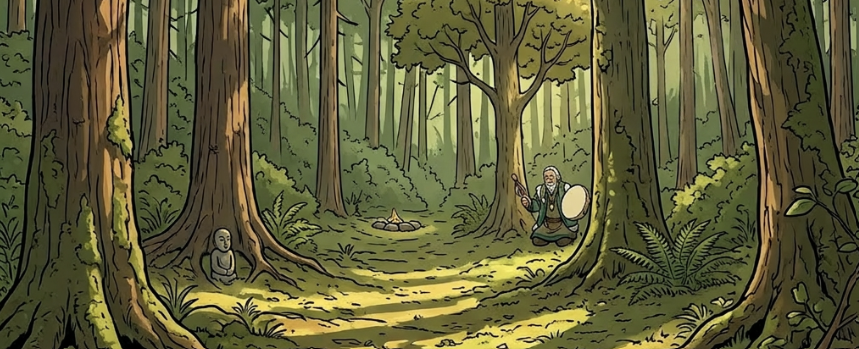
Shamanism refers to spiritual practices that centre on a shaman (from a Manchu-Tungus word “šaman” meaning “the one who knows”) who is capable of entering altered states of consciousness for the purposes of healing, communication with the unseen world, etc. Below are seven great books on shamanism, a practice that remains misunderstood. Some of the books below are quite introductory, while others delve into certain intriguing aspects associated with the ancient practice.
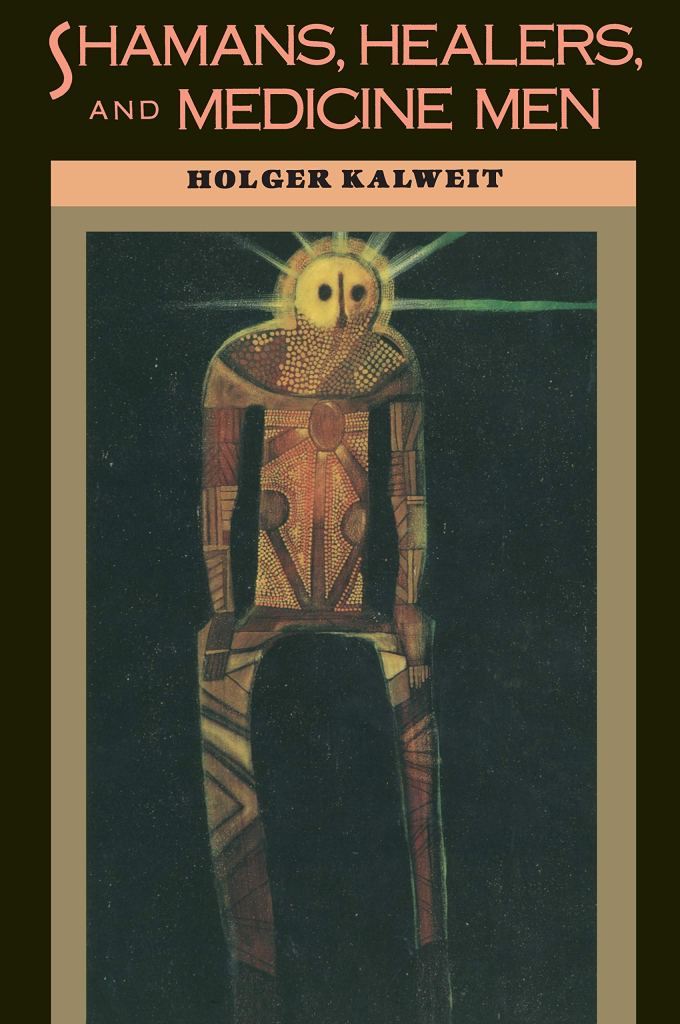
I. Shamans, Healers, and Medicine Men by Holger Kalweit
In my review, I called this book by eminent German ethnologist Holger Kalwait “comprehensive, endlessly perceptive, & inspiring.” Kalwait impressed me with the depth with which he tackles shamanism and its concepts, and with the sheer number of tribal cultures he gives as examples. The author not only provides detailed explanations of shamanic training, testing, competitions, and healing practices, but also ties them to our innate humanity, and the meaning of consciousness and myth.
Continue reading “7 Great Books on Shamanism”Orpheus and Eurydice
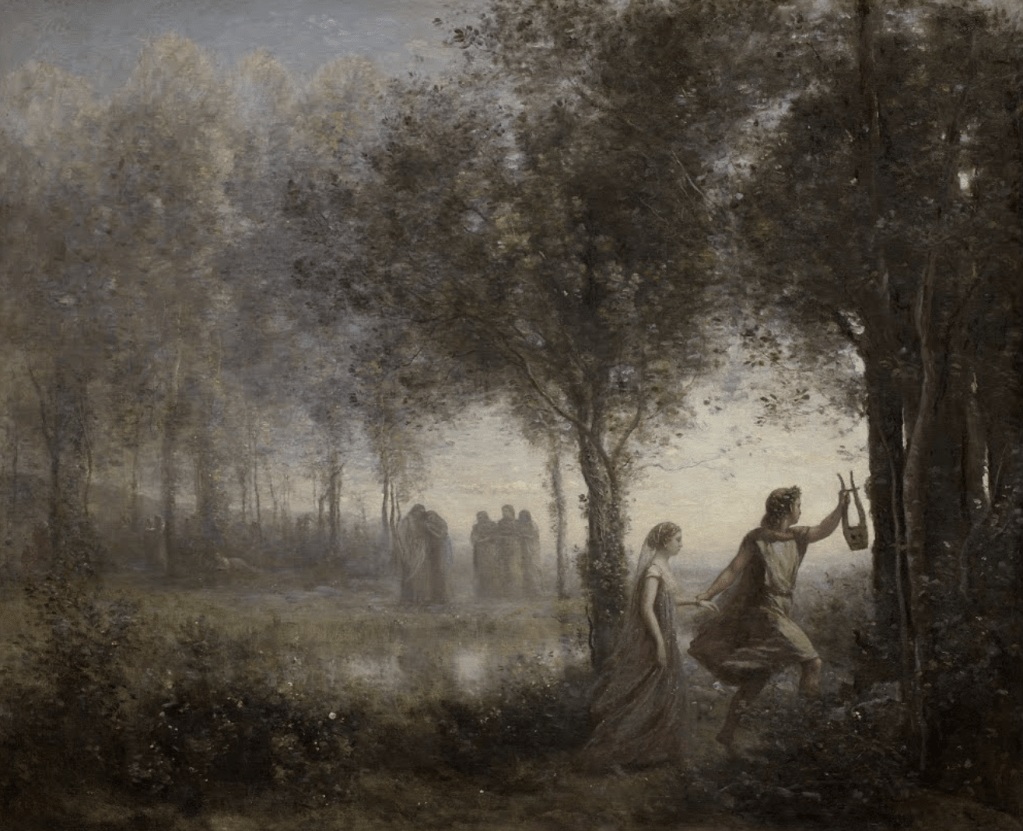
I hope all my followers and readers had a very Merry Christmas, and I would like to wish all a very Happy New Year. We are now in January, named after Roman God Janus, who is in charge of beginnings and transitions. He is often portrayed as having two faces, one looking into the past “with memory” and another – into the future “with foresight”. This duality somehow reminded of the myth of Orpheus and Eurydice that I am sharing below. This a moving tale of the power of love and music as its hero journeys to the Underworld to try to bring his beloved back to life.
The Fountain of Youth: Dream of Eternal Life

People have always been preoccupied with the question of how to live longer, retain their youthful looks for the longest possible time and reverse time that always marches forward. The idea that there could be a place in the world that would miraculously enable people to stop, reverse time and have their youth back might have been very appealing. Thus, similar to the legends surrounding the Elixir of Life and the Philosopher’s Stone, the Fountain of Youth is said to be a spring that restores youth to people who either bath in it or drink from it. Alexander the Great allegedly searched for it, and some waters’ cleansing and healing properties must have contributed much to the myth’s enduring popularity. Naturally, therefore, the idea also stirred many artists’ imagination, and below are four depictions of the Fountain of Youth that idealises the image of the mythical place that can grant the impossible.

3 Enchanted Forests from Mythology & Folklore
Enchanted forests have always had a special place in fairy-tales, folklore and mythology. In fantasy fiction, the forest is often perceived as a place of danger where anything can happen and where dark magicians or other dark forces dwell. In Slavic folklore, for example, the forest is a home to Baba Yaga, a kind of an evil witch who lives in a hut “on chicken legs”, and likes to cook and eat her victims. Similarly, in Hansel and Gretel, a brother and a sister find a gingerbread house deep in the forest, only to realise that its resident is a wicked witch. The Forbidden Forest in Harry Potter is equally a place of danger and morbid fascination, where centaurs, giant spiders and unicorns roam. Moreover, the forest can act as both a place to do evil deeds secretly and a place to hide and find the necessary refuge, as in the case of Snow White & the Seven Dwarfs, where the forest first acted as a place where the Queen’s huntsman had a task to kill Snow White, but then it became a welcoming abode for the Princess. In England, Sherwood Forest in Nottinghamshire is probably the most famous forest where the legend of Robin Hood is played out, and many cultures also have the tradition of a sacred grove (a holy place associated with secret rites and spiritual rituals). Below are three other examples of enchanted forests from mythology and folklore.

Arnold Böcklin
Review: Shamanism: Archaic Techniques of Ecstasy by Mircea Eliade

Shamanism [1951/64] – ★★★★
Mircea Eliade’s book is a fascinating, albeit dated, account of shamanism that focuses on the application of the tradition in different world regions.
Shamanism is by Romanian historian and author Mircea Eliade (1907 – 1986), and is considered to be one of the first proper attempts to approach shamanism systematically and scholarly. From costumes and drums to spirit animals and dreams, Eliade elucidates one of the most misunderstood practices/traditions in the world. The great thing about the book is that it talks about shamanism as it is applicable in different regions of the world, from Siberia and India, to South America and Oceania, attempting to draw parallels between them and talking about their general concepts, including similarities in initiation processes.
Continue reading “Review: Shamanism: Archaic Techniques of Ecstasy by Mircea Eliade”
