Nabokov’s Pale Fire: An Illusion Within an Illusion

Pale Fire [1962] – ★★★★★

Continue reading “Nabokov’s Pale Fire: An Illusion Within an Illusion”

Review: Grand Hotel by Vicki Baum

Continue reading “Review: Grand Hotel by Vicki Baum”

Review: The Kingdom of This World by Alejo Carpentier

Continue reading “Review: The Kingdom of This World by Alejo Carpentier”

Review: Laura by Vera Caspary

Book Cover of Novel Laura by Vera Caspary

Laura [1943] ★★★★★

To solve the puzzle of [Laura’s death], [one] must first resolve the mystery of Laura’s life” [Vera Caspary, Houghton Mifflin/Vintage: 1942/2012: 16].

Beautiful, aspiring socialite Laura Hunt is found murdered in her apartment in New York City. She allegedly opened the door to her murderer. A veteran detective Mark McPherson starts to investigate this tricky case, but soon finds out that few things make sense in Laura’s murder. Worse still, McPherson finds himself falling under the charms of Laura’s personality and her world as a number of possible murder suspects emerge, including Laura’s low-paid fiancé Shelby Carpenter and Laura’s friend, eccentric columnist Waldo Lydecker. It soon turns out that Shelby is a possible insurance beneficiary upon Laura’s death, and, then, someone also buys Laura’s portrait that hung on her apartment wall …could it have been the murderer? Clues are scattered throughout this clever mystery-noir, which also has a twist “to die for”.

Continue reading “Review: Laura by Vera Caspary”

Review: How Do You Live? by Genzaburo Yoshino

How Do You Live? [1937/82/2021] – ★★★★★

Often compared to Antoine de Saint-Exupéry’s The Little Prince [1943], How Do You Live? is an unforgettable book with a heart and a soul.

This story focuses on naturally inquisitive high-school student Junichi Honda (nicknamed “Copper”) and his three friends: quiet Mizutani, outspoken Kitami and kind Uragawa. With his uncle acting as a guide, Copper learns important life lessons and discovers things that would enable him to become a better human being in future. We are shown little episodes in Copper’s life as the boy starts to understand the importance of friendship, kindness, thankfulness and acceptance, and the wrongs of bullying, cowardice and discrimination.

In an often typical Japanese literary style, there is hardly any “action” narrative in Yoshino’s book. Rather, the main “action” takes place inside Copper as he finds himself at “moral crossroads” in his life, forced to make decisions, and matures, learning certain things in life which can only be understood through experience. One such life lesson concerns the importance of humility and the need to be thankful for small things in one’s life. Copper’s uncle explains to our hero how there is a general human tendency to view oneself at the very centre of the world. This view is mistaken. We are all people who think, feel and dream, and are all connected to each other in a multitude of different ways, even if we do not see this directly. Only by thinking “globally” and from the point of view of other people, can we understand this life’s true nature, as well as become better human beings, making a positive impact on this world. Everything is inter-connected in nature and society, and no matter how small a thing or a person is, or how small their actions, its/their impact can still be felt on others/environment.

Continue reading “Review: How Do You Live? by Genzaburo Yoshino”

Review: The City and the Mountains by Eça de Queiróz

The City and the Mountains [1901/2008] – ★★★★★

“…and in life, only the soul matters” [Eça de Queiroz/Costa, Dedalus, 1901/2008: 174].

Translated from the Portuguese by Margaret Jull Costa, The City and the Mountains is de Queiroz’s much later novel about the life of Portuguese nobleman Jacinto de Tormes, as told from the perspective of his best friend Zé Fernandes. The novel starts in Paris, France (the City) and ends in Tormes, Portugal (the Mountains), presenting a vivid contrast between the busy, money and technology-driven Parisian lifestyle, on the one hand, and the quiet, simple, filled with natural beauty, mode of life in the countryside, on the other. As important as this duality is also the psychology of Jacinto de Tormes, a man of great means and even bigger opportunities. However, it turns out that it is not so easy to figure out the purpose of a thing called Life and the quest for ultimate knowledge may not lie in the most obvious of places. Thus, this charming book on duality and human transformation is many things: a delicate city satire, a study of fin de siècle societal eccentricities, a heart-warming presentation of lifelong friendship, and, finally, a lyrical tribute to the beauty of Portuguese countryside.

Continue reading “Review: The City and the Mountains by Eça de Queiróz”

Review: The Luzhin Defense by Vladimir Nabokov

The Luzhin Defense [1929] – ★★★★★

Of all my Russian books, The Luzhin Defense contains and diffuses the greatest “warmth”, which may seem odd seeing how supremely abstract Chess is supposed to be” (Vladimir Nabokov).

This was an audio-book which I listened to in its original language, Russian. This is Vladimir Nabokov’s only third novel in Russian (he wrote his last series of books in English), but it impressed me hugely. In this book, the author imagines the life of once chess prodigy and now respected retired man Alexander Luzhin, and, while the first part of the book is a touching coming-of-age story of one talented but misunderstood and lonely boy, the second half of the story is a penetrating study of one eccentric, increasingly confused man who still tries to accustom himself to the society that, surprisingly to him, is far from chess rules and boards. Through this character study, which is both tender and ironic, tragic and farcical, Nabokov underscores the parasitic relationship of madness to genius, as he also unveils a deeply sympathetic situation of one man always in the midst of a battle to lead a life which seems natural to him.

Continue reading “Review: The Luzhin Defense by Vladimir Nabokov”

Review: The Jungle by Upton Sinclair/Kristina Gehrmann

The Jungle [1906/2018] ★★★★★

 “The opposite of poverty is not wealth, the opposite of poverty is enough” (Dr. Wess Stafford).

Sometimes even to live is an act of courage” (Seneca).

This graphic novel is based on a classic novel by Upton Sinclair The Jungle [1906] that tells of a Lithuanian family of immigrants who arrive to Chicago, Illinois in 1899 and find their hopes slowly turning to dust as they all take jobs exploiting them and their desperate need to survive in the foreign country. Jurgis Rudkus is a twenty-one year old man eager to work at any job in America and soon finds himself in a meat-processing factory, working in very unhygienic and even horrifying environment. His fiancée Ona starts working in packaging, while her cousin Marija begins painting cans, and even Jurgis’s elderly father tries to land some job in order not to be dependent on others, among other family members. This family comprising of three generations is soon hit very hard by the “hidden costs” of their American Dream, which becomes very hard to bear, especially when most factories close in winter and the mercilessness of the family’s employers and landlords leads to traumatic experiences. Though I have not yet read the original novel by Sinclair, I found this graphic adaptation deeply moving, offering an uncomfortable, yet valuable insight into Sinclair’s vision and the conditions of blue-collar workers in early twentieth-century Chicago.

Continue reading “Review: The Jungle by Upton Sinclair/Kristina Gehrmann”

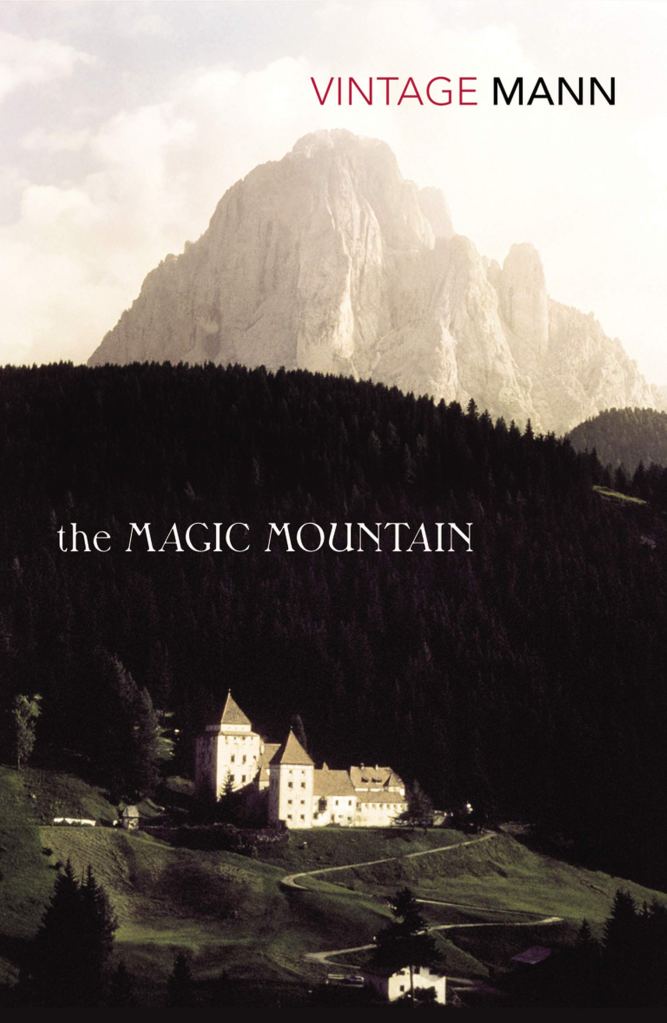
Review: The Magic Mountain by Thomas Mann

The Magic Mountain [1924/27] – ★★★★★

But mind, the mountain’s magic-mad tonight,
And if you choose a will-o’-the-wisp to light
Your path, take care, ’twill lead you all astray

(Goethe, Faust (tran. H. T. Lowe-Porter)).

Hans Castorp is a young man on a threshold of a very successful career of an engineer at a prestigious shipping firm in Germany when he enters an international sanatorium Berghof in the picturesque Swiss Alps for three weeks and only to support Joachim Ziemssen, his sick cousin, and keep him company. Little does Castorp suspect that the sanatorium, with its orderly routine and confused sense of time, will start working insidiously on his mind the moment he steps onto its premises and he will end up living there for the next 7 years. During that time, Castorp will make friends with the most extraordinary individuals, engage almost daily in deep philosophical discussions on virtually every topic under the sun, fall hopelessly in love, and in that whole process entangle his body, mind and spirit so deeply in this “enchanted” place with its own particular passage of Time that any disentanglement will become out of the question. In this story, matters of science and spirituality converge, forces of time sweep people off their feet and then the re-consideration of what is Life and what is Death, and what is to be healthy and what is to be sick, may lead to some divine insights and instances of ultimate self-discovery. Translated from the German, The Magic Mountain is a masterpiece of the world literature, a splendid study of a man undergoing inner transformations in an environment of perpetual unchangeability.
Continue reading “Review: The Magic Mountain by Thomas Mann”

Review: Shamans, Healers & Medicine Men by Holger Kalweit

Shamans, Healers, and Medicine Men [1987/92]★★★★★

A comprehensive, endlessly perceptive, & inspiring book on shamanism.

“Shamanism…is not a somehow obscure or incomprehensible or mysterious magical path, but a simple heightening of the emotional experience of the world; “the goal of the shamanic path of initiation is to broaden and deepen the normal emotionality that we all know” [Kalweit, Shambhala Publications, 1987/92: 219].

This book, translated from the German, is by Holger Kalweit, a German ethnologist and psychologist who studied shamans and shamanism in different corners of the world, including Hawaii, the American Southwest, Mexico and Tibet. With concrete examples drawn from the Ainu, Siberian, Yahgan and other shamanic traditions, Kalweit delves into the very heart of shamanism and explains detailly the nature of being a shaman, “a possessor of profound knowledge that cannot be grasped in words”. From shamanic training, testing and rituals inducing trance to shamanic healing powers, and duels and competitions, Kalweit touches on many topics and hardly stops there, elucidating further on such concepts as consciousness, reality, dreaming and on a variety of parapsychological phenomena, including “magic”, visions and near-death experience.

Continue reading “Review: Shamans, Healers & Medicine Men by Holger Kalweit”

Review: The Japanese: A History in Twenty Lives by Christopher Harding

In this new book, Dr Harding traces the history of Japan through the lives of twenty remarkable people that helped to shape the country, making a powerful impact on either its politics, business, religion, science, culture or just society at large, and – more often than not – against all odds and in very challenging times. From heroic personalities from mythology and ancient politics to people who changed business, music or literary scene, the author introduces each extraordinary individual in turn, focusing on their childhood, on Japan of their time and on their contribution to the country, with the result being that Japan finally became what it is now – a culturally rich country full of so many paradoxes, intricacies and hidden treasures that a lifetime will not be sufficient to know and understand them all. In this book, we get to know royalties, warlords, samurai, Buddhist monks, politicians, businessmen, scientists, poets, singers, revolutionists and Manga creators. Dr Harding’s book is a history of Japan in a bright new form that is a pure pleasure to read.

Continue reading “Review: The Japanese: A History in Twenty Lives by Christopher Harding”

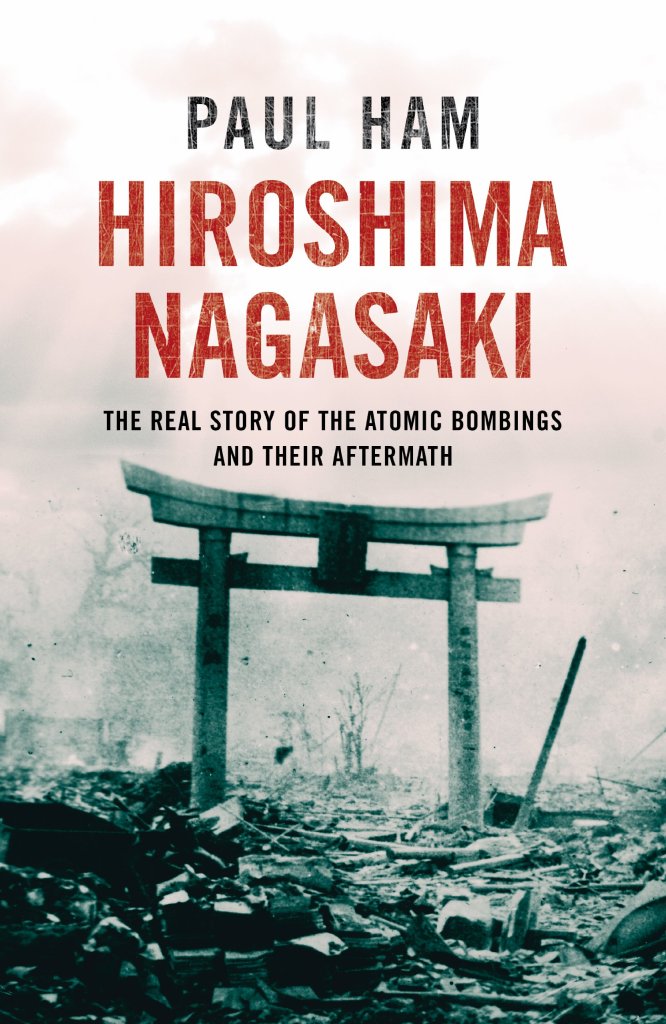
Hiroshima & Nagasaki – The Truth

Hiroshima Nagasaki [2011] – ★★★★★

An eye for an eye leaves the whole world blind.” M. K. Gandhi (attributed)

The Japanese collectively were to blame…Truman drew no distinction between civilian and soldier; mother and murderer; child and monster”; “America [sic] annihilated 100.000 persons, most of them civilians, at Hiroshima…and then…,in spite of the “universal horror”, repeated the performance at Nagasaki” [Paul Ham quoting, 2011: 420, 422].

Paul Ham is an Australian author and correspondent, who in his non-fiction Hiroshima Nagasaki presents a true account of what happened to the two Japanese cities in 1945, dispelling myths that still persist about the Hiroshima and Nagasaki bombings, including that the bombs were somehow “necessary”, or that their usage led to Japan’s surrender. Starting in winter 1945, when “Roosevelt and Churchill arrived bound by a private agreement…not to share with the Soviet Union…the development of an extraordinary new weapon” [Ham, 2011: 15], continuing to the secret development of the world’s first atomic bomb, and ending with the aftermath of the tragedy, the author goes into incredible depth about what happened in the final year of the war, demonstrating the situation through statistics, broader situation invoking key actors and through personal accounts. The result is a well-researched book about one of the most unbelievable and traumatic events in the world history. Since the scope of the book and the topic is so broad, I have decided to structure my review in the following manner: (i) Events leading up to the atomic bombings; (ii) Four myths and four corresponding realities; (iii) Immediate aftermath; and (iv) Long-term consequences.

Continue reading “Hiroshima & Nagasaki – The Truth”

Review: Beethoven: A Life in Nine Pieces by Laura Tunbridge

Beethoven: A Life in Nine Pieces [2020] – ★★★★★

Through just nine musical pieces, Laura Tunbridge places Beethoven in one particular time and place in her well-researched book, presenting an intimate and detailed image of the great composer.

Did you know that one music piece (a Septet) that made Beethoven’s name in the nineteenth century is hardly ever played today, or that later pieces by Beethoven that are now known to everyone were considered in the composer’s time too complex and brazen to merit any attention? Beethoven’s elusive “Immortal Beloved” is still without identity, and his attempts at self-promotion were not always successful. Rather than Beethoven being an isolated genius making music masterpieces on his own, Laura Tunbridge talks in her book of Beethoven as a gifted person who was very much depended on others (such as on his friends and patrons), on the particular time, norms and politics, as well as on the musical tradition in which he lived. The author demonstrates how Vienna and Beethoven’s own personal life affected his music, and how changing perceptions, as well as tastes of nobility, ultimately shaped and dictated the man and his music that is now admired by millions.

Continue reading “Review: Beethoven: A Life in Nine Pieces by Laura Tunbridge”

Review: Letter from an Unknown Woman by Stefan Zweig

The opposite of love is not hatred, it’s indifference. This novella by an Austrian author, which was adapted into a major film of 1948 directed by Max Ophüls and starring Joan Fontaine and Louis Jourdan, tells the story of a man who receives a strange letter one morning penned by one unknown-to-him woman. What this woman tells him is something much more than a mere confession. It is a soul-searching, gut-wrenching effort at personal liberation, a last cry to be finally understood in life and one fearful culmination of a life lived with one endless hope, a fruitless succession of attempts at happiness and one final tragic resignation. R. is a handsome man and a celebrated novelist who always had a lot of affection from women. The unknown woman is a dreamy and impressionable person from a much more modest family. What ties them together? From his point of view: three, very brief life episodes which can be counted by mere hours and which he forgot the moment they happened. From her point of view: absolutely everything, including three most important moments in her life, her whole world-view and the very point of her existence. Stefan Zweig wrote a powerful, sincere and moving account of one unrequited love and close examination of a person on the very fringes of another person’s life always looking in, hoping in vain to become a full-time participant.

Continue reading “Review: Letter from an Unknown Woman by Stefan Zweig”

Review: The Woodlanders by Thomas Hardy

In this novel, Grace, an impressionable, recently-educated girl, “who has been around cultivated folks” arrives home to a small village of Little Hintock after a long absence and to the delight of her father Mr Melbury, a timber merchant. She soon rekindles her friendship with her childhood sweet-heart Giles Winterborne, an apple and cider farmer. However, as soon as she does so, she also notices a much more promising suitor who starts to intrigue her more than anyone else in this world: an educated, ambitious and “irresistible” doctor Edred Fitzpiers.

Thomas Hardy’s narrative is like an exquisite painting created in the style of Old Masters, where money, ambition, sophistication, self-interest and the excess of knowledge clash violently with rural simplicity, kindness, loyalty and naïve mentality. The beauty/mastery of the prose is matched by the gripping plot full of vivid characters and psychological nuances. Emphasising the unbridgeable gap between the social classes and drawing attention to the iron confines of a marriage, while evoking the atmosphere of the old rural England, Hardy created with The Woodlanders the work that is on a par with some of his greatest literary creations – Tess of the d’Urbervilles [1891] and Far from the Madding Crowd [1874].

Continue reading “Review: The Woodlanders by Thomas Hardy”

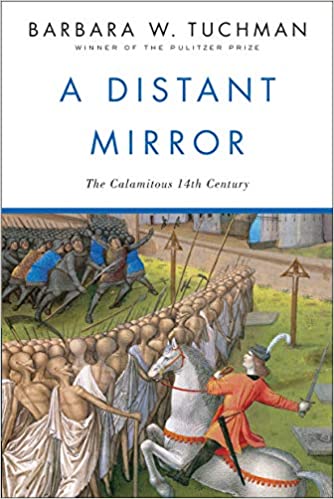
Review: A Distant Mirror: The Calamitous 14th Century by Barbara W. Tuchman

A Distant Mirror: The Calamitous 14th Century [1978] ★★★★★

Continue reading “Review: A Distant Mirror: The Calamitous 14th Century by Barbara W. Tuchman”

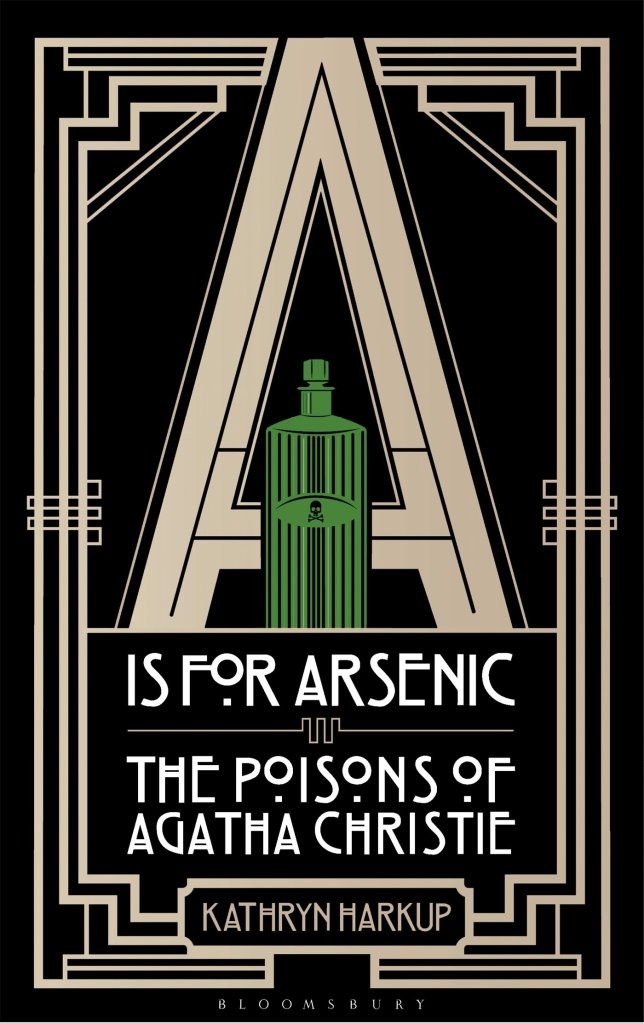
Review: A is For Arsenic: The Poisons of Agatha Christie by Kathryn Harkup

This image has an empty alt attribute; its file name is harkup-book-cover.jpg

15 September 2020 marks 130 years since the birth of Agatha Christie in 1890, and this review is meant to pay tribute to the ultimate Queen of Crime. The author of A is For Arsenic is Kathryn Harkup, a chemist by profession, who decided to plunge into all the poisons that Christie used in her books to come up with her perfect crimes. In A is For Arsenic, we first read about the scientific properties of each of the poisons used by Christie in her fiction, from arsenic and belladonna to opium and phosphorus (including their histories and the ways they kill), before the author illuminates the real cases involving these poisons, and finally talks about the fictitious cases in Agatha Christie’s books. It is clear that reading about different poisons has never been as morbidly fun or interesting as with this book since Harkup is an intelligent and succinct writer with a great sense of humour. A is For Arsenic is sure to fascinate and delight this Halloween season.

Continue reading “Review: A is For Arsenic: The Poisons of Agatha Christie by Kathryn Harkup”

Review: Le Père Goriot by Honoré de Balzac

This image has an empty alt attribute; its file name is old-goriot-balzac.jpg

Le Père Goriot [1835/1991] – ★★★★★

This is my fourth Balzac (after Lost Illusions, The Black Sheep & Cousin Bette) and it is probably the best of the other novels I have read so far. Le Père Goriot (Father Goriot or Old Goriot) centres on one young man from France’s provinces, Eugène de Rastignac, who has just settled in Paris and set his sights on becoming a lawyer. He desires to climb the social ladder fast and his impatience for money, status and power soon makes him cross paths with one impoverished father of two daughters (old Goriot) who selflessly devotes his remaining time to them (or, more accurately, to the memory of them). From richly-decorated Parisian drawing-rooms to the bedlam that reigns in a poverty-stricken lodging house, the result of this crossing of the paths is a thrilling head-to-head collision of reality and illusion, youth and old age, ruthless selfishness and selfless devotion, all happening at the very heart of turbulent and exploitative Paris of 1819.

Continue reading “Review: Le Père Goriot by Honoré de Balzac”

Review: The Betrothed by Alessandro Manzoni

Continue reading “Review: The Betrothed by Alessandro Manzoni”

Review: The Good Neighbour: The Life & Work of Fred Rogers by Maxwell King

the good neighbour book cover

The Good Neighbour [2018] – ★★★★★

This comprehensive biography talks about the life of American icon Fred Rogers (1928 – 2003), the man behind the famous American television show for children Mister Rogers’ Neighborhood (1962 – 2001). Fred Rogers was more than just a presenter, his show was more than just one’s usual children’s programme, and, hence, this biography is so much more than a book about one celebrity. Always championing children’s rights and their needs, Rogers has always been known for valuing each viewer “just the way they are” and a child was truly someone who mattered on his television. Unassuming, humble and even shy, but with captivating presence, Rogers hence revolutionised children’s day-time television in the US, believing that television can be uplifting, fun and educational for everyone [2018: 172]. From Rogers’ childhood to his last TV appearance, the biography touches on many aspects of his life, including Rogers’ unparalleled-on-television authenticity, his commitment to child development, and his love for music and swimming. The Good Neighbour is a book to read because Fred Rogers was one of those people whose efforts and commitments should never be forgotten. Fred Rogers’ life is a life worth knowing. 

Continue reading “Review: The Good Neighbour: The Life & Work of Fred Rogers by Maxwell King”

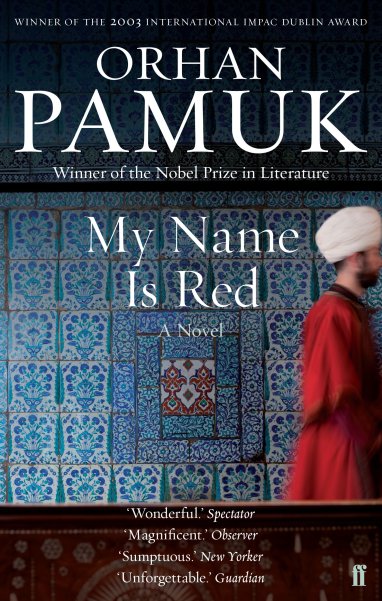
Review: My Name is Red by Orhan Pamuk

my name is red My Name is Red [1998/2001] – ★★★★★

A rich, tightly-woven literary tapestry whose secrets lie in elaborate details, red herrings and in the depth of the soul of its maker, celebrating the beauty, imagination and intelligence of ancient artworks and methods of painting. 

Why does man not see things? He is himself standing in the way: he conceals things.” “What are man’s truths ultimately? Merely his irrefutable errors“. (Friedrich Nietzsche) 

In My Name is Red by Nobel Laureate Orhan Pamuk, the murder of one miniaturist – Elegant Effendi – was committed within the circle of miniaturists working for the Sultan in medieval Istanbul. At the same time, thirty-six year old Black returns to his hometown of Istanbul after the absence of twelve years to seek once again the hand of his beloved Shekure, an opportunity that was denied to him twelve years previously. Unwittingly, Black becomes entangled in the intrigues of miniaturists working under Enishte Effendi, Black’s uncle and Shekure’s father. Masterfully, Pamuk takes us deep within the art circle of medieval craftsmen who labour to produce a mysterious new book, a circle replete with professional jealousy, narcissism, hidden love and, above all, differences as to the proper way of painting and representing pictures under one strict religious canon. In this historical novel, Persian art-forms clash violently with rising Venetian art influences as Black starts to realise that, in order to find the murderer of Elegant Effendi, it is necessary to go deep into the worldviews and art opinions of each of the three suspected miniaturists – “Stork”, “Olive” and “Butterfly”, testing their loyalties and beliefs.

Continue reading “Review: My Name is Red by Orhan Pamuk”

Review: The Way of Zen by Alan Watts

The Way of Zen [1957] – ★★★★★ the way of zen book cover

The book is a short and remarkably lucid account of Zen, which is also both – informative and a pleasure to read.

“…the true practice of Zen is no practice, that is, the seeming paradox of being a Buddha without intending to be a Buddha” [1957: 95, 96]. “The basic position of Zen is that it has nothing to say, nothing to teach. The truth of Buddhism is so self-evident, so obvious that it is, if anything, concealed by explaining it” [1957: 163].

This non-fiction book by a British philosopher and writer illuminates one of the least understood concepts in the world – Zen. Patiently, Watts traces the origins of Zen Buddhism– its Mahayana Buddhism and Taoism foundations, and then explains very clearly some of its basic principles and practices (such as the nature of direct experience, “no-mind”, the present “Now” and sitting meditation). The last chapter in this book is devoted to the application of Zen to a number of arts: from haiku (a form of Japanese poetry) to archery, with the author explaining how Zen started to permeate virtually every aspect of life. Continue reading “Review: The Way of Zen by Alan Watts”

Review: The Silent Cry by Kenzaburō Ōe

the silent cry The Silent Cry [1967/88] – ★★★★★

Full of uneasiness and foreboding, The Silent Cry is a subtly powerful work that masterfully evokes the unsaid, the forbidden and the terrifying, getting us close to the real Truth and to the final Hope.

In The Silent Cry, we are presented with the early 1960s and Mitsu, a disillusioned husband to an alcoholic wife and a father to a child who is now in an institution. Mitsu sees his life changing when his estranged brother Takashi arrives from America and together they travel to their native village in Shikoku, one of the main islands in Japan. There, they find that there is a shift in local power and one rich Korean magnate is proposing to buy what remains of Mitsu and Takashi’s land inheritance – their storehouse. Reluctantly, Mitsu finds himself drawn into a complicated political situation of the village, while also realising that Takashi starts to wield the unprecedented power over the village inhabitants. The Silent Cry is a slow-paced descent into one kind of a nightmare where the violent history of the village is about to be re-enacted and other grim discoveries made as the relationship between the two brothers takes an unexpected turn. Continue reading “Review: The Silent Cry by Kenzaburō Ōe”

Review: Amulet by Roberto Bolaño

Amulet Book Cover

Amulet [1999/2006] – ★★★★★

“…those who can see into the past never pay. But I could also see into the future and vision of that kind comes at a high price: life, sometimes, or sanity” [Roberto Bolaño, 1999/2006: 64]. 

Last year I had a goal to read a certain number of books by Asian authors (see my YARC), and so, this year, I set myself a similar goal, but, this time, I will travel to another part of the world and try to read as many books as possible by Latin American authors. I will begin my Latin America Reading Challenge with a short book by Chilean author Roberto Bolaño (1952 – 2003) titled Amulet.

In this vivid “stream of consciousness” account, our narrator is Auxilio Lacouture, a woman from Uruguay and the “mother of Mexican poetry”. She works part-time at one university in Mexico City and at one point realises that her university (National Autonomous University of Mexico) is being surrounded by an army (event that happened two months before the infamous Tlatelolco massacre of 1968). Auxilio finds herself alone and hiding in the lavatory of the university as the army rounds up the staff and students. At that point she starts to recall her own past, talking to us about her dedication to nurturing the artistic talent of others. As time passes and her hunger and exhaustion increase, her account becomes increasingly hectic and imaginative. Amulet is an unusual novella with one unusual narrator at its heart, which is also strangely compelling as it tries to tell us the truth of the situation in the country and the state of Latin America’s literary talent and tradition through an unconventional and slightly dreamlike voice.

Continue reading “Review: Amulet by Roberto Bolaño”

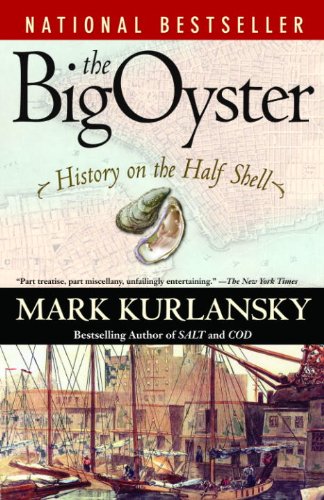
Review: The Big Oyster by Mark Kurlansky

the big oysterThe Big Oyster: A Molluscular History of New York [2006] – ★★★★★

Kurlansky’s book is an engaging, quirky historical account of one of the most famous cities in the world told through the story of once one of the most misunderstood salt-water mollusc.

The history of New York oysters is a history of New York itself – its wealth, its strength, its excitement, its greed, its thoughtlessness, its destructiveness, its blindness and – as any New Yorker will tell you – its filth. This is the history of the trashing of New York, the killing of its great estuary” [2006: xvi], so begins this marvellous non-fiction book by Mark Kurlansky, who is also the author of such popular books as Cod [1997] and Salt [2002]. The Big Oyster tells the story of the city of New York through the prism of once one of its most famous and prized commodities – its unparalleled oysters. Currently, New York is known for its skyscrapers, its shopping and its business (among other things), but for a long time in history when you thought of New York, you first thought of its delicious and plentiful oysters [2006: xvii]. There was, indeed, a time when New York was known for its “sweet air”, enviable water and tidal systems, and its marine produce, especially its oysters. Through engaging historical accounts, literary anecdotes, culinary recipes and some of the most famous New Yorkers, Kurlansky tells a story of New York like you have never read or known it before and one we should never forget, especially in today’s ever-rising environmental and climate change concerns.  Continue reading “Review: The Big Oyster by Mark Kurlansky”

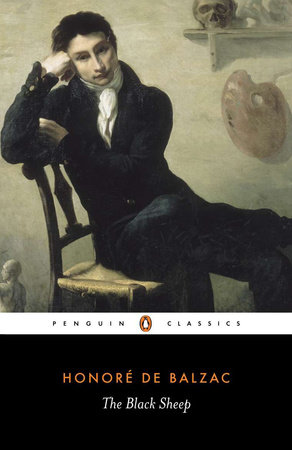
Review: The Black Sheep by Honoré de Balzac

The Black Sheep Balzac

The Black Sheep (La Rabouilleuse) [1842/1970] – ★★★★★

The Black Sheep is an outstanding novel by Balzac (Lost Illusions [1837]) that tells of a remarkable battle for inheritance. At the centre of this story are two brothers, Joseph and Philippe, who could not be more different from one another: the modest and studious Joseph is the complete opposite of the bold and physically-imposing Philippe. They become the protagonists in the fight against their uncle’s supposed will to leave his fortune to mere strangers that coveted his attention for years. As in other novels, Balzac masterfully concocts a tale that is based on contrasts – the provincial life in Issoudun vs. the town life in Paris, the consequences of immense wealth vs. the results of poverty, the life of the upper classes vs. the destitution of the working class, while his moral spins around the fleeting nature of success, the extent of the individual ruthlessness and cunningness, and the consequences of a mother’s blind love for her child. More than any other Balzac novel, The Black Sheep is all about appearances often deceiving us and the fact that “a leopard never changes its spots”

Continue reading “Review: The Black Sheep by Honoré de Balzac”

Review: The Memory Police by Yōko Ogawa

The Memory Police Book Cover

They say you die twice. One time when you stop breathing and a second time…when somebody says your name for the last time” (Banksy, re-quoting Ernest Hemingway). Yōko Ogawa (The Housekeeper and the Professor [2003/08]) wrote The Memory Police in 1994, and it was translated from the Japanese by Stephen Snyder in 2019. In this beautiful dystopian book, our young female character works as a writer on one curious island – there, things sometimes simply disappear from time to time, and with those “disappearances” come another interesting element – people soon forget these things completely, how they looked and what they felt like. For them, these things simply cease to exist. The enforcement of the memory erosion is the task for the special Memory Police, that ruthlessly detects and investigates any traces of disappearing objects, as well as hunts people that are still able to remember them. When one man, R, a book editor, is in danger of being caught for remembering disappeared things, our lead character vows to do everything in her power to save him from a terrible fate.

Continue reading “Review: The Memory Police by Yōko Ogawa”

Review: The Face of Another by Kōbō Abe

The Face of Another Book Cover
Continue reading “Review: The Face of Another by Kōbō Abe”

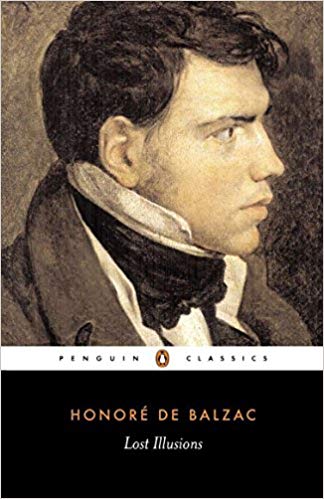
Review: Lost Illusions by Honoré de Balzac

Honore de Balzac Lost Illusions

Lost Illusions [1837 – 1843/1971] ★★★★★

“...he was living in one of those golden dreams in which young people, cantering along on their ifs, leap over all barriers” [Balzac/Hunt, 1837/1971: 113].

It’s hard…to keep one’s illusions about anything in Paris. Everything is taxed, everything is sold, everything is manufactured, even success” [Balzac/Hunt, 1837/1971: 387].

This week I am celebrating my first blogaversary – my blog is one year old (thank you to all my followers for following!), and this will also be my 70th full book review (see the others here). Therefore, I thought I would review a classic for a change as a way to “celebrate” and also to draw attention to the best literature has to offer.

Translated from the French by Herbert J. Hunt, Lost Illusions by Honoré de Balzac is part of his La Comedie Humaine series, and centres around Lucien Chardon, a handsome and optimistic, but very naïve, young man who desires to be successful in high society through his talent – he is a writer. He leaves his friend David Sechard, a typographist, in Angouleme and embarks on a dizzying adventure full of dramatic ups and downs in Paris, where he has to make difficult for him decisions about which path to success to follow. This is not one’s ordinary tale of a man’s fall from grace or the corruption of innocence. Balzac masterfully portrayed a story with a number of vivid characters, and his observations on the society, its hierarchy and its unspoken rules are second to none – making this work a true classic, both entertaining and insightfully profound. Through his tale, we get to understand the nuts and bolts of a printing business and journalism in the countryside and in Paris in the 1820s, as well as the consequences of unrelenting ambition and talent when they are not underpinned by solid connections and easily swayed by vanity and egocentrism. 

Continue reading “Review: Lost Illusions by Honoré de Balzac”

Review: Half a Lifelong Romance by Eileen Chang

Half a Lifelong Romance1.docx

Half a Lifelong Romance [1950/1966/2014] ★★★★★

Maybe a love like that came to a person only once in a lifetime? Once was enough, maybe” [Chang/Kingsbury, 1950/2014: 354].

Of all forms of caution, caution in love is perhaps the most fatal to true happiness” (Bertrand Russell).

Half a Lifelong Romance, translated from the Chinese by Karen S. Kingsbury, is a modern classic where a timeless story, filled with passion, longing and sorrow, meets fluid and engaging writing. In this story, set in the 1930s, Manzhen, a young girl, forms friendship with her co-worker Shuhui and his friend Shijun; soon after, between Manzhen and Shijun sparks a feeling so innocent and tender that both are left speechless, floating on an island of complete happiness. However, Manzhen’s disastrous family circumstances and Shijun’s own familial duties do not let the lovers get any closer, and, in time, their circumstances only worsen as they try to fight their inner sense of duty, responsibility, tradition and lack of money. Simple misunderstandings, false pride, as well as unexpected betrayals also keep their happiness at bay.

Half a Lifelong Romance is a moving, quietly devastating and exquisite novel that may surprise you with its power (including its dark twist) in the second half. Chang wrote compellingly and beautifully, and her story of Chinese family traditions and one love torn apart by circumstances is one unputdownable read.

Continue reading “Review: Half a Lifelong Romance by Eileen Chang”

Review: The Nickel Boys by Colson Whitehead

The Nickel Boys Book Cover The Nickel Boys [2019] – ★★★★★ 

Our lives begin to end the day we become silent about things that matter” (Martin Luther King, Jr.).

Fiction is the lie through which we tell the truth” (Albert Camus).

Colson Whitehead’s latest book is the story of Elwood Curtis, a clever and hard-working boy, who is sent to the Nickel Academy for boys after one “misunderstood” event. Drawing inspiration from the real, shocking story of the Dozier School for Boys in Florida (subsequently known for its mistreatment and abuse of boys), Whitehead paints a gruesome picture of one school that employs shocking corrective procedures that can break any human spirit and hope for the future. Through Elwood, we enter a dictatorial organisation whose rules must be obeyed at all costs because the price for not doing so is hard to put into words. Idealistic Elwood, who worships the sermons of Dr Luther King, soon has to confront one way of life filled with arbitrary violence, indifference, heartlessness and hypocrisy. In this environment, Elwood must learn fast how the place is run in order to survive, and the book is also a story of coming to terms with one’s horrific past.

Neither Elwood nor his story may seem original, but the account is heart-felt, not least because this is a story about the fight for freedom and against institutional injustice and racism. There have been many Elwoods throughout history, people who were either crippled for being who they are; whose spirits were broken before they could lead a life of peace; or those who simply did not make it alive, having gone through a system that should not have existed in the first place. Preserving the memory of these people is the point of Whitehead’s latest book. Continue reading “Review: The Nickel Boys by Colson Whitehead”

Review: The Crime of Father Amaro by Eça de Queirós

The Crime of Father Amaro Book Cover

The Crime of Father Amaro [1875/1962] – ★★★★★

Portuguese novelist José Maria Eça de Queirós has been compared to Russian Leo Tolstoy and French Honoré Balzac, and for a good reason – his debut (without a collaboration) book The Crime of Father Amaro (translated by Nan Flanagan in 1962) is a multi-faceted novel of great ambition and skill. In it, he tells of events taking place in a small cathedral town of Leiria, north of Lisbon. Father Amaro, a handsome young priest arrives to Leiria to take the position of a parish priest and soon falls under the spell of the most beautiful girl in town – good-natured Amelia, who lives with her strict and apparently religious mother Joanneira in the heart of the city. Amaro is an honourable guest and a lodger in the comfortable house of Amelia and Joanneira, and he soon finds that his duties of a priest clash with his physical desires, and, in particular, with his burning romantic passion for Amelia. Amaro is also caught up in the town’s complex politics, in a clash between the clergy of the town and the governmental powers. The forces within Amaro, as well as from outside of his influence, conspire to lead the young parish priest to making some unprecedented choices.

Continue reading “Review: The Crime of Father Amaro by Eça de Queirós”

Review: The Woman in the Dunes by Kōbō Abe

Kobo Abe The Woman in the Dunes
Continue reading “Review: The Woman in the Dunes by Kōbō Abe”

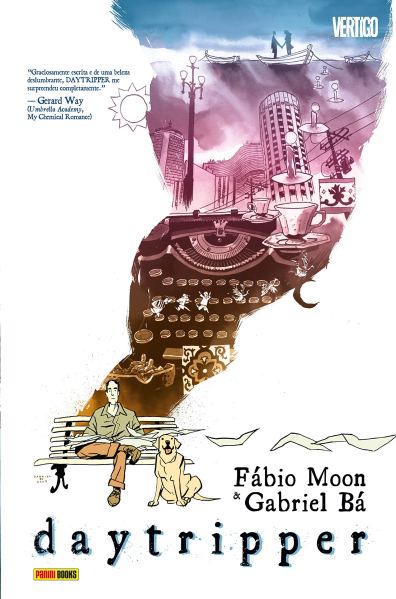
Review: Daytripper by Fábio Moon & Gabriel Bá

Daytripper Book Cover

Daytripper [2010/11] – ★★★★★

An exhilarating journey to uncover the mysteries of life and death. 

Fábio Moon and Gabriel Bá are twin brothers from Brazil who are the creators of Daytripper, an ambitious comic book about Bras de Oliva Domingos, an obituaries’ writer living in São Paulo. We follow and experience his life in a non-chronological order and witness everything from Bras’s “unusual” birth, his first kiss, his major break-up, his career change, to the birth of his child and the death of his parent. Bras learns important life-lessons along the way, and it is his relationships with other people that come to define him and his most memorable life moments. Daytripper may be dealing with very uncomfortable issues of life and death, but this beautiful comic book is also eye-opening, inspirational and moving. Gabriel Bá and Fábio Moon invite you to step into their colourful, slightly transcendental world of one’s memorable life moments, into the world of “what ifs”, ups and downs, hopes and despairs. Their message is clear: we have one shot at this thing called life and should prioritise the most important things in it, including the people we cherish and the relationships we hold dear.

Continue reading “Review: Daytripper by Fábio Moon & Gabriel Bá”

Review: Solaris by Stanisław Lem

Solaris Book Cover

Solaris [1961/70] – ★★★★★

Man has gone out to explore other worlds and other civilisations without having explored his own labyrinth of dark passages and secret chambers, and without finding what lies behind doorways that he himself has sealed” [Stanisław Lem/Kilmartin/Cox, 1961/70: 164].

Solaris is considered to be the most influential and significant work of a Polish writer Stanisław Lem. Also made into a movie [1972] by Andrei Tarkovsky, the book tells of Kelvin, a psychologist, who arrives to a station orbiting the mysterious planet called Solaris. On board of the station are supposed to be three other researchers, and Kelvin joins them to know about their progress in trying to understand the planet, and, in particular, the ocean on Solaris that may or may not have consciousness of its own. Then, Kelvin starts to experience something coming from the mysterious planet no one has warned him about. The so-called “visitors” frequent the station and Kelvin begins to think he is losing his grip on reality when his dead wife makes an appearance, opening his emotional wounds. But, what is this strange force that plays tricks on the inhabitants of the station? What is the meaning of this psychic phenomenon coming from Solaris? Can researchers really understand its workings?

Continue reading “Review: Solaris by Stanisław Lem”

Review: Miracle in the Andes by Nando Parrado

Miracle in the Andes Miracle in the Andes [2006] – ★★★★

“…the mountains showed me there were many forms of bravery, and, for me, even the quietest ones among us showed great courage simply by living from day to day” [Nando Parrado, 2006: 79].

The author of this book – Nando Parrado – is one of the sixteen survivors of the crash of the Uruguayan Air Force Flight 571 deep in the Andes in 1972. After the crash, twenty-eight survivors battled inhumane conditions high in the mountains to survive and only sixteen made it alive after seventy-two days. Even though the previous book Alive [1974] detailed the story, Parrado’s book, which came out in 2006, is a completely different account of this experience which enables us to understand what it is really like to face death every minute of one’s life period, and then  – after surviving the unsurvivable –  do it all again twice. Paying a special tribute to the determination and courage of others, Parrado’s moving and personal book is a “must-read” for everyone – so life-changing its observations and conclusions can be for a reader. Continue reading “Review: Miracle in the Andes by Nando Parrado”

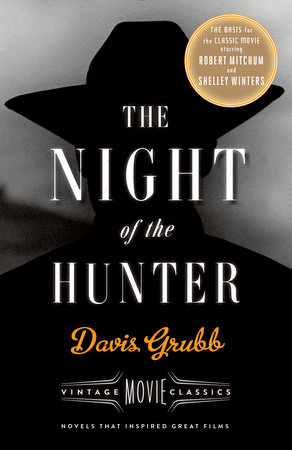
Review: The Night of the Hunter by Davis Grubb

The Night of the Hunter Book Cover

The Night of the Hunter [1953] – ★★★★★

The Night of the Hunter is best known as a film of 1955 by Charles Laughton, but it was first a great book by Davis Grubb, who based his story on a true case of serial killer Harry Powers, a deranged psychopath who preyed on and killed lonely widows in the late 1920s. In the book by Davis Grubb, Willa Harper is a recently widowed mother of two whose husband, Ben Harper, has recently been convicted and executed for killing two men in armed robbery. After the execution, Willa and her two children, John and Pearl, are the centre of sympathy in their community until their “salvation” arrives in the form of Harry Powell or “Preacher”. Preacher knows that Ben Harper disclosed to his children before his execution the location of ten thousand dollars he gained through robbery, and Preacher will use any means – kindness or more disturbing pressure to discover the location of the money. It is safe to say now that The Night of the Hunter was unjustly overshadowed by its cinematic counterpart. American writer Julia Keller called Davis Grubb’s book a “lost masterpiece”, and there is truth in that. The Night of the Hunter is a chilling, unforgettable tale of crime and evil set in the background of a Depression-hit community on a riverbank in West Virginia. The novel is suspenseful and thrilling, with great characterisations and an eerie atmosphere. 

Continue reading “Review: The Night of the Hunter by Davis Grubb”

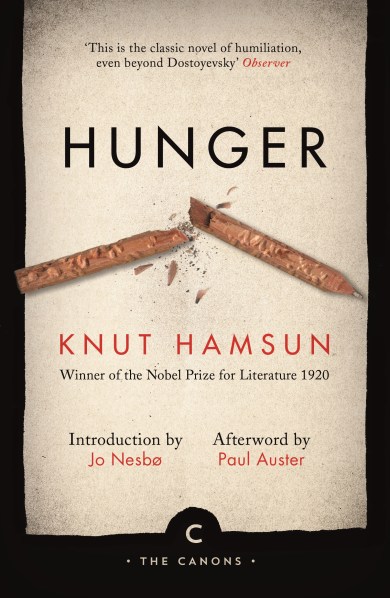
Review: Hunger by Knut Hamsun

Hunger Cover

Hunger [1890/1996] – ★★★★★

Knut Hamsun is a Nobel Prize Winner for Literature whose existentialist literary work Hunger predates Franz Kafka’s The Trial [1925] and Albert Camus’ The Stranger [1942]. Translated from the Norwegian by Sverre Lyngstad, Hunger explores the daily life of one lonely and desperate man on the brink of starvation in a large city. Our unnamed narrator is a freelance writer who has one “ambition” in his life: not to die from hunger. He is hard-working and not demanding, with food and shelter being his main wishes. Hamsun explores mental and physical traumas of the character in a masterful work that inspired some of the greatest philosophical fiction authors of the twentieth century, emphasising in his work that the fight to survive in a big city may take a shape of complete absurdity.

Continue reading “Review: Hunger by Knut Hamsun”

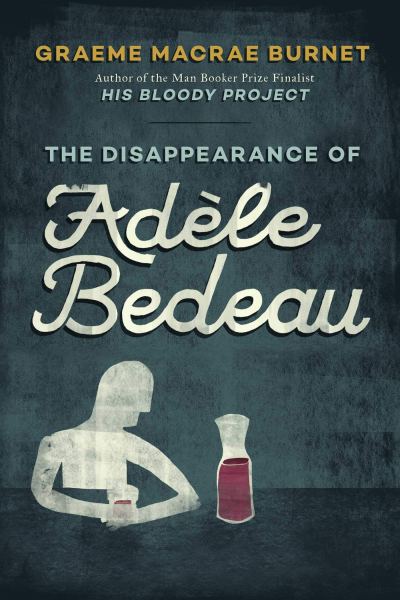
Review: The Disappearance of Adèle Bedeau by Graeme Macrae Burnet

The Disappearance of Adele Bedeau Cover

The Disappearance of Adèle Bedeau [2014] – ★★★★★

Graeme Macrae Burnet is a Scottish author best known for his Man Booker Prize nominated novel His Bloody Project [2015]. The Disappearance of Adèle Bedeau is his debut novel written in the style of a French mystery novel and film noir. Dark and intriguing, the novel tells the story of thirty-six-year old Manfred Baumann, a reclusive, lonely and socially awkward bank worker who spends his evenings in local Restaurant de la Cloche, Saint-Louis, France. When one attractive waitress of the restaurant – Adèle Bedeau disappears after a night-out, Detective Georges Gorski’s suspicions soon fall on Manfred Baumann and one unsolved past criminal case regains its spotlight. The Disappearance of Adèle Bedeau is written in that nostalgic style of old French mystery novels, echoing the works of Georges Simenon (Burnet’s favourite book is Simenon’s The Little Man from Archangel [1957]) or existential literature, such as Ernesto Sabato’s El Tunel [1948]. The Disappearance of Adèle Bedeau is an impressive, understated literary mystery with many subtle elements, convincing psychological character study, and one atmospheric setting.

Continue reading “Review: The Disappearance of Adèle Bedeau by Graeme Macrae Burnet”

Review: When Rain Clouds Gather by Bessie Head

When Rain Clouds Gather Book Review

When Rain Clouds Gather [1969] – ★★★★★

You may see no rivers on the ground but we keep the rivers inside us. That is why all good things and all good people are called rain. Sometimes we see the rain clouds gather even though not a cloud appears in the sky. It is all in our heart” [Bessie Head, 1969: 191]. 

This is a tale of Makhaya, a refugee from South Africa, who desires to build his life anew in a small village of Golema Mmidi, Botswana. There, he meets eccentric Englishman Gilbert Balfour, who would like to revolutionise farming methods to help people of the village. Both men are running away from the past and are in search of wives. However, before both start to live free lives, trying to help others, they have to face and fight political corruption, unfavourable climatic conditions and village prejudice. When Rain Clouds Gather tells an important story of finding hope in the most hostile and dangerous conditions, and can really be considered a modern classic.

Continue reading “Review: When Rain Clouds Gather by Bessie Head”

Review: Shipwrecks by Akira Yoshimura

Shipwrecks Book Cover Shipwrecks [1982/96] – ★★★★★

Yoshimura’s observational novel is fascinating and subtly powerful, uncovering a different way of looking at life.

Shipwrecks is a short novel translated from the Japanese by Mark Ealey. It tells the story of one village in rural medieval Japan, following one boy Isaku, as his family struggles to get food essential for their survival. The village has numerous rituals, but one is particularly eerie: the village does everything it can to summon OFune-Sama (the Sea God) or shipwrecks to their coast. This phenomenon is often essential for the survival of the village (since ships carry the necessary food and other commodities), and Isaku and his family are always eagerly awaiting the season when O-Fune-Sama or shipwrecks occur. One day, such a ship does come to the shore where Isaku lives, but will it be a blessing or curse for the village? Those who like books with discernible plot points and fast-paced action should look elsewhere. Shipwrecks by Yoshimura is rather slow and contemplative as it follows day-to-day activities of one village that has one strange, but understandable desire. Continue reading “Review: Shipwrecks by Akira Yoshimura”

Review: Sweet Bean Paste by Durian Sukegawa

Sweet-Bean-Paste-cover

Sweet Bean Paste [2013/2017] – ★★★★★

The aroma seemed to leap up at him, as if it were alive, racing through his nose to the back of his head. Unlike the ready-made paste, this was the smell of fresh, living beans. It had depth. It had life. A mellow, sweet taste unfurled inside Sentaro’s mouth” [Sukegawa/Watts, 2013: 33]. 

This book, translated from the Japanese by Alison Watts (see also the film trailer here), tells a story of Sentaro, a middle-aged man who spends his time unenthusiastically selling dorayaki, a kind of pancake filled with sweet bean paste, to customers at the Doraharu shop, while consuming alcoholic drinks in his spare time. When an elderly woman Tokue approaches his shop and asks to work there, Sentaro first thinks it is a joke. However, Sentaro also tastes the bean paste cooked by Tokue and he is amazed by the flavours she can produce. What follows is a touching human story filled with the passion for food and the importance of appreciating small pleasures in life. Sweet Bean Paste is also so much more than a book about Japanese culinary delights and culture. It is a quietly beautiful book with the message of coming to terms with history, accepting people and recognising their talents no matter how small they may appear. Each person can contribute something to this world if others are willing to listen, learn and accept. 

Continue reading “Review: Sweet Bean Paste by Durian Sukegawa”

Review: The World That Made New Orleans by Ned Sublette

The World That Made New Orleans Book Cover The World That Made New Orleans: From Spanish Silver to Congo Square [2008] – ★★★★★ 

Since my previous post related to Mardi Gras celebrations, it is fitting now to talk about New Orleans, and I am presenting a curious non-fiction book by Ned Sublette, the author behind Cuba and Its Music [2004]. The World That Made New Orleans is a fascinating book that traces the history of New Orleans, Louisiana, from around 1492 to the nineteenth century: from the city’s humble beginnings on swamp soils to the French Spanish, British-American colonisations, and finally the city’s growth and ultimate urbanisation in the nineteenth century. This is not one’s ordinary history non-fiction book, however. Ned Sublette pays due attention to the music tradition of the area, its unique and changing slavery regimes, and spends time explaining why New Orleans became a diverse, jazz-pioneering and carnival-hosting city it is known today. Ambitious and well-researched, this insightful book provides an eye-opening journey into historical and cultural peculiarities of New Orleans. Continue reading “Review: The World That Made New Orleans by Ned Sublette”

Review: Texaco by Patrick Chamoiseau

texaco book cover

Texaco [1992] – ★★★★★ 

Chamoiseau’s colonial-themed magnum opus is a story of and by the generations who fought hard for their right to exist and prosper, and it is this unique perspective which makes the book so exceptional.  

You say “History” but that means nothing. So many lives, so many destinies, so many tracks go into the making of our unique path. You dare say History, but I say histories, stories. The one you take for the master stem of our manioc is but one stem among many others.…” 

Some books shine through times, forever stirring spirits” [Chamoiseau, 1992/7: 325].

Some books have such a distinct, authentic voice, telling of the plight of ordinary people, that they cannot fail to move, defying logical analyses. Martinique-born Patrick Chamoiseau wrote one such emotionally powerful book with one such distinctive voice, and it is titled Texaco, translated from the French by Rose-Myriam Rejouis and Val Vinokurov. The book, which also received the prestigious Prix Goncourt in 1992, reads almost like a fable, evading strict categorisations. 

Continue reading “Review: Texaco by Patrick Chamoiseau”

Review: Jonathan Strange & Mr Norrell by Susanna Clarke

jonathan strange & mr norrell book cover

Jonathan Strange & Mr Norrell [2004] – ★★★★★

Neil Gaiman called Jonathan Strange & Mr Norrellthe finest English novel of the fantastic written in the last seventy years”. This hits the mark. It is a very long book, but it is totally absorbing from the very first page. The novel begins in autumn 1806 with Mr Segundus, a theoretical magician, wanting to know why there was no more magic done in England. He is a new addition to the society of magicians in York, England. Practical magic has declined in England and there are apparently no practising magicians left in the country. The profession of a practising magician has fallen in reputation, and Mr Segundus comes to inquire of another magician who lives in Yorkshire why this is the case. He finds, however, that not only the reclusive Mr Norrell has an established library filled with rare books on the practice of magic, he also claims to be a practising magician himself! Mr Norrell soon desires to establish himself as the only practising magician in the country.

The episodic-in-nature plot is delightful to read, and, in style, reminds of Dickens’s Bleak House [1853]. Delving into the British folklore, Clarke opens up a fascinating magical world, which you will not want to leave. Inside the book, one will find a gripping adventure-mystery, great characterisation, unforgettable atmosphere, humorous sequences, and the masterful use of the language. The book’s story, format, style and language all give the impression as though the book was written back when it was set – in the 19th century. In sum, Jonathan Strange & Mr Norrell is quite brilliant in every respect, and, as I would like to discuss the book here in some depth, the following review will contain spoilers.

Continue reading “Review: Jonathan Strange & Mr Norrell by Susanna Clarke”

Review: The Hour of the Star by Clarice Lispector

the hour of the star cover

The Hour of the Star [1977] – ★★★★★ 

Clarice Lispector’s finest achievement, one unusual story which is also emotional, philosophical, brave and inventive.

This thought-provoking novella by Clarice Lispector was translated from Portuguese by Benjamin Moser. It is narrated by one man Rodrigo S.M. who tells the tale of Macabéa, an ordinary girl from the northeast, who tries to make ends meet living in the slums of Rio de Janeiro, Brazil. The novella is very unusual because, before the narrator gets to the crux of the story, he spends quite some time musing on the task at hand – how to write this story (for example, should the writer undergo some “transformation” before writing?), and whether there is any point in doing so since fiction may never capture the real truth. Despite its short length, the book tells an immersive and emotional story, while the author, through her narrator, also meditates on human existence and the meaning of life.

Continue reading “Review: The Hour of the Star by Clarice Lispector”

Review: News of the World by Paulette Jiles

news of the world cover

News of the World [2016] – ★★★★★

He broke down the .38, cleaned it, reassembled it. He made a list: feed, flour, ammunition, soap, beef, candles, faith, hope, charity” [Jiles, 2016: 177].

The story begins at Wichita Falls, Texas during the winter of 1870 and centres on Captain Kidd, aged seventy-one, who “travel[s] from town to town in North Texas with his newspapers and read[s] aloud the news of the day to assemblies” [Jiles, 2016: 3]. When Captain Kidd comes across a little girl who has recently been an Indian native and is now abandoned to the newness and vulgarities of the civilised world, Captain promises to deliver the girl back to her German-American family in South Texas. The issue for Captain Kidd is that Johanna was taken captive at the age of six and now, at the age of ten, considers herself a Kiowa. What follows is the journey of two vulnerable people on the treacherous road to the area of San Antonio, where Johanna’s aunt and uncle allegedly await her return. This is not only a tale of an exciting journey through the American South, which delves into the culture of native tribes, but also an emotional journey of two people whose resilience to hardship and kindness to strangers are the only guarantors of their survival. 

Continue reading “Review: News of the World by Paulette Jiles”

Review: The God of Small Things by Arundhati Roy

The God of Small Things Cover

The God of Small Things [1997] – ★★★★★

Once in awhile a book comes your way which is so powerful in its message, so inexplicably poetic in its presentation and so wondrous in its understated emotion that you may wonder how come you have not read it yet. The God of Small Things by Arundhati Roy is that book to me. The notable feature of the book is that it is a debut novel which won the Booker Prize for Fiction in 1997. It takes a cross-generational approach to tell the story, but at the heart of the plot is a pair of twins – brother and sister – seven-year old Estha and Rahel respectively – who grow up in Ayemenem, part of Kerala, India, in the late 1960s. This is a turbulent time to grow up because there is political unrest and uncertainty in the country, and financial and other hardships, as well as all kinds of injustice, are seen as just part and parcel of life. However, the twins are not concerned with the Big Things, and are eagerly anticipating the arrival of their nine year-old English cousin Sophie Mol. Her father and the twins’ uncle Chacko are welcoming his ex-wife Margaret and his daughter to India. At the height of all the excitement, however, everyone is quite oblivious to the dangers lurking just on the periphery of their lives, and these dangers seem to just wait for all the circumstances to conspire in their favour to strike the final blow into the very heart of the small lives of Ayemenem.

Continue reading “Review: The God of Small Things by Arundhati Roy”