Review: The Man Who Died Seven Times by Yasuhiko Nishizawa

Continue reading “Review: The Man Who Died Seven Times by Yasuhiko Nishizawa”

Review: The Rainbow by Yasunari Kawabata

Continue reading “Review: The Rainbow by Yasunari Kawabata”

Japanese Short Stories from Tanizaki, Shiga, Seirai, Ogawa, & Nakajima

Continue reading “Japanese Short Stories from Tanizaki, Shiga, Seirai, Ogawa, & Nakajima”

Japanese Fiction: Schoolgirl, & The Little House

Continue reading “Japanese Fiction: Schoolgirl, & The Little House”

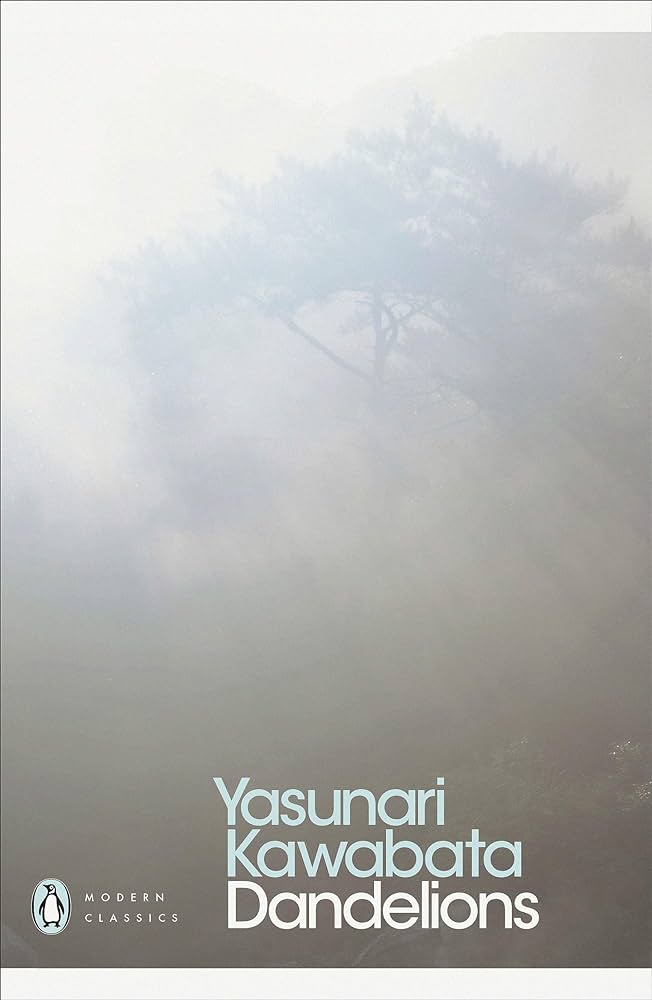
Review: Dandelions by Yasunari Kawabata 

Continue reading “Review: Dandelions by Yasunari Kawabata “

Manga: Opus, The Strange Tale of Panorama Island, & The Solitary Gourmet

I. Opus [1995/96] by Satoshi Kon★★★★

I am a huge admirer of Japanese director Satoshi Kon (1963-2010). In his animations Perfect Blue [1997], Millennium Actress [2001] and Paprika [2006], he created worlds that fuse reality and fantasy, playing with such concepts as memory, identity and perception. Opus is his manga work that was released before his first animated debut, and it also mixes up reality and make-believe to a curious effect. In this story, Chikara Nagai is a manga artist who is creating a manga series titled Resonance. One of his characters is special agent Satoko who has telepathic powers and who is set to bring down the leader of a mysterious cult known only as the Masque, who, in turn, has a goal to “brainwash” the Earth’s population. Nagai draws the ending to his manga instalment, but then realises that one of his characters does not want to submit to his sad fate, as Nagai’s real-life and fantasy worlds collide. This is a tale of a creator who “lives and breathes” his work, and, in consequence, is becoming lost in his own creation (similar to A-ha’s music video Take on Me), but the focus is also the characters, who all start to experience an existential crisis.

Continue reading “Manga: Opus, The Strange Tale of Panorama Island, & The Solitary Gourmet”

Review: The Sea and Poison by Shūsaku Endō

The Sea and Poison [1958/92] – ★★★★

The world will not be destroyed by those who do evil, but by those who watch them without doing anything” (Albert Einstein).

Go where the pain is” (Anne Rice).

Japan, the last months of the World War II. The city of Fukuoka, nestling in the Hakata Bay, has been experiencing air raids for quite some time, and its hospital finds itself stretched to the limits as its never-ending line of mostly dying patients is always at the door, riddled with many diseases, worsened by hunger and despair. But one day is no ordinary day for this hospital. Unbeknown to many, the Second Surgery is preparing for a secret vivisection operation on American soldiers taken prisoners by the Japanese, and the goal is to test the limits of air and saline that can be injected into humans before they die. Those who are involved in the operation are not some evil monsters or serial killers on the loose, though. They are some of the most respected people in the institution, as well as their dedicated supporting medical personnel. Through the perspectives of two interns – sensitive Suguro and cynical Toda, as well as haunted-by-traumatic-past Nurse Ueda, Endō shows us how easily the unimaginable can unfold when conditions are led by war-time nihilism and actions are prompted by apathy, despair, helplessness and self-interest. Based on a true story (see this article), Shūsaku Endō’s book is as intense as it is disturbing, but at its core is still a touching message to always preserve the spirit of humanity and compassion even in the most highly-pressured and hopeless environments.

Continue reading “Review: The Sea and Poison by Shūsaku Endō”

Review: How Do You Live? by Genzaburo Yoshino

How Do You Live? [1937/82/2021] – ★★★★★

Often compared to Antoine de Saint-Exupéry’s The Little Prince [1943], How Do You Live? is an unforgettable book with a heart and a soul.

This story focuses on naturally inquisitive high-school student Junichi Honda (nicknamed “Copper”) and his three friends: quiet Mizutani, outspoken Kitami and kind Uragawa. With his uncle acting as a guide, Copper learns important life lessons and discovers things that would enable him to become a better human being in future. We are shown little episodes in Copper’s life as the boy starts to understand the importance of friendship, kindness, thankfulness and acceptance, and the wrongs of bullying, cowardice and discrimination.

In an often typical Japanese literary style, there is hardly any “action” narrative in Yoshino’s book. Rather, the main “action” takes place inside Copper as he finds himself at “moral crossroads” in his life, forced to make decisions, and matures, learning certain things in life which can only be understood through experience. One such life lesson concerns the importance of humility and the need to be thankful for small things in one’s life. Copper’s uncle explains to our hero how there is a general human tendency to view oneself at the very centre of the world. This view is mistaken. We are all people who think, feel and dream, and are all connected to each other in a multitude of different ways, even if we do not see this directly. Only by thinking “globally” and from the point of view of other people, can we understand this life’s true nature, as well as become better human beings, making a positive impact on this world. Everything is inter-connected in nature and society, and no matter how small a thing or a person is, or how small their actions, its/their impact can still be felt on others/environment.

Continue reading “Review: How Do You Live? by Genzaburo Yoshino”

Review: The Three-Cornered World by Natsume Sōseki

The Three-Cornered World [1906/65] – ★★★★1/2

Thank heaven for all those who, in devious ways by their art, bring tranquillity to the world, and enrich men’s hearts.

In this novel by Natsume Sōseki (1867 – 1916), a young painter travels the country in search of a source of true artistic inspiration, tying to be completely dispassionate about everything he sees. In his journey “to rise above emotions” and conquer his earthy desires he has the aim to reach the state of total objectivity so that his brush will be able to paint only the “truth” and “bare life”.

However, when he stops briefly at a guesthouse of one Shioda in a hot-spring village of Nakoi, he encounters there a woman who may put a stop to all of his pretences to be an unemotional observer and a mere spectator of life. O-Nami is a beautiful and enigmatic young woman who has recently escaped her impoverished husband and may have had an affair with a local Buddhist priest. Intrigued by this woman and engulfed in the sheer beauty of the nature around him, our narrator plunges deep into the very heart of the meaning of art, poetry and life itself. The Three-Cornered World is a gentle novel of deep insights with intimate meditations on life and art, its secrets and manifestations.

Continue reading “Review: The Three-Cornered World by Natsume Sōseki”

Review: Fires on the Plain by Shōhei Ōoka

Winner of the prestigious Yomiuri Prize, Fires on the Plain details the experience of a Japanese soldier in the Philippines during the last months of the World War II (the Leyte island landing). This sometimes gruesome and traumatic, but vividly introspective and unputdowanable novel full of conviction is filled with psychological and philosophical insights. Drawing from his own experience of the WWII, Shōhei Ōoka wrote about the degradation, futility and meaninglessness of war through the experience of one injured and stranded soldier who gets suspended between complete despair, increasing apathy and little choice, but to commit war crimes, on the one hand, and glimpses of hope and religious visions, on the other. Plagued by contradictions and irrational thoughts, Private Tamura finds himself psychologically distancing from war horrors around him, as Ōoka makes a powerful statement on one situation where such concepts as morality or rationality no longer seem to have any meaning.

Continue reading “Review: Fires on the Plain by Shōhei Ōoka”

Japanese Short Stories from Akutagawa, Enchi, Endō, Inoue, & Kawabata

Meredith at Dolce Bellezza is hosting The Japanese Literature Challenge 14, which takes place from January to March 2021, and this post on five Japanese short stories is my contribution to the challenge (see all the other exciting entries here and for my entries to the previous Japanese Literature Challenge 13 see my reviews here and here).

This memorable story with a confident prose by the “father” of Japanese short story Akutagawa (Hell Screen [1918]) is told through letter and diary entries written by one young man to Viscount and Viscountess Honda. The story’s unreliable narration that deludes the truth and makes motives questionable introduces us to one hidden obsession as we plunge deep into the psyche of one disturbed man. If Akutagawa’s short story The Spider’s Thread [1918] relied on Dostoyevsky’s story of a woman and an onion from The Brothers Karamazov [1879], here we also see certain close similarities with other works. The story starts close to The Sorrows of Young Werther [1774] by Goethe (unrequited, forbidden and passionate love/drastic action), but finishes very similarly to Doctor Glas [1905] by Hjalmar Söderberg (doctor/mental torment/similar action taken to secure the future of a beloved woman). I read this story in Murder in The Age of Enlightenment (Essential Stories) by Ryunosuke Akutagawa [translated by Bryan Karetnyk, Pushkin Press 2020].

Continue reading “Japanese Short Stories from Akutagawa, Enchi, Endō, Inoue, & Kawabata”

Review: 1Q84 by Haruki Murakami

This is going to be a very honest review of Haruki Murakami’s twelfth novel. 1Q84 is presented as a whimsical romance epic with elements of magical realism, and, in its proportion, has been linked to such extremely ambitious works as Roberto Bolano’s 2666 and Don DeLillo’s Underworld. In 1Q84, the year is 1984 and the location is Tokyo, Japan. Aomame, a thirty year old woman, becomes entangled in one strange affair involving a manuscript titled Air Chrysalis, a charity that seeks to help battered women seek revenge, and a menacing and unrelenting religious cult called Sakigake. In parallel to her story, we read the story of Tengo, a thirty year old man and Aomame’s alleged lost “love” whom she has not seen in twenty years. Tengo inexplicably gets implicated in the same affair of “another world” when he agrees to re-write Air Chrysalis. His fateful encounter with beautiful Fuka-Eri, original author of Air Chrysalis, soon makes him question his reality, as well as makes him reconsider his relationship with his estranged father. Soon, we read about the world where the so-called Little People have the upper hand and where there are two moons in the sky. Pursued by dangerous forces, will Tengo and Aomame ever meet again?

Continue reading “Review: 1Q84 by Haruki Murakami”

Review: Nip the Buds, Shoot the Kids by Kenzaburō Ōe

Nip the Buds, Shoot the Kids [1958] – ★★★★1/2

Kenzaburo Oe’s debut should remind of Lord of the Flies [1954] by William Golding, but, undoubtedly, the author had other inspirations too. In his first book, the Japanese Nobel Laureate tells of a group of boys from a reform school that get stranded high up in forested mountains and forced to confront hostile villagers, the possibility of a plague, starvation and inhumane conditions. As the boys take matters into their own hands, their boyish desire to play and youthful confidence/hopefulness clash violently with the necessities posed by the war and traumas experienced by the most desperate. The boys finally realise that they have to choose between truth, principle, loyalty and compassion, on the one hand, and their own lives, on the other.

Continue reading “Review: Nip the Buds, Shoot the Kids by Kenzaburō Ōe”

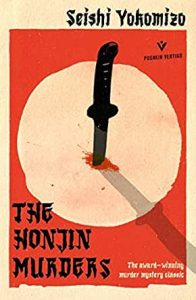
Review: The Honjin Murders by Seishi Yokomizo

the honjin murders The Honjin Murders [1973/2019] – ★★★★1/2

I am continuing my contribution to the 13th Japanese Literature Reading Challenge with this book by Seishi Yokomizo. The Honjin Murders is considered to be the classic Japanese murder mystery, first serialised in 1946 and published in 1973. It is a debut work of the author and the winner of the first Mystery Writers of Japan Award. This story centres on the well-to-do Ichiyanagi family living in the village of Okamura who prepare for the wedding of their eldest son– Kenzo to a young woman of humbler origins – Katsuko. The whole village is shaken when both Kenzo and Katsuko are found slashed to death in their room in the early morning hours after their wedding. One strange clue follows another and soon it becomes clear that the murderer could not have possibly escaped the premises after the commission of the murder. The local police feels stuck with this case, and it is at this point that one young and unassuming amateur detective Kosuke Kindaichi takes his turn to try to solve this highly unusual “locked-room” mystery. Offering a curious insight into traditional Japan, The Honjin Murders is a compact, tightly-woven crime mystery, which, while paying a direct tribute to other crime masterworks, provides its own similar brain-teaser. Continue reading “Review: The Honjin Murders by Seishi Yokomizo”

Review: The Silent Cry by Kenzaburō Ōe

the silent cry The Silent Cry [1967/88] – ★★★★★

Full of uneasiness and foreboding, The Silent Cry is a subtly powerful work that masterfully evokes the unsaid, the forbidden and the terrifying, getting us close to the real Truth and to the final Hope.

In The Silent Cry, we are presented with the early 1960s and Mitsu, a disillusioned husband to an alcoholic wife and a father to a child who is now in an institution. Mitsu sees his life changing when his estranged brother Takashi arrives from America and together they travel to their native village in Shikoku, one of the main islands in Japan. There, they find that there is a shift in local power and one rich Korean magnate is proposing to buy what remains of Mitsu and Takashi’s land inheritance – their storehouse. Reluctantly, Mitsu finds himself drawn into a complicated political situation of the village, while also realising that Takashi starts to wield the unprecedented power over the village inhabitants. The Silent Cry is a slow-paced descent into one kind of a nightmare where the violent history of the village is about to be re-enacted and other grim discoveries made as the relationship between the two brothers takes an unexpected turn. Continue reading “Review: The Silent Cry by Kenzaburō Ōe”

Review: The Memory Police by Yōko Ogawa

The Memory Police Book Cover

They say you die twice. One time when you stop breathing and a second time…when somebody says your name for the last time” (Banksy, re-quoting Ernest Hemingway). Yōko Ogawa (The Housekeeper and the Professor [2003/08]) wrote The Memory Police in 1994, and it was translated from the Japanese by Stephen Snyder in 2019. In this beautiful dystopian book, our young female character works as a writer on one curious island – there, things sometimes simply disappear from time to time, and with those “disappearances” come another interesting element – people soon forget these things completely, how they looked and what they felt like. For them, these things simply cease to exist. The enforcement of the memory erosion is the task for the special Memory Police, that ruthlessly detects and investigates any traces of disappearing objects, as well as hunts people that are still able to remember them. When one man, R, a book editor, is in danger of being caught for remembering disappeared things, our lead character vows to do everything in her power to save him from a terrible fate.

Continue reading “Review: The Memory Police by Yōko Ogawa”

Review: The Face of Another by Kōbō Abe

The Face of Another Book Cover
Continue reading “Review: The Face of Another by Kōbō Abe”

Review: The Woman in the Dunes by Kōbō Abe

Kobo Abe The Woman in the Dunes
Continue reading “Review: The Woman in the Dunes by Kōbō Abe”

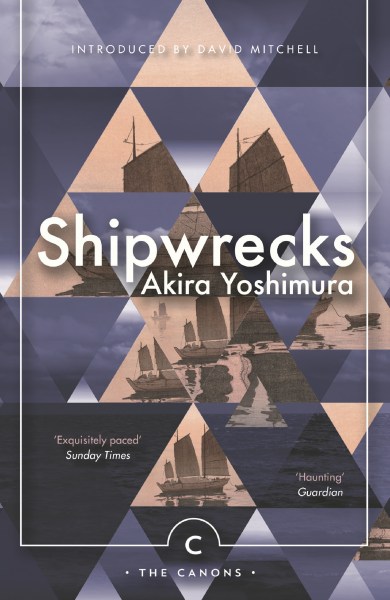
Review: Shipwrecks by Akira Yoshimura

Shipwrecks Book Cover Shipwrecks [1982/96] – ★★★★★

Yoshimura’s observational novel is fascinating and subtly powerful, uncovering a different way of looking at life.

Shipwrecks is a short novel translated from the Japanese by Mark Ealey. It tells the story of one village in rural medieval Japan, following one boy Isaku, as his family struggles to get food essential for their survival. The village has numerous rituals, but one is particularly eerie: the village does everything it can to summon OFune-Sama (the Sea God) or shipwrecks to their coast. This phenomenon is often essential for the survival of the village (since ships carry the necessary food and other commodities), and Isaku and his family are always eagerly awaiting the season when O-Fune-Sama or shipwrecks occur. One day, such a ship does come to the shore where Isaku lives, but will it be a blessing or curse for the village? Those who like books with discernible plot points and fast-paced action should look elsewhere. Shipwrecks by Yoshimura is rather slow and contemplative as it follows day-to-day activities of one village that has one strange, but understandable desire. Continue reading “Review: Shipwrecks by Akira Yoshimura”

Review: Sweet Bean Paste by Durian Sukegawa

Sweet-Bean-Paste-cover

Sweet Bean Paste [2013/2017] – ★★★★★

The aroma seemed to leap up at him, as if it were alive, racing through his nose to the back of his head. Unlike the ready-made paste, this was the smell of fresh, living beans. It had depth. It had life. A mellow, sweet taste unfurled inside Sentaro’s mouth” [Sukegawa/Watts, 2013: 33]. 

This book, translated from the Japanese by Alison Watts (see also the film trailer here), tells a story of Sentaro, a middle-aged man who spends his time unenthusiastically selling dorayaki, a kind of pancake filled with sweet bean paste, to customers at the Doraharu shop, while consuming alcoholic drinks in his spare time. When an elderly woman Tokue approaches his shop and asks to work there, Sentaro first thinks it is a joke. However, Sentaro also tastes the bean paste cooked by Tokue and he is amazed by the flavours she can produce. What follows is a touching human story filled with the passion for food and the importance of appreciating small pleasures in life. Sweet Bean Paste is also so much more than a book about Japanese culinary delights and culture. It is a quietly beautiful book with the message of coming to terms with history, accepting people and recognising their talents no matter how small they may appear. Each person can contribute something to this world if others are willing to listen, learn and accept. 

Continue reading “Review: Sweet Bean Paste by Durian Sukegawa”

Review: The Decagon House Murders by Yukito Ayatsuji

The Decagon House Murders Cover
Continue reading “Review: The Decagon House Murders by Yukito Ayatsuji”

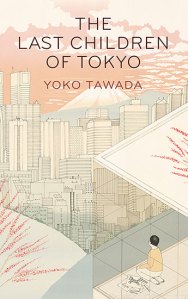
Review: The Last Children of Tokyo by Yoko Tawada

The Last Children of Tokyo CoverThe Last Children of Tokyo [2014] – ★★★★

The short novella is a beautiful and unsettling evocation of the future.

Yoko Tawada sets her book in near-future Japan where the elderly regain their powers and live beyond one hundred years old, while the young become weak and sickly. Everyone is worried in the story because, due to some catastrophe, “the human race may be evolving in a direction no one ever imagined” [Tawada, 2014: 14]. The central characters are an old man called Yoshiro and an orphaned boy named Mumei. While Yoshiro is the very definition of health and vigour at his age of one hundred plus, his great-grandson Mumei is feverish, vitamin-deficient, and in the course to face a slow death. Translated by Margaret Mitsutani, Tawada’s dystopian novel is a fascinating read, even though most of the time it reads like an essay on some highly imaginative dystopian future, rather than like a story with a linear plot. Continue reading “Review: The Last Children of Tokyo by Yoko Tawada”