
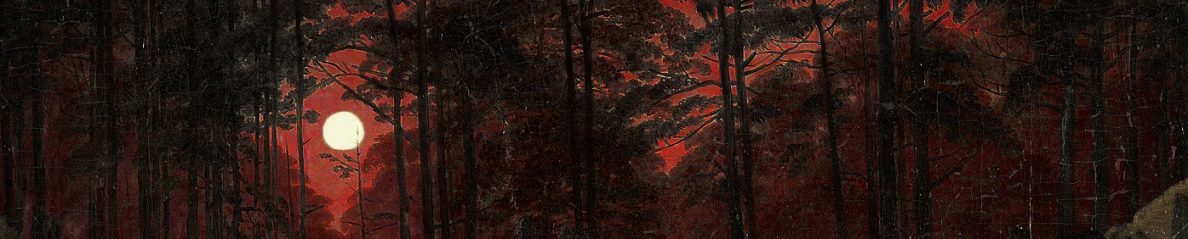
I am sharing today Franz Liszt’s “La Campanella” (Italian “the little bell”), which is the third of the six etudes in Liszt’s work Grandes etudes de Paganini, where the composer reworked Paganini’s Violin Concerto No.2 in B Minor for piano. The composition below is played by American pianist André Watts (1946-2023), and I somehow prefer it over other hastier renditions. This piece is considered challenging not least because it requires a very light touch (to sustain the bell-like quality of the notes) and excellent dexterity to take on its fast, large leaps, trills and tricky ornaments. The piece’s gentle start soon unveils surprising buoyancy and vibrancy, a flowing (“torrent of water”) progression, before culminating in a passionate, even violent, coda, making it a very memorable piece. Overall, a virtuosic gem.
Tag: Piano Music
10 Book-Music Pairings
I have recently read a number of articles on book and music pairings, including by Richland Library and Cassava Republic Press (where they paired (perfectly!) Nina Simone’s feverish Sinnerman with Baldwin’s novel Go Tell It On the Mountain), and decided to compile my own list (in no particular order). Literature and music at times make a perfect pairing, and in the list below, I tried to capture the similarities in both theme and mood. The music below is diverse, from classical to rock, J-pop and jazz.
Anna Karenina by Leo Tolstoy
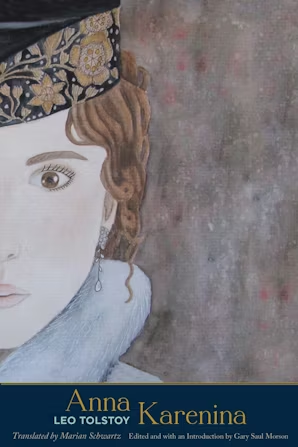
The paired music: Masquerade – Ballet Suite: 1. Waltz by Aram Khachaturian
My Reasons
Initially envisioned for the production of Mikhail Lermontov’s play Masquerade, this piece of music was turned into an orchestral suite in 1944. I think its sweeping, almost violent theme is suitable to describing Anna Karenina’s inner world of burning, overwhelming passion for Count Vronsky in Tolstoy’s story of one complicated love affair. That whirlpool of abundant, conflicting emotions comes to its climax as Karenina watches Vronsky compete in a horse race. The masquerade theme is also fitting here as Karenina and Vronsky have to wear masks of indifference in their daily life.
listen to the composition – buy the book
Continue reading “10 Book-Music Pairings”J. S. Bach: Keyboard Concerto No. 1 in D minor
Today (25 September) marks 92 years since the birth of Glenn Gould (1932-1982), a famous Canadian pianist and renowned Bach interpreter, so I would like to share the following recording of Gould playing Allegro from J. S. Bach’s musical masterpiece Keyboard Concerto No. 1, one of my all-time favourite pieces, which is also said to be inspired by Vivaldi’s Grosso Mogul. Incidentally, 25 September is also the birthdate of composer Dmitri Shostakovich (1906-1975) (see my other post on his sublime Piano Concerto No. 2).
Review: Fryderyk Chopin by Alan Walker

Fryderyk Chopin: A Life and Times [2018] – ★★★1/2
A comprehensive biography of Chopin, though also a tad over-written and insensitive.
This book on Polish composer Fryderyk Chopin is the culmination of a ten years’ research project. Fryderyk or Frédéric Chopin is considered to be the greatest composer of the Romantic period, and this biography details his life from his early education and success in native Poland to his move and conquest of Paris through salon appearances, concerts and published works. Much in this book is about Chopin’s long-term relationship with female French novelist George Sand, but Chopin’s musical masterpieces, technique and piano theories are also dissected. Walker employs an engaging story-format to tell us about Chopin, a composer who was also largely self-taught and perpetually ill, providing invaluable insights into Chopin’s relationships with others. And, this well-researched book would have been a “must-read” biography if not for the fact that it is also over-written, with the author making some insensitive faux pas as he proceeds with his over-zealous narration.
Continue reading “Review: Fryderyk Chopin by Alan Walker”“The Great Pianists” Non-Fiction: Lang Lang’s Memoir & Van Cliburn’s Biography – “Moscow Nights”

This month I intensified my piano-learning (I have finally finished all the piano method books I once started and jumped on Duvernoy, Schytte and Lemoine’s studies) and listened to a lot of piano music (Godowsky’s Java Suite ), so I have also decided to share a couple of piano-related books I have been reading recently: Lang Lang’s memoir and a book on Van Cliburn.

Journey of a Thousand Miles: My Story [2008] by Lang Lang – ★★★★1/2
Chinese pianist Lang Lang is considered one of the leading figures of today’s classical music world and one of the most accomplished pianists of our modern time. This is his memoir in which he tells his story, from his birth in 1982 in China’s north-eastern city of Shenyang, his early musical education and upbringing, to his hard-work and his family sacrificing everything to see him become “the world’s no. 1”. It is a moving autobiography of a child once living in near-poverty, but always working hard and dreaming “big”, and then of a young man, not always believing in himself, but always being clear in his mind what he wants to achieve next, overcoming his tricky family life and the Chinese competitive system. There are no “self-indulgent” paragraphs in this memoir. It is clear and to the point, with very short chapters, in which Lang Lang, first and foremost, pays tribute to his family and his teachers, who always believed in him and enabled him to become what he is now – an immensely popular classical pianist.
Continue reading ““The Great Pianists” Non-Fiction: Lang Lang’s Memoir & Van Cliburn’s Biography – “Moscow Nights””National Day of Spain: Isaac Albéniz’s Cantos de España
Today, 12 October, is Spain’s National Day and I am sharing Isaac Albéniz‘s Cantos de España (or Chants d’Espagne). Isaac Albéniz (1860 – 1909) was an influential Spanish virtuoso pianist and composer and some of his best-known compositions incorporate Spanish folk music.
My Piano Progress

My previous post was about classical piano music, and I thought I would do a post sharing my thoughts on learning piano from scratch at the age of thirty one without any previous knowledge of music. I first started learning the instrument around January 2020, but I am sad to report that since that time I have practised the piano on and off and even spent whole months without practising (up to four consecutive months without playing once), so my progress has been very slow and protracted. Nevertheless, I did make small progress, finished a couple of beginner books and enjoyed my journey. So, my notes below apply to *absolute adult beginners* and I hope the post will be interesting/useful at least to some of you who are considering picking up this instrument in future.
I. 3 things I wish I knew at the start of my piano-learning journey:
(i) It is important to learn to appreciate simple piano pieces and not try to produce Beethoven’s Moonlight Sonata or some complicated piece by Chopin in the first year. Just because a piece of music sounds simple, it does not mean it cannot be beautiful and some Grade 1/2 pieces are just lovely (check out these – Krieger’s Minuet in A Minor, Purcell’s Air in D Minor or Beethoven’s Sonatina in G Major (my personal favourite)). Learning simple songs not only helps to lay down important technique foundation for more complex pieces to come in future, but also boosts confidence. I think no musical piece should be seen as too insignificant or “childish” to play and learning to appreciate the sound of every note/key pressed will go a long way; (ii) linked to the first, is the advice to avoid learning pieces that are way beyond one’s musical level. It is great to challenge oneself once in a while, but most of the time learning a musical piece way beyond one’s ability will be a difficult and disheartening task. Patience is key, and what may take you three months to learn now may be accomplished in three weeks a year or two from now; (iii) learning scales and arpeggios early will be beneficial, not only for exercising hands, but also for recognising and learning key signatures.
Continue reading “My Piano Progress”Carlos Gardel: Por una Cabeza

Carlos Gardel (11 December 1890 – 24 June 1935) was a French-Argentine singer, songwriter and composer. Born in Toulouse, France, he was celebrated throughout Latin America and became known for his melancholy ballads and classic tango songs. Often referred to as “The King of Tango”, he created hundreds of recordings and one of his songs titled Por una Cabeza was featured in such films as Scent of a Woman [1992] and Schindler’s List [1993]. The lyrics were written by Alfredo Le Pera, and Gardel himself sang to his own piece in a film Tango Bar [1935]. “Por una Cabeza” is a gambling jargon signifying a horse winning a race narrowly and, in this case, probably also refers to the possibility of losing a beloved woman. The mood of the song is said to be “passionate and vivid”, and the composition is often praised for its contrasting use of minor and major chords.
The video below shows the piano performance by Stanislav Stanchev who plays his own arrangement. Carlos Gardel tragically died in an airplane crash in 1935. He was 44.
Ludwig van Beethoven: 250 Years – Sonata “Pathetique”
17 December 2020 marks 250 years since the birth of Ludwig van Beethoven (he was baptised on 17 December 1770, but his real date of birth was probably 16 December 1770). Considered by many to be the greatest composer who has ever lived, Beethoven composed some of the world-famous classical music compositions, from Piano Sonata No. 14 (“Moonlight Sonata”) to “Emperor Concerto”. I would like take this opportunity to share one of his masterpieces – the beginning of “Sonata Pathetique”, No. 8. My favourite performance of this piece is by Vladimir Ashkenazy at the University of Essex in Colchester in 1972.
May 2020 Wrap-Up: From Stoner to Smoking Poppy




Stoner [1965] – ★★★★1/2
This American classic by John Williams is a great, even if heart-breaking read. It tells the story of university professor Stoner as he finds his way through life. He means to lead a simple life, but certain tragedies and disappointments in it get the better of him. The book is beautifully-written and is a quiet meditation on life and its meaning. The book can be compared to Thomas Hardy’s Jude the Obscure [1895] and to Jack London’s Martin Eden [1909]. Continue reading “May 2020 Wrap-Up: From Stoner to Smoking Poppy”
 Thoughts on Papyrus