


The nine muses are the daughters of Zeus and Titan goddess Mnemosyne (of “memory”) who lived on Mount Helicon where they cultivated their creative gifts near the streams and geysers made by the hoof of winged horse Pegasus. Those streams and lakes, created by the hoof, were said to endow anyone who drunk from them with unlimited creative potential, intellectual curiosity and prophetic insight. In this environment, Mnemosyne taught her daughters various arts and trained their voices, and they later danced and sang at parties held by gods and heroes. The daughters are Calliope (Epic Poetry), Melpomene (Tragic Drama), Thalia (Comedy), Terpsichore (Dance), Clio (History), Erato (Lyric Poetry), Euterpe (Music), Polyhymnia (Mime & Sacred Lyrics), and Urania (Astronomy). All of them brought artistic inspiration to mortals, igniting the human spirit to explore and express the arts, and the word “museum” is from Greek “mouseion”, meaning a sacred shrine built to honour the muses, that now refers to a building that houses all things art.
Continue reading “The Nine Muses”Tag: Greek Mythology
Symbolist Art: Gustave-Adolphe Mossa
Gustave-Adolphe Mossa (1883-1971) was a French artist and museum curator from Nice who worked in a Symbolist style from roughly 1900 to 1911, before discovering Flemish masterpieces and Gothic art, and switching directions. In the production of his art, he was heavily influenced by novels (Joris-Karl Huysmans), poetry (Charles Baudelaire), and the styles of Art Nouveau and the Pre-Raphaelites. His paintings are characterized by vivid transformations of well-known characters and scenes from mythology and folklore, and are truly an idiosyncratic bouquet of the macabre, beauty, dark satire, eroticism and psychological intensity.

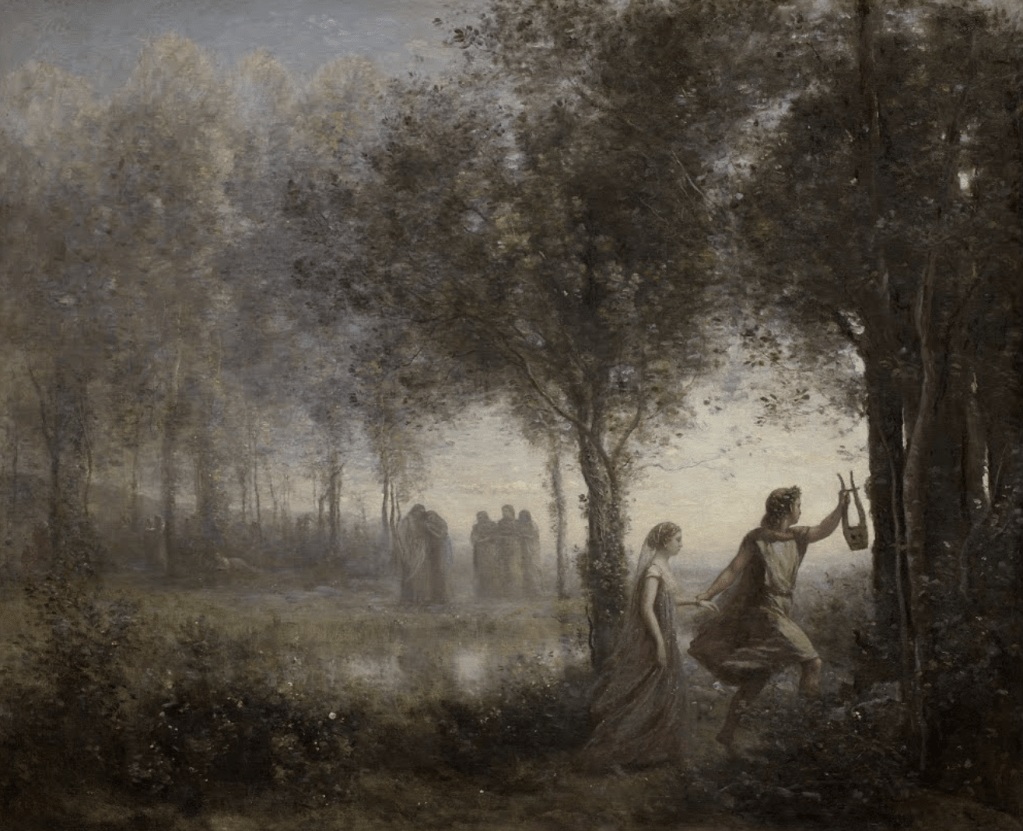
Orpheus and Eurydice
I hope all my followers and readers had a very Merry Christmas, and I would like to wish all a very Happy New Year. We are now in January, named after Roman God Janus, who is in charge of beginnings and transitions. He is often portrayed as having two faces, one looking into the past “with memory” and another – into the future “with foresight”. This duality somehow reminded of the myth of Orpheus and Eurydice that I am sharing below. This a moving tale of the power of love and music as its hero journeys to the Underworld to try to bring his beloved back to life.
Fortune & Fate in Art

People have always been obsessed with the question of fate: what does the future hold? Is it possible to reverse the course of one’s destiny? In ancient and medieval times, mortality was particularly high and people felt they had little control over their lives, coupled with the fact that they also usually had little opportunity to move up the societal ladder and were “stuck” in their roles from birth until death. Moreover, those born rich had all the chances to lose everything, and violent death, war, famine, incurable illness and infant death were all just around the corner for all. In this unpredictable environment, appeasing the gods and goddesses of destiny and chance must have been an important task, especially for farmers, soldiers and sailors. After all, these deities were capable of ensuring the survival against all odds and the enduring of the worst and, anyways, a miracle can happen at any moment. It is also partly for that reason that premonitions, dreams and fortune-telling rituals have all been part of various cultures around the world, and Fortuna or Lady Luck in Europe has often been portrayed as ever-changing and fickle, as capable of giving much suddenly as taking it all away in a split second. So, how was Fate presented in art?
Continue reading “Fortune & Fate in Art”
