
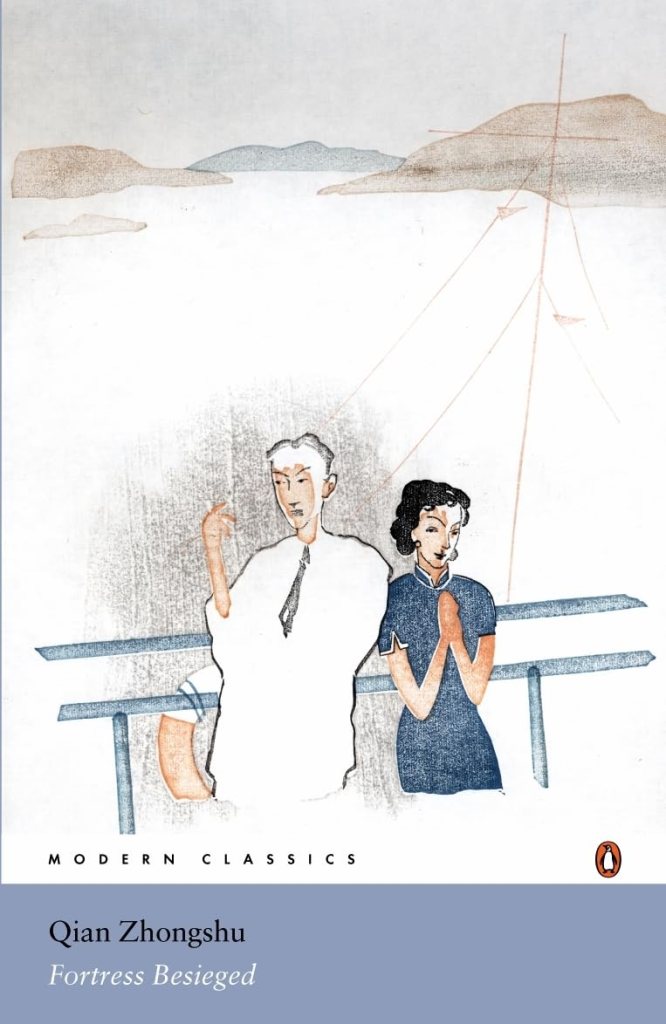
Fortress Besieged [1947] by Qian Zhongshu
Qian Zhongshu (1910-1998) was a talented literary scholar, researcher and polyglot. He published his novel Fortress Besieged in 1947, but it received its due attention only in the 1980s. It is now considered “one of the masterpieces of twentieth century Chinese literature”. Set on the eve of the Sino-Japanese war in 1937, it tells the story of Fang Hung-chien, a young man who returns home to Shanghai after years of aimless and fruitless studying in Europe. Without a proper degree, he then jumps from one job to another, and from one love affair to the next, becoming disillusioned with both his career and his eventual marriage. Penguin Publishing describes this contemporary Chinese classic as “a glorious tale of love, marriage, war, calamity, disillusionment and hope, this is one of the greatest Chinese novels: combining Eastern philosophy, Western traditions, adventure, tragicomedy and satire to create a unique feast of delights.”
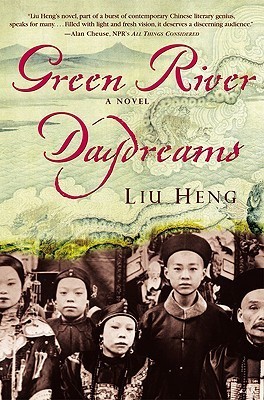
Green River Daydreams [2001] by Liu Heng
I am not sure how I became aware of this book, but it received some positive reviews, and I am always interested in family sagas. The story is about one wealthy family’s disintegration, focusing on the “second son” of the family, Guanghan, who returns home after years abroad with socialist ideals and his French engineer friend. The family matches Guanghan to a girl with the view to a marriage, but seeing Guanghan’s hesitation, the Frenchman makes his move. Green River Daydreams is a glimpse into the final years of China’s Qing dynasty, and Liu Heng’s other novel Black Snow was also highly praised.
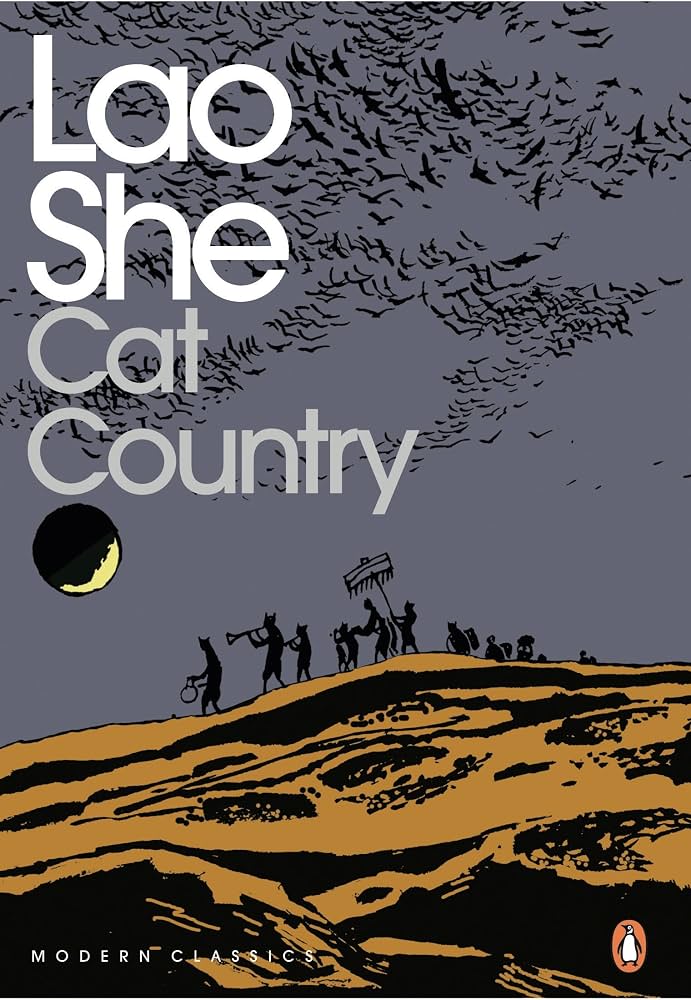
Cat Country [1932] by Lao She
Earlier this year, I read Lao She’s novel Mr Ma and Son about the experiences of Chinese immigrants in London in the 1920s, and am eager to read more by the author. Cat Country is a dystopian sci-fi novel about a visitor to Mars, where he discovers a civilisation populated by cat-people. I have little experience of Chinese science-fiction beyond Liu Cixin (The Three-Body Problem), so I am interested to see how I like it.
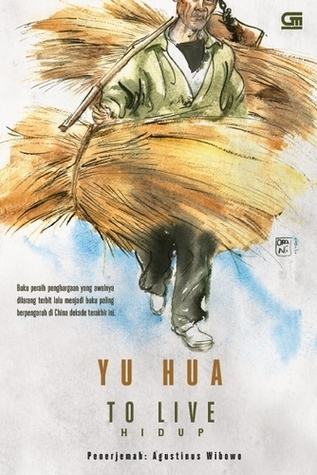
To Live [1992] by Yu Hua
This contemporary Chinese classic charts the life of Fugui, the spoiled son of a landlord who settles down into the life of a farmer after squandering his fortune. The novel whisks the reader through the horrors of the Civil War and the ravages of the Cultural Revolution as Fugui is forced to confront deep questions on human suffering, and the meaning of life. Talking about his book in the 2003 interview, Yu Hua said that To Live was about “the power to live…to endure the responsibilities life has thrust upon us…to endure the happiness and sufferings, the boring and banal, that reality has given us“. Zhang Yimou (Raise the Red Lantern [1991]) adapted the story for film in 1994.
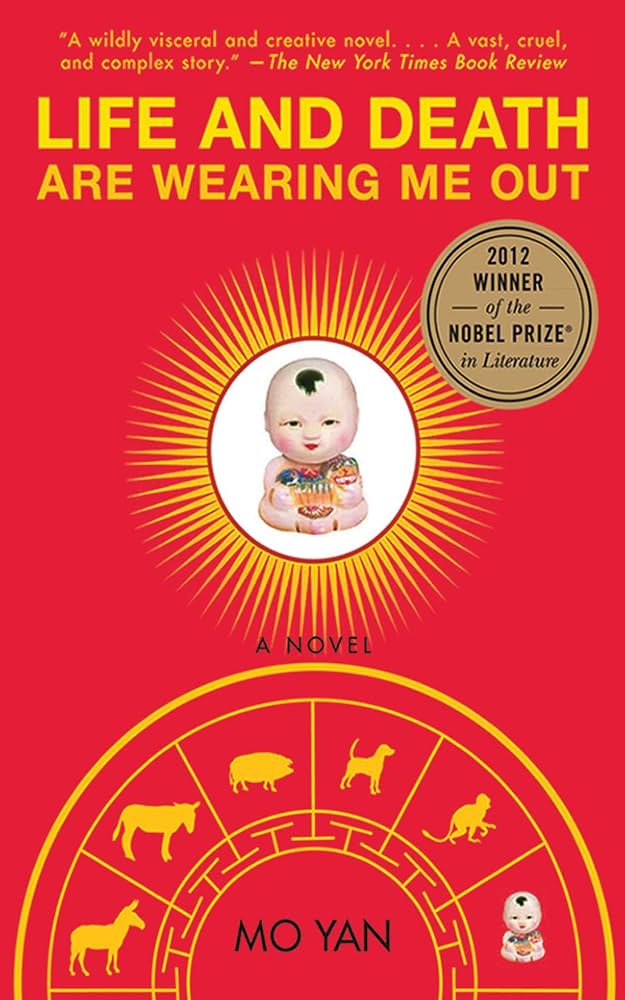
Life & Death Are Wearing Me Out [2006] by Mo Yan
This book by Nobel Laureate Mo Yan has a very intriguing premise: “stripped of his possessions and executed as a result of Mao’s Land Reform Movement in 1948, benevolent landowner Ximen Nao finds himself endlessly tortured in Hell before he is systematically reborn on Earth as each of the animals in the Chinese zodiac” (Goodreads). Mo Yan is often described as China’s Kafka, and this unusually-premised book promises to be an exhilarating read.

