

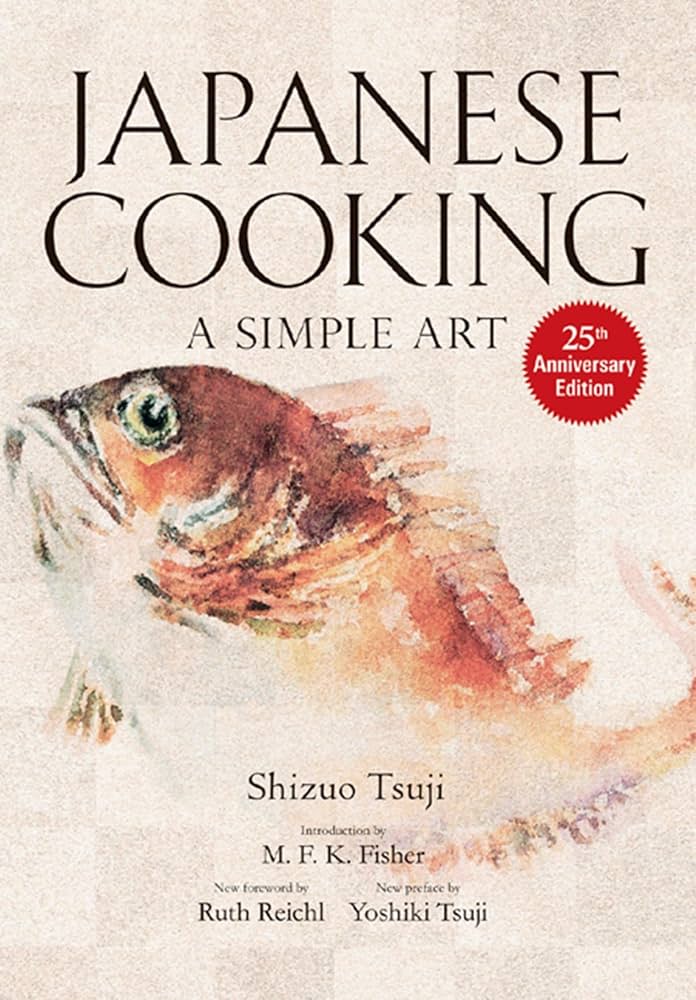
Japanese Cooking [1980/2007] – ★★★★1/2
November is a non-fiction reading month, and I thought I would review something from a non-fiction genre I have hardly touched – food non-fiction. Japanese food may bring to mind certain stereotypical images, such as a conveyor belt sushi or raw seafood. However, Japanese food is so much more than this. This book by chef and teacher Shizuo Tsuji (1933-1993) explains clearly and succinctly traditional Japanese cuisine and food, its types and preparation, focusing on special recipes, and Japanese eating customs, which centre on a balanced diet that prioritises aesthetics and seasonal changes. Everything you have ever wanted to know about Japanese food and its intricate preparation is in this book, which includes over five hundred drawings, and more than two hundred recipes, from hot pots and rice dishes to sushi and grilled cuisine.
Shizuo Tsuji was once the head of the cooking school Ecole Hotelier Tsuji in Osaka, the largest establishment for training chefs in Japan, and he definitely knows what he is talking about in this book. The chapter on sushi, for example, is fascinating. “Sushi marries the flavor of vinegared rice to the clean flavor of fresh raw fish and shellfish. The rice is deftly shaped into bite-sized “fingers”, seasoned with a dab of zesty wasabi horseradish, and covered by a strip of choice seafood,” explains Tsuji, saying later that “first and foremost with sushi, the fish must be exceptionally fresh, so the optimum time to visit a sushi bar is at noon”. Sushi actually originated as a way to preserve funa, a type of carp. It was salted and left to mature on a bed of vinegared rice, that was originally supposed to be discarded. However, over time, both the fish and rice began to be eaten together, evolving into a separate dish.
One of the most interesting parts for me was the topic of special jargon used in sushi restaurants. For example, chefs, and perhaps certain customers, ask for “murasaki” (purple) rather than for “shōyu” (soy sauce) because, traditionally, brewed soy sauce had a deep, dark-brown colour reminiscent of the colour purple, a colour of nobility. The book states that almost every speciality sushi restaurant has its own brewed sauce, which is usually darker and thicker than one’s average soy sauce. Also, when finishing one’s meal it is customary to ask for “agari” (meaning “finished”), which is immediately understood to be green tea.
Tsuji provides a typical Japanese menu for each of the four seasons, for example, an autumn dinner may include a Chinese cabbage, deep-fried tofu and chestnut rice, and lunch – tempura-on-rice, and vinegared crab pickles. He then proceeds to talk about different Japanese foodstuffs which are rare outside of Japan/Asia, including wasabi horseradish and yuzu citrus. I have always wondered why potatoes in Japanese are called “jagaimo” (じゃが芋), and the book explains that the word is actually a corrupted Dutch word for Jakarta, Indonesia. Potatoes were introduced to Japan via Jakarta by European traders, and that happened sometime in the sixteenth century.
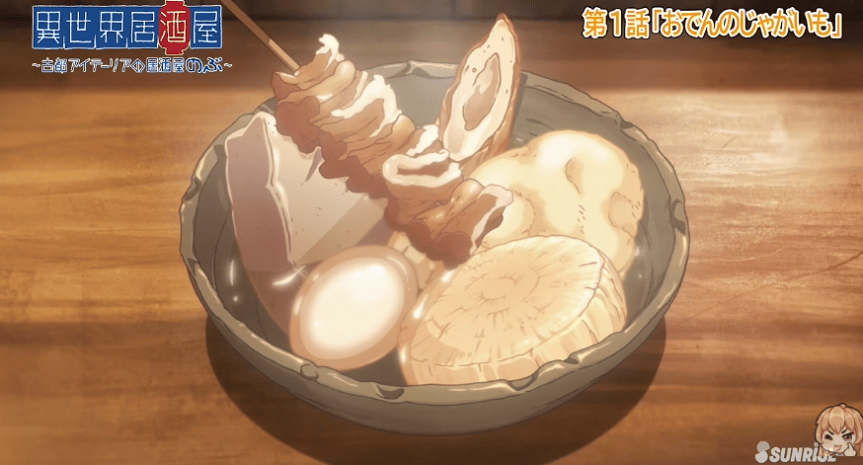
I also appreciated a recipe for Oden (おでん), which is a hot pot dish popular in the winter season and made with such ingredients as eggs, daikon (Japanese radish), and fish balls, all stewed in a soy-flavored dashi broth. The dish has its origin in the Muromachi period (1336-1573), when a skewered snack of grilled tofu with miso paste was sold. Later, in the Edo period, these skewered ingredients were eaten in the shared broth, and, finally, in the early Meiji period (late 19th century), it evolved into the soy-and-dashi-based hot pot dish. In the Kansai region, Oden is called “Kanto-ni” or “Kanto-daki , and is prepared using a lighter soy sauce, giving it a more delicate flavour. In the popular manga series Isekai Izakaya ‘Nobu’ (Alternate-World Inn ‘Nobu’), two characters, soldiers living in the mythical city of Aitheria, are first introduced to the restaurant’s food by trying its super-delicious Oden dish.
There is also an illuminating chapter on the history of tea, and how the process of tea-drinking became a cultural institution in Japan, explaining the differences between various types of tea, including hōji-cha (焙じ茶) and sencha (煎茶). The book then provides mouth-watering recipes for various Japanese-style soups, including Beaten Egg Soup and Thunder Soup, as well for sashimi, and grilled, pan-fried and steamed dishes, such as Grilled Chicken Rolls and Foil-Cooked Enokitake Mushrooms. Among the simplest to prepare are probably different types of noodles, such as Tempura Noodles, and Noodles with Chicken and Green Onions.
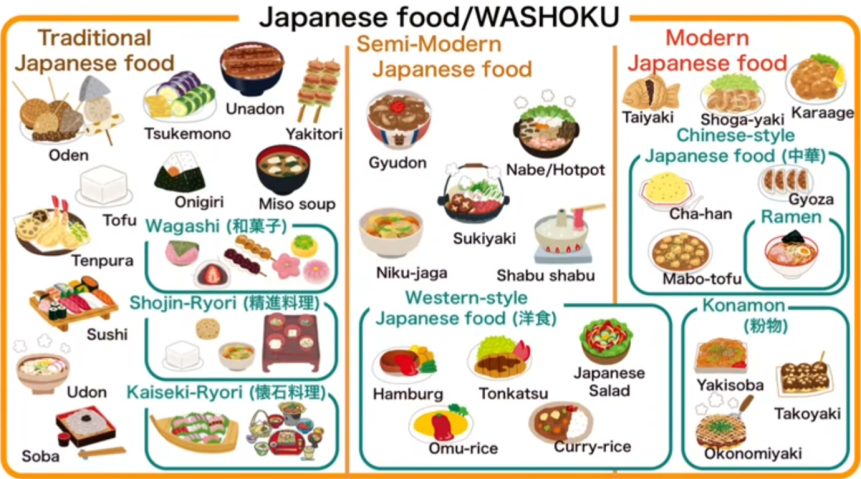
There is also a brief historical overview of Japanese sweets. Tsuji says that, traditionally, fruit is the “dessert” in a Japanese meal, and “the word for confectionery in Japanese – kashi – derives from the word for fruit, kajitsu, and once referred only to fruit…The “shi” in kashi means “seed.”” He provides such dessert recipes as red-bean jelly and Cherry Blossom Mochi. There is even a recipe for a Plum Liqueur (Umeshu, 梅酒). The Japanese version of marron glacé – Kuri Ama-ni (栗甘煮) – also caught my eye. Marron glacé originates in France, and is a chestnut candied in sugar syrup and glazed. Kuri Ama-ni is usually eaten in September and October.
🥢Overall, this is a beautiful book that could serve both as a practical and insightful cookbook and as a stunning coffee-table addition.


Fascinating!
I’m not a fan of Japanese food, but The Spouse does like J-food, so I’ve taken him to some posh ones with real J-chefs for his birthday and have thus tried both fine cuisine and the everyday suburban offerings and remain unimpressed. But in the 1990s I had a brief flirtation with a ‘Japanese Country Cookbook’ which (like regional French food or Plat du Jour bistros in the countryside) was more like home cooking, more flavoursome, and less fussy to make. I tried making some of their ‘casseroles’ and fish dishes and they were rather nice with distinctive flavours because of the sauces that were added. (Not just soy sauce.)
LikeLike