


Today, 10th October 2023, is the 21st World Day Against the Death Penalty, and it is thus a perfect opportunity to talk about some insightful books that shed light on the death penalty, its usage, history and justification (some 53 countries in the world still retain capital punishment). Below are 10 books, both fiction and non-fiction, that open one’s eyes to the issue and the debate, including from historical, socio-economic, moral, psychological and personal perspectives.

I. The Enchanted [2014] by Rene Denfeld
This is a staggering, hard-hitting debut about a death row inmate who tries to cope with his inhumane, claustrophobic prison conditions, authority corruption and his predicament by imagining fantastical things. He sits and observes, seeing hope and love flourishing in the most unlikely of places. Denfeld’s economical prose leaves a powerful impression, and the book brims with purpose and conviction. This is an engaging story that sheds light on the state of the death row and the human condition characterised by longing for redemption. A criminal never exists in a vacuum, removed from all the past, upbringing, and socio-economic and psychological conditions, and, yet, the criminal justice always treats them as though they were. This controversial book is described as “dark”, and it is, but there is also a strange burning light somewhere there too. It is worth reading this novel just to find and savour it.
II. Reflections on the Guillotine [1957] by Albert Camus
Albert Camus is logical than emotive in his famous essay against the death penalty. In his eyes, this practice, which is primarily geared at seeking revenge, simply does not work in our modern society and it does not act as a deterrent to future criminals. It is better for the state to spend its money elsewhere, including tackling the root causes of crime, including poverty and alcoholism. The French Nobel Laureate also touched on the topic of the death penalty in his fiction work The Stranger [1942].
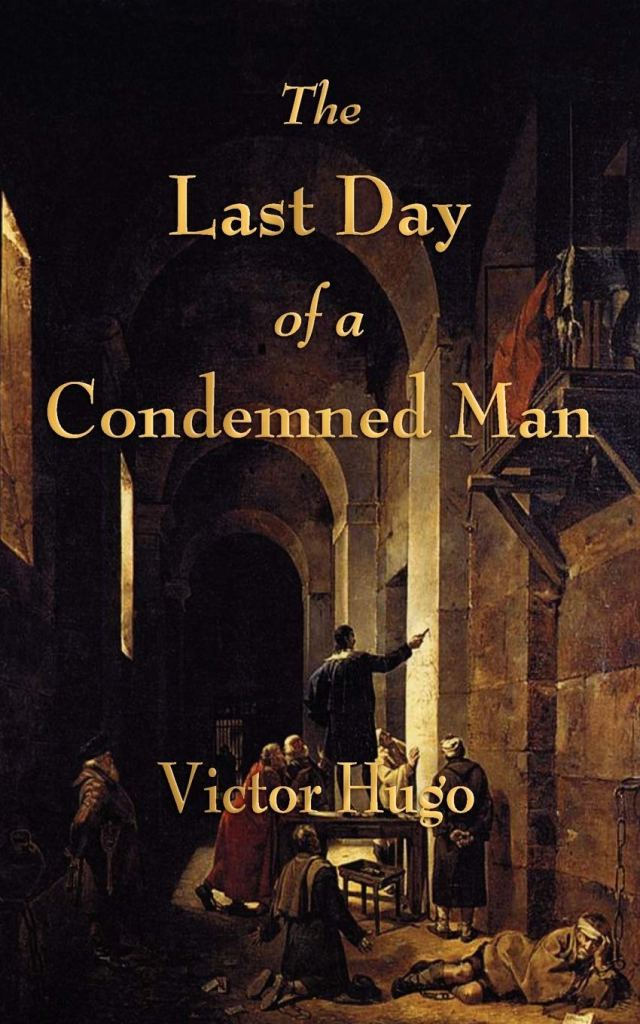
III. The Last Days of the Condemned Man [1829] by Victor Hugo
“The death penalty is the special and eternal sign of barbarity,” Victor Hugo said in 1848. A big proponent of the abolition of the capital punishment, Hugo wrote a passionate novella about one condemned man waiting for his execution. Hugo not only wanted to highlight the barbaric nature of the procedure that was the guillotine in his time (he witnessed its operation first-hand), but also to emphasise the mental torture that accompanies any execution – the torments of the wait, uncertainty and dread. One dies a million times over in the most horrific way just thinking of the thing to come – the true bliss lies in our general ignorance of when and how we will all eventually die.
IV. The Spectacle of the Scaffold [1979] by Michel Foucault
“[The atrocity of the public execution] provided the spectacle with both truth and power; it was the culmination of the ritual of the investigation and the ceremony in which the sovereign triumphed” (Michel Foucault). In this short essay, French philosopher Michel Foucault writes eloquently and persuasively on the topic of how the idea of punishment has changed over time to accord with new and emerging societal ideals, with “the bloody spectacle of public execution”, including seeing the experience of physical pain, gradually disappearing from society to be replaced by the “shackling of the body”, a process of insidious and systematic domination and control over an individual.
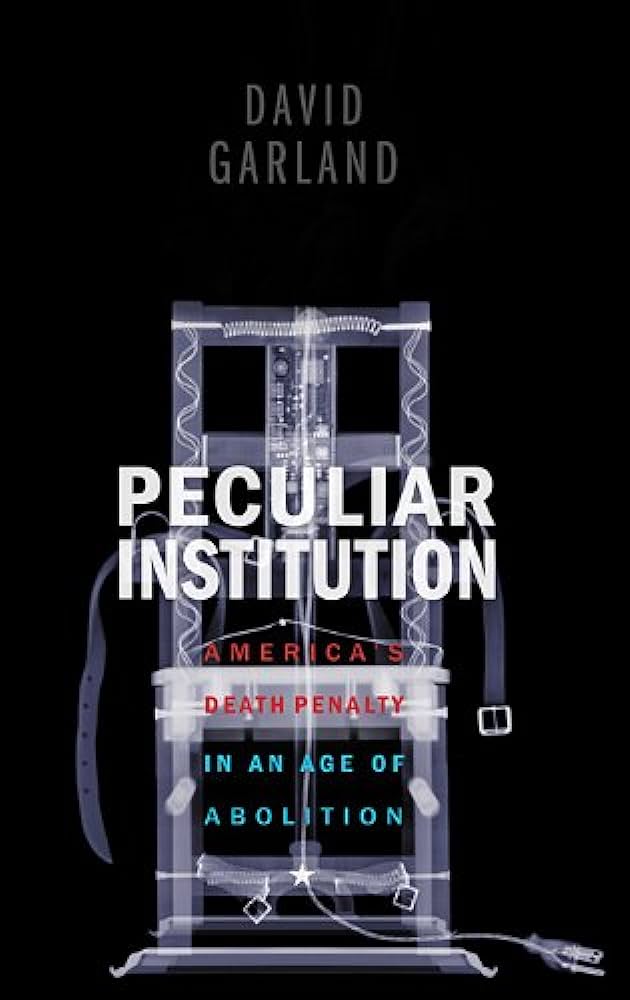
V. Peculiar Institution: America’s Death Penalty in an Age of Abolition [2010] by David Garland
Peculiar Institution aims to find explanations and justifications for the USA’s insistence on carrying out the death penalty. Garland draws parallels between the execution practice and the particular culture of the USA, where law and politics intermingle, and the popular will, often mindful of the need for “revenge”, is often equated with the law. The question of who eventually ends up on the death penalty row often boils down to the colour of one’s skin, one’s mental capacities and how much money one has to buy their way out of it (a more experienced lawyer), rather one’s true guilt and crime severity. Moreover, appeals and delays in executions cost more to taxpayers than just keeping prisoners in jail. So, why still have it? “We should forgive our enemies, but not before they are hanged” (Joe Abercrombie). It looks like some states’ electorate agrees.
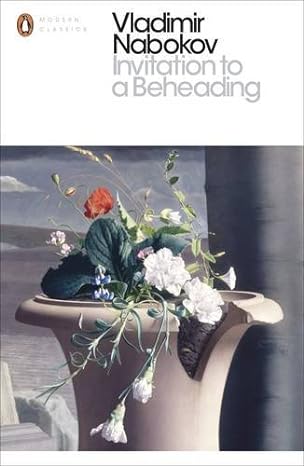
VI. Invitation to a Beheading [1936] by Vladimir Nabokov
“In accordance with the law the death sentence was announced to Cincinnatus C. in a whisper.” Vladimir Nabokov may be known for his novels Lolita and Pnin, but he also wrote this book that introduces one truly Kafkaesque scenario and involves one man named Cincinnatus C. who was found guilty of the crime of “gnostical turpitude” and now awaits his execution in prison. His executioner is apparently also his cell-mate. Nabokov underlines the absurdity and irony of this man’s extraordinary situation in this much underrated, introspective literary work. Producer Uri Singer (White Noise) has already bought the rights to this book adaptation, so perhaps we will also soon see Invitation to a Beheading as a major film?

VII. The Electric Chair: An Unnatural American History [1999] by Craig Brandon
When one thinks about the rise of the use of electricity in the US, one hardly ever thinks about the electric chair and its usage in death penalty cases, but, in fact, the “current war” waged by Thomas Edison and George Westinghouse in the 19th century was directly linked to the first use of the electric chair to carry out executions in the US (Edison Electric Illuminating Company was formed in 1882 and the first execution by the electric chair was carried out in 1890). This curious book traces the history of the use of the electric chair, and how its rise in the American criminal justice system was rooted in the misconceptions about the then “new wonder” that is electricity and its effect.
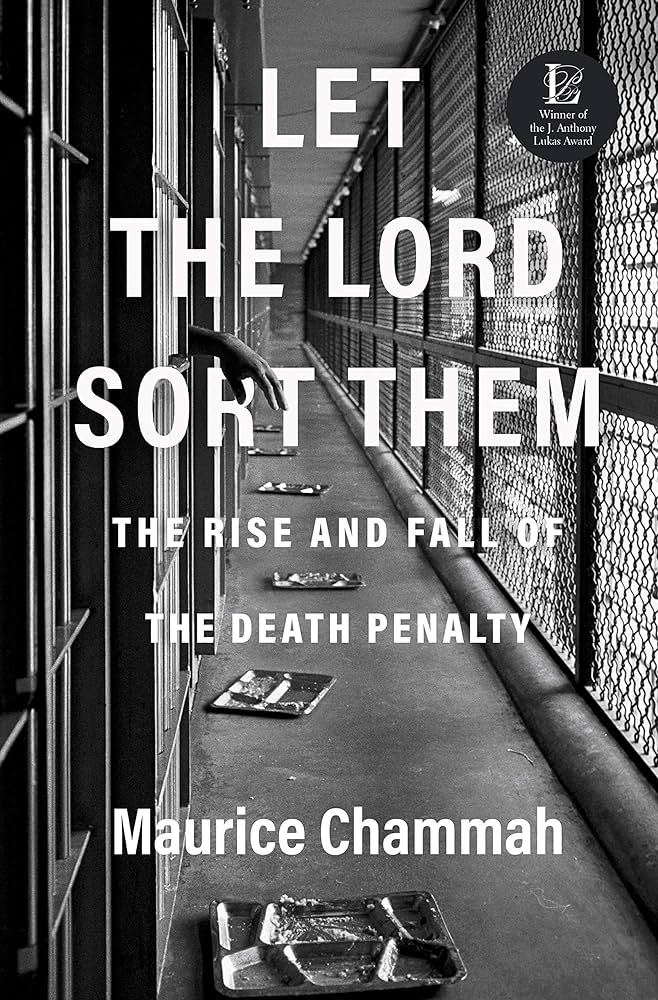
VIII. Let the Lord Sort Them: The Rise and Fall of the Death Penalty [2021] by Maurice Chammah
Proliferation of weaponry among common citizens, death penalty and costly medical care – one may assume that the talk is about the Middle Ages or some long forgotten past, but, no, this is the state of the twenty-first century USA. In this book, Maurice Chammah traces the history of capital punishment in the USA, and one of the great things about this book is that it gets “close and personal” with the topic, with the author talking about individual prisoners, their families and defence lawyers. The focus is primarily Texas, the state with the greatest support for the practice.

IX. The Faithful Executioner: Life and Death, Honour and Shame in the Turbulent Sixteenth Century [2013] by Joel F. Harrington
What were executions really like in the sixteenth century? No one could answer this question better than the executioner himself. The Faithful Executioner focuses on the working life of Franz Schmidt (1555-1634), a public executioner who lived in what is now Germany in the Renaissance period. By all accounts, he was an “exemplary” executioner who wanted to challenge a number of unfair stereotypes surrounding his gruesome trade. This is a bit misguided, but still insightful biographical nonfiction about the life of one man practising one uncommon profession.
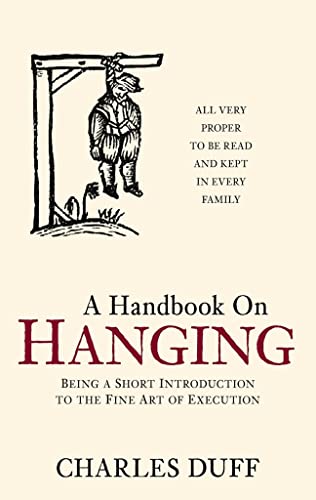
X. A Handbook On Hanging [1927] by Charles Duff
Charles Duff (1894 – 1966) was a writer from Northern Ireland who wrote a number of curious non-fiction books, among which is A Handbook on Hanging, which is a satirical take on hanging as a means of execution. Hanging was the most common method of execution in the United Kingdom, and the author exposes a parade of hypocrisies on the part of the British towards the death penalty procedure. The book is now part of the NYRB classics series.
Jean-Paul Sartre’s classic short story The Wall [1939] also concerns a number of prisoners awaiting their execution, and it is curious to note that the US of the 1990s was particularly interested in the death penalty debate. It is at that time that we saw notable American creative works produced on this topic, including novel The Green Mile [1996] by Stephen King, non-fiction Dead Man Walking [1993] by Helen Prejean, which was also made into a well-known film, as well as John Grisham’s legal thriller The Chamber [1994]. Moreover, if you are not puff off by the very grim topic, I can also recommend Japanese film Death by Hanging [1968], a complex cinema of absurdities involving a situation whereby one condemned Korean man unexpectedly survives his execution by hanging.


Great book list. Thanks for delving into this macabre and relevant topic!
LikeLiked by 1 person
Thanks! It was fascinating to explore.
LikeLiked by 1 person
A fascinating collection of books about a subject which would most of us the creeps. Well done.
LikeLiked by 1 person
Thank you so much for this! I’ll be checking out copies of each. It’s a very interesting and relevant topic. Thanks!
LikeLiked by 1 person
I hope you like the selection. It is a grim topic, yes, but so important and worth delving into.
LikeLiked by 1 person
Diana – I would include Dreiser’s An American Tragedy.
I met Craig Brandon. He was an authority on the Gillette case, which Dreiser’s novel is about.
I found Brandon’s book on the electric chair hard to read because of Brandon’s fascination with gruesome details which I thought (their appeal to Brandon) was excessive.
Also, how about Norman Mailer’s The Executioner’s Song?
LikeLiked by 1 person
Thank you, Roger, The Executioner’s Song is a great suggestion to fit into the list, and Dreiser’s An American Tragedy, too, though I guess like Camus’s The Stranger, the death penalty theme there plays its role only near the end. I read Brandon’s book quite some time ago, so the gruesome details are hazier for me, but I am sure you are right there too.
LikeLike
Good list. I thought The Enchanted was a terrific book — really blew me away a bit. I think there was another novel recently Notes on an Execution by Danya Kukafka but I haven’t read it yet. It seemed to get some favorable reviews. And I read Grisham’s The Confession — if that counts, gritty & effective.
LikeLiked by 1 person
Thanks! I too was so impressed with The Enchanted – it exceeded my expectations in every way. I also like it for the fact that it is not “in your face” book and Denfeld does her job rather quietly and unassumingly, with simple language, but the result is still so powerful. Magic.
Notes on an Execution is a great suggestion, thanks. I’ve heard of this book, but also still to check it out. Actually, as I am just reading its synopsis again, I can’t help but compare it to The Enchanted. I think Denfeld tried, at least in part, to do the same thing that Kukafka does in Notes – trying to show that a killer, even on death row, does not exist in a vacuum, but has a past to tell, as well as/or people in his life affected by his deed.
LikeLike