

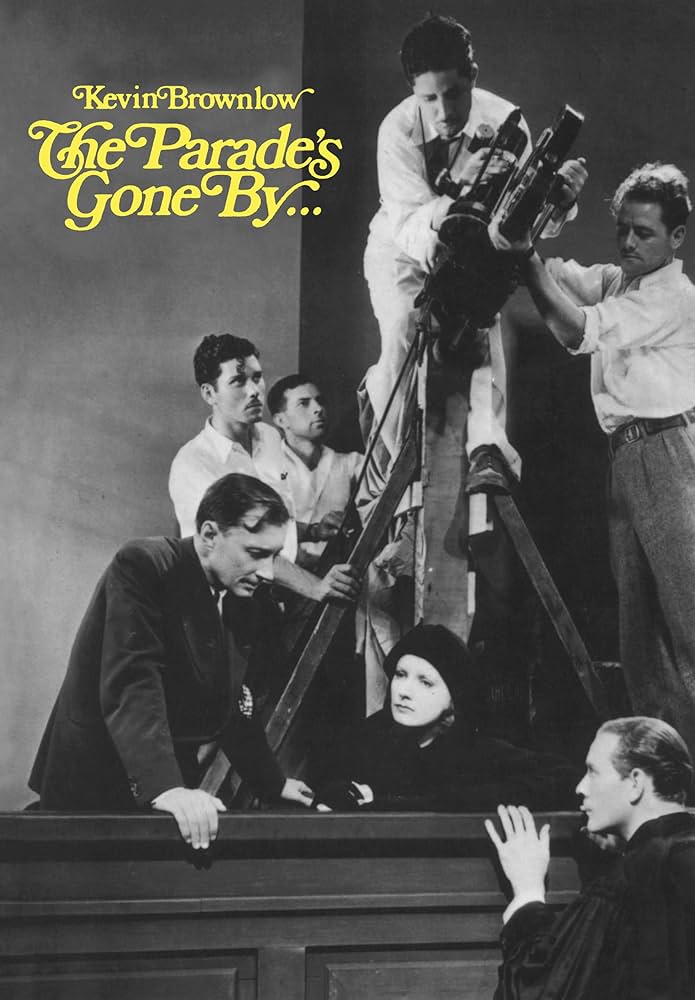
The Parade’s Gone By…[1968/76] – ★★★★
Today (29th September) is the National Silent Movie Day, celebrating early cinema and raising awareness about film preservation, and I am reviewing this non-fiction book on silent cinema by film historian Kevin Brownlow (1938-).
Safety Last! (1923), Sherlock Jr. (1924), Greed (1924), Battleship Potemkin (1925), Metropolis (1927), Sunrise (1927), The Passion of Joan of Arc (1928), City Lights (1931) – these are some of the greatest films ever made, and they are all silent. Brownlow’s argument is simple: silent film is not some primitive, crude relic of a bygone era, but part of the richest tradition in cinema history. It is a unique mode of cinematic expression, and should be preserved and cherished in its own right. In the book, Brownlow alternates chapters on the craft of silent film-making (camerawork, editing, acting, etc.) with the insights into individual directors and actors, producing an intelligent, eye-opening book.
Brownlow starts his book by talking about early, experimental forms of medium, and Vitagraph’s early days, before continuing his odyssey through cinematic topics and star interviews. There are separate chapters on D. W. Griffith, Harold Lloyd, Gloria Swanson, Buster Keaton, Charlie Chaplin, Betty Blythe, Mary Pickford, David O. Selznick, Clarence Brown, and others.
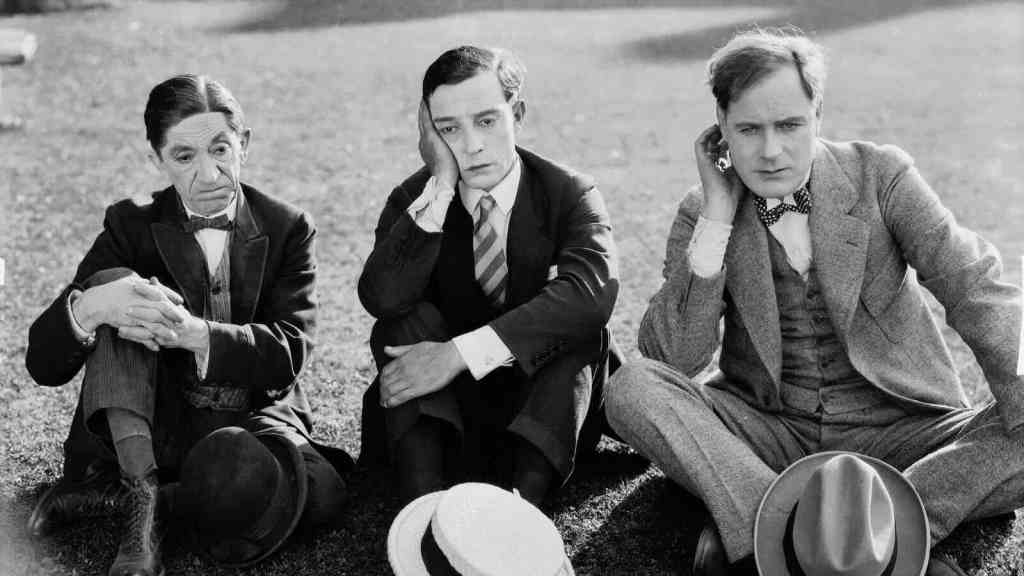
The chapter on Buster Keaton (1895-1966), an American actor known for his silent films where he performed inventive stunts, is, of course, fascinating. The interview touches on Keaton’s biographical details and how he got into pictures in the first place, before talking about his specific films, including Sherlock Jr. (1924) and The Navigator (1924). Keaton was very hard-working, fascinated by the mechanics of film-making, and became known for his intricate preparations for stunts. Brownlow writes: “His gags were never hit-and-miss; they were calculated with the precision of an engineer’s blueprint. And he was a past master when it came to stunts involving physical prowess for comic effect” (University of California Press, 1976: 104). Spontaneity, determination and hard-work were key to making a good comedic gag. However, in comparison to some other major film stars of the silent era, Keaton suffered a series of cinematic failures with the arrival of talkies and was reduced to a gag man in the very early 1930s. We are used to think of him as a major star, but the author reminds us that Keaton was “completely forgotten until the surprising revival of his films in the 1950s”. Now and then I rewatch comedy Seven Chances (1925) with Keaton about a young man whose late grandfather had left him a fortune, but only on the condition that he marries before his twenty-seventh birthday. It is one of the funniest pieces of cinema ever, so I highly recommend.
The chapter on Charlie Chaplin is also surprisingly fresh as it delves into some of the behind-the-scenes material of his films and comments on his controversies, while the one on Harold Lloyd has heart-racing passages that describe the making of his film Safety Last! (1923). There, Lloyd, who did most of the stunt-work himself, plays a sales-clerk in a department store who is forced to climb a high-rise building as the man who was supposed to do it to attract customers is chased by a policeman.
The chapter on acting is as illuminating. There is a difference between acting for stage and acting for screen, but it took quite awhile for actors and the industry to catch-up to this “common sense” notion, as Brownlow puts it. Some actors who were used to the stage were seen as “overacting” on film, while others quickly rose to fame just for their screen presence. Albert Capellani (The House of Mirth (1918), The Hunchback of Notre Dame (1911)) and Maurice Tourneur brought a new, naturalistic style to dramatic acting: “screen acting should be nature herself…as close to normal behaviour of people in real life as possible.”
Brownlow then talks about directing. Interestingly, in the very early pictures, anyone could be a director, and men became directors after careers in engineering, gold mining and medicine. It could actually be of benefit that these people were not writers first. Preference was for “men unhampered by a literary education [since they] had a greater facility for visual narrative than men trained all their lives to use words” (University of California Press, 1976: 236). A common joke was of one actor who always shook hands with a train conductor simply because, in his own words, “he could be a director of my next picture”. Then, Brownlow asks who were the greatest silent film directors, and this question is tricky because many silent films are lost. For all we know, Hugo Ballin might have been the best director, but many of his films are lost. His filmography tells us that he directed Jane Eyre (1921), Vanity Fair (1923), and East Lynne (1921) – the prints of all of them are missing.
The interview with producer David O. Selznick (Gone with the Wind, Rebecca) was also insightful. America is a forward-looking country, which is a good thing, but it may serve her to look into the past more and not forget the lessons learnt there. Selznick said something that still rings true today: “I think it’s a pity that so much of the knowledge of cinematic craftsmanship in this country passed with the death or retirement of so many of the old hands. A contrast with directors abroad, who, whatever their shortcomings as makers of entertainment for American audiences, know more about the telling of a story on film than a regrettably large percentage of American directors of today.”
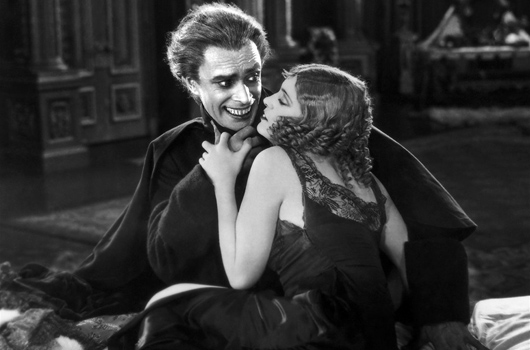
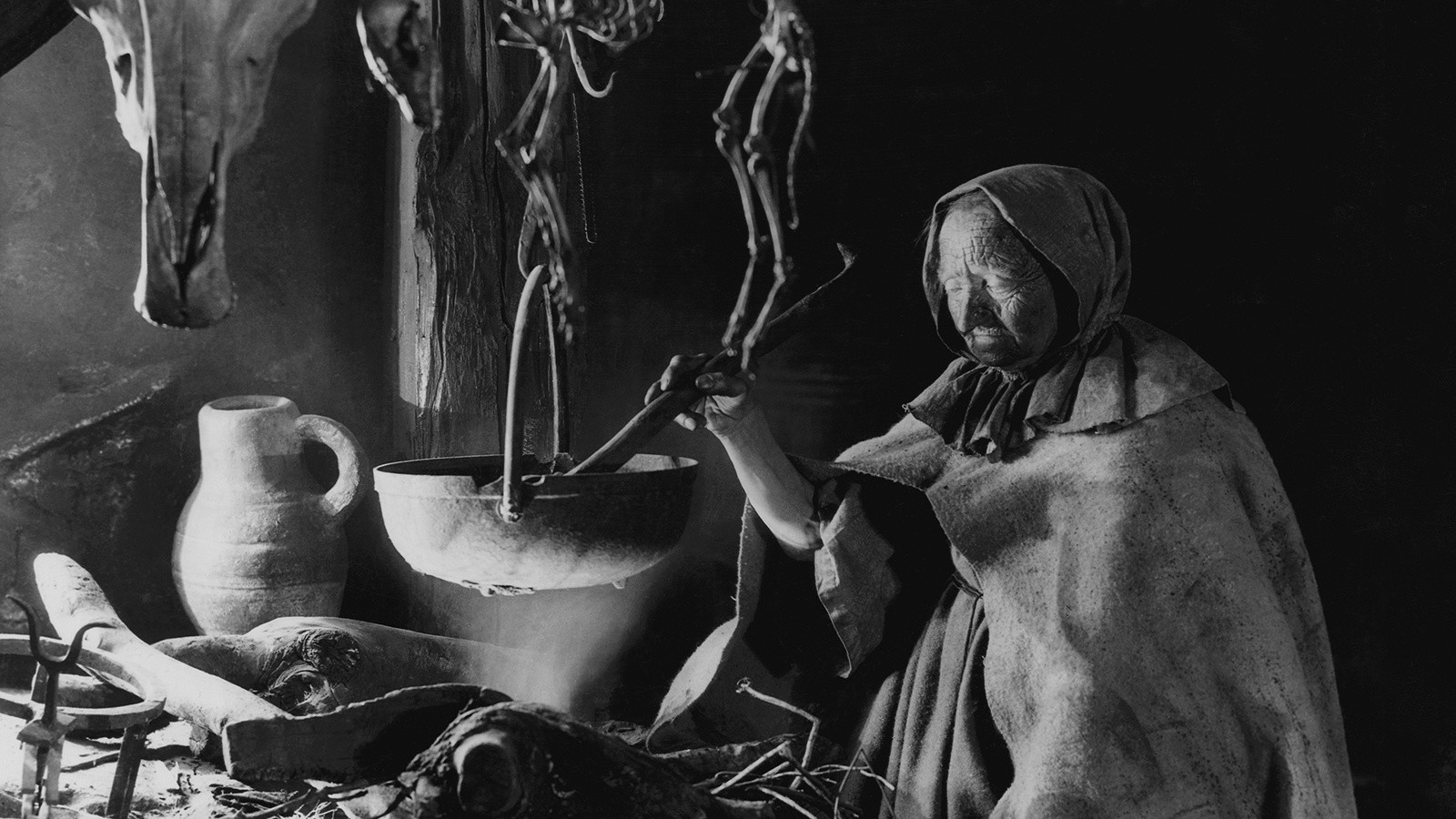
“The secret of the silent film lay in its unique ability to conjure up a situation that closely involved an audience, because demands were made on its imagination. The audience responded to suggestion, supplied the missing sounds and voices, and became a creative contributor to the process of projection. A high degree of technical skill was required to make such demands effective; what the audience saw it had to believe in” (Kevin Brownlow, University of California Press, 1976: 11).
Brownlow’s chapter on European cinema largely talks about German and British cinema, and, surprisingly, there are only a few references to Sergei Eisenstein (Strike (1925), Battleship Potemkin (1925)), who revolutionised silent cinema, and no references to Carl Theodor Dreyer (The Passion of Joan of Arc). Perhaps this is because Eisenstein’s work was rediscovered and re-evaluated only in the late 1980s, while the final version of The Passion of Joan of Arc was only found in 1981 (Brownlow’s latest book edition dates to 1976). More understandable are the omissions of Boris Barnet’s classic Dom na Trubnoy (The House on Trubnaya) (1928), which was rediscovered by the West only in the 1990s, as well as Lev Kuleshov’s silent film Po Zakonu (By the Law) (1926), which was reconstructed in 1975. However, although Brownlow spends much time on Abel Gance (J’accuse, La Roue, Napoléon), to whom the book is dedicated, there are also few references to both F.W. Murnau (The Last Laugh, Sunrise, Nosferatu) and Paul Leni. Both are mentioned only in passing and in the context of a couple of interviews, though, for example, Leni’s The Man Who Laughs (1928), rediscovered in 1966, is also a tremendous achievement in silent cinema.
Finally, amidst Chaplin, Lloyd and Keaton, Brownlow did not forget other comic actors, such as Harry Langdon (The Strong Man (1923), Long Pants (1927)), whose work must also be remembered, and there is a surprising short chapter titled “You Can’t Make a Picture Without ’Em” dedicated to grips, carpenters, property men, electricians, and assistants. “They have had no mention in the histories of the motion picture, yet without them there would be no history; [they] had to work as hard as any director or actor, but without the reward of credit or the satisfaction of creative involvement,” tells Brownlow. He also says that these people are often the “severest of critics” – “a really fine performance was rewarded with a burst of applause from the shadowy figures behind the lights. This most spontaneous and genuine of praise often meant more to the recipient than a handful of good reviews” (Kevin Brownlow, University of California Press, 1976: 174).
My Top 10 Favourite Silent Films
– The Passion of Joan of Arc (1928)
– Metropolis (1927)
– Sunrise: A Song of Two Humans (1927)
– Safety Last! (1923)
– Greed (1924)
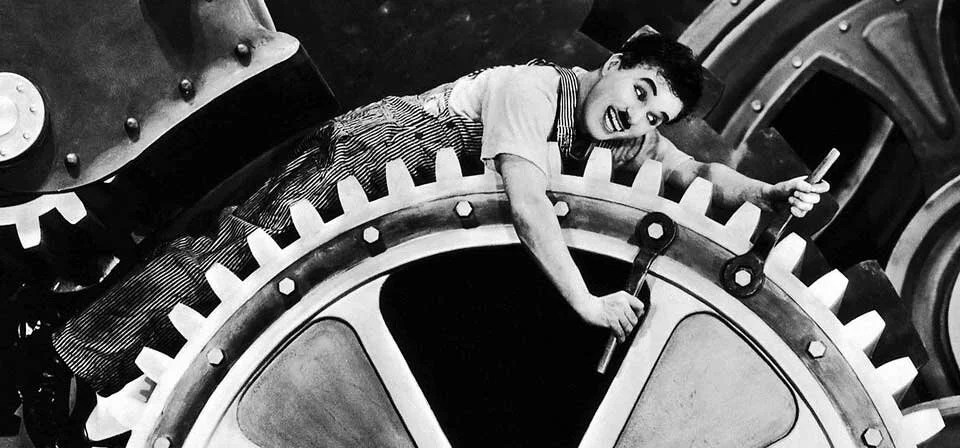
– Modern Times (1936)
– City Lights (1931)
– The Crowd (1928)
– The Cameraman (1928)
– Seven Chances (1925)
Brownlow’s style of writing is easy and appealing, and another great thing about the book is that it dispels some of the misconceptions about silent cinema, for example, the idea that it was The Jazz Singer (1927) that introduced “talkies” (talking pictures). This is not exactly the truth, and Brownlow shows how talking pictures existed years before The Jazz Singer. In fact, as early as 1901, many attempts were made to record sound on film. Moreover, talking pictures had not the immediate and enthusiastic success most believe they had. Photoplay magazine conduced a survey and found that “the public is not so sure they will continue to be satisfied with full-length, all-dialogue entertainment. Nine out of ten say they would rather have a first-rate silent picture than a second-rate talking picture”. However, the main reason for their dissatisfaction was that few theatres at that time had proper equipment to show talking pictures, reducing their quality, and the public opinion was soon changed in favour of talkies with the arrival of better-equipped cinemas.
🎦 Brownlow points out that “nothing is new except what has been forgotten”. We are so used to bright colours and spectacular sound effects that we may look at some contemporary films and think they are remarkable, creative or innovative not realising that it was their silent counterparts which were the true inspiration. There wouldn’t be the cinema we love today without the techniques established in the silent film era. Directors as diverse as Martin Scorsese, David Lynch, Tim Burton and Michel Hazanavicius were all influenced by silent films in their film-making (as well as such animators as Sylvain Chomet (The Illusionist) and Michael Dudok de Wit (The Red Turtle)).
The Parade’s Gone By…is more than just a love-letter to silent film; it is an invaluable resource replete with detailed information on how silent film emerged, gained popularity, and eventually morphed into another medium. Although predominantly American in perspective, it is also a surprisingly human story of silent film because the interviews shed light on the remarkable people who transformed our understanding of story-telling. In a sense, the parade has gone by, but it can also be argued that it still continues on its path, just in a changed form and in a new direction.
🎬 Do you watch silent films? What is your favourite?


I love Buster Keaton, all those stunts! And they’re actually doing them!!
LikeLiked by 1 person
They are astonishing, aren’t they? No safety nets or CGI. How about that stunt in Steamboat Bill, Jr. where Keaton had to be in an exact spot as the house is falling around him or he could have died or been seriously injured.
LikeLike
exactly!
LikeLiked by 1 person
I only just read this book over the summer and I loved it. This 58-year-old book offers so much insight to the origins of silent film; except for me now, it’s even more relevant since I have seen so many including ones that would have been considered lost or in terrible condition in 1968. It also complements information read in other film books and biographies. A must-read if you love film history!
LikeLiked by 1 person
Yes, completely agree, and I’m glad to find another fan! And, actually and paradoxically, its dated nature is part of makes it so appealing and valuable because of the interviews with silent movie stars who were still alive at that time. A treasure.
LikeLiked by 1 person
Agreed!
LikeLike