This American classic by John Williams is a great, even if heart-breaking read. It tells the story of university professor Stoner as he finds his way through life. He means to lead a simple life, but certain tragedies and disappointments in it get the better of him. The book is beautifully-written and is a quiet meditation on life and its meaning. The book can be compared to Thomas Hardy’s Jude the Obscure [1895] and to Jack London’sMartin Eden [1909]. Continue reading “May 2020 Wrap-Up: From Stoner to Smoking Poppy”→
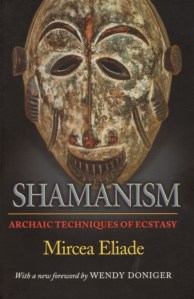
Mircea Eliade’s book is a fascinating, albeit dated, account of shamanism that focuses on the application of the tradition in different world regions.
Shamanism is by Romanian historian and author Mircea Eliade (1907 – 1986), and is considered to be one of the first proper attempts to approach shamanism systematically and scholarly. From costumes and drums to spirit animals and dreams, Eliade elucidates one of the most misunderstood practices/traditions in the world. The great thing about the book is that it talks about shamanism as it is applicable in different regions of the world, from Siberia and India, to South America and Oceania, attempting to draw parallels between them and talking about their general concepts, including similarities in initiation processes. Continue reading “Review: Shamanism: Archaic Techniques of Ecstasy by Mircea Eliade”→
Erik Satie (1866 – 1925) was a French composer known for his Gymnopédies and Gnossiennescompositions, among other late 19th century experimental music (he was “a precursor of minimalism, repetitive music and the Theatre of the Absurd”). This week it will be 154 years since the composer’s birth, and I would like to share his uplifting Je te veux composition to brighten everyone’s Wednesday.
“…there was no doubt in Phil’s mind of the end of [the] pursuit. The dog would have its prey. Phil had only to raise his eyes to the hill to smell the dog’s breath [Thomas Savage, 1967: 76].
This book is by an underappreciated American author Thomas Savage, and Jane Campion (The Piano (1993)), one of my favourite film directors, is currently shooting an adaptation of it. The story takes place in a small town in Montana in the 1920s where two brothers’ interests clash when one of them unexpectedly decides to marry a widow with a son. Raw, uncanny and psychological, The Power of the Dog is probably known for its intense character study of Phil Burbank, whose brooding and quietly menacing presence haunts the pages of this book, making it virtually unforgettable. Thomas Savage undoubtedly drew from his own previous experience of working as a ranch hand to produce a different kind of a western, whose deep sensitivity to the characters and their dynamics is nicely offset by the “harsh” authenticity of the language. Continue reading “Review: The Power of the Dog by Thomas Savage”→
It is Victory Day in Russia (my homeland), and I thought I would post a tribute especially since today marks 75 years since the defeat of Nazi Germany and the end of the World War II in Europe. My grandparents lived through the WWII (for example, my grandfather on my mother’s side was a paratrooper (a military parachutist) and was involved in many WWII operations and my grandmother on my mother’s side worked in trenches). Some heroic actions are less evident than others and some heroes remain either unknown or forgotten. I have always found it touching when children or young teenagers distinguished themselves as heroes of war. Although there were many such examples, below, I would like to briefly talk about Zinaida Portnova.
Zinaida Portnova [20 February 1926 – 15 January 1944]
Zinaida was an active member of the anti-fascist youth organisation of Obol, a town now in Belarus. From 1942 (at the age of fifteen), she was a Committee member of the Obol undercover organisation “Young Avengers”. When she worked in one Nazi canteen, she poisoned soup meant for Nazi Officers which led to the deaths of many Nazis (over one hundred), and to prove that she did not, she ate the soup herself and miraculously survived. She then worked on many undercover operations that involved the undercover bombing of Nazi vehicles and distinguished herself in many other ways. When she was captured and interrogated by the Gestapo, the source says she snatched a pistol from the interrogation table and then killed three Nazi interrogators who meant to torture her for information. She escaped that room, but was then recaptured, tortured and shot (source I and source II). For her courage and heroism in fighting the fascists, she was posthumously awarded the title of the Hero of the Soviet Union.
I am concluding this post with this arrangement by Patrik Pietschmann of the Schindler’s List (1993) soundtrack composed by John Williams.
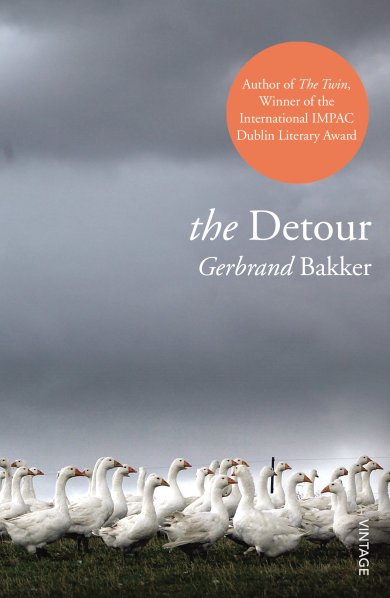
This is a book by Dutch writer Gerbrand Bakker, whose previous book The Twin[2006] won the International Dublin Literary Award. The Detour (also known as Ten White Geese), translated from the Dutch by David Colmer, is about a Dutch woman who moves from her country and starts to live alone on a farm in rural Wales. Some of her nearby neighbours are badgers, cows and ten white geese whose number declines rapidly and mysteriously the longer she lives on her rented farm. Equipped with a poetry book by Emily Dickinson, the woman seems to be on the run from her past, trying to either delay or solve her immediate problems by seeking refuge in an unknown and isolated location. Her peace is soon disturbed by those with curiosity and inquisitiveness. With elegance and delicacy, Bakker draws on the nature in his book to shed light on the mystery that is this woman and her past, with his book becoming a quiet and poignant exploration of loneliness, pain and human connection.





 Shamanism [1951/64] –
  The
The
 Thoughts on Papyrus