Review: King, Queen, Knave by Vladimir Nabokov

Continue reading “Review: King, Queen, Knave by Vladimir Nabokov”

Nabokov’s Pale Fire: An Illusion Within an Illusion

Pale Fire [1962] – ★★★★★

Continue reading “Nabokov’s Pale Fire: An Illusion Within an Illusion”

The Croatian Freethinker

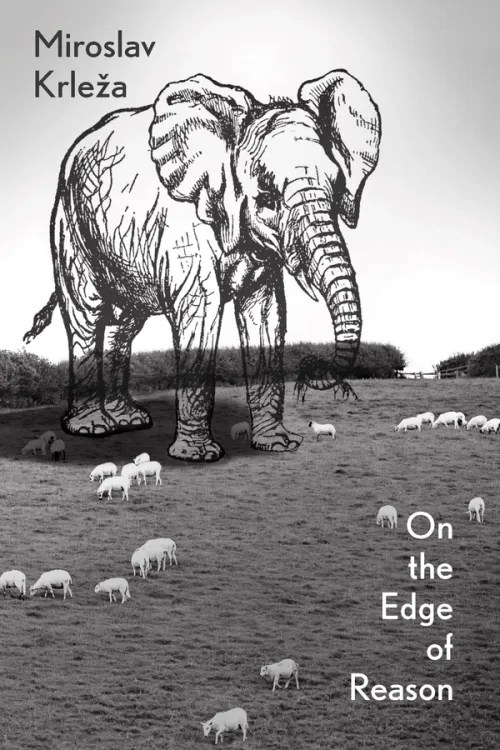
On the Edge of Reason re-issue is newly out from New Directions

What classic story first comes to your mind when you think of a satire on the hypocrisy of the bourgeoisie or ruling majority? George Orwell’s Animal Farm? J. B. Priestley’s An Inspector Calls? Henrik Ibsen’s An Enemy of the People? Charles Dickens’s Little Dorrit? Edith Wharton’s The House of Mirth? French literature has a long tradition of such stories, so, perhaps, some story by Molière, Honoré de Balzac, Émile Zola, or Guy de Maupassant? The choice is numerous, but, whatever it is, chances are it would not be Miroslav Krleža’s novel On the Edge of Reason (1938). And, yet – it should be. This novel by one of the greatest Croatian writers of the twentieth century should be on everyone’s lips when evoking stories about the challenge to that prevailing social order that curbs individual freedoms and rights, leading to injustice.

Prolific and versatile author Miroslav Krleža (1893 – 1981), who wrote novels, essays, poems, plays and short stories, was aptly placed to tackle the theme. His stark criticism of the ruling elite’s egoism, greed and the perpetration of social injustice in his fiction is the reflection of his country’s turbulent political history and his own innate desire to challenge the status quo. While being an officer in the Austro-Hungarian Army, Krleža once unsuccessfully deflected to the Serbian Army, and his embittered experience as a soldier on the frontlines during the World War I culminated in his powerful anti-war writings, including a short story collection titled Croatian God Mars (1922). After the World War I, Krleža emerged as a talented writer promoting socialism, and because of his leftist views, his books, publications and left-wing magazine Plamen had been banned in the inter-war period. In 1939, Krleža was expelled from the country’s Communist Party as his opinions on art contrasted with the social realist principles, and this further cemented his independent, “anti-establishment” public image.

Continue reading “The Croatian Freethinker”

Review: Waiting for the Barbarians by J. M. Coetzee

Waiting for the Barbarians [1980] ★★★★

What does J. M. Coetzee’s third book Waiting for the Barbarians have in common with Dino Buzzati’s novel The Tartar Steppe (1940)? Arguably, much more than their shared source of inspiration – C.P. Cavafy’s poem titled Waiting for the Barbarians (1904), whose first two lines go like this: “What is it that we are waiting for, gathered in the square?/The Barbarians are supposed to arrive today.” The ironic poem tells of the idleness and passivity of authorities who wait for the realisation of their grandiose expectations – the coming of the Barbarians. While Buzzati’s book primarily focuses on the self-imposed inertia and what it may mean to an individual spirit, similar to Mann’s novel The Magic Mountain, Coetzee book emphasises the ignorance of a blood-thirsty, ruthless power out of touch with reality and the way of life of its own people, but adamant to prove itself in the face of any, however slight and imaginary, hint of an external threat.

Continue reading “Review: Waiting for the Barbarians by J. M. Coetzee”

Review: A Lost Lady by Willa Cather

A Lost Lady [1923] – ★★★★1/2

A charming novel with a deceptively simple, beautifully-written story that reveals so very slowly & elegantly its moving & provoking character study.

Her eyes, when they laughed for a moment into one’s own, seemed to promise a wild delight that he had not found in life. “I know where it is”, they seemed to say, “I could show you!“….She had always the power of suggesting things lovelier than herself, as the perfume of a single flower may call up the whole sweetness of spring” [Willa Cather, 1923: 136, 137].

Continue reading “Review: A Lost Lady by Willa Cather”

Review: The Baron in the Trees by Italo Calvino

Continue reading “Review: The Baron in the Trees by Italo Calvino”

April 2021 Wrap-Up: From Letter From An Unknown Woman to The Musical Illusionist

Letter from an Unknown Woman [1922] by Stefan Zweig – ★★★★★

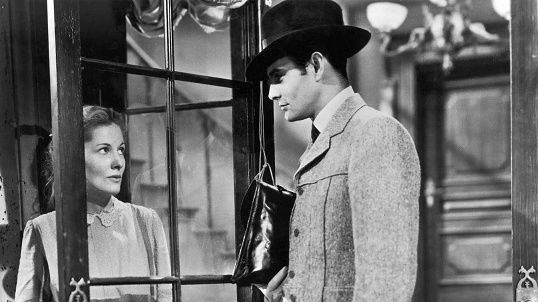
This short novella was a heart-breaking read, and probably goes well with the film of the same name by Max Ophüls. It is as much a story of hidden and forbidden passion as it is a tale about coming to terms with life disappointments and acknowledging people affected by one’s spur-of-the-moment whims and short-lived desires.

An Autobiography: The Story of My Experiments with Truth [1929/48] by Mohandas K. Gandhi – ★★★★★

In this frank, unputdownable autobiography, Mahatma Gandhi talks about his life, from his upbringing in India (including child marriage) and travel to the UK (to study law) to actions in India, and thoughts on everything, from his relationship with his wife, to the WWI, religion and racism. I particularly appreciated the book passages on his vegetarianism and Gandhi’s comments on introversion. Rather than the latter being a weakness or some “fault”, it helped him to establish that “quiet power” to conquer hearts and minds, and try to lead people to a better life. The book is a philosophical and deeply honest one, with important life lessons.

Continue reading “April 2021 Wrap-Up: From Letter From An Unknown Woman to The Musical Illusionist”

Mini-Review: Tuesday Nights in 1980 by Molly Prentiss

Tuesday Nights in 1980 [2016] – ★★★★

I would like to thank Cathy at 746books for recommending this book to me after I compiled list 7 Great Novels Revolving Around Visual Art. Tuesday Nights in 1980 presents New York City’s art scene of 1980. At the centre are three people whose destinies collide in the background of creative bohemia filled with liberties of all kinds, boundless artistic inspiration and ambition, and spurs of unusual creativity: James Bennett is a misunderstood person and a renowned art critic who has synaesthesia, a condition which means that he experiences ideas, people and objects as colours or a combination of colours; Raul Engales is a “free spirit” and up-and-coming Argentinean artist who left behind in his country one past better not recalled; and Lucy Olliason is a girl from Idaho who has just recently arrived to NYC and is open to everything and anything. Evocatively, even if exaggeratedly, Molly Prentiss captures in her story the thrill of being young and artistic in NYC, which itself starts to undergo many changes. Amidst obsessive art-making and pleasures of falling in love, there are also a transitory nature of success, creative doubts and personal tragedies.

Continue reading “Mini-Review: Tuesday Nights in 1980 by Molly Prentiss”

Review: Melmoth by Sarah Perry

A15Zne-lCL Melmoth [2018] – ★★1/2 

First, I would like to say that I loved Sarah Perry’s The Essex Serpent [2016], its historical context, its beautiful prose, its main character, its plot – it read (almost, perhaps) like a modern classic, and it was a very enjoyable experience. Melmoth is Perry’s third book in which she focuses on the legend of Melmoth the Wanderer as it is seen through the eyes of modern-day characters living in Prague. In this story, Helen Franklin is a forty-something-year-old woman living in the Czech Republic in 2016 and working as a translator. She strikes up a friendship with one “posh” couple Karel and Thea, and it is through them that she reads a mysterious manuscript that details the confessions of certain people who allegedly had an encounter with Melmoth or Melmotka (a lonely woman who once denied the resurrection of Christ and is doomed to wander the Earth forever bearing witness to the humanity’s cruelty). The obsession with the manuscript soon makes Helen confront her own past. Even though there is an attempt made by the author to make this book deep and philosophical by touching upon such issues as sin, guilt, regret and atonement, these messages never get across in a compelling manner, and, overall, the book feels dull and very contrived. As in The Essex Serpent, Perry uses one intriguing and spooky legend here as a bait to entice her readers into picking up this “Gothic and unsettling” book only for those readers to then discover that they, instead, have been served with merely a collection of sad personal historical accounts that the author never even managed to bring convincingly together to make her final important point on history, witnessing and responsibility. Continue reading “Review: Melmoth by Sarah Perry”

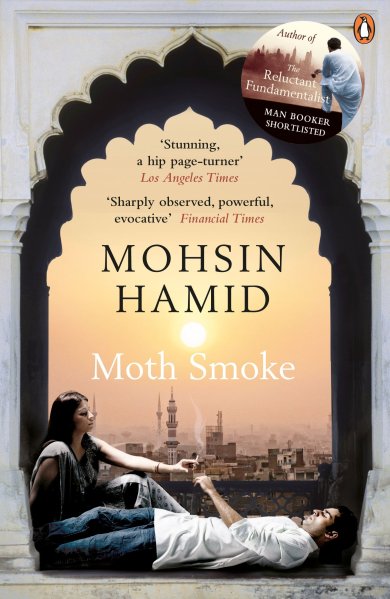
Review: Moth Smoke by Mohsin Hamid

Moth Smoke Cover

Moth Smoke [2000] – ★★★★1/2    

In Moth Smoke, Darashikoh Shezad or Daru is a hash-smoking banker living in Lahore, Pakistan who rekindles his friendship with his childhood friend Ozi, who is now an influential and rich man living under the protection of his equally influential, but corrupt father. Daru also realises that he is attracted to Ozi’s wife Mumtaz, and, among his friends is also a shady character named Murad Badshah, who sometimes acts as his drugs supplier. After Daru is fired from his job, his societal divide from influential and rich Ozi grows even further, and he finds himself on the dark path towards immorality and crime. Moth Smoke is a fascinating, eye-opening journey into Lahore’s criminal underbelly, which makes observations on the societal class divisions and the east vs. west mentality conflict. But, it is also so much more than that: it has an experimental structure and style (with at least four unreliable narrators); employs symbolism and fable-like story-telling; and becomes a book about the limits of morality, friendship and love, while also exploring the nature of guilt and the malleability of truth.

Continue reading “Review: Moth Smoke by Mohsin Hamid”

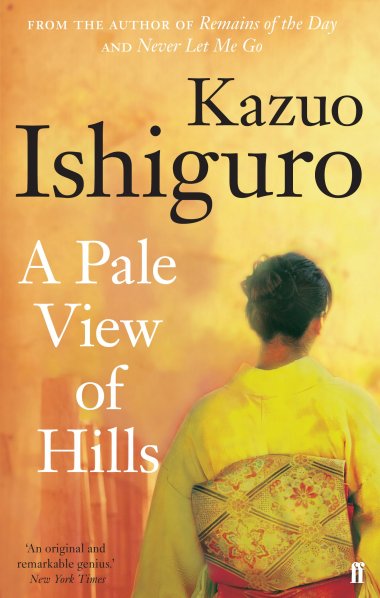
Review: A Pale View of Hills by Kazuo Ishiguro

A Pale View of Hills Book Cover

A Pale View of Hills [1982] – ★★1/2 

<<This review may contain spoilers>>

Kazuo Ishiguro’s debut novel is quite a puzzle. In the story, we first meet Etsuko, a middle-aged woman from Japan who is now residing in the English countryside, while her younger daughter Niki lives in London. As Niki comes from London to visit her mother, Etsuko starts to reminisce about her previous life in Nagasaki, Japan. We eventually start to guess that Etsuko’s memory of the suicide of her older daughter Keiko in England is somehow linked to Etsuko’s recollections of her friendship with strange woman Sachiko and her daughter Mariko at the time that she lived in Nagasaki.

This short novel is an easy and, at times, intriguing read, with Ishiguro sometimes making insightful points about Japanese culture and the effect of the passage of time on his characters. However, it seems that this subtle novel also asks too much from its reader. If there was a mystery somewhere in the novel’s midst, then it was not sufficiently elaborated upon or given sufficient space to breathe for the reader to really care; and, if there was no real mystery, then the point of the novel is partly lost. Ishiguro seems to have wrapped his story in too many layers of subtlety, thereby forcing his readers to make a giant leap forward in terms of imagination so that they finally decide to start unwrapping the unwrappable. It is unlikely that there will be a satisfactory meaning or explanation found by the novel’s end. Besides, while the reader may want to delve into possible interpretations of what he or she has just read, there is also the possibility that the interest will be lost half-way through. 

Continue reading “Review: A Pale View of Hills by Kazuo Ishiguro”