Chopin: Favourite Ballades

Continue reading “Chopin: Favourite Ballades”

J. S. Bach: Keyboard Concerto No. 1 in D minor

Top 10 History Non-Fiction I Read

From all non-fiction out there, I often find history non-fiction the most interesting and, actually, the best written (historians can write!). This is a list of ten history non-fiction books that I wholly recommend, and, yes, my list does gravitate towards medieval history and the history of medicine. I am also excluding autobiographical memoirs, and this list is in no particular order.

I. History of Madness [1961/2009] by Michel Foucault 

Men are so necessarily mad, that not being mad would constitute another form of madness” (Blaise Pascal). I have read a number of books on the history of psychiatry, but this one is still the one. It is an ambitious, monumental work of eminent French philosopher Michel Foucault (1926 – 1984), and in it, he examines the changing meaning, perception and treatment of “madness” through the centuries, commenting on many cultural, societal, scientific and political transformations.

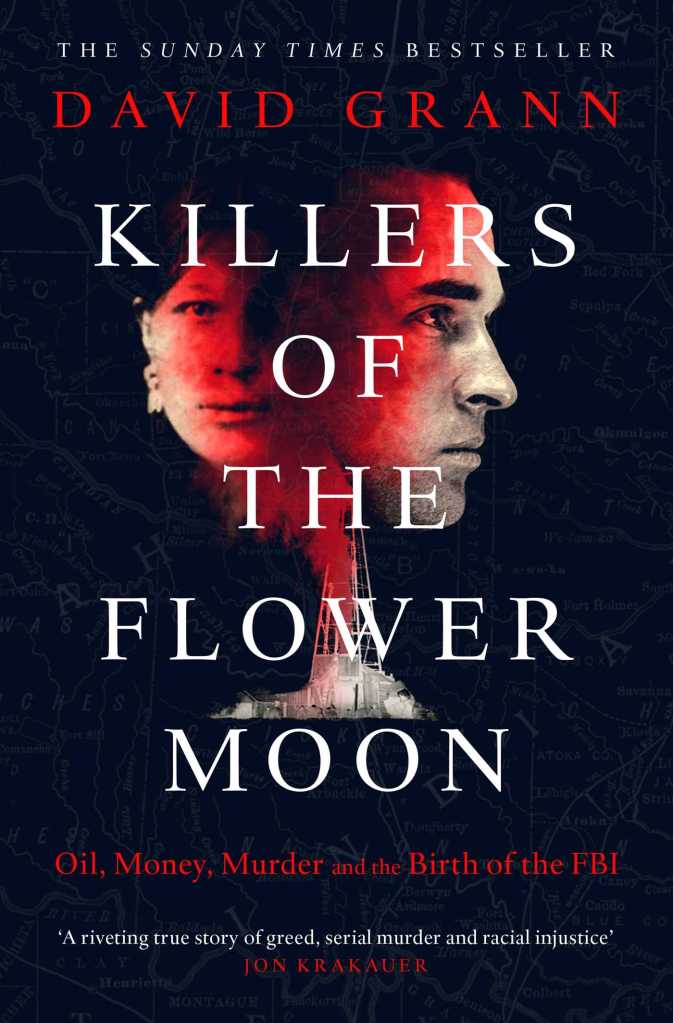
II. Killers of the Flower Moon [2017] by David Grann

This entry cannot be more timely – Martin Scorsese’s film based on this book is currently debuting at the Cannes Film Festival 2023. This is the story of the brutal murders of the Osage people in Oklahoma in the 1920s after oil deposits were found on their land. Corruption and deception are rife, but can an independent police force untangle the web of deception and cover-ups, and ensure justice? This is an entrancing read that will haunt you for days. My first book by David Grann was The Lost City of Z [2009], which I also highly recommend.

Continue reading “Top 10 History Non-Fiction I Read”

Kats-Chernin: Unsent Love Letters

Elena Kats-Chernin (1957-) is a Soviet-born Australian composer and pianist, and in this piece, she evokes Erik Satie‘s melodies to produce a melancholy composition of her own on the theme of unsent love letters since, after Satie’s death, a stack of unsent love letters was found in his apartment in Paris. The composition is part of Kats-Chernin’s album Meditations on Erik Satie (2017), and she is also best known for scoring the ballet Wild Swans (2003).

Camille Saint-Saëns: Samson and Delilah (Bacchanale)

In 1877, French composer Camille Saint-Saëns (Danse Macabre) wrote opera Samson and Delilah to a French libretto by Ferdinand Lemaire and based on a biblical tale. Bacchanale is a musical piece from that opera where Delilah leads a provocative dance to taunt Samson.

“The Great Pianists” Non-Fiction: Lang Lang’s Memoir & Van Cliburn’s Biography – “Moscow Nights”

This month I intensified my piano-learning (I have finally finished all the piano method books I once started and jumped on Duvernoy, Schytte and Lemoine’s studies) and listened to a lot of piano music (Godowsky’s Java Suite ), so I have also decided to share a couple of piano-related books I have been reading recently: Lang Lang’s memoir and a book on Van Cliburn.

Journey of a Thousand Miles: My Story [2008] by Lang Lang – ★★★★1/2

Chinese pianist Lang Lang is considered one of the leading figures of today’s classical music world and one of the most accomplished pianists of our modern time. This is his memoir in which he tells his story, from his birth in 1982 in China’s north-eastern city of Shenyang, his early musical education and upbringing, to his hard-work and his family sacrificing everything to see him become “the world’s no. 1”. It is a moving autobiography of a child once living in near-poverty, but always working hard and dreaming “big”, and then of a young man, not always believing in himself, but always being clear in his mind what he wants to achieve next, overcoming his tricky family life and the Chinese competitive system. There are no “self-indulgent” paragraphs in this memoir. It is clear and to the point, with very short chapters, in which Lang Lang, first and foremost, pays tribute to his family and his teachers, who always believed in him and enabled him to become what he is now – an immensely popular classical pianist.  

Continue reading ““The Great Pianists” Non-Fiction: Lang Lang’s Memoir & Van Cliburn’s Biography – “Moscow Nights””

Review: Music in the Castle of Heaven by John Eliot Gardiner 

Music in the Castle of Heaven: A Portrait of Johann Sebastian Bach [2013] – ★★★★

In this biography, Gardiner strikes at the very heart of J. S. Bach’s genius, presenting to us a complex and sometimes contradictory musician who was also a very empathetic man.

I was obliged to be industrious. Whoever is equally industrious will succeed equally well“. Johann Sebastian Bach

The music of Bach is complex, inventive, awe-inspiring and brimming with mathematical precision and religious fervour. The man behind it appears equally stern and unapproachable. But, who was Johann Sebastian Bach really and how it came about that a cantor operating in a small region of Germany managed to compose music of such brilliant contours, imaginative force and spiritual depth? In this non-fiction, British conductor John Eliot Gardiner aims to shed light on these puzzling questions. Music in the Castle of Heaven is an illuminating account of Bach’s life and music that starts from the premise that to understand Bach’s art, we have to first immerse ourselves in the very essence of his time and place of birth. Numerous factors influenced Bach and made him into a musician we know today – familial, historic, socio-economic, cultural, educational – and without knowing these we cannot even begin to fathom the workings of Bach’s mind.

Continue reading “Review: Music in the Castle of Heaven by John Eliot Gardiner “

Richard Wagner: Tristan and Isolde (Prelude)

Richard Wagner (1813-1883) was a German composer known for many of his pieces that paved the path to modern music, including The Ring of the Nibelung. Tristan and Isolde is an opera in three acts by the composer which is largely based on the twelfth-century romance by Gottfried von Strassburg. Below is the haunting prelude from the opera that was also used in many famous films, including Lars von Trier’s sublime Melancholia (2011).

Dmitri Shostakovich: Piano Concerto No. 2 (Andante)

Soviet composer Dmitri Shostakovich was born on this day (25 September) 115 years ago, in 1906 (died in 1975), so I am sharing this part from his Piano Concerto No. 2, composed and performed for the first time in 1957. It is a very touching piece of understated beauty.

Non-Fiction Reviews: “Five Points”, “When Brains Dream”, & “Year of Wonder”

Five Points: The Nineteenth-Century New York City Neighborhood That Invented Tap Dance, Stole Elections and Became the World’s Most Notorious Slum [2002] by Tyler Anbinder ★★★★

I love reading about the history of New York City, for example see my review of Mark Kurlanskys The Big Oyster: A Molluscular History of New York [2006]. In Five Points, Tyler Anbinder focuses his attention on once the most notorious area in New York – the infamous Five Points, once a densely-populated, poverty, crime, riots and disease-ridden area. The area, which was once a green place with a lake called “The Collect Pond”, became by the end of the eighteenth century “a putrid nuisance” (due to local industries’ contamination) [Anbinder, 2002: 14] and, later, a place to be feared and ruled by criminal gangs. However, what became a place of danger for some, also turned into a place of fun and unthought-of opportunities for others. This non-fiction book is a very detailed account of the history of Five Points in the nineteenth century. Through documents, contemporaries’ accounts (each chapter starts with a “personal story” prologue), maps, graphs and old photographers, the author shows how Five Points gained such a vile reputation around the world and what made it so different from other New York neighbourhoods.

Continue reading “Non-Fiction Reviews: “Five Points”, “When Brains Dream”, & “Year of Wonder””

Review: Beethoven: A Life in Nine Pieces by Laura Tunbridge

Beethoven: A Life in Nine Pieces [2020] – ★★★★★

Through just nine musical pieces, Laura Tunbridge places Beethoven in one particular time and place in her well-researched book, presenting an intimate and detailed image of the great composer.

Did you know that one music piece (a Septet) that made Beethoven’s name in the nineteenth century is hardly ever played today, or that later pieces by Beethoven that are now known to everyone were considered in the composer’s time too complex and brazen to merit any attention? Beethoven’s elusive “Immortal Beloved” is still without identity, and his attempts at self-promotion were not always successful. Rather than Beethoven being an isolated genius making music masterpieces on his own, Laura Tunbridge talks in her book of Beethoven as a gifted person who was very much depended on others (such as on his friends and patrons), on the particular time, norms and politics, as well as on the musical tradition in which he lived. The author demonstrates how Vienna and Beethoven’s own personal life affected his music, and how changing perceptions, as well as tastes of nobility, ultimately shaped and dictated the man and his music that is now admired by millions.

Continue reading “Review: Beethoven: A Life in Nine Pieces by Laura Tunbridge”

Ludwig van Beethoven: 250 Years – Sonata “Pathetique”

17 December 2020 marks 250 years since the birth of Ludwig van Beethoven (he was baptised on 17 December 1770, but his real date of birth was probably 16 December 1770). Considered by many to be the greatest composer who has ever lived, Beethoven composed some of the world-famous classical music compositions, from Piano Sonata No. 14 (“Moonlight Sonata”) to “Emperor Concerto”. I would like take this opportunity to share one of his masterpieces – the beginning of “Sonata Pathetique”, No. 8. My favourite performance of this piece is by Vladimir Ashkenazy at the University of Essex in Colchester in 1972.

Yann Tiersen: Comptine d’un autre été

After Yann Tiersen’s Rue des Cascades, I feel like sharing this quieter but no less beautiful composition by the French composer. Comptine d’un autre été forms part of the score for film Amelie [2001], and the piano arrangement/performance below is by Rousseau.

Erik Satie: Je te veux

Erik Satie (1866 – 1925) was a French composer known for his Gymnopédies and Gnossiennes compositions, among other late 19th century experimental music (he was “a precursor of minimalism, repetitive music and the Theatre of the Absurd”). This week it will be 154 years since the composer’s birth, and I would like to share his uplifting Je te veux composition to brighten everyone’s Wednesday. 

Erik Satie: Gnossienne No.1

Erik Satie (1866 – 1925) was a French composer working largely in his own impressionist musical style that emphasised minimalism and experimented with form, rhythm, and chordal structure. His piece Gnossienne No. 1 is an uncanny musical work of profound mystery and subtle beauty, capturing the unfathomable and the enigmatic. All of Satie’s Gnossienne compositions were influenced by mysticism and esoterica, and Gnossienne No. 1 also featured in some notable films, including in John Curran’s The Painted Veil (2006).

Fryderyk Chopin: Nocturne Op.9 No.2

Frédéric (or Fryderyk) Chopin (1810 – 1849) was a celebrated Polish composer and virtuoso pianist of the Romantic period. His piece Nocturne Op. 9 No. 2 is one of his most popular compositions, which he composed when he was around twenty years old. It is a very melodic piece that uses repetitions, and, together with two other nocturnes in the series, was dedicated to Belgian concert pianist Marie Pleyel. See also my review of the biography of Chopin by Alan Walker – Fryderyk Chopin: A Life and Times.