Review: Shell-Shock by Anthony Babington

Shell-Shock: A History of the Changing Attitudes to War Neurosis [1997] – ★★★★

“…They broke his body and his mind/And yet They made him live,/And They asked more of My Mother’s Son/Than any man could give...” (from Rudyard Kipling’s poem The Mother’s Son).

“…Men who went out to battle, grim and glad;/ Children, with eyes that hate you, broken and mad…” (Siegfried Sassoon, October 1917).

This is an insightful book about the history of “shell-shock”, a type of post-traumatic stress disorder suffered by soldiers after a prolonged combat. Anthony Babington is neither a medical professional nor strictly a trained historian, but his book still provides a thought-provoking overview of one very misunderstood illness. From wars described by Herodotus (484-425 BC) to the Gulf War of 1990/91, the account touches on every major war conflict to explain how “shell-shock” and combat stress were perceived and treated through history.

Continue reading “Review: Shell-Shock by Anthony Babington”

Review: Am I Dreaming? by James Kingsland

Am I Dreaming? The New Science of Consciousness and How Altered States Reboot the Brain [2019] – ★★★

From lucid dreaming and hallucinations to hypnotism and various effects of LSD and DMT, science journalist James Kingsland takes the reader on a journey explaining the altered states of consciousness and the present state of knowledge in this field, making his case that inducing altered states of consciousness is beneficial, and much can be gained by experimenting with psychoactive substances. Am I Dreaming? is an unnecessarily chaotic book, but if you are prepared to sift through the author’s more obvious statements on consciousness and his not-always-so-clear scientific explanations, there is some insight gained as the author talks about more recent studies and people’s first-hand experiences.

Continue reading “Review: Am I Dreaming? by James Kingsland”

Non-Fiction Reviews: “Five Points”, “When Brains Dream”, & “Year of Wonder”

Five Points: The Nineteenth-Century New York City Neighborhood That Invented Tap Dance, Stole Elections and Became the World’s Most Notorious Slum [2002] by Tyler Anbinder ★★★★

I love reading about the history of New York City, for example see my review of Mark Kurlanskys The Big Oyster: A Molluscular History of New York [2006]. In Five Points, Tyler Anbinder focuses his attention on once the most notorious area in New York – the infamous Five Points, once a densely-populated, poverty, crime, riots and disease-ridden area. The area, which was once a green place with a lake called “The Collect Pond”, became by the end of the eighteenth century “a putrid nuisance” (due to local industries’ contamination) [Anbinder, 2002: 14] and, later, a place to be feared and ruled by criminal gangs. However, what became a place of danger for some, also turned into a place of fun and unthought-of opportunities for others. This non-fiction book is a very detailed account of the history of Five Points in the nineteenth century. Through documents, contemporaries’ accounts (each chapter starts with a “personal story” prologue), maps, graphs and old photographers, the author shows how Five Points gained such a vile reputation around the world and what made it so different from other New York neighbourhoods.

Continue reading “Non-Fiction Reviews: “Five Points”, “When Brains Dream”, & “Year of Wonder””

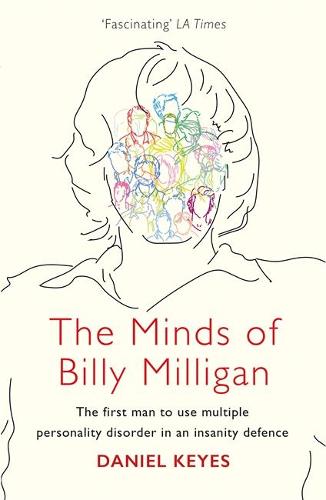
Review: The Minds of Billy Milligan by Daniel Keyes

The Minds of Billy Milligan [1981/2018] – ★★★★1/2

This non-fiction book comes from Daniel Keyes, the writer of classic sci-fi Flowers for Algernon [1959]. The Minds of Billy Milligan tells the amazing story of Billy Milligan, the first man in the US history to successfully plead the insanity defence in court based on his proven multiple personality disorder and, therefore, be held not responsible for his major crimes (three counts of robbery and rape). Billy Milligan had twenty-four personalities (or “people”) living inside him, competing for spotlight (or consciousness) at any one time, and some of them developed when he was a toddler and suffering from trauma. This is no fiction as numerous eminent psychiatrists who observed Milligan for years testified repeatedly to his condition and the chances that Milligan could have somehow faked all twenty-four personalities over so many years are close to zero. This is because his personalities were truly different people, observed to have different body temperatures, hand-writing, accents, vocabulary, speech patterns, mannerism, IQ, skills, knowledge, experience and even brain waves. Daniel Keyes traces Milligan’s case, beginning from his arrest and childhood and culminating with Milligan being dragged from one hospital to another, battling public prejudice. This is a mind-blowing account of the most remarkable case of a disorder that lies at the very heart of uncovering the mystery of the human mind and consciousness.

Continue reading “Review: The Minds of Billy Milligan by Daniel Keyes”

Review: The Bilingual Brain by Albert Costa

Continue reading “Review: The Bilingual Brain by Albert Costa”

Review: Mad in America by Robert Whitaker

Mad in America: Bad Science, Bad Medicine and the Enduring Mistreatment of the Mentally Ill [2002] ★★★★1/2

Robert Whitaker opens his book with this quote by David Cohen: “We are still mad about the mad. We still don’t understand them and that lack of understanding makes us mean and arrogant, and makes us mislead ourselves, and so we hurt them”. His book is an engaging overview of the methods to treat mentally ill patients through centuries (starting in the pre-1750s period and continuing to the present day), and how changes in societal attitudes and perceptions, as well as in psychiatry politics and business considerations impacted the treatment. “Scientific” and “therapeutic” approaches to treating mentally ill had competed with each other for centuries, and Whitaker shows how politics of this or that time period ultimately dictated what mentally ill patients were supposed “to need”, with mentally ill people often caught in a trap of doctors and businesses’ ambitions to make a mark in science or earn money respectively.

Continue reading “Review: Mad in America by Robert Whitaker”

Mini-Review: The Woman with a Worm in Her Head by Pamela Nagami 

The Woman with the Worm in her Head The Woman with a Worm in Her Head [2002] – ★★★★

The Woman with a Worm in Her Head is a topical non-fiction book since it talks about those infectious diseases which present a real puzzle for medical staff. Referring to her experience of working as an infectious disease doctor, Nagami talks about real patients with such seemingly surreal diseases as cocci or valley fever, leishmaniasis, chickenpox and falciparum malaria, and, of course, with live worms loose in their bodies which cause havoc and distress. Nagami’s book is definitely not for the faint of heart or the squeamish, but those who are interested in mysterious diagnoses or in unusual and rare medical illnesses will find much to appreciate in this book. Continue reading “Mini-Review: The Woman with a Worm in Her Head by Pamela Nagami “

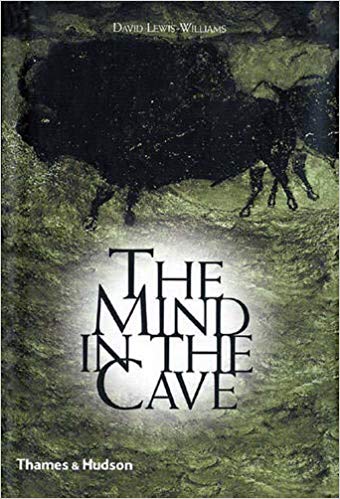
Review: The Mind in the Cave by David Lewis-Williams

The Mind in the CaveThe Mind in the Cave: Consciousness and the Origins of Art [2002] – ★★★

A chaotic and repetitive account on cave art and its origin, which is also not as insightful as one would have hoped, focusing primarily on shamanism and altered states of consciousness.

The Mind in the Cave is by David Lewis-Williams, a South African archaeologist known for his research into South African rock art, and, in his book, he describes the most breath-taking cave art from the Upper Palaeolithic Period (examples found in the Cave of the Trois-Frères, France and in the Altamira Cave, Spain), tracing the way people thought about cave art through the ages and trying to theorise on the question why Upper Palaeolithic people made such art and what it represented for them. Although the book is engaging, with interesting case studies and beautiful illustrations, it is also problematic and only sporadically informative on the question of consciousness itself – its origin and how this relates to the first known cave art. Continue reading “Review: The Mind in the Cave by David Lewis-Williams”