Review: Medicine & Society in Later Medieval England by Carole Rawcliffe

Medicine & Society in Later Medieval England [1995] – ★★★★

Magic was…an integral component of medieval medicine”, tells us historian Carole Rawcliffe in this book on the state of medicine in later medieval England. And, not only magic. Religion, astrology and even art were all tied up in the practice of medicine in the Middle Ages, and this non-fiction sheds much light on how the medieval society in England viewed illness, and its diagnosis and treatment. What was the difference between the medieval professions of physician, surgeon, apothecary and barber? Why the state of medicine in England at that time lagged behind other European countries? What was the general attitude towards women connected to the practice of medicine? And, what methods were used when no proper methods of anaesthesia and sanitation were yet available to the medical personnel? Relying much on the contemporary accounts, Rawcliffe proves to be an expert guide on these questions and many more, and her book is a scholarly, but also highly readable, journey into England’s medieval past.

Continue reading “Review: Medicine & Society in Later Medieval England by Carole Rawcliffe”

Visualizing Spheres & Branches of Knowledge: “The Book of Circles”, & “The Book of Trees”

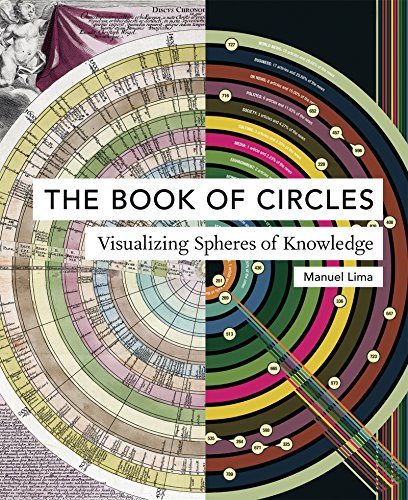
I. The Book of Circles [2017] by Manuel Lima – ★★★★

This illustrated non-fiction is all about the human presentation of knowledge through circles. The author states how natural it is for humans to try to classify and systematise all sorts of knowledge, and the circle serves as a perfect vehicle for doing so because it is a perfect geometrical figure standing for the Sun, among other things, and representing a multitude of other concepts, including movement, unity, wholeness, perfection and infinity. Being a shape that is omnipresent in nature, the circle may also be attracting our attention because of our innate evolutionary tendency to seek out human faces/eyes.

A large chunk of this book is devoted to showing various circles being used to illustrate and explain all sorts of concepts and progressions, from the presentations of the solar system, scientific theorems and alchemical tables to city maps, world economics and online engagements. There are things in this book which I never thought have been or could have been analysed using a circle, including the “Lineage of Sin in the Bible” (2009) by Anna Filipova and the changing colour of Lego sets (2015) by David Eaton.

Continue reading “Visualizing Spheres & Branches of Knowledge: “The Book of Circles”, & “The Book of Trees””

Review: Hogenberg & Braun’s Cities of the World by Stephan Füssel (ed.)

Cities of the World by Frans Hogenberg and Georg Braun

Cities of the World [1617/2015] – ★★★★1/2

Travelling – it gives you home in thousand strange places, then leaves you a stranger in your own land” (Ibn Battuta (1303 – 1377), a Berber Maghrebi scholar and explorer, who “travelled more than any other explorer in pre-modern history”, covering some 117.000 km over a 30 year-long journey).

This Taschen edition encyclopaedic book compiles engravings and original texts with commentaries from the Civitates orbis terrarum, a collection of town maps produced between 1572 and 1617 by Frans Hogenberg, a Flemish engraver, and Georg Braun, a German Catholic cleric, among other contributors. The book is often referred to as “the most important cartographic work of sixteenth-century Europe”, and includes town plans, bird’s-eye views of cities and stunning landscape illustrations of various cities’ domestic activities. Since these date from the sixteenth century and come from European authors, the book naturally talks predominantly about the cities of Europe (though it does include such cities as Constantinople (Istanbul), Cairo, Alexandria, Jerusalem, Cuzco and Mexico City, too), and retains its original title – Cities of the World. Below are just snippets from this fascinating illustrated book that spans some 750 pages and covers more than 450 cities.

Continue reading “Review: Hogenberg & Braun’s Cities of the World by Stephan Füssel (ed.)”

The Aztec Account of the Conquest of Mexico

The Broken Spears: The Aztec Account of the Conquest of Mexico [1959/97] – ★★★★

The Aztecs…thought the strangers were Quetzalcoatl, and other gods returning from over the sea, while the Spaniards, despite their amazement at the splendours of Tenochtitlan, considered the Aztecs barbarians and thought only of seizing their riches and of forcing them to become Christians and Spanish subjects” (León-Portilla/Kemp, Beacon Press, 1959/97: xxxiii).

On 22 April 1519, Spaniard Don Hernán Cortés landed in Mexico, and on 13 August 1521, the Aztecs, one of the greatest civilisations of South America, fell. The Aztecs, a nation possessing an intricate culture and complex political organisation, were destroyed and plundered beyond all recognition. In this book, Mexican anthropologist Miguel León-Portilla aims to show the invasion of Mexico by the Spaniards in 1519 from the point of view of the native Aztecs. The non-fiction, translated from the Spanish by Lysander Kemp, compiles a number of first-hand account writings from indigenous people, giving the voice to the victims of this unprecedented encounter between two very distinct military powers and cultures.

Continue reading “The Aztec Account of the Conquest of Mexico”

Recent History Non-Fiction Reads: The Electric Chair, & Empireland

I. The Electric Chair: An Unnatural American History [1999/2009] by Craig Brandon – ★★★★

This book is on the history of one of “the elephants in the room” in the US – death penalty by electrocution. It talks in depth about the case of William Kemmler, a vegetable peddler from Buffalo, who became the first person to be executed by electric chair in America on 6 August 1890. Previously, Kemmler was convicted of murdering his common law wife Tillie Ziegler. It is this man, or rather his death, that became a pawn in the complex business and political game of inventors, investors, entrepreneurs and politicians, at the centre of which was the so-called “current war” waged by Edison (a proponent of the direct current (DC)) and Westinghouse (a proponent of the alternative current (AC)), both eager to prove that only their patented electricity was the way forward for American society, both for domestic and penal purposes.

Continue reading “Recent History Non-Fiction Reads: The Electric Chair, & Empireland”

Review: A Day in the Life of Ancient Rome by Alberto Angela

A Day in the Life of Ancient Rome [2007/09] ★★★★

This book about ancient Rome is written in a conversational style, and we walk through the ancient city with the author who acts as our guide, pointing to us various curiosities we encounter in our journey through the day. From 6:00 a.m., the time to explore one as yet silent domus of a wealthy Roman citizen, to 9:00 p.m., the time when, ordinarily, a Roman banquet nears its end, we spend the day exploring the lives of the wealthy, the poor and the slaves in the world’s most populous city in the year 115 CE, while the author also comments on such topics as Roman religion, professions, education, money, games and food. The book, translated from the Italian by Gregory Conti, is quite introductory, but still wondrous, and even those who are familiar with the lives of Romans are bound to pick up some interesting facts to explore further.

Continue reading “Review: A Day in the Life of Ancient Rome by Alberto Angela”

Non-Fiction Reviews: “Making Movies”, “Gomorrah”, & “Pure Invention”

I. Making Movies [1995] by Sidney Lumet ★★★★

This book on movie-making is by American director Sidney Lumet (1924 – 2011) who was probably best known for directing a number of “legal” films including 12 Angry Men [1957], Murder on the Orient Express [1974] and The Verdict [1982]. It provides a deep insight into the “magical” process of making movies, from deciding whether to do a movie (Lumet almost always decided “instinctively”) to the final editing process and running previews. Lumet was a “trier” and a “doer”. He tells us in his book that he did not believe in waiting around for opportunities and liked to create his own luck. His eagerness to create chances reflected the sheer variety of films he directed. Cinematic success is hard to pin down, he states. That is also his first lesson to us: “nobody knows what that magic combination is that produces a first-rate piece of work” [Vintage, 1995: 9]. Even a great script or a great star-actor does not guarantee success.

Continue reading “Non-Fiction Reviews: “Making Movies”, “Gomorrah”, & “Pure Invention””

Review: The History of Chess in Fifty Moves by Bill Price

The History of Chess in Fifty Moves [2015] ★★★1/2

I got inspired to read this book because of the World Chess Championship 2021 currently held in Dubai where now the defending champion Magnus Carlsen of Norway is playing Ian Nepomniachtchi of Russia. This book by Bill Price traces the history of chess from its very likely origin in northern India circa 7th century to the game’s expansion in Muslim countries, and then to it making its way to the heart of the Christian community through Islamic ports. Chess was then a game played by the royalty and was seen as “an expression of social standing, rather than an intellectual pursuit” [Price, Apple Press 2015: 56]. Certain historical and other developments then led to it being played by a wide variety of people and the game spread rapidly across Europe, played in coffeehouses across the continent in the 17th century. Though this book is more on a superficial side, it is still an entertaining journey into chess, offering some curious insights into the game, for example, into the women’s chess and into the origin of certain chess terms, such as a gambit.

Continue reading “Review: The History of Chess in Fifty Moves by Bill Price”

Review: Aquagenesis by Richard Ellis

Aquagenesis: The Origin and Evolution of Life in the Sea [2001] – ★★★★

May be on an academic side and now a bit dated, but the book is still a perceptive and engaging account of the mysteries that still surround the evolution of life in the sea.

That we live on land is, in the grander scheme of things, best regarded as an anomaly, or even an eccentricity – albeit with sound evolutionary justification. The story of life is, if we retain a true sense of proportion, a story of life at sea(Philip Ball).

After I read Monarchs of the Sea by Danna Staaf last year, I wanted to read a deeper work on this topic and chose Aguagenesis by marine biologist Richard Ellis. The author aims to demonstrate how life originated in water some 3.9 billion years ago, what species evolved first in water and why, what species followed them and how evolution changed courses multiple times with various animals choosing to dwell on land next and then returning to waters. Richard Ellis starts his book by discussing the origin of water itself and a 2 inch-long shrimp-like creature without eyes capable of subsisting on hydrogen sulphide alone, which is poisonous to most living creatures, before talking about more complex and diverse marine life that roamed the oceans in the final stages of the Cretaceous period, some 65 million years ago. “More than 99% of all the species that have ever lived on Earth are [now] extinct” [Ellis, 2001: 22], says the author, and that makes that extinct life even more fascinating, especially in what it can tell us about the diversity of life and our own, human, origin.

Continue reading “Review: Aquagenesis by Richard Ellis”

Non-Fiction Reviews: “Five Points”, “When Brains Dream”, & “Year of Wonder”

Five Points: The Nineteenth-Century New York City Neighborhood That Invented Tap Dance, Stole Elections and Became the World’s Most Notorious Slum [2002] by Tyler Anbinder ★★★★

I love reading about the history of New York City, for example see my review of Mark Kurlanskys The Big Oyster: A Molluscular History of New York [2006]. In Five Points, Tyler Anbinder focuses his attention on once the most notorious area in New York – the infamous Five Points, once a densely-populated, poverty, crime, riots and disease-ridden area. The area, which was once a green place with a lake called “The Collect Pond”, became by the end of the eighteenth century “a putrid nuisance” (due to local industries’ contamination) [Anbinder, 2002: 14] and, later, a place to be feared and ruled by criminal gangs. However, what became a place of danger for some, also turned into a place of fun and unthought-of opportunities for others. This non-fiction book is a very detailed account of the history of Five Points in the nineteenth century. Through documents, contemporaries’ accounts (each chapter starts with a “personal story” prologue), maps, graphs and old photographers, the author shows how Five Points gained such a vile reputation around the world and what made it so different from other New York neighbourhoods.

Continue reading “Non-Fiction Reviews: “Five Points”, “When Brains Dream”, & “Year of Wonder””

Hiroshima & Nagasaki – The Truth

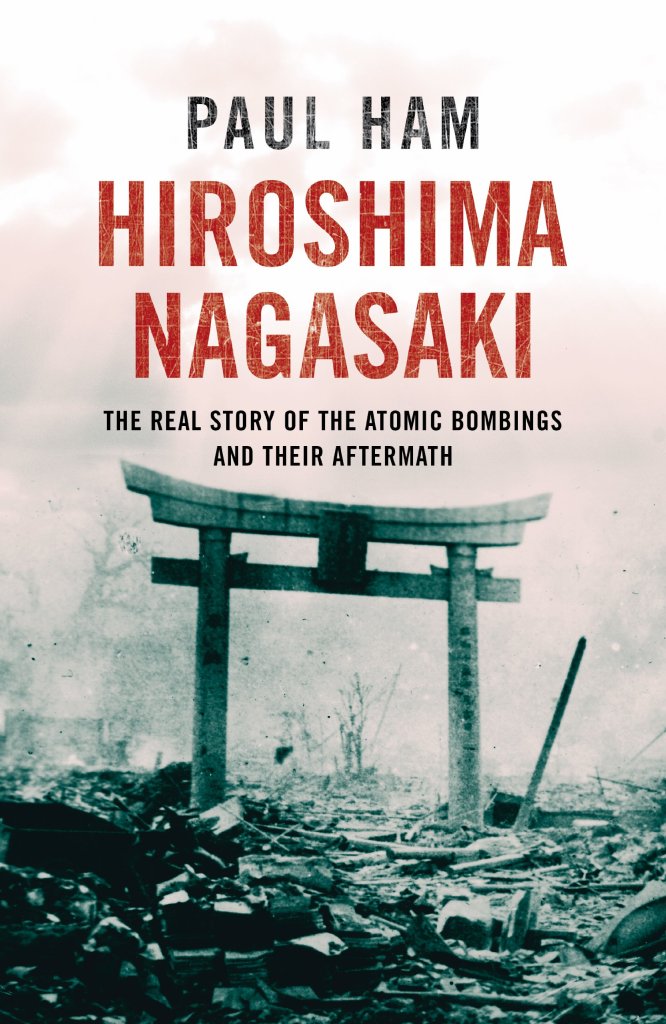
Hiroshima Nagasaki [2011] – ★★★★★

An eye for an eye leaves the whole world blind.” M. K. Gandhi (attributed)

The Japanese collectively were to blame…Truman drew no distinction between civilian and soldier; mother and murderer; child and monster”; “America [sic] annihilated 100.000 persons, most of them civilians, at Hiroshima…and then…,in spite of the “universal horror”, repeated the performance at Nagasaki” [Paul Ham quoting, 2011: 420, 422].

Paul Ham is an Australian author and correspondent, who in his non-fiction Hiroshima Nagasaki presents a true account of what happened to the two Japanese cities in 1945, dispelling myths that still persist about the Hiroshima and Nagasaki bombings, including that the bombs were somehow “necessary”, or that their usage led to Japan’s surrender. Starting in winter 1945, when “Roosevelt and Churchill arrived bound by a private agreement…not to share with the Soviet Union…the development of an extraordinary new weapon” [Ham, 2011: 15], continuing to the secret development of the world’s first atomic bomb, and ending with the aftermath of the tragedy, the author goes into incredible depth about what happened in the final year of the war, demonstrating the situation through statistics, broader situation invoking key actors and through personal accounts. The result is a well-researched book about one of the most unbelievable and traumatic events in the world history. Since the scope of the book and the topic is so broad, I have decided to structure my review in the following manner: (i) Events leading up to the atomic bombings; (ii) Four myths and four corresponding realities; (iii) Immediate aftermath; and (iv) Long-term consequences.

Continue reading “Hiroshima & Nagasaki – The Truth”

Review: A People’s History of Tennis by David Berry

A People’s History of Tennis [2020] – ★★★★1/2

Berry’s book is a fun, eye-opening and frank account of the history of tennis that puts real people front and centre.

Lawn tennis was different. It was played “as much with the head as the hand” and it encouraged playfulness and enjoyment of performance” [David Berry, Pluto Press, 2020: 23].

This new non-fiction book is about the history of “lawn tennis”, as viewed through the prism of class and gender politics. Rather than being just a sport for the privileged and well-off, David Berry argues that tennis has also historically provided important battlegrounds for “freedom” movements, for the rights of women, immigrants, black people and people from the working class segment of the population. Referring to the sport’s “amateur” beginnings and explaining the business side of the game, Berry talks about tennis between the wars, about the history of tennis clubs, as well as details the rise of first tennis stars that helped to transform tennis from an amusing hobby played on the British Isles to a global phenomenon and industry worth millions of pounds. Often referring to Wimbledon, the oldest and most prestigious tennis tournament in the world, Berry demonstrates with a great narrative flair the constant battle to shed away the “exclusivity” of tennis, a sport which remains one of the few in the world that, from its very origin in the nineteenth century, was designed to be played by both men and women.

Continue reading “Review: A People’s History of Tennis by David Berry”

History Non-Fiction: “Genghis Khan”, & “Rubicon”

Genghis Khan and the Making of the Modern World [2004] by Jack Weatherford – ★★★★

They can do all because they think they can“. Virgil

“Attack him where he is unprepared, appear where you are not expected. The supreme art of war is to subdue the enemy without fighting”. Sun Tzu 

Based on the ancient account The Secret History of the Mongols (dating c. 1227), this book tells of the life of Genghis Khan, his first foreign campaigns and his later conquests of other countries. Although dramatised and sometimes not entirely objective, the book is a very engaging, endlessly fascinating and perceptive account of the world’s most successful invaders. It demonstrates all the reasons for Genghis Khan’s unprecedented success in conquest since, historically, the Mongol army was the one to whom fell numerous countries and millions of people kneeled, as the army started to dominate virtually two continents, including the majority of China, India, Russia, Persia, Eastern Europe, the Middle East and the South-East Asia.

Continue reading “History Non-Fiction: “Genghis Khan”, & “Rubicon””

Review: Monarchs of the Sea by Danna Staaf

This book is about the magnificent, enigmatic and elusive cephalopods (a class of molluscs to which octopuses and squid belong), their origin and 500-million-year history. Danna Staaf, a marine biologist, traces their evolution from the very origins of life on Earth in the sea, to the demise of some cephalopods in the Cretaceous period and our modern age. From the causes of the “Great Dying” that happened in the Permian period (when up to ninety-six percent of all marine species perished) to our present day threat of global warming and dangers that face nautiluses, Dr Staaf explains clearly the many issues that concern cephalopods, as well as introduces a whole variety of weird and fascinating sea creatures: from the first sponges and worms, to now extinct ammonoids and a variety of curious present-day octopuses and squid (for example, the pygmy squid and the mimic octopus). This well-illustrated book, which is written with surprising humour and succinctness, will completely delight all those who are interested in marine evolution and curious about the history of present-day cephalopods.

Continue reading “Review: Monarchs of the Sea by Danna Staaf”

Review: A Distant Mirror: The Calamitous 14th Century by Barbara W. Tuchman

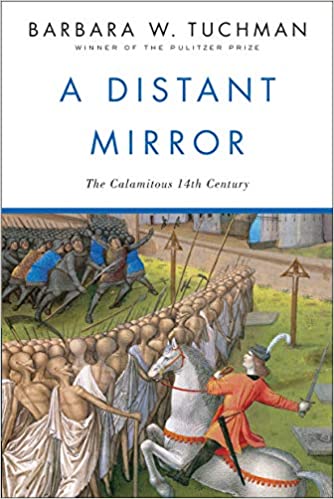
A Distant Mirror: The Calamitous 14th Century [1978] ★★★★★

Continue reading “Review: A Distant Mirror: The Calamitous 14th Century by Barbara W. Tuchman”

Review: Apollo’s Angels: A History of Ballet by Jennifer Homans

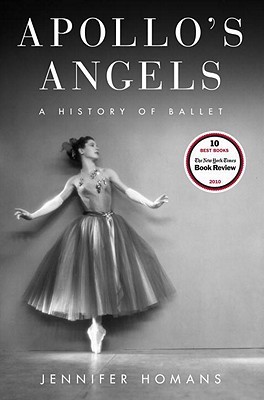
This book is about once purely aristocratic and social dance that was elevated to an art of purest form and principles, which then required almost inhuman perseverance and training, and whose spectacle simply takes one’s breath away – classical ballet. From France and Russia, to Denmark and the US, and from Giselle [1841] and Swan Lake [1877], to Cinderella [1945] and Spartacus [1956], Jennifer Homans traces the history and tradition associated with classical ballet in this book, from its origins in the royal courts of France and Italy to its modern variations of the twenty-first century. The result is a well-researched book that pays as much attention to the dates and principles as it does to the aesthetics and social context.

Continue reading “Review: Apollo’s Angels: A History of Ballet by Jennifer Homans”

Recent History Non-Fiction Reads: Twelve Who Ruled; Rome: A History in Seven Sackings; & Milk of Paradise: A History of Opium

twelve who ruled book coverI. Twelve Who Ruled: The Year of The Terror in the French Revolution [1941] by R.R. Palmer – ★★★★1/2

This book may be dated, but it did not lose any of its power from the time it was first published in 1941, and was re-issued many times (the last edition dates to 2013). In this book, R. R. Palmer looks at one particular time period in the history of France, and its Revolution – the year 1793-1974. But, what a year that was! Chaotic, unbelievable, bordering fantastical. After the death of Louis XVI, twelve people (virtually strangers to each other) started to govern the country and their slide into dictatorship gave the name to the year of their rule – The Year of the Terror. The year’s main symbol – the guillotine, operated alongside democratic ideas put in speeches and on paper. France has not seen anything like that before or since. Palmer’s engaging, illuminating account traces the months leading to the Year of the Terror, then focuses on the twelve men in charge of the country. The narrative further details the twelve men’s town and country policies, laws and actions, as they purported to stand for liberty, democracy, unity, justice and peace, but, actually, became the embodiment of the opposite. Foreign and civil wars, rebellions within and outside the country, as well as economic disasters, growing paranoia and the inability to maintain the central rule, are just some of the challenges that faced the twelve men after they were left in change of the country under the innocuous name “The Committee of Public Safety”.   Continue reading “Recent History Non-Fiction Reads: Twelve Who Ruled; Rome: A History in Seven Sackings; & Milk of Paradise: A History of Opium”

Review: The World That Made New Orleans by Ned Sublette

The World That Made New Orleans Book Cover The World That Made New Orleans: From Spanish Silver to Congo Square [2008] – ★★★★★ 

Since my previous post related to Mardi Gras celebrations, it is fitting now to talk about New Orleans, and I am presenting a curious non-fiction book by Ned Sublette, the author behind Cuba and Its Music [2004]. The World That Made New Orleans is a fascinating book that traces the history of New Orleans, Louisiana, from around 1492 to the nineteenth century: from the city’s humble beginnings on swamp soils to the French Spanish, British-American colonisations, and finally the city’s growth and ultimate urbanisation in the nineteenth century. This is not one’s ordinary history non-fiction book, however. Ned Sublette pays due attention to the music tradition of the area, its unique and changing slavery regimes, and spends time explaining why New Orleans became a diverse, jazz-pioneering and carnival-hosting city it is known today. Ambitious and well-researched, this insightful book provides an eye-opening journey into historical and cultural peculiarities of New Orleans. Continue reading “Review: The World That Made New Orleans by Ned Sublette”