

Daphne du Maurier’s novels are moody, haunting, and psychologically suspenseful – making them perfect for autumn reading. So, while thinking about her novels recently, I came up with this ranking of her books. This list reflects my personal preferences and only includes those novels I have read so far – seven in total, excluding her short-stories.
My Cousin Rachel [1951]
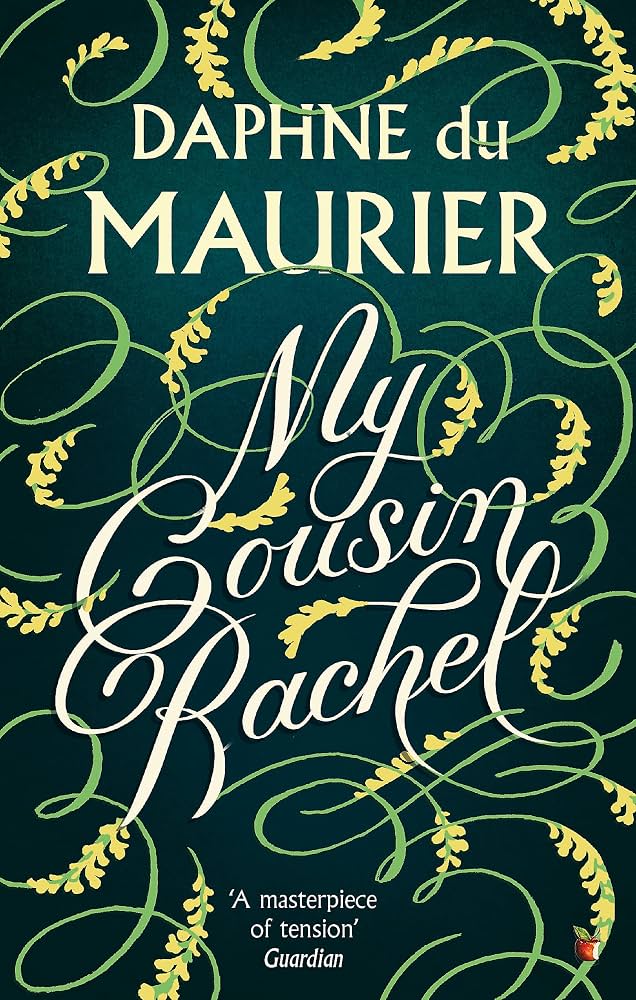
“People who mattered could not take the humdrum world. But this was not the world, it was enchantment; and all of it was mine” [Daphne du Maurier, Virago Press, 1951/2003: 117].
It must be jarring not to see Rebecca in the first place, but I have my reasons. My Cousin Rachel finds du Maurier at the peak of her narrative powers. It is a dazzling story of relentless obsession, torments of youth, and endless questioning. I love it the most because it is so nuanced, clever, mysterious and psychologically-intriguing. In the story, Philip Ashley finds himself smitten with the wife of his older cousin, Ambrose, who passed away suddenly in Italy. Rachel presents herself as a woman of much beauty and sophistication, but awestruck Philip finally begins doubting himself, questioning whether he is not falling into the same trap Ambrose did…I love stories about hidden dangers slowly unravelling or characters hiding themselves or pulling strings from behind the scenes, and My Cousin Rachel struck a chord with me like Rebecca, which is perhaps more thrilling, but also more predictable, never did.
Rebecca [1938]
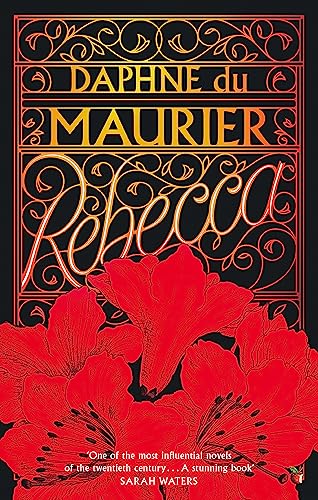
“…I suppose sooner or later in the life of everyone comes a moment of trial. We all of us have our particular devil who rides us and torments us, and we must give battle in the end” [Daphne du Maurier, Virago Press, 1938/2016: 5].
Daphne du Maurier’s most famous novel Rebecca is considered by many to be her masterpiece. In the story, Maxim de Winter, a mysterious widower and the owner of the grand estate Manderley stumbles across a shy and awkward young girl while on a trip in France and hurriedly marries her. However, upon her arrival at the estate, the new Mrs de Winter feels like a trespasser who slowly realises that every corner of the house is permeated by the spirit of Maxim’s beautiful, charming and intelligent previous wife – Rebecca. It is definitely a haunting page-turner of a novel that is filled with foreboding, vivid images, deep feelings, and thought-provoking themes: alienation, fear of the future, torments of the past and destiny. I love everything that leads up to the climax of the story, but also believe that, in the disentanglement part, du Maurier got a bit lost, including in the moral of the story. Some also noted similarities between Rebecca and such novels as Carolina Nabuco’s A Sucessora and María Luisa Bombal’s La última niebla, but I am yet to investigate them (one day I will!)
The Scapegoat [1957]
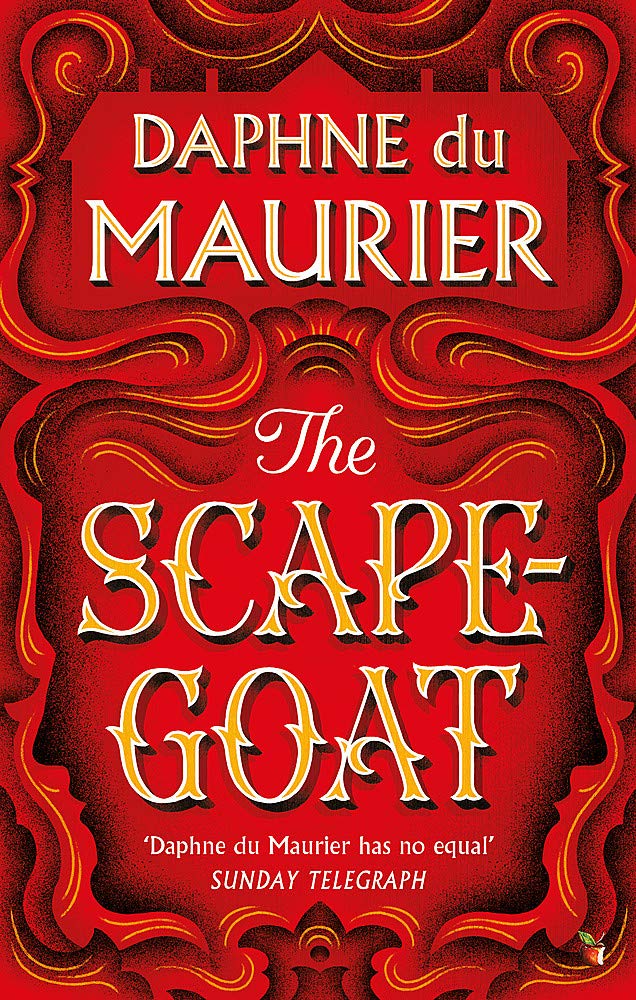
“I had plunged into this unknown world like a reckless walker into a morass, each step taking him deeper, each wild flounder committing him more inescapably” [Daphne du Maurier, Virago Press, 1957/2004: 203].
I had a lot of fun with this novel, enjoying it immensely. In this story, two look-alikes meet and switch places. We follow John, an Englishman, as he reluctantly takes the place of the seemingly wealthy but troubled Frenchman Jean de Gué. Previously shy and afraid to live, John is unexpectedly thrust into the very limelight of life, acquiring a big family overnight, but also overbearing responsibilities and a failing business. In my review, I said that “this is no ordinary tale of switched identities…we step into an atmosphere that is haunting and unsettling, into a strange château peopled by still stranger folks whose complex relationships and buried secrets first puzzle and then “liberate” our protagonist”. “Like…du Maurier’s Rebecca and My Cousin Rachel, The Scapegoat puts that haunting spell on the reader with its penetrating character study, its delicious suspense and its brooding atmosphere.”
The House on the Strand [1965]

“If you get bitten by the past…whether you’re historian, or an archaeologist, or even a surveyor, it’s like a fever in the blood; you never rest until you’ve solved the problem before you” [Daphne du Maurier, Virago Press, 1965/2015: 229].
In this novel, du Maurier blends science fiction and historical fiction. Essentially, it is a time-travel story, where our protagonist Dick Young, while holidaying in Cornwall at the house of his friend, decides to take a drug that transports him…to the past. Soon, Dick is addicted to being in the fourteenth-century reality where he witnesses political intrigues, adultery and, possibly, a murder. The first-person narration is gripping, and, despite its mind-boggling premise, I love how unassuming, dreamy and nostalgic the story feels as du Maurier also pays tribute to the region’s beauty and history.
Jamaica Inn [1936]
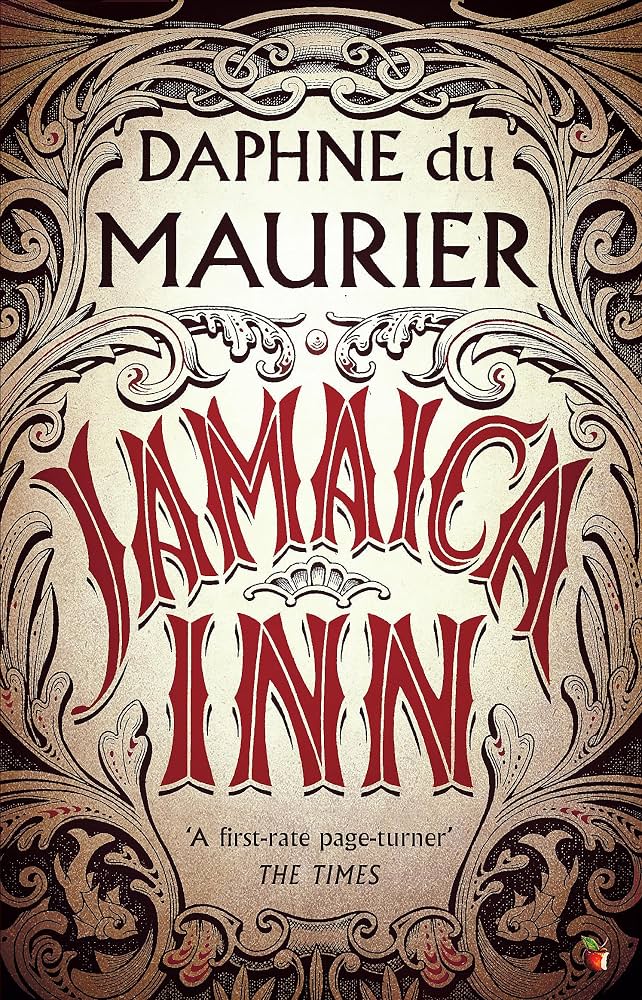
“…she was caught in the sudden fever of love that devastates reason and makes havoc of logic” [Daphne du Maurier, Virago Press, 1936/2013: 164].
I found this tale engrossing and thrilling, but also less original than du Maurier’s other novels and, ultimately, sensationalistic. In this book, the author offers “an outward adventure”, with some shockingly horrifying episodes, and a twist, and not necessarily anything deep or psychological (in contrast, Rebecca and My Cousin Rachel primarily explore the internal world). The story is about twenty-three year old Mary Yellan who comes to live with her aunt and uncle in their inn – Jamaica Inn. The place is lonely and ghastly, ruled by the brutal and despotic Joss Merlyn, Mary’s uncle. The girl learns to survive in this harsh environment, and also starts to suspect that her uncle is involved in illegal activities and harbours a terrible secret. Mary also makes friends with Joss’s younger brother, Jem. However, I personally found the romance between the two a bit corny and reminiscent of the “beauty and the beast” dynamic seen in Jane Eyre or Wuthering Heights. It is an exciting story worth reading, but I also believe that du Maurier wrote it when she still did not trust herself to deliver deeper, more intricate character studies and more nuanced plotlines.
Frenchman’s Creek [1941]
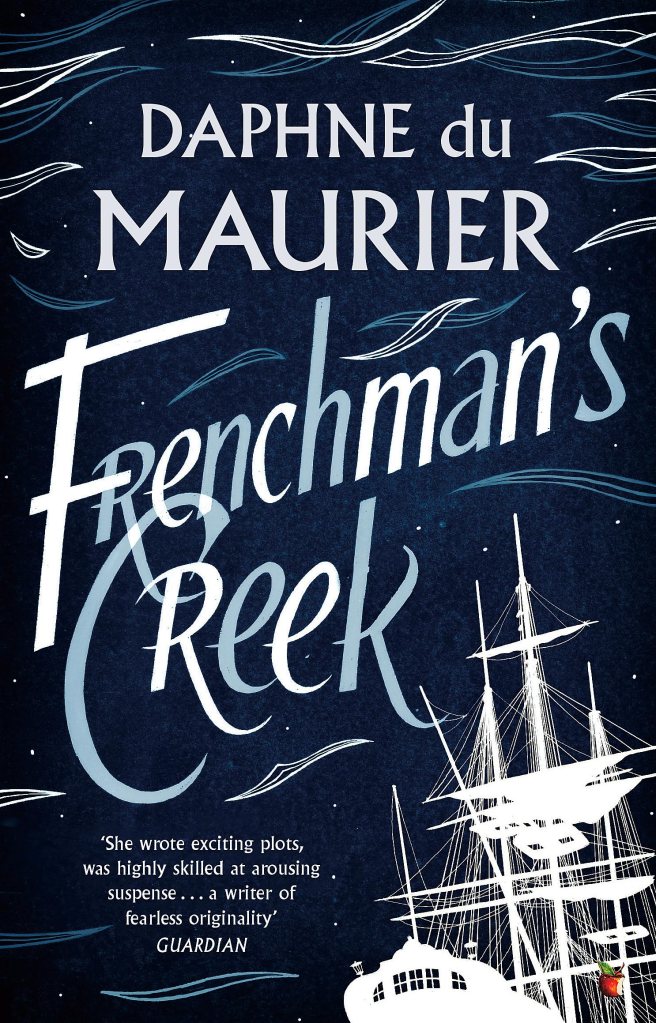
“It seemed to her, as they sat there side by side, without a word, that she had never known peace before, until this moment, that all the restless devils inside her who fought and struggled so often for release were, because of this silence and his presence, now appeased“ [Daphne du Maurier, Virago Press, 1941/2003: 77].
Those who love pirates and romantic, swashbuckling adventures may find Frenchman’s Creek right up their alley. Here, Lady Dona St. Columb, a noblewoman in seventeenth century England, journeys to an estate in Cornwall where she discovers a pirate ship hiding in a cove. The adventure begins then and there with Lady Dona meeting a daring and handsome pirate wanted all over Cornwall. Du Maurier’s language is always beautiful, striking a balance between simplicity and sophistication, and this is another elegantly-written novel with a fair amount of excitement. However, I still found it a bit hard to warm up to the main heroine or understand her actions. The romance was beautiful and touching, but the circumstances surrounding it, including Lady Dona’s marriage, lessened my enthusiasm.
The Glass-Blowers [1963]
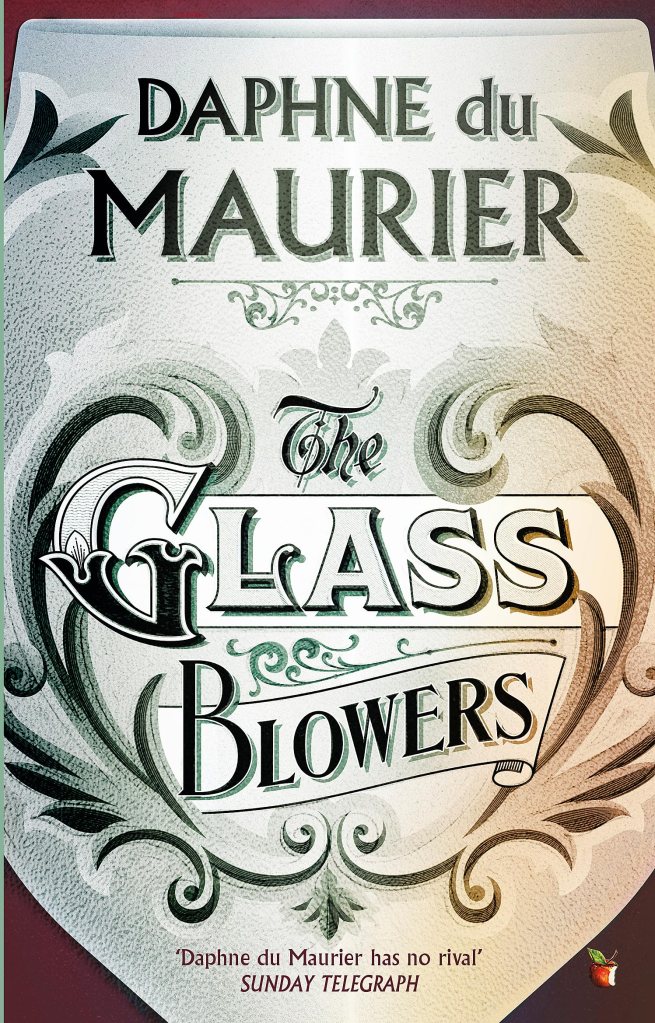
“The glass world was unique, a law unto itself. It had its own rules and customs, and a separate language too, handed down not only from father to son but from master to apprentice, instituted heaven knows how many centuries ago wherever the glass-makers settled – in Normandy, in Lorraine, by the Loire – but always, naturally, by forests, for wood was the glass-foundry’s food, the mainstay of its existence” [Daphne du Maurier, Virago Press, 1963/2004: 15-16].
Daphne du Maurier drew from her own family’s history to produce this novel, which introduces us to the world of France close to the revolution, and, at first, to Magdaleine Labbé, a young woman who marries into a glassmaking family, and soon has three sons (ambitious Robert, wayward, but kind Pierre, intelligent Michel), and two daughters (sensible Sophie, and strong-willed, passionate Edmé). Sophie recounts this tale of family fortunes gained and lost as the years roll by. It is unclear what is propelling this story forward, and du Maurier takes some time to introduce the story’s “hook.” However, when it is finally introduced, it is far less exciting than imagined at first. The author cannot seem to find a place where to “deepen” her story, and is definitely more interested in the unfolding events than in her characters (a stark contrast to her novel The Scapegoat, for example). Besides, there is no mystery here as such which could have made one turn the pages hungrily, though du Maurier displays the same passion for history as can clearly be seen in some of her other books, especially in The House on the Strand.


My issue with Rebecca was predictability but also I felt it tapered off at the end. The first half of the book was incredible though. Do any of these maintain a consistent quality throughout and maybe end strongly?
LikeLike
What I’m taking back from this is that I’ve not read all of du Maurier’s works and must remedy that!
LikeLike
I read Castle Dor, which she completed, a very long time ago – and have never forgotten the end (assuming I remember it correctly):
A dying Linnet stirred in her sleep and smiled.
So I looked it up today – it is a modern retelling of Tristan and Isolde, started by Sir Arthur Quiller-Couch, completed at his daughter’s request many years later by Du Maurier.
LikeLike