

I have recently returned from a short trip to Paris, and am sharing my highlights. The weather was warm, and I managed to visit a couple of parks, but below am focusing on the museums, including the Maison de Balzac, found at the 16th arrondissement, and which I have been wanting to explore for ages because I love Balzac’s work. It is hard to tell which of Balzac’s novels is my favourite, though – Le Père Goriot has great characterisations, Lost Illusions and The Black Sheep are masterpieces of dramatic contrast, & Eugénie Grandet is compact, but emotional, and has a special place in my heart.
Maison de Balzac
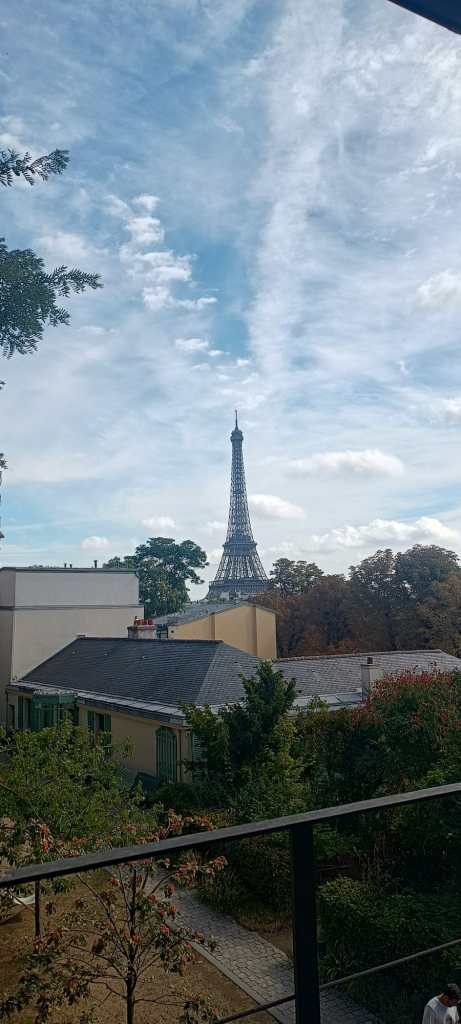
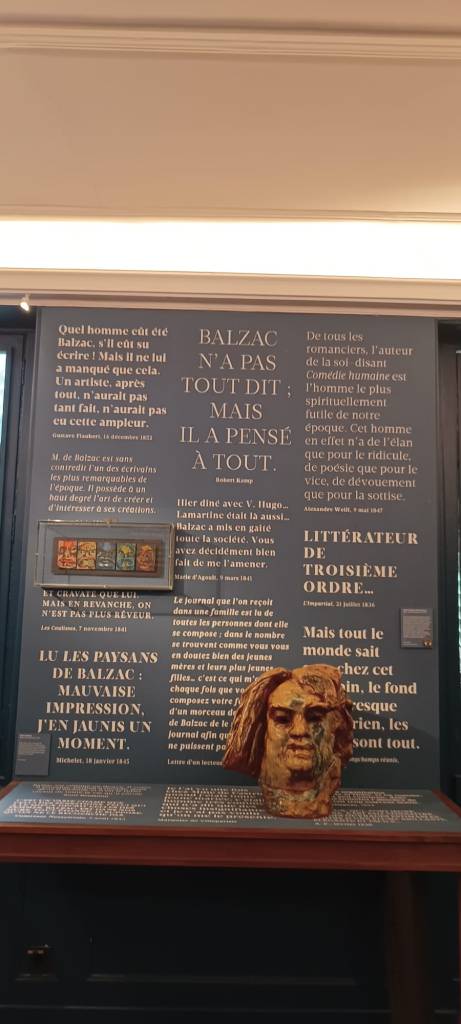
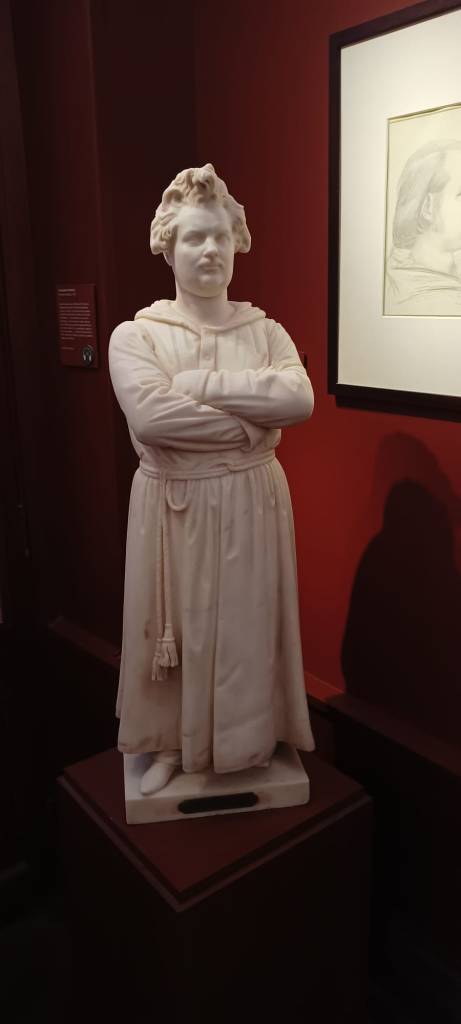
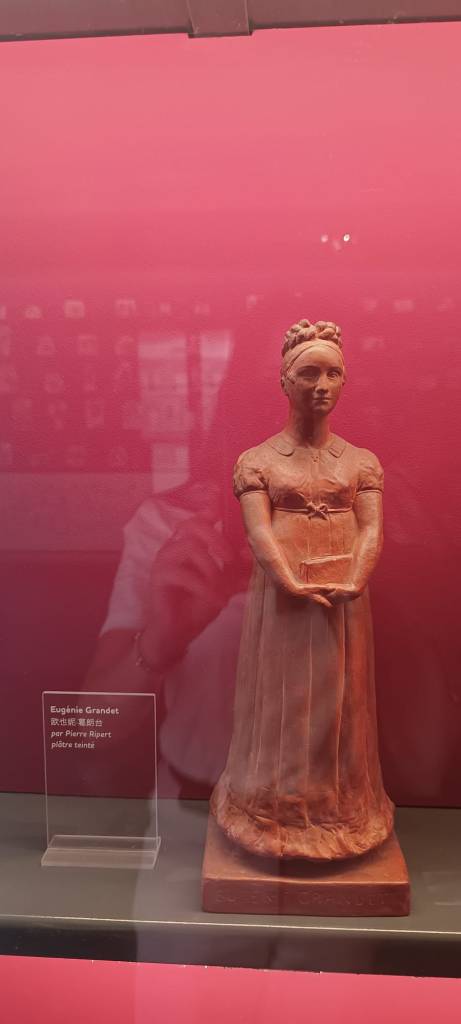
This is the place where Balzac lived between 1840 and 1847 under an assumed name to avoid his creditors. At this place, he also wrote many of the books in La Comédie humaine series. It contains his reference library (Balzac was a voracious reader and possessed around 5000 books), his study and kitchen, and the Madame Hanska room, devoted to a Polish noblewoman who corresponded with Balzac for seventeen years, and was his wife during the last months of his life. There is also a room with figurines from Balzac’s books (the whole of La Comédie humaine has some 2500 different characters, among which are also real people), as well as a room showcasing the ecranisation of his works.
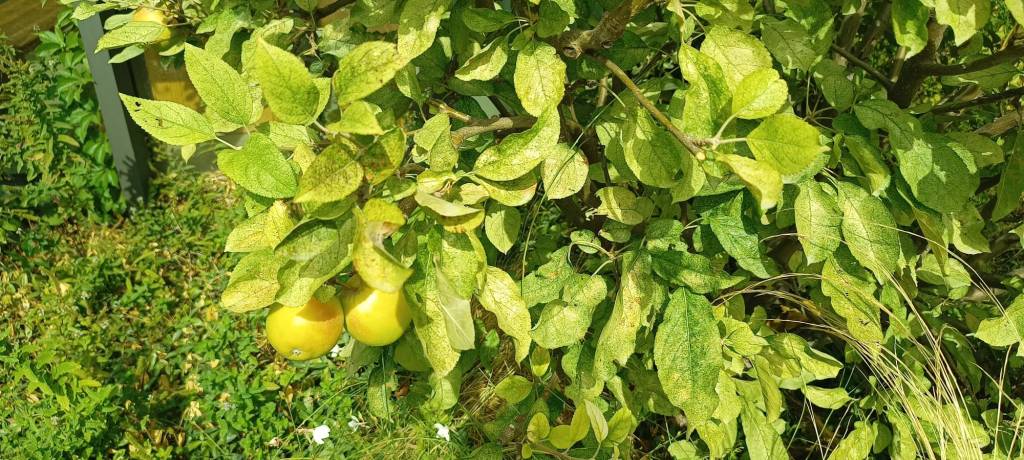
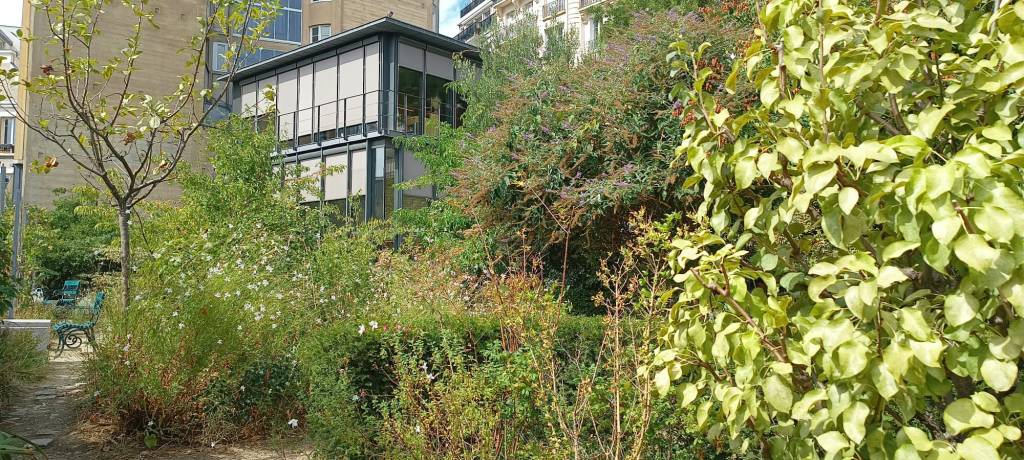
Next to the house are a lovely garden and a café, where one can order snacks and drinks and take them to the garden to enjoy. Overall, the museum is a charming, quiet and relaxing place in the very centre of Paris, though in Balzac’s time, it was considered city outskirts.
Musée national de la Marine
My visit to this museum was a bit of a spontaneous decision. It is located at the Trocadéro, and “retraces more than 250 years of French maritime and naval adventures”. Its general reviews are not too good, but it pleasantly surprised me. It is huge, though it has only two floors to explore (first and ground), has a number of fun interactive elements, and there is also a good souvenir shop with a great selection of adventure novels in gorgeous editions. There are many scale models, marine paintings (some lent by the Louvre), navigational instruments, shipwreck artifacts, etc. on display.
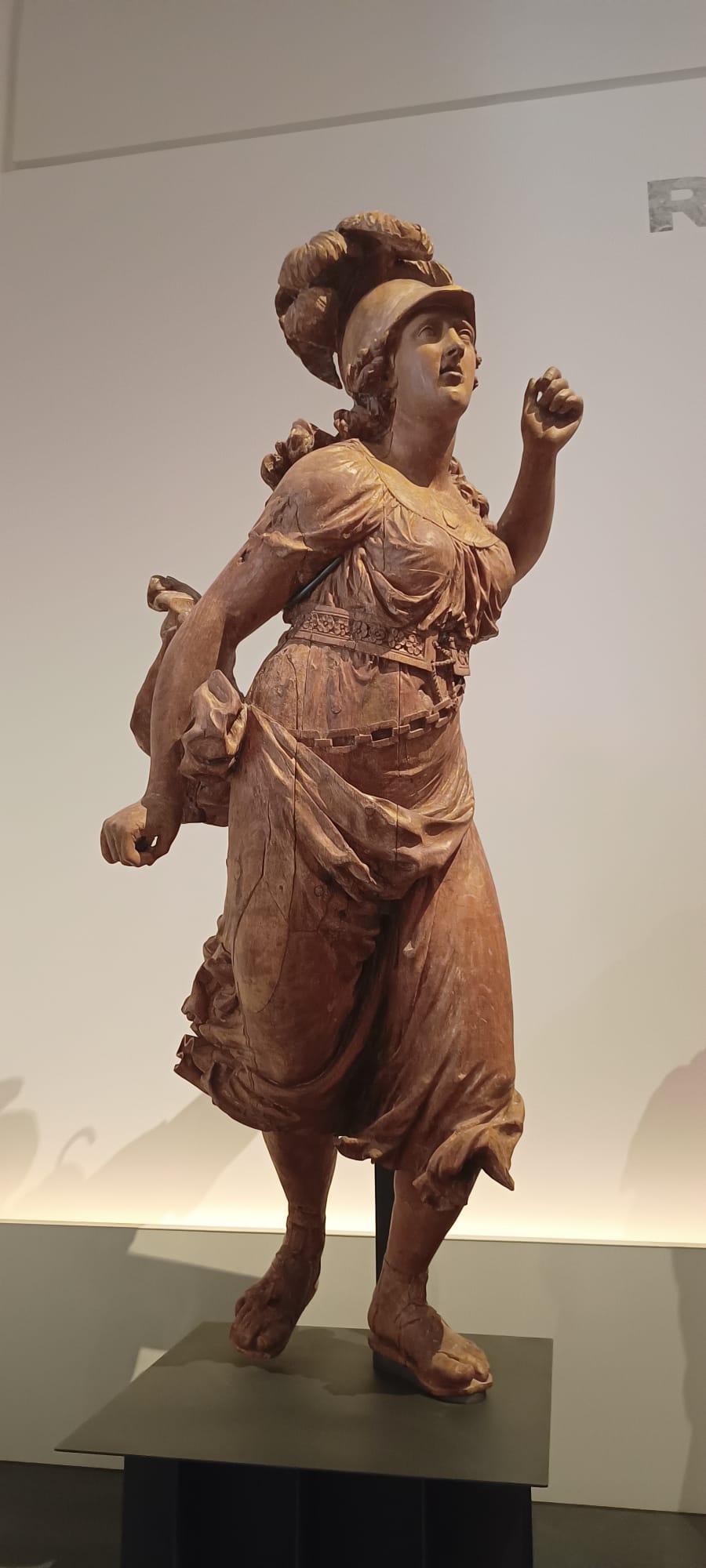
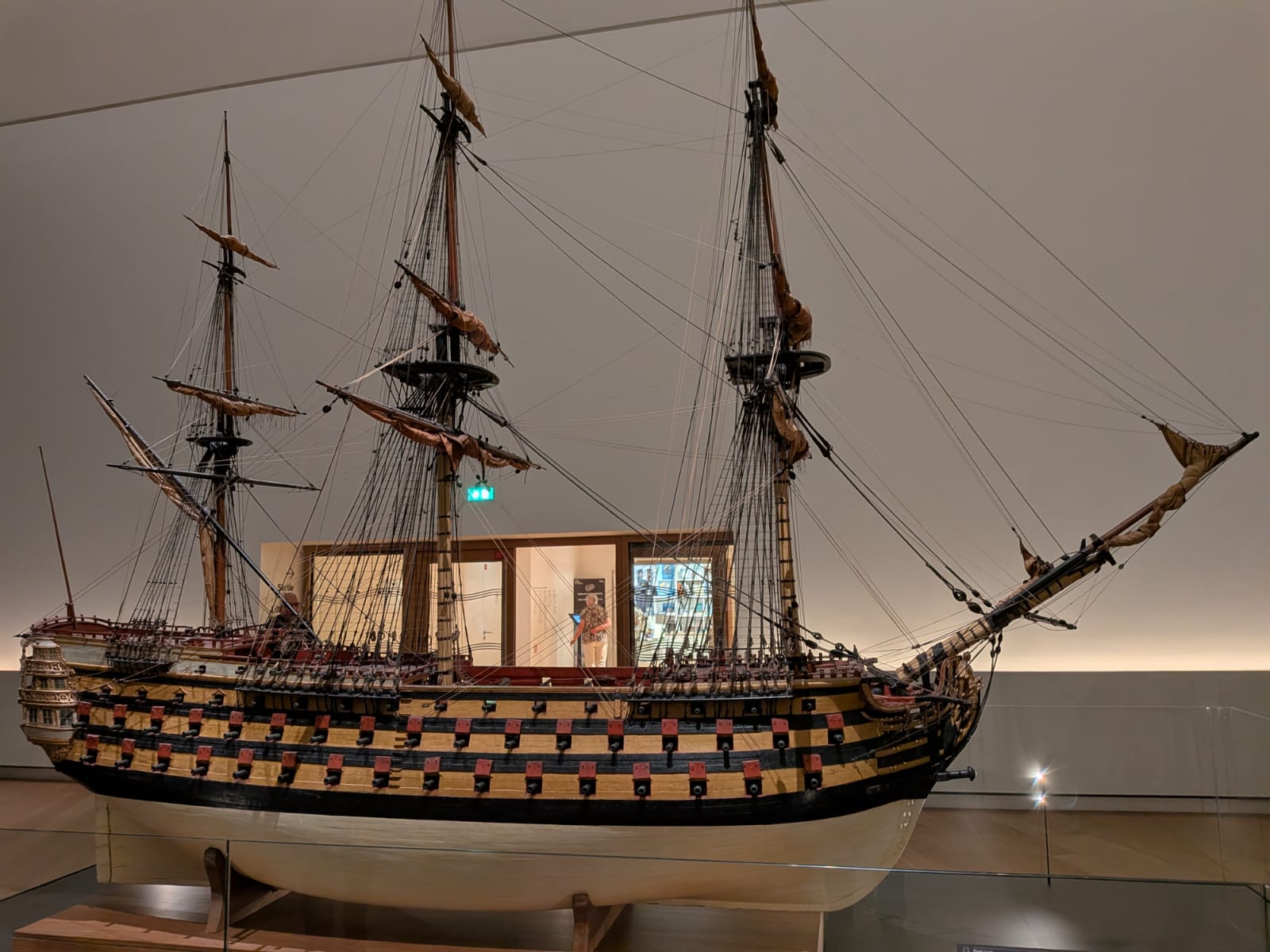
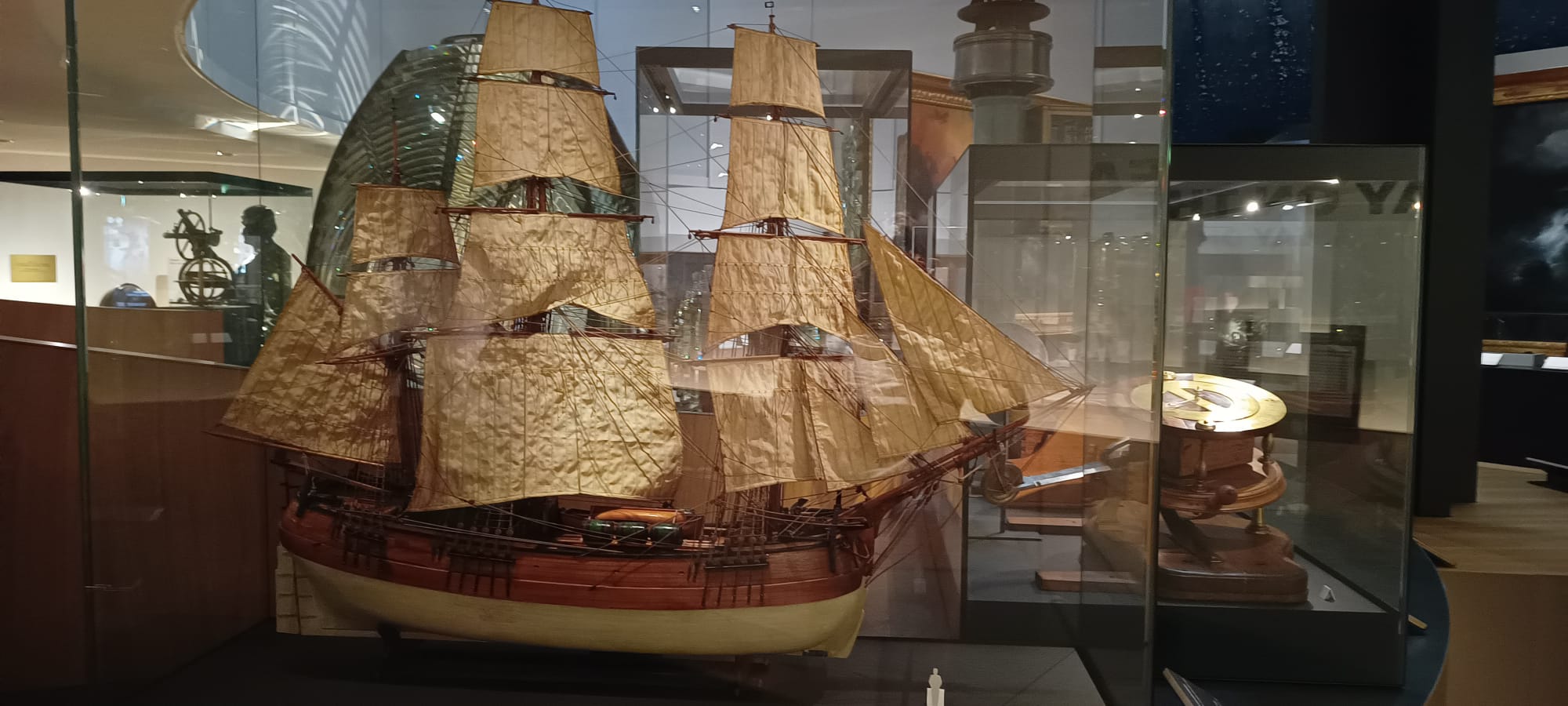
Above: The figurehead of the frigate Poursuivante, that took part in the Battle of Dunkirk in 1800; a model of a ship; and a model of a Dutch three-masted ship.
As I explored the collection, I got interested in the mystery of La Pérouse, a French exploration ship led by Jean-François de Galaup comte de Lapérouse and overseen by King Louis XVI, that vanished without a trace somewhere in the Pacific. It arrived in Australia in January 1788, and then was supposed to continue its voyage along “the narrow waterway separating Australia and New Guinea, to be back in France by June 1789”. It never arrived. The mystery was partly solved in 1828 when Irishman Peter Dillon located some objects belonging to La Pérouse off the coast of Vanikoro, Solomon Islands. The curious thing is that, apparently, some of the crew of La Pérouse survived the alleged initial shipwreck and constructed a small boat to sail from the island. It is still a mystery whether they were able to sail from Vanikoro, and if so, what was their fate.
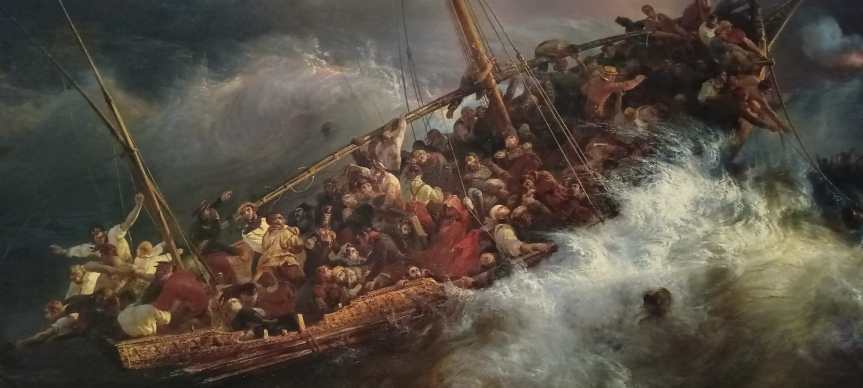
During my visit, I also explored the mourning rituals of coastal communities and rituals developed to ensure the safe passage of ships and their crews, as well as the way people dealt/deal with people lost at sea. I also liked finding out more about the ships in a bottle craft. It involves squeezing the model of a ship through the mouth of a bottle, and it fully evolved in the nineteenth century (the oldest surviving example dates to the end of the eighteenth century).
Musée Gustave Moreau
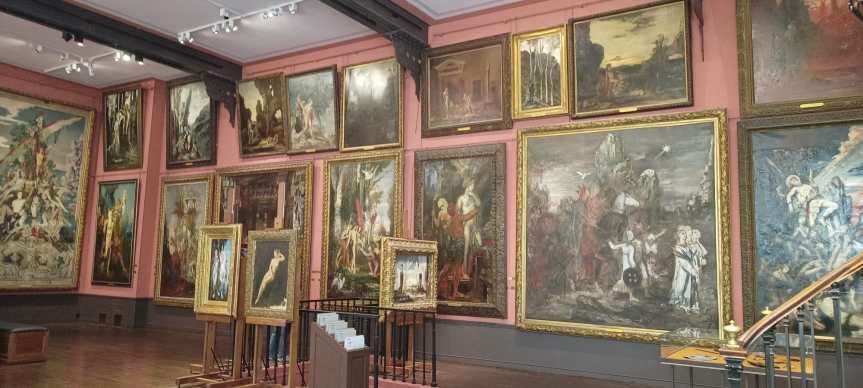
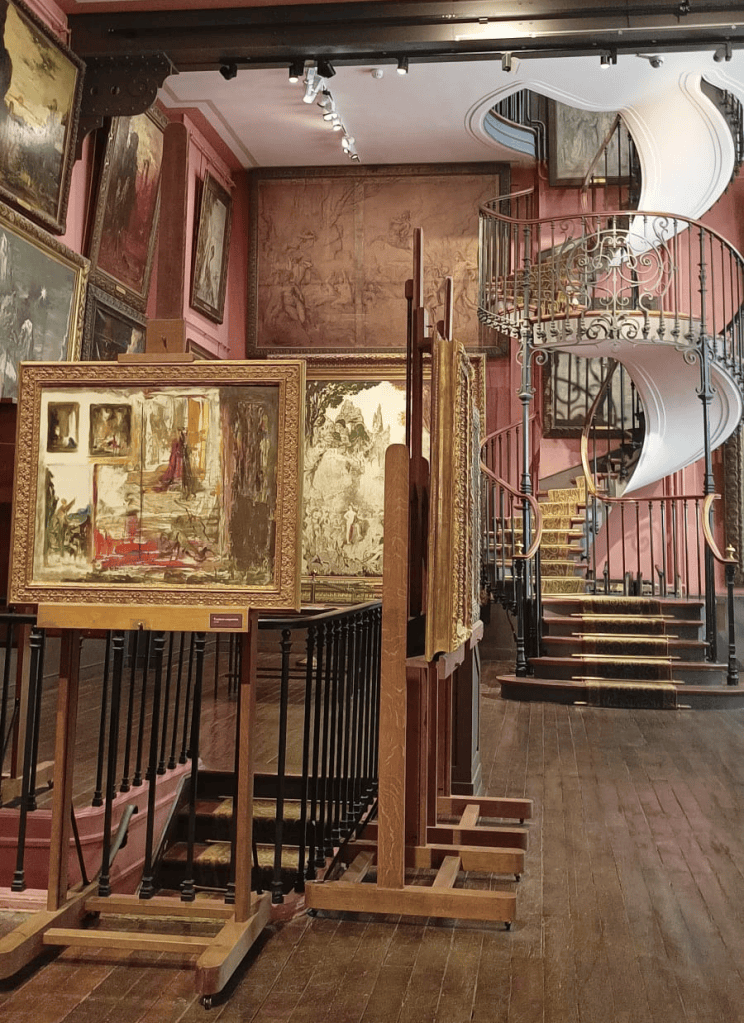
I visited the museum and previously home of French Symbolist painter Gustave Moreau (1826-1898), found at 14 rue de La Rochefoucauld, Paris. I think it was Brian at Equinoxio who recommended it to me (thank you Brian!) It was quite an experience, and if you love art, I definitely also recommend this place. There are three floors to explore (the ground floor was closed during my visit), and it has the same layout as when it first opened in 1903. It is not a huge one, but there are many artworks on display, as well as preserved rooms where the family of Gustave Moreau lived. One of its distinguishing features is its beautiful spiral staircase (seen on the left), a true work of art designed by architect Albert Lafon in 1895. Atlas Obscura compared the staircase to the spiral staircase at Loretto Chapel in Santa Fe, New Mexico, and there are certainly similarities, but the one in the Gustave Moreau museum is cast iron, whereas the one in Loretto Chapel is made of wood. The whole museum reminded me of Victor Hugo’s house museum in Paris, with its cosiness, but also abundance of heirlooms.
“I believe only in what I cannot see and only in what I feel. My brain and reason seem ephemeral and doubtful to me; my interior feeling seems the only thing that is eternal and incontestably certain.” Gustave Moreau
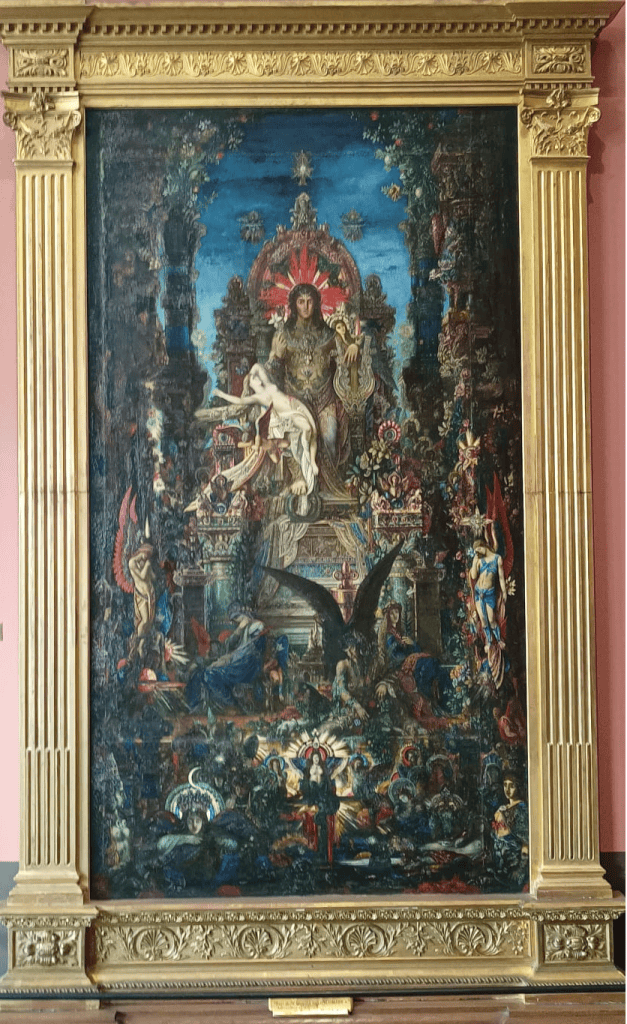
Jupiter et Sémélé by Gustave Moreau
This is one of the best-known paintings of the artist. It tells the myth of Semele, a mortal woman, and her lover Jupiter, the Supreme King of the Gods. Jupiter’s wife, the goddess Juno, was jealous and advised Semele that she should ask Jupiter to appear to her “in all his divine splendour and beauty”. He did so, and, by doing so, caused her death since that was a catastrophic in its potency event. Moreau’s work is rich and detailed, and he called this painting “worldly death and apotheosis in immortality…a hymn to divinity.”
This is the description of the painting in Moreau’s own words: “Amid colossal, airy architectures, with neither foundations nor rooftops, covered with animate, trembling vegetation, sacred flora outlined against the sombre azures of the starry vault in the sky’s empty solitudes, the god so often invoked reveals himself in splendour, still partly-veiled. Semele, pierced through with divine fragrances, regenerated and purified by the sacral, dies struck by a bolt of lightning, and with her dies the goat-footed god, the spirit of sensual, terrestrial love. And so, through this enchantment, this sacred exorcism, all is transformed, purified, idealized; immortality begins. The divine imbues all things, and all beings, as yet still unformed, aspire to the true light: satyrs, fauns, dryads, hamadryads, the hosts of the waves and woods, all are overwhelmed, lost in joy, enthusiasm, and love. Departing from their terrestrial shore, they aspire to the peaks, climbing, ever climbing, some already assuming the form of higher gods, religious spirits with unfolding wings.”
“On either side of the throne two ephebes stand in adoration before the God, bearing the attributes of officiants. At the foot of this throne, Death and Sorrow form the tragic base of Life (of Humanity); not far from them, beneath the aegis of Jupiter’s eagle, great Pan, symbol of the earth, bows his forehead, grief-stricken at [the existence of] slavery and exile; while at his feet crowd the dark phalanxes of monsters of Erebus and Night, unformed creatures who still await the light of life; beings of shadow and mystery, the indecipherable enigmas of darkness. The moon, silent and fatal, Hecate with her sidelong and wandering glances, griffins, lemurs, bloody hydras, hybrid monsters, fatal divinities of the night doze in the depths of the gorge and in abysses of shadow. And the two great Sphinxes—the Past and the Future—guardians of this formidable host of Erebus, and of solitudes and celestial highways, contemplate each other with a fixed smile in their rigid stillness, smiling and hieratic.“
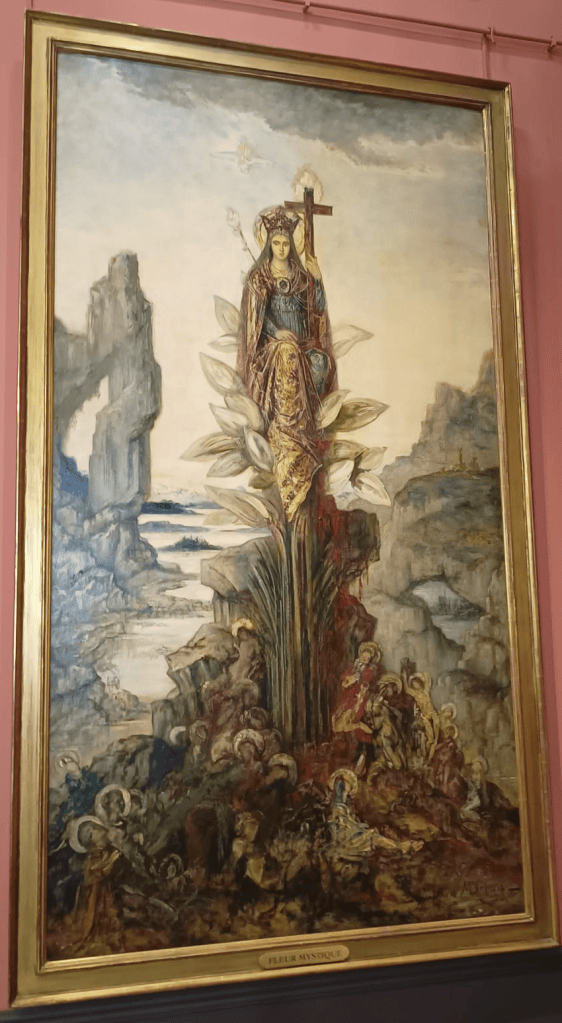
The Mystic Flower by Gustave Moreau
This is one of the late paintings by Moreau, inspired by the works of Leonardo da Vinci (background – The Virgin of the Rocks) and Vittore Carpaccio (the idea of a saint in the flower – Glory of St. Ursula). He depicted a lily that springs from the mound covered by figures of martyrs. At the top of the flower is the Virgin Mary, the symbol of the Church, holding a a cross. Moreau wrote by way of explanation: “The corolla of a large lily serves as a throne for a figure of the Holy Virgin” and ““All the martyrs who died for Her have watered this mystical flower, symbol of purity, with their blood”. I quite like the painting’s mystical/religious connotations.
Looking at these two paintings I was reminded of these two quotes: “The aim of art is to represent not the outward appearance of things, but their inward significance.” Aristotle; and “Nothing in art is done through the will alone, everything is done by docile submission to the arrival of the subconscious.” Odilon Redon
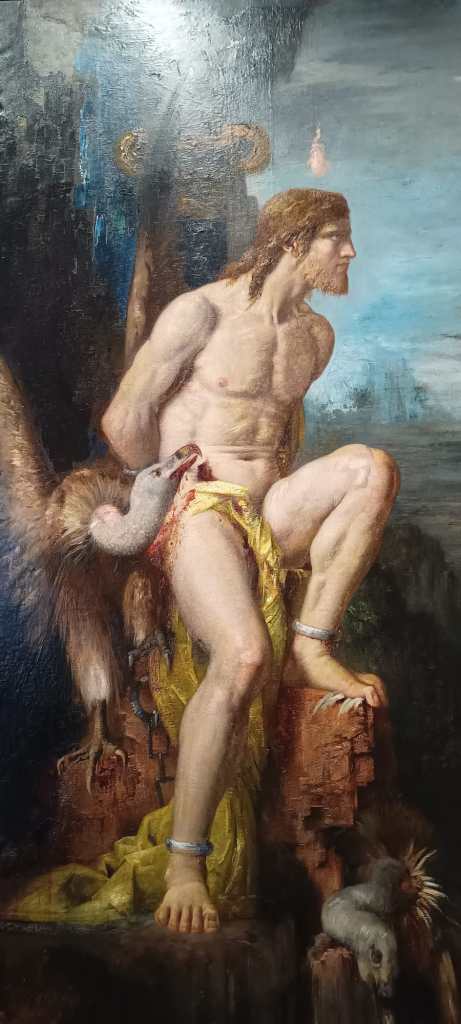
Prometheus by Gustave Moreau
Moreau was attracted by the myth of Prometheus, a Titan who stole fire from the Gods to benefit the humankind and who had his liver eaten by a vulture. Moreau saw in the man the fate of mankind, the symbol of Jesus Christ, and the destiny of a stoic artist, tormented by his inability to transform the matter so it would accord fully with imagination and the magical workings of the human mind, especially in sleep and dreams.
In the painting, immobile with an expressionless face, Prometheus sits chained to a column while a vulture pecks at his liver. His body posture reveals tension, which can also be seen in his feet, and, clearly, he is enduring great pain. However, his face remains calm, serious and determined. It seems that, for Prometheus, this is merely a stage to endure (even if it will be repeated) and he remains confident of the future (one vulture is already dead at his feet). It is a horrifying scene, but it can still be interpreted as hopeful, showing stoicism in the face of immense pain and hardship.
On display there were also paintings The Unicorns and Saint Georges terrassant le dragon. Some of my other favourite artworks by Moreau were not actually in the museum, but are to be found elsewhere, such as Orpheus and The Apparition (1874/76 version), which are both in the Musée d’Orsay, and Oedipus and the Sphinx, which is in the Met in New York.
“…when it comes to a work of the imagination one must love absolutely, dream a little, and not settle, under the pretext of simplicity or clarity, for naivety…” Gustave Moreau
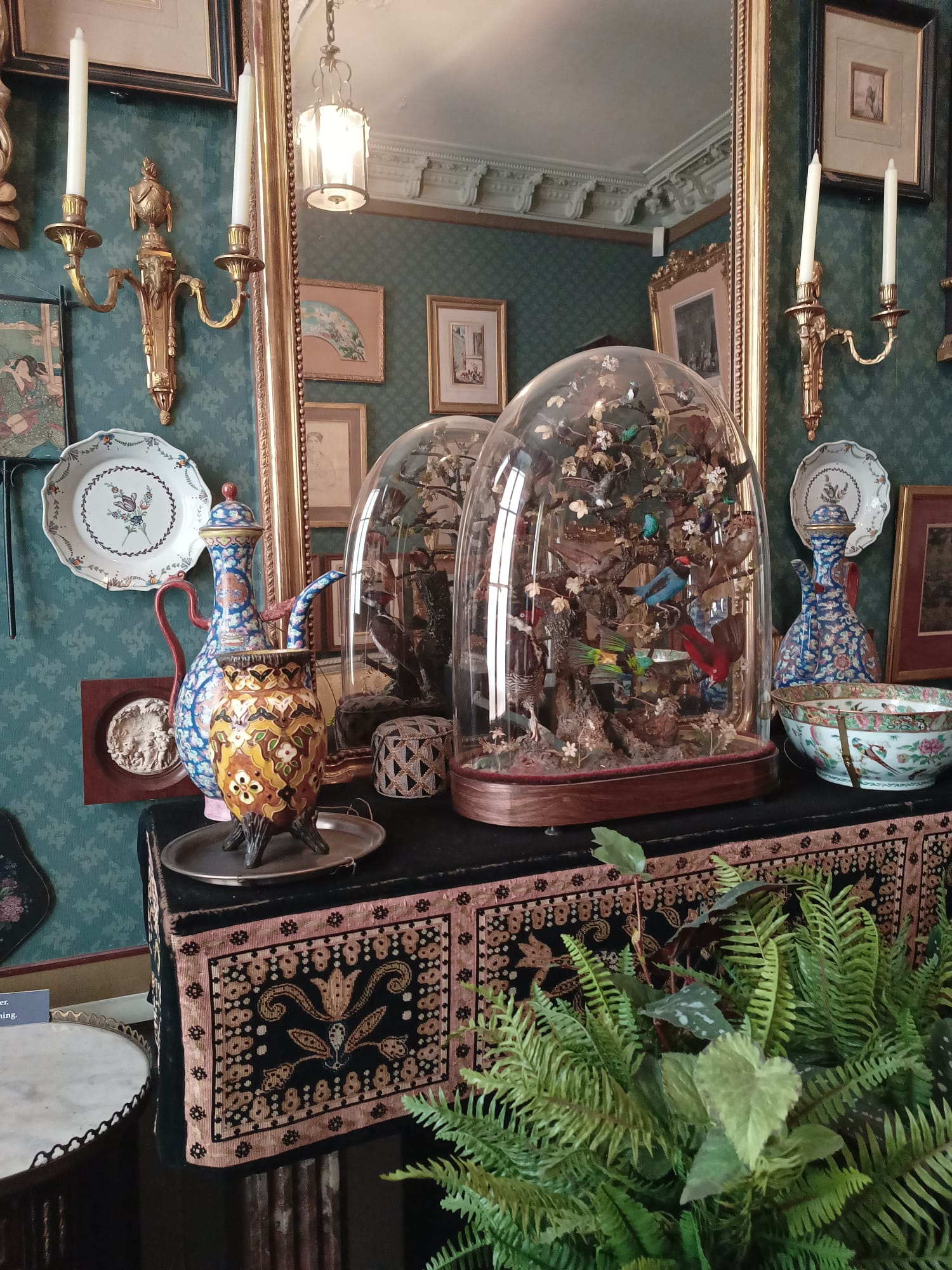
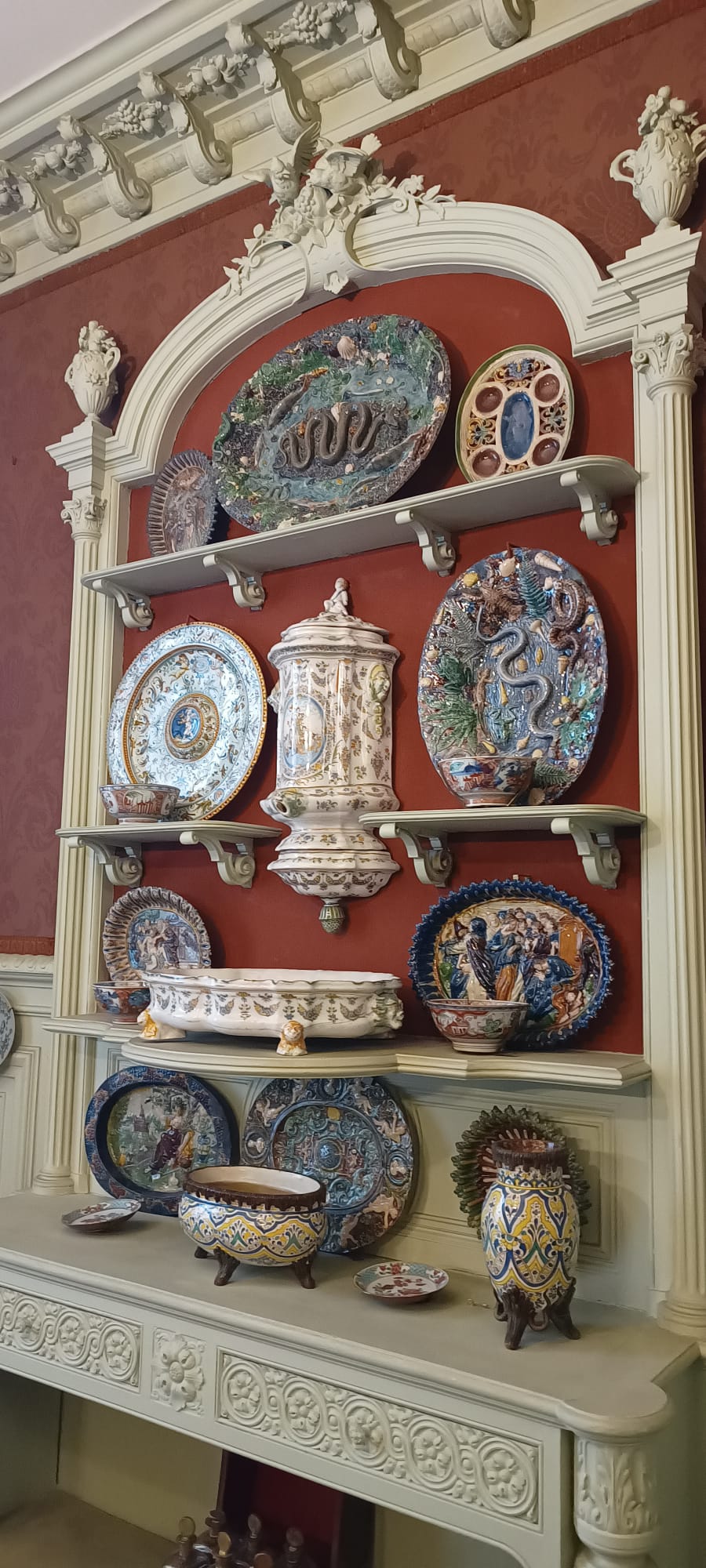
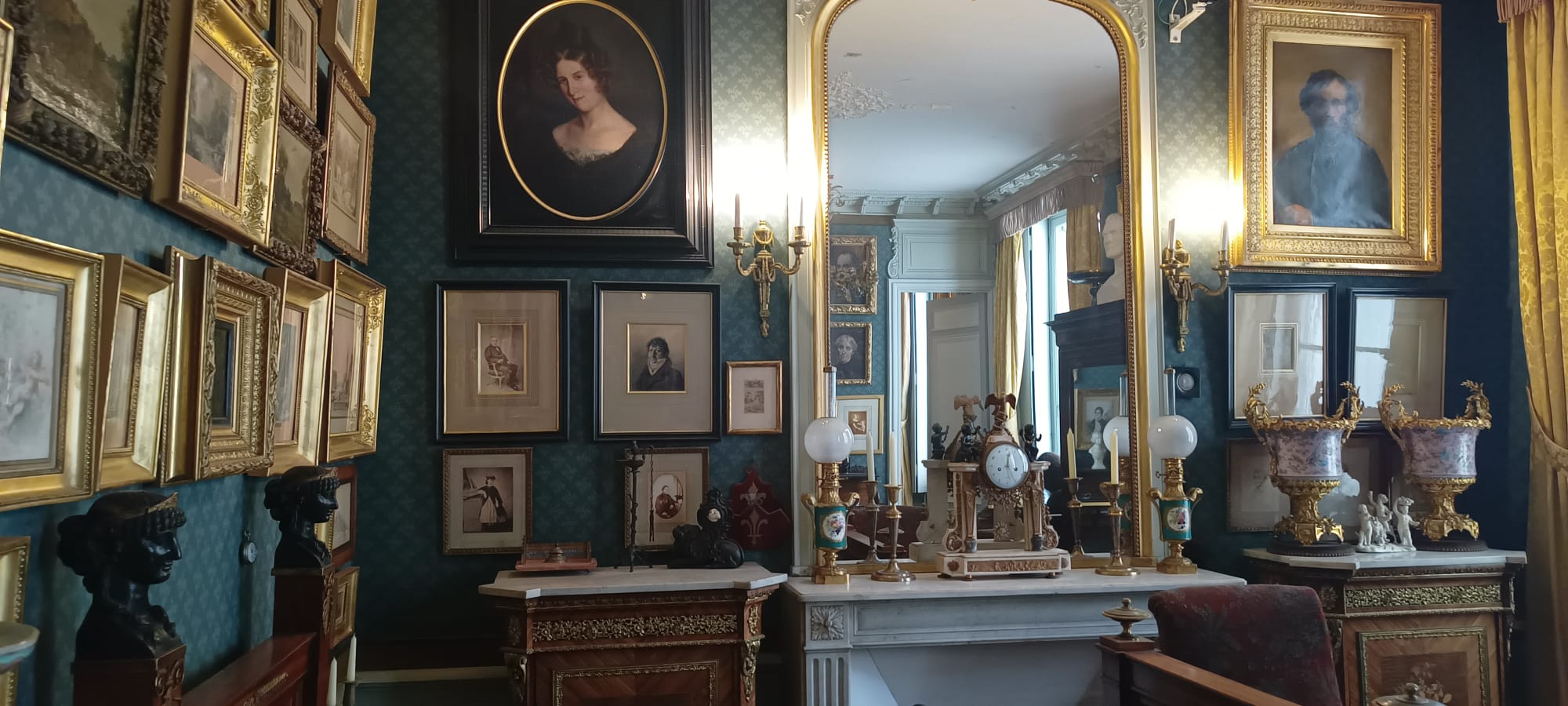
Interior of the rooms, Gustave Moreau Museum
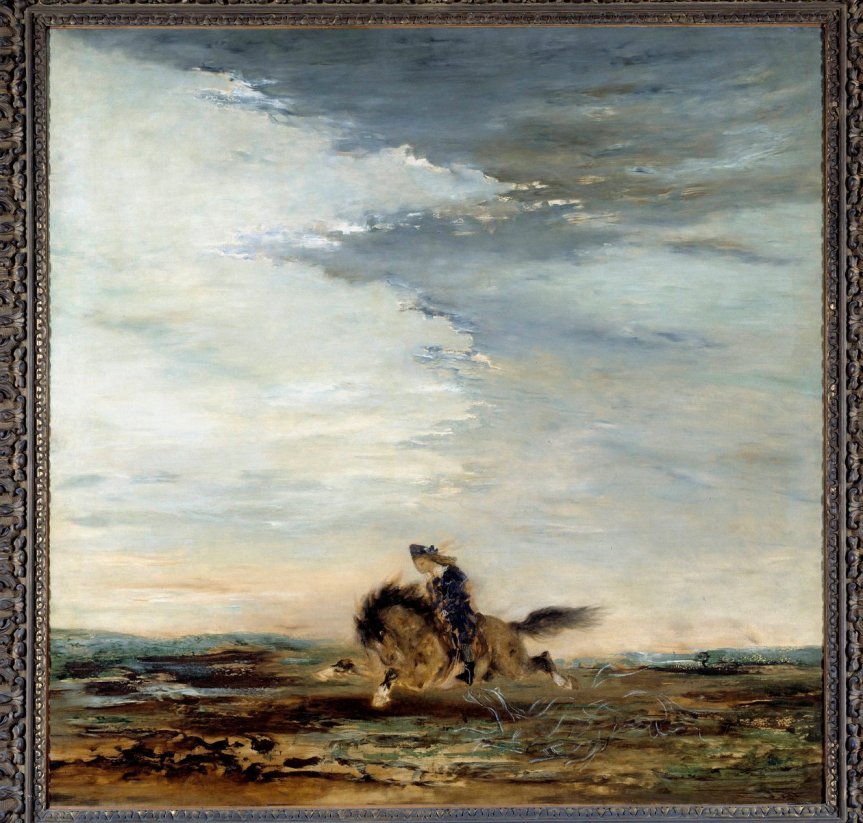
During the visit, I surprised myself by focusing on Moreau’s painting Scottish Horseman, which I didn’t know before (that is, before my visit to the museum). It was inspired by Delacroix’s oil painting Tam O’ Shanter, illustrating a scene from a poem by Robert Burns. In comparison to the artist’s other work, the painting is quite simple, but I still found it quite fascinating. Perhaps what appealed to me was its Romantic aspects (it is Moreau’s last Romantic work) and precisely its simplicity. It suggests a story, and I quite like that the horse in the painting was captured by the artist mid-jump (as in Delacroix’s work).
🥐 See also my travel reports from my previous three trips to Paris – Recent Trip to Paris: 3 Museums, Autumnal Trip to Paris, & My Recent Trip to Paris: Cultural Highlights.


#/media/File:Gustave_Moreau_Les_Licornes.jpg)


It should be noted Moreau’s tie-in with J-K Huysmans, who goes on at length about him in Au Rebours, that great foundational work of decadent literature (famously referred to in Wilde’s “Portrait of Dorian Gray”), especially his Salome (I believe an oil version is in the museum, but the watercolor on which he based his musings hangs in the Musee d’Orsay.)
To quote Huysmans:
“He went to ethnographic sources, to the origins of myths, and he compared and elucidated their intricate enigmas. He reunited the legends of the Far East into a whole… And he remained saddened, haunted by the symbols of perversities and superhuman loves, of divine stuprations brought to end without abandonment and without hope.”
LikeLiked by 1 person
Extraordinary, all of it, thank you for sharing
LikeLiked by 1 person
Beautiful! You transported me there.
LikeLiked by 1 person
Ooo, I didn’t know about the Musée Gustave Moreau – thanks for the taster photos, not just of individual paintings but of how they’re displayed. Fantastic! Glad you got so much out of this trip.
LikeLiked by 1 person
Another bountiful excursion, Parisian traveler🧳👩🎨👏✌️
LikeLiked by 1 person
All right! SO you did make it to Moreau’s. Glad you liked it.
The Musée de la Marine used to be a fantastic museum, but I haven’t been in more ‘n 20 years…
Balzac: Good point. I’m not a big fan of Balzac, (not as literature-inclined as you are) but it’s one of the rare museums in Paris I’ve never been to. Mental note for the next visit. (Didn’t go this year. Sigh.)
Take care.
Brian
LikeLiked by 1 person
These smaller, lesser known museums are often so interesting! I would love to visit Maison de Balzac one day. I went to the National Maritime Museum in Greenwich last year and was so surprised by how good it was, and so informative!
LikeLiked by 1 person