

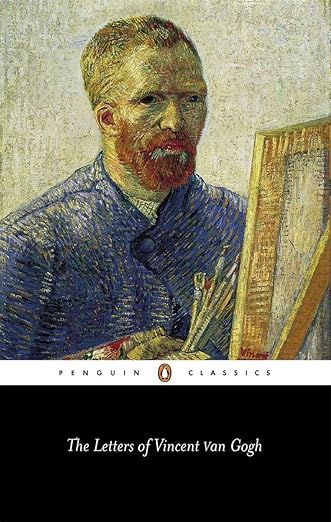
I am sharing a few quotes from an amazing book I have finished recently – The Letters of Vincent Van Gogh. The artist wrote more than 2000 letters in his lifetime, principally to his brother Theo, and this Penguin edition reproduces some of them with commentary.
“The need is for nothing less than the infinite and the miraculous, and a man does well to be satisfied with nothing less, and not to feel easy until he has gained it…That is what all great men have acknowledged in their works, all those who have thought a little more deeply and searched and worked and loved a little more than the rest, who have plumbed the depths of the sea of life. Plumb the depths, that is what we too must do if we want to make a catch, and if we sometimes have to work the whole night through without catching anything, then we do well not to give up and to cast the net once more at dawn.“
“One should never feel secure just because one has no difficulties or cares or handicaps, and one should never be too easy-going. Even in the politest circles and the best surroundings and circumstances one should retain something of the original character of a Robinson Crusoe or of primitive man, for otherwise one cannot be rooted in oneself, and one must never let the fire in one’s soul die, for the time will inevitably come when it will be needed.”
“Love is the best and the noblest thing in the human heart, especially when it is tested by life as gold is tested by fire. Happy is he who has loved much, and is sure of himself, and although he may have wavered and doubted, he has kept that divine spark alive and returned to what was in the beginning and ever shall be. If only one keeps loving faithfully what is truly worth loving and does not squander one’s love on trivial and insignificant and meaningless things then one will gradually obtain more light and grow stronger…”
“Anyone who leads an upright life and experiences real difficulty and disappointment and yet is not crushed by them is worth more than one for whom everything has always been plain sailing and who has known nothing but relative prosperity.”
“There once was a man who went to church and asked, ‘Can it be that my ardour has deceived me, that I have taken a wrong turning and managed things badly? Oh, if only I could be rid of this doubt and know for certain I shall come out victorious and succeed in the end.’ And then a voice answered him, ‘And if you were certain, what would you do then? Act now as if you were certain and you will not be disappointed.’ Then the man went on his way, not unbelieving but believing, and returned to his work no longer doubting or wavering.”
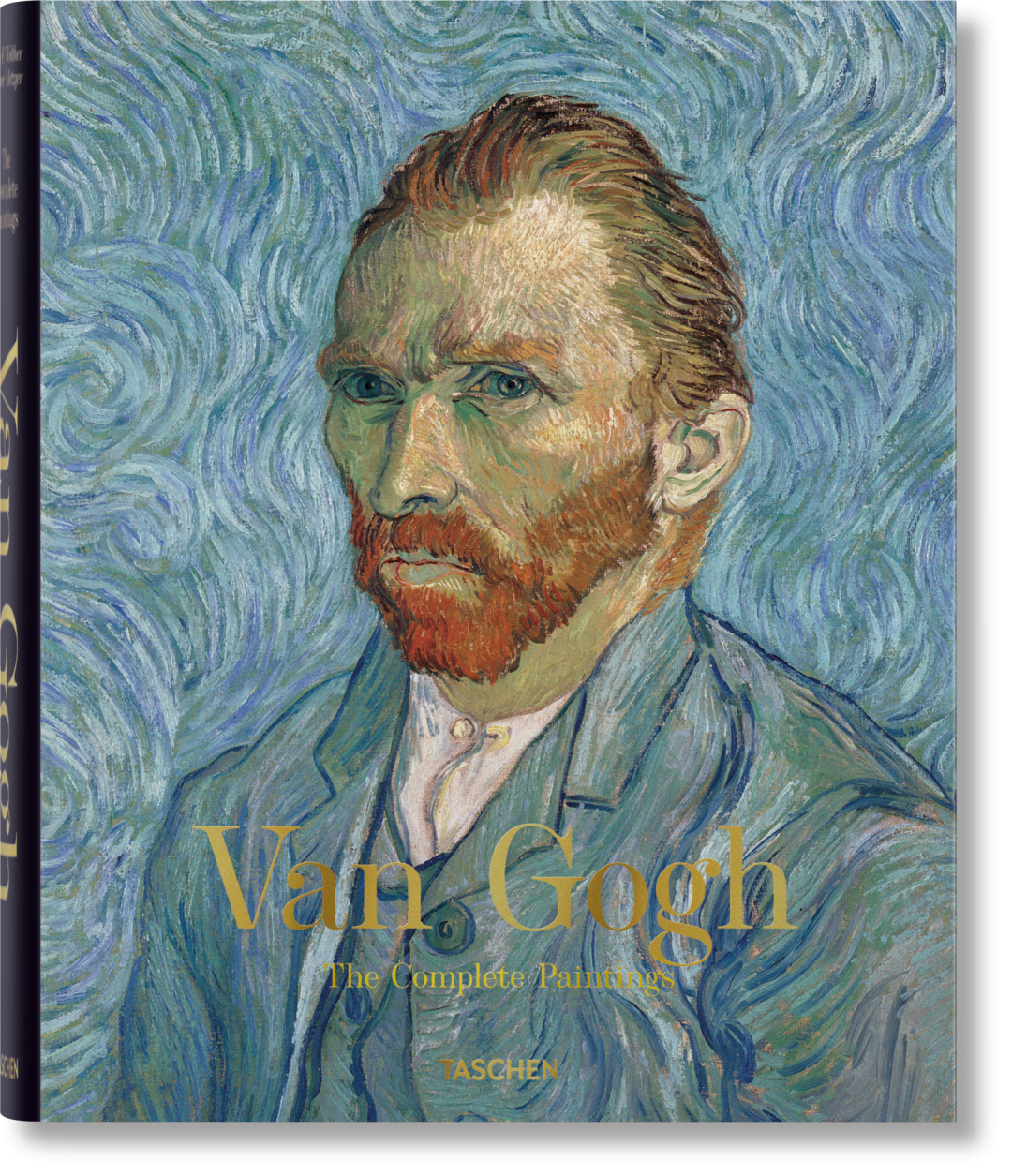
“…can you tell what goes on within by looking at what happens outside? There may be a great fire in your soul, but no one ever comes to warm himself by it, all that passers-by can see is a little smoke coming out of the chimney and they walk on…
“Do you know what makes the prison disappear? Every deep, genuine affection…wherever affection is revived, there life revives” [Van Gogh, July 1880].
- On art:
“…it is the canvas which is frightened of the real painter, not the painter who is frightened of the canvas.”
“Art demands dogged work, work in spite of everything and continuous observation. By dogged, I mean in the first place incessant labour, but also not abandoning one’s views upon the say-so of this person or that.”
“The painter’s duty is to immerse himself wholly in nature and to use all his intelligence for putting his feelings into his work, so that it becomes intelligible to others. But to my mind, working for the sake of sales is not exactly the way to do it, all it does is pull the wool over art lovers’ eyes. And that is something true [artists] have never done, the sympathy they earn sooner or later arriving as the result of their sincerity…“
“It isn’t the language of painters so much as the language of nature that one should heed….The feeling for things themselves, for reality, is of greater importance than the feeling for painting; anyway it is more productive and more inspiring.“
“For great things do not just happen by impulse but are a succession of small things linked together…What is drawing? How does one come to it? It is working through an invisible iron wall that seems to stand between what one feels and what one can do. How is one to get through that wall – since pounding at it is of no use? In my opinion one has to undermine that wall, filing through it steadily and patiently…And as it is with art so it is with other things. And great things are not something accidental, they must be distinctly willed.” [Van Gogh, 21 July 1882, 4/8 August 1883]
- Van Gogh admired Japanese prints and Japanese techniques of art-making:
“I envy the Japanese the extreme clarity of everything in their work. It is never dull and it never seems to be done in too much of a hurry. Their work is as simple as breathing, and they do a figure in a few sure strokes as if it were as easy as doing up your waistcoat. [Van Gogh, 24 September 1888, translated by Arnold Pomerans, all emphasis is mine]

Vincent van Gogh


By the way, what is the NON–FICTION OF THE MONTH in your right border? A special challenge?
LikeLiked by 1 person
These are just books I chose to highlight for this month (I realised that Penguin published some great editions of Japanese philosophy ). Perhaps someone would get curious and pick them up. Great reads!
LikeLiked by 1 person
I will look for this.
LikeLiked by 1 person
This sounds like a fascinating and fabulous read. I will keep my eye out for it. Thanks
LikeLiked by 1 person