
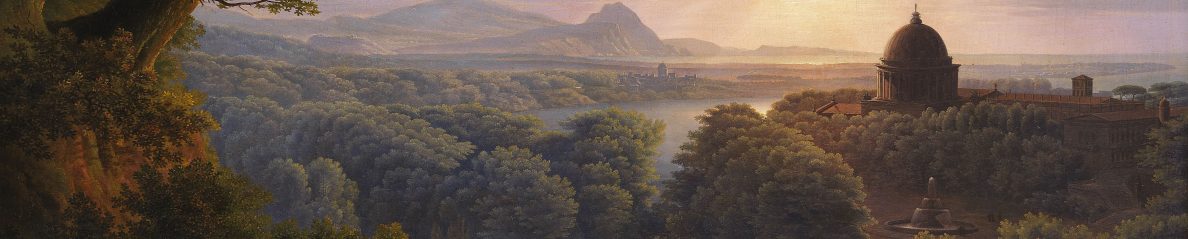
To a God Unknown [1933] by John Steinbeck – ★★★1/2

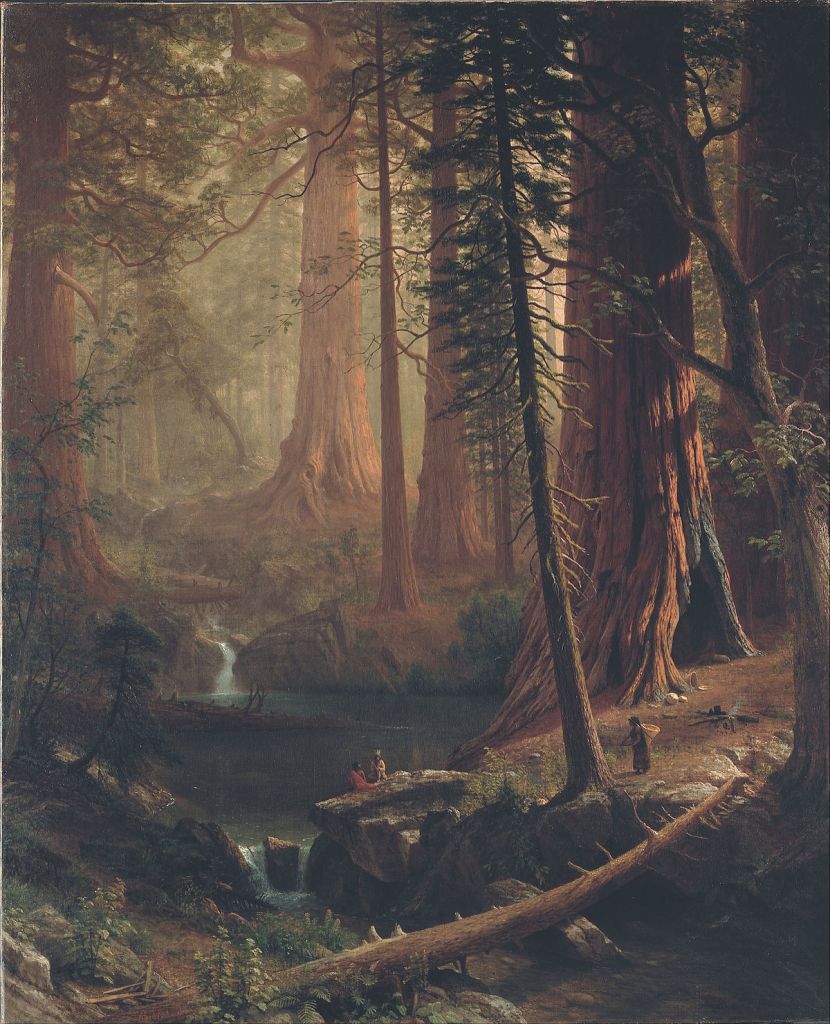
John Steinbeck’s third novel follows Joseph Wayne, who leaves his family in Vermont and makes for sunny California in hope of obtaining cheap land there. Taken by the “pioneer fever”, he desires nothing more than some acres of land to call his own, and soon, his three brothers back home, animal-loving Thomas, religious Burton and wayward Benjamin follow suit, establishing a big inter-connected farm in their new place – the valley of Nuestra Señora. Wayne makes friends with Mexican Juanito, who helps him build his house, and even woos local school-teacher Elisabeth McGreggor. The combination of Joseph’s obsessive veneration of one large tree (a symbol of promise and renewal), problems with his alcoholic brother Benjamin and then fears about some uncharacteristic weather conditions slowly sets the scene for tragedies to come.
Steinbeck’s gentle, delicate narrative, full of strange foreboding, at times gives way to some “rapturous” sentences of incredible insight as his characters try to reconcile their spiritual mindsets with their new abode dictated by the laws of nature they are yet to experience. Our pioneer Joseph realises the extent of the dangers haunting his “promised land”, but does so rather late, and not only his economic situation suffers, but also his personal life as the “land of opportunity” also harbours secret places that cannot wait to reveal the origin of their dark reputation. To a God Unknown is a settlers’ experience story with simply-drawn characters that fits well into Steinbeck’s “Salinas Valley” series, but whose main drama is also rather weak, albeit rich in symbolism. This is a simple tale of one extraordinary will to conquer land and life, and realising only too late that any partnership with nature also comes at a cost.
<< Buy To a God Unknown (affiliate link) >> 🌳
The Twilight Years [1972] by Sawako Ariyoshi – ★★★1/2
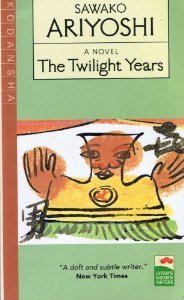
With its rapidly aging population and the cultural taboo placed on all matters of death and dying, it is no wonder Japan has often been caught in an accountability cross-fire regarding the disparity between its theory and practice concerning the care for the elderly and the matters of life and death. It then fell on writers and directors to highlight the important social issues that many politicians tend to ignore, and, previously, such great Japanese films as Tokyo Story (1953), The Ballad of Narayama (1958), The Funeral (1984), and Departures (2008) all tried to draw attention either to those elderly in Japan who find themselves in a “limbo” state or combat the Japanese stigma associated with funeral work.

Sawako Ariyoshi (1931 – 1984) might have been a Japanese author known for such works as The Doctor’s Wife and The River Ki, but she was also a passionate social justice advocate, and in The Twilight Years, chose to highlight two improtant social issues – the position of women in society and the care for the elderly. In the 1970s Japan, Akiko is a busy, working housewife and mother who shuffles her family obligations (the care for her husband and teenage son) with her work in an office. However, when her mother-in-law suddenly dies, Akiko finds herself overwhelmed with responsibility as the task to care for her father-in-law Shigezo, who displays signs of dementia, falls increasingly on her alone. Soon, Akiko and her family have to make some difficult decisions. Though for me personally the story was too straightforward, and more factual than insightful or emotive, The Twilight Years is still an important story to read that highlights many issues surrounding aging in Japan and the problems that the elderly and their carers face.
 Thoughts on Papyrus
I want to work my way through Steinbeck … I’ll get to this one eventually. I am intrigued to learn more about the venerable tree.
LikeLiked by 1 person
Haven’t read this Steinbeck, but I’ll never forget The Grapes of Wrath. Life weighs disproportionately on those who already have no resources, and he makes you feel as if you were right there.
I was born in California, lived most of my life elsewhere, and insisted on coming home for retirement (no muggy East Coast for me!). Husband obliged, and we now live in Davis. I’ll have to find space for To a God Unknown.
Japan is such a fascinating culture – but its population is aging quickly and it will need to deal with the many older people who live and die alone. I don’t see how many of these things will be managed – there’s only so much companionship you can expect of a robot.
Things have foreseeable consequences – and official blindness. China’s ‘one-child’ policy added to a preference for important financial reasons has led (why didn’t they do anything sooner – their closed kind of government) to millions of young men who will never find a wife, because families preferred a son who would take care of them to a daughter who would care for her in-laws. But they’re been ignoring this possibility since they started. And both nations are very reluctant to welcome foreigners – whereas the States may be saved precisely because of immigration if we can overcome some of our own citizens’ prejudices. Wheels within wheels.
LikeLiked by 2 people
Oh, it’s a pleasure to talk with California native! I think you would enjoy A God Unknown despite my criticism. As you know, Steinbeck certainly puts you right there in terms of all the description. And, I agree with your assessment on immigration, too.
LikeLike
Steinbeck is definitely a compelling author. Have you read Cannery Row? A while back for me, and then we visited the real Cannery Row (shops and tourist attractions and restaurants – not fish canning any more) on one of our visits to the Monterey Peninsula – but the stories stay with you.
LikeLiked by 1 person
This is the one I am still to read, actually. I can’t wait.
LikeLike
Oh my, I didn’t know this book by Steinbeck!
The River Ki is on my TBR for soon. This other book by the same author does sound important. Thanks for presenting these books
LikeLiked by 1 person
Indeed, there have been literary works and films about the problem of treating old people in Japan. It once made a strong impression on me. In general, in different cultures there are very different attitudes towards the elderly and old age. This is an interesting activity – to compare different peoples on this issue. The attitude of the Japanese remains completely incomprehensible to me, it intrigues and excites, I want to know what they mean, what is behind this.
LikeLiked by 1 person
Yes, it is not easy to understand, but I guess when it comes to funeral practices it is mostly superstition and burakumin (untouchables) culture, which means these people are discriminated against. I think the issue with the elderly is more complex, but given that Japan is the “super aged” society, but still steeped in many traditions, the modernisation and greater understanding and thus adequate response in certain areas, especially when it comes to treating mental disease, are slower in coming than desired. But then, the modernisation and new attitudes are also blamed for changed response to the elderly and their care, so it is a bit of a vicious circle.
LikeLiked by 1 person
Agree. It’s just that the culture in Russia is very different from other cultures in relation to old age and old people. When you find out that it could be different, you first experience a shock. And then I want to understand the origins and figure out – but how to do it right. But so far it hasn’t been possible.
LikeLiked by 1 person
I really like the sound of The Twilight Years. If you haven’t seen it, Kore-Eda’s movie Shoplifters beautifully picks up that theme of care for the elderly (and others) in Japanese society.
LikeLiked by 1 person
It definitely is worth reading, and yes, I have seen Shoplifters, thanks. Koreeda is amazing!
LikeLiked by 1 person
Thanks for highlighting Ariyoshi’s work! I’m wondering if the straightforwardness is part of the plan… since it can be a bit taboo to talk about these topics.
LikeLiked by 1 person