June 2022 Wrap-Up: From La Vita Nuova to The Siren

La Vita Nuova [1294/2021] by Dante Alighieri – ★★★★★

Here is a deity stronger than I; who, coming, shall rule over me”. Translated by Dante Gabriel Rossetti, La Vita Nuova is Dante’s early work dedicated to his beloved Beatrice, a noblewoman. Part autobiographical narrative and part poetry, the book is about this Italian poet’s joy and anguish as he worships Beatrice and her image, dedicating poem after poem to her, and his narrative is filled with tenderness, wonder, and visions and premonitions of all kinds. Being purely platonic and much idealised, this is no ordinary love, especially since Dante allegedly met Beatrice only twice in his life (the first time when both of them were children). So, some in his immediate entourage expressed their scepticism about this otherworldly love of his: “To what end lovest thou this lady, seeing that thou canst not support her presence?” However, Dante had an answer. “Love governs [his] Soul”. In this work at least, Dante’s love is obsessive and transformative, but also pure and unselfish, and does not depend on his beloved being near or reciprocating, though the torment of not seeing her and then seeing her pass to the “otherworld” of Angels is too much to bear (“The look she hath when she a little smiles/Cannot be said, nor hidden in the thought; ‘Tis such a new and gracious miracle” [Dante/Rossetti, Pan Macmillan, 1294/2021: 47]). This is Dante’s soul-crying, soul-searching work; a powerful, moving evocation.

Continue reading “June 2022 Wrap-Up: From La Vita Nuova to The Siren”

Review: The City and the Mountains by Eça de Queiróz

The City and the Mountains [1901/2008] – ★★★★★

“…and in life, only the soul matters” [Eça de Queiroz/Costa, Dedalus, 1901/2008: 174].

Translated from the Portuguese by Margaret Jull Costa, The City and the Mountains is de Queiroz’s much later novel about the life of Portuguese nobleman Jacinto de Tormes, as told from the perspective of his best friend Zé Fernandes. The novel starts in Paris, France (the City) and ends in Tormes, Portugal (the Mountains), presenting a vivid contrast between the busy, money and technology-driven Parisian lifestyle, on the one hand, and the quiet, simple, filled with natural beauty, mode of life in the countryside, on the other. As important as this duality is also the psychology of Jacinto de Tormes, a man of great means and even bigger opportunities. However, it turns out that it is not so easy to figure out the purpose of a thing called Life and the quest for ultimate knowledge may not lie in the most obvious of places. Thus, this charming book on duality and human transformation is many things: a delicate city satire, a study of fin de siècle societal eccentricities, a heart-warming presentation of lifelong friendship, and, finally, a lyrical tribute to the beauty of Portuguese countryside.

Continue reading “Review: The City and the Mountains by Eça de Queiróz”

Recent History Non-Fiction Reads: The Electric Chair, & Empireland

I. The Electric Chair: An Unnatural American History [1999/2009] by Craig Brandon – ★★★★

This book is on the history of one of “the elephants in the room” in the US – death penalty by electrocution. It talks in depth about the case of William Kemmler, a vegetable peddler from Buffalo, who became the first person to be executed by electric chair in America on 6 August 1890. Previously, Kemmler was convicted of murdering his common law wife Tillie Ziegler. It is this man, or rather his death, that became a pawn in the complex business and political game of inventors, investors, entrepreneurs and politicians, at the centre of which was the so-called “current war” waged by Edison (a proponent of the direct current (DC)) and Westinghouse (a proponent of the alternative current (AC)), both eager to prove that only their patented electricity was the way forward for American society, both for domestic and penal purposes.

Continue reading “Recent History Non-Fiction Reads: The Electric Chair, & Empireland”

10 Novels I’ve Recently Added to My TBR

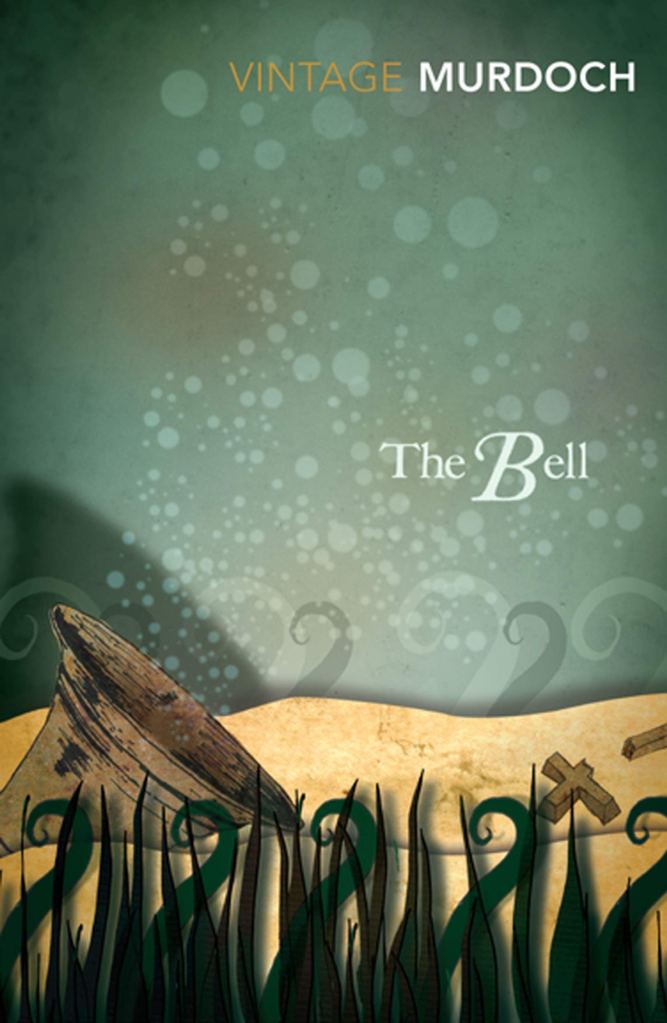
I. The Bell [1958] by Iris Murdoch

It is said that this “funny and sad novel is about religion, the fight between good and evil and the terrible accidents of human frailty.” The Bell should be right up my alley because I love stories that focus on small communities and morality. The synopsis reads: “A lay community of thoroughly mixed-up people is encamped outside Imber Abbey…A new bell, legendary symbol of religion and magic, is rediscovered“. At the same time, it appears that a number of characters also decide to either confront their partners or change their relationships status.

II. The Iliac Crest [2002/17] by Cristina Rivera Garza

Sometimes I am up for something subversive and unusual. The Iliac Crest is by Mexican author Cristina Rivera Garza who decided to explore the concepts of gender and identity, presenting in her story two women who come to an unnamed narrator’s house and start their questioning. “The increasingly frantic protagonist fails to defend his supposed masculinity and eventually finds himself in a sanatorium.” The novel has been called “haunting” and “otherworldly”, and I am sure there are many surprises along the way.

Continue reading “10 Novels I’ve Recently Added to My TBR”

Puccini’s Opera: Turandot

Turandot [1926]

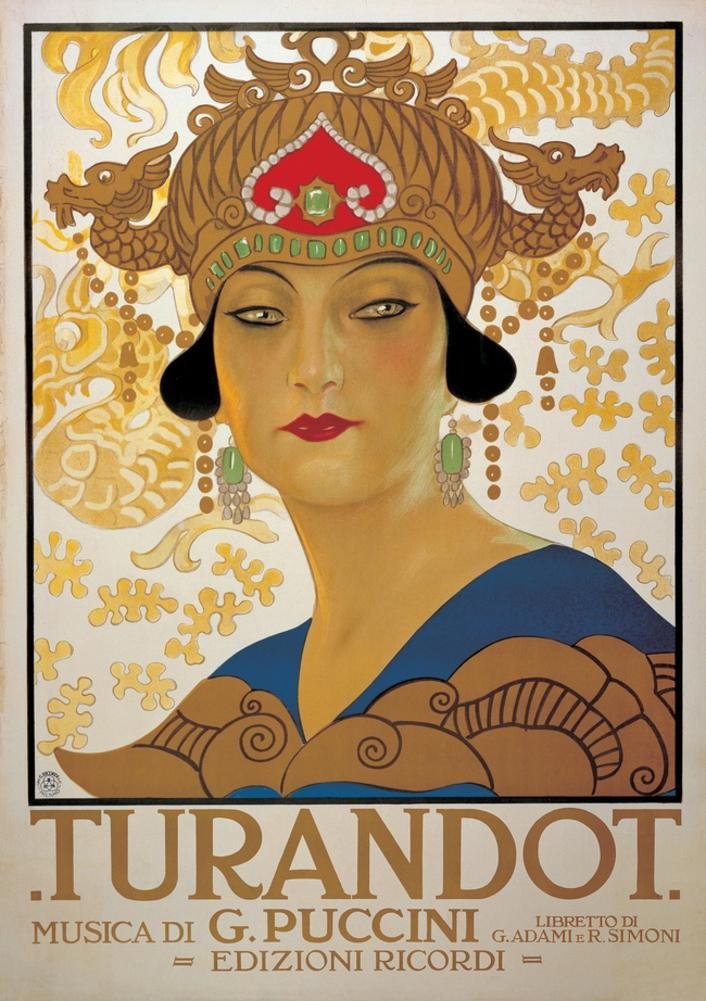
Opera Turandot is set in Beijing, China and tells the story of proud Princess Turandot and unknown Prince Calaf. Turandot is a haughty Princess who wants to take revenge for a crime once committed against one woman in her ancestry line by condemning young princes from afar to their deaths. To achieve this aim, Turandot demands that every man that wants to marry her has to solve her three riddles. Whoever solves her three puzzles will become her husband, but if that person is unable to solve them – he will be executed. However, despite very probable deadly consequences of this trial-riddle imposed by the Princess, there is no shortage of young men willing to risk their lives since Turandot is very beautiful. Then, comes Calaf, a Prince travelling with his father Timur and a slave-girl Liu, and he will stop at nothing until he completes the challenge and wins the hand of Turandot. Turandot is an opera of extravagant displays, great passions and narrative contrasts and extremes. Puccini’s music diffuses Asian tones and makes use of powerful choirs, providing a kaleidoscopic musical experience, with the heart-wrenching final-act aria “Nessun dorma” rightly deserving its place among the finest operatic arias ever.

Continue reading “Puccini’s Opera: Turandot”

Dreaming in Art: 5 Fantastical Paintings

The mystery of dreams and dreaming has been fascinating artists since ancient times. Many famous artists (from Hieronymus Bosch, Francisco de Goya and William Blake to Gustav Klimt, René Magritte and Salvador Dalí) had tried to give life and form on canvas to the wondrous and bewildering nature of dreams. Whether taking folklore, mythology or biblical scenes as their main themes, artists’ greatest challenge was to enable the easy differentiation in the painting between the waking and the dreaming lives of their subjects. Below is just a snippet of this fascinating art tradition.

I. The Stuff That Dreams Are Made Of/Dreams [1858] by John Anster Fitzgerald 

John Anster Fitzgerald (1819 – 1906) was a British painter of the Victoria era known for producing detailed, colourful artwork depicting various mythological figures: fairies, ghouls, demons, and also effects of drug-consumption. Dreams is just one of his paintings that depicts a young girl sleeping and seeing dreams. Those dreams “materialise” around her in this piece, showing various mischievous spirits playing musical instruments at the foot of the girl’s bed, while the more benevolent ones dance in the painting’s background, encircling the girl’s most pleasant dream of forming a couple with a (real or imagined) man she loves. The girl’s chic dress is probably also a part of her dream, and the red drapery around the girl’s bed work almost as stage curtains further emphasising the effect of an ongoing performance.

Continue reading “Dreaming in Art: 5 Fantastical Paintings”

Recent Reading: Short Stories

I. Xingu [1900] by Edith Wharton – ★★★★★

In this story, one intellectual reading club is led by one Mrs. Ballinger and composed of a number of ladies of distinction, i.e. “huntresses of erudition”, “who pursue Culture in bands, as though it were dangerous to meet alone”. Mrs. Ballinger is the epitome of proper behaviour, but is also described as having a “mind [like an] hotel where facts came and went like transient lodgers, without leaving their address behind, and frequently without paying for their board”. Mrs. Roby is the newest addition to this elite club who gained her entry by way of one gentleman’s recommendation. However, she does not seem to fit and does and says the wrong things. That is, until Mrs. Ballinger and the other ladies invite a respected female author Osric Dane to talk about her latest book and that “inadequate” Mrs. Roby asks Ms. Dane to comment on one supposed book titled “Xingu”. The uttering of that word “Xingu” is that Alice in Wonderland’s Unbirthday Party moment in this story which precedes changing power dynamics and the quiet, or maybe not so quiet, disintegration of the club’s supposed erudition.

Edith Wharton (The House of Mirth [1905]) could always be counted on to produce a fine satire of the upper-class. The haughtiness and self-absorption of the club, that focuses too much on what is “right” and “proper”, means that the ladies lose sight of the very culture and intellectual endeavours they are supposed to be pursing. They are necessarily restricted by the very “fine” social parameters within which they operate, and the goal to pursue culture and serious literature, which does require a level of open-mindedness, sits at odds with the club’s inflexible and discriminatory practices. Xingu must be among Wharton’s best short stories, being both caustically amusing and delightfully sarcastic.

Continue reading “Recent Reading: Short Stories”