
Review: Fryderyk Chopin by Alan Walker

Fryderyk Chopin: A Life and Times [2018] – ★★★1/2

A comprehensive biography of Chopin, though also a tad over-written and insensitive.

This book on Polish composer Fryderyk Chopin is the culmination of a ten years’ research project. Fryderyk or Frédéric Chopin is considered to be the greatest composer of the Romantic period, and this biography details his life from his early education and success in native Poland to his move and conquest of Paris through salon appearances, concerts and published works. Much in this book is about Chopin’s long-term relationship with female French novelist George Sand, but Chopin’s musical masterpieces, technique and piano theories are also dissected. Walker employs an engaging story-format to tell us about Chopin, a composer who was also largely self-taught and perpetually ill, providing invaluable insights into Chopin’s relationships with others. And, this well-researched book would have been a “must-read” biography if not for the fact that it is also over-written, with the author making some insensitive faux pas as he proceeds with his over-zealous narration.

Continue reading “Review: Fryderyk Chopin by Alan Walker”

Review: Talking Music by William Duckworth

Talking Music: Conversations with John Cage, Philip Glass, Laurie Anderson, & Five Generations of American Experimental Composers [1995]★★★★

A “must-read” for any music fan interested in the nature of music, its experimental forms and its boundaries.

Experimental music is defined as “any music that pushes existing boundaries and genre definitions“. Though the term originated in the 1950s, the US of the 1960s saw certain music artists emerging that can be said to be loosely associated with the “experimental music” movement. This book by American composer and educator William Duckworth compiles the author’s interviews with experimental composers and performers from the US, including John Cage, Philip Glass, Lou Harrison, Conlon Nancarrow, Meredith Monk and Laurie Anderson. The interviews shed light on the artists’ backgrounds, major works and inspirations, and many of the interviews are frank, interesting and inspirational.

Continue reading “Review: Talking Music by William Duckworth”

“The Great Pianists” Non-Fiction: Lang Lang’s Memoir & Van Cliburn’s Biography – “Moscow Nights”

This month I intensified my piano-learning (I have finally finished all the piano method books I once started and jumped on Duvernoy, Schytte and Lemoine’s studies) and listened to a lot of piano music (Godowsky’s Java Suite ), so I have also decided to share a couple of piano-related books I have been reading recently: Lang Lang’s memoir and a book on Van Cliburn.

Journey of a Thousand Miles: My Story [2008] by Lang Lang – ★★★★1/2

Chinese pianist Lang Lang is considered one of the leading figures of today’s classical music world and one of the most accomplished pianists of our modern time. This is his memoir in which he tells his story, from his birth in 1982 in China’s north-eastern city of Shenyang, his early musical education and upbringing, to his hard-work and his family sacrificing everything to see him become “the world’s no. 1”. It is a moving autobiography of a child once living in near-poverty, but always working hard and dreaming “big”, and then of a young man, not always believing in himself, but always being clear in his mind what he wants to achieve next, overcoming his tricky family life and the Chinese competitive system. There are no “self-indulgent” paragraphs in this memoir. It is clear and to the point, with very short chapters, in which Lang Lang, first and foremost, pays tribute to his family and his teachers, who always believed in him and enabled him to become what he is now – an immensely popular classical pianist.  

Continue reading ““The Great Pianists” Non-Fiction: Lang Lang’s Memoir & Van Cliburn’s Biography – “Moscow Nights””

Review: Music in the Castle of Heaven by John Eliot Gardiner 

Music in the Castle of Heaven: A Portrait of Johann Sebastian Bach [2013] – ★★★★

In this biography, Gardiner strikes at the very heart of J. S. Bach’s genius, presenting to us a complex and sometimes contradictory musician who was also a very empathetic man.

I was obliged to be industrious. Whoever is equally industrious will succeed equally well“. Johann Sebastian Bach

The music of Bach is complex, inventive, awe-inspiring and brimming with mathematical precision and religious fervour. The man behind it appears equally stern and unapproachable. But, who was Johann Sebastian Bach really and how it came about that a cantor operating in a small region of Germany managed to compose music of such brilliant contours, imaginative force and spiritual depth? In this non-fiction, British conductor John Eliot Gardiner aims to shed light on these puzzling questions. Music in the Castle of Heaven is an illuminating account of Bach’s life and music that starts from the premise that to understand Bach’s art, we have to first immerse ourselves in the very essence of his time and place of birth. Numerous factors influenced Bach and made him into a musician we know today – familial, historic, socio-economic, cultural, educational – and without knowing these we cannot even begin to fathom the workings of Bach’s mind.

Continue reading “Review: Music in the Castle of Heaven by John Eliot Gardiner “

Non-Fiction Reviews: “Five Points”, “When Brains Dream”, & “Year of Wonder”

Five Points: The Nineteenth-Century New York City Neighborhood That Invented Tap Dance, Stole Elections and Became the World’s Most Notorious Slum [2002] by Tyler Anbinder ★★★★

I love reading about the history of New York City, for example see my review of Mark Kurlanskys The Big Oyster: A Molluscular History of New York [2006]. In Five Points, Tyler Anbinder focuses his attention on once the most notorious area in New York – the infamous Five Points, once a densely-populated, poverty, crime, riots and disease-ridden area. The area, which was once a green place with a lake called “The Collect Pond”, became by the end of the eighteenth century “a putrid nuisance” (due to local industries’ contamination) [Anbinder, 2002: 14] and, later, a place to be feared and ruled by criminal gangs. However, what became a place of danger for some, also turned into a place of fun and unthought-of opportunities for others. This non-fiction book is a very detailed account of the history of Five Points in the nineteenth century. Through documents, contemporaries’ accounts (each chapter starts with a “personal story” prologue), maps, graphs and old photographers, the author shows how Five Points gained such a vile reputation around the world and what made it so different from other New York neighbourhoods.

Continue reading “Non-Fiction Reviews: “Five Points”, “When Brains Dream”, & “Year of Wonder””

Review: Beethoven: A Life in Nine Pieces by Laura Tunbridge

Beethoven: A Life in Nine Pieces [2020] – ★★★★★

Through just nine musical pieces, Laura Tunbridge places Beethoven in one particular time and place in her well-researched book, presenting an intimate and detailed image of the great composer.

Did you know that one music piece (a Septet) that made Beethoven’s name in the nineteenth century is hardly ever played today, or that later pieces by Beethoven that are now known to everyone were considered in the composer’s time too complex and brazen to merit any attention? Beethoven’s elusive “Immortal Beloved” is still without identity, and his attempts at self-promotion were not always successful. Rather than Beethoven being an isolated genius making music masterpieces on his own, Laura Tunbridge talks in her book of Beethoven as a gifted person who was very much depended on others (such as on his friends and patrons), on the particular time, norms and politics, as well as on the musical tradition in which he lived. The author demonstrates how Vienna and Beethoven’s own personal life affected his music, and how changing perceptions, as well as tastes of nobility, ultimately shaped and dictated the man and his music that is now admired by millions.

Continue reading “Review: Beethoven: A Life in Nine Pieces by Laura Tunbridge”

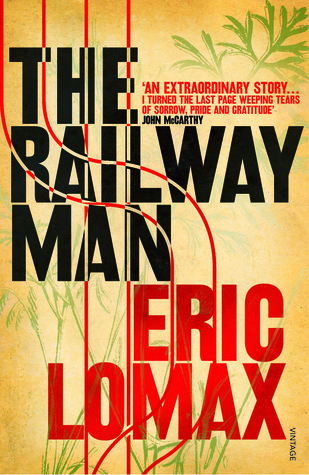
Biography/Memoir Non-Fiction: The Railway Man and Mozart: The Man Revealed

the railway manThe Railway Man [1995] by Eric Lomax – ★★★★

Those who experienced evil may forget it, but those who committed it – never” (A. Mare).

This is a true story of Eric Lomax, a British Army Officer and ex-Prisoner-of-War (POW) during the World War II, who was tortured and held in confinement while he and his fellow comrades were forced to work on the Siam-Burma railway line. Years after the WWII, he came face-to-face with one of his captors – Japanese interpreter Takashi Nagase, a meeting that finally led to a reconciliation. This is Lomax’s incredible true story, which is an inspirational and moving read. 

Continue reading “Biography/Memoir Non-Fiction: The Railway Man and Mozart: The Man Revealed”