Nabokov’s Pale Fire: An Illusion Within an Illusion

Pale Fire [1962] – ★★★★★

Continue reading “Nabokov’s Pale Fire: An Illusion Within an Illusion”

Shin Kyung-Sook’s “Violets”: Both Tender & Unflinching

Violets [2001/22] – ★★★★

There is a Chinese proverb that states “a child’s life is like a piece of paper on which every person leaves a mark”. Acclaimed South Korean author Shin Kyung-Sook may agree with this statement, seeing that her sixth novel titled Violets (2001), translated from the Korean by Anton Hur in 2022, is all about a girl who is determined to overcome her traumatic childhood experiences while trying to find her calling in the buzzing capital of the country – Seoul. San is first introduced to us as a little girl born into a poverty-stricken family with one wayward father and not-so-very-responsible mother, and San’s only ray of sunshine seems to be another girl her age named Namae. It is the 1970s, and the two girls spend their time together, bonding over their respective families’ poverty and inadequacies, until one incident puts an unbridgeable distance between the girls. Then, we follow San, who is already aged twenty-two, as she seeks a job in Seoul, presumably in the 1980s, and, after unsuccessful applications to various publishing houses, lands the job of a flower seller.

It is in this, at first unenviable, position of a “flower girl” that shy San starts discovering things about herself and others, first making a connection with the mute shop-keeper and then friends with strong-willed and bold co-worker Su-ae. However, what was planted in childhood is bound to shoot up in adolescence and adulthood. San may be attempting to find fulfilment in her new job and friendship with Su-ae, but her painful past, her persistent isolation and her growing inward despair, may just get the better of her. San’s uncertain condition and need for attachment culminate in her obsessive love for one magazine photographer and then in further trauma as her search for comfort and understanding leads to some thoughtless and erratic actions. Shin’s tender, dream-like narrative puts our heroine in juxtaposition to the elements of her brash immediate environment, including the misogynistic attitude towards women, the competitive job market of the 1980s’ Seoul and the lonely disillusionment of “big city” dreams. The message is clear – San represents those ordinary, anonymous women in society, whose pitiful circumstances and trauma were systematically shut down and ignored[1]. The novel in our hands ensures that their voices are heard and remembered.

Continue reading “Shin Kyung-Sook’s “Violets”: Both Tender & Unflinching”

The Croatian Freethinker

On the Edge of Reason re-issue is newly out from New Directions

What classic story first comes to your mind when you think of a satire on the hypocrisy of the bourgeoisie or ruling majority? George Orwell’s Animal Farm? J. B. Priestley’s An Inspector Calls? Henrik Ibsen’s An Enemy of the People? Charles Dickens’s Little Dorrit? Edith Wharton’s The House of Mirth? French literature has a long tradition of such stories, so, perhaps, some story by Molière, Honoré de Balzac, Émile Zola, or Guy de Maupassant? The choice is numerous, but, whatever it is, chances are it would not be Miroslav Krleža’s novel On the Edge of Reason (1938). And, yet – it should be. This novel by one of the greatest Croatian writers of the twentieth century should be on everyone’s lips when evoking stories about the challenge to that prevailing social order that curbs individual freedoms and rights, leading to injustice.

Prolific and versatile author Miroslav Krleža (1893 – 1981), who wrote novels, essays, poems, plays and short stories, was aptly placed to tackle the theme. His stark criticism of the ruling elite’s egoism, greed and the perpetration of social injustice in his fiction is the reflection of his country’s turbulent political history and his own innate desire to challenge the status quo. While being an officer in the Austro-Hungarian Army, Krleža once unsuccessfully deflected to the Serbian Army, and his embittered experience as a soldier on the frontlines during the World War I culminated in his powerful anti-war writings, including a short story collection titled Croatian God Mars (1922). After the World War I, Krleža emerged as a talented writer promoting socialism, and because of his leftist views, his books, publications and left-wing magazine Plamen had been banned in the inter-war period. In 1939, Krleža was expelled from the country’s Communist Party as his opinions on art contrasted with the social realist principles, and this further cemented his independent, “anti-establishment” public image.

Continue reading “The Croatian Freethinker”

The Aztec Account of the Conquest of Mexico

The Broken Spears: The Aztec Account of the Conquest of Mexico [1959/97] – ★★★★

The Aztecs…thought the strangers were Quetzalcoatl, and other gods returning from over the sea, while the Spaniards, despite their amazement at the splendours of Tenochtitlan, considered the Aztecs barbarians and thought only of seizing their riches and of forcing them to become Christians and Spanish subjects” (León-Portilla/Kemp, Beacon Press, 1959/97: xxxiii).

On 22 April 1519, Spaniard Don Hernán Cortés landed in Mexico, and on 13 August 1521, the Aztecs, one of the greatest civilisations of South America, fell. The Aztecs, a nation possessing an intricate culture and complex political organisation, were destroyed and plundered beyond all recognition. In this book, Mexican anthropologist Miguel León-Portilla aims to show the invasion of Mexico by the Spaniards in 1519 from the point of view of the native Aztecs. The non-fiction, translated from the Spanish by Lysander Kemp, compiles a number of first-hand account writings from indigenous people, giving the voice to the victims of this unprecedented encounter between two very distinct military powers and cultures.

Continue reading “The Aztec Account of the Conquest of Mexico”

Hiroshima & Nagasaki – The Truth

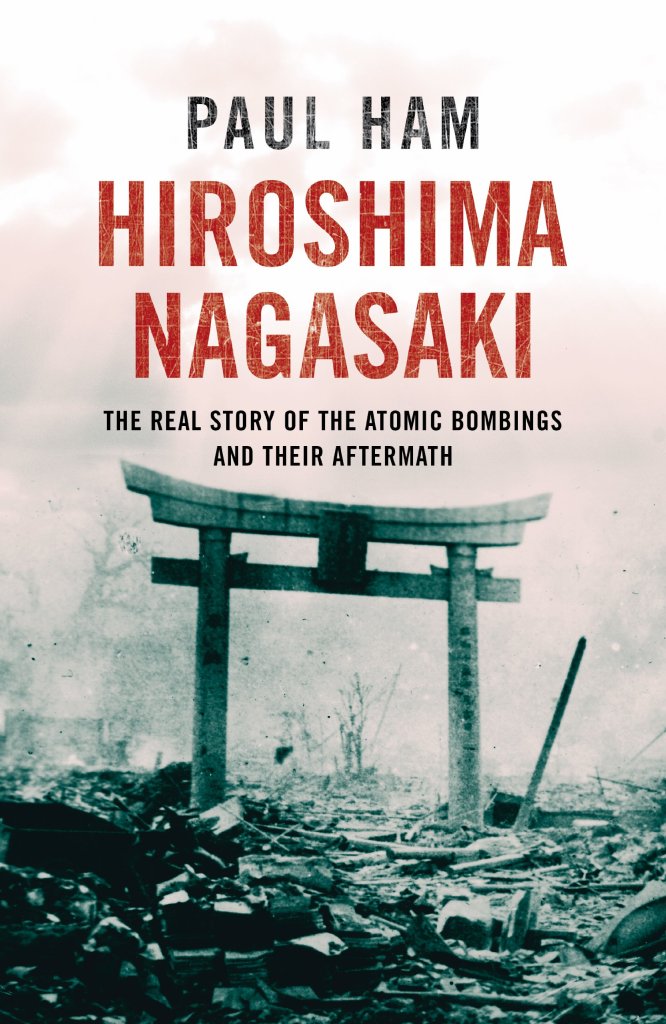
Hiroshima Nagasaki [2011] – ★★★★★

An eye for an eye leaves the whole world blind.” M. K. Gandhi (attributed)

The Japanese collectively were to blame…Truman drew no distinction between civilian and soldier; mother and murderer; child and monster”; “America [sic] annihilated 100.000 persons, most of them civilians, at Hiroshima…and then…,in spite of the “universal horror”, repeated the performance at Nagasaki” [Paul Ham quoting, 2011: 420, 422].

Paul Ham is an Australian author and correspondent, who in his non-fiction Hiroshima Nagasaki presents a true account of what happened to the two Japanese cities in 1945, dispelling myths that still persist about the Hiroshima and Nagasaki bombings, including that the bombs were somehow “necessary”, or that their usage led to Japan’s surrender. Starting in winter 1945, when “Roosevelt and Churchill arrived bound by a private agreement…not to share with the Soviet Union…the development of an extraordinary new weapon” [Ham, 2011: 15], continuing to the secret development of the world’s first atomic bomb, and ending with the aftermath of the tragedy, the author goes into incredible depth about what happened in the final year of the war, demonstrating the situation through statistics, broader situation invoking key actors and through personal accounts. The result is a well-researched book about one of the most unbelievable and traumatic events in the world history. Since the scope of the book and the topic is so broad, I have decided to structure my review in the following manner: (i) Events leading up to the atomic bombings; (ii) Four myths and four corresponding realities; (iii) Immediate aftermath; and (iv) Long-term consequences.

Continue reading “Hiroshima & Nagasaki – The Truth”

Did A. J. Finn (“The Woman in the Window” (2018)) plagiarise Sarah A. Denzil’s thriller “Saving April” (2016)?

A. J. Finn’s voice and story were like nothing I’d ever heard before,” Editor, William Morrow Publishing; Even in fiction, there are precedents in copyright law where the borrowing of plot elements is so extensive and blatant that plagiarism crosses into copyright infringement”, Rebecca Tushnet, Intellectual Property Expert, Harvard Law School

The Woman in the Window Book CoverThe Woman in the Window is a 2018 debut thriller and international bestseller by A. J. Finn (Dan Mallory), which sold millions of copies, with the film based on the book to be released in 2020 starring Julianne Moore. Daily Express called the book “masterpiece of storytelling” and Stephen King said that it was “unputdownable”. Saving April is a 2016 lesser-known book by Sarah A. Denzil, released two years before The Woman in the Window and first being available in an e-book format. As I will show below, the similarities between the two books are overwhelming, both in their scope and in their nature, and, clearly, Finn took everything that he possibly could from Denzil’s thriller to write his bestseller. Jane Harper noted that Finn is “a tremendous new talent”. By the end of my comparison, it may become clear that the only talent Finn possibly has (apart from insolence) is taking nearly all of other writers’ ideas, elaborating on them slightly and then passing others’ stories as his own.

Saving April Book CoverBoth books undoubtedly drew inspiration from classic film noir, especially from Hitchcock’s Rear Window [1954] and Amiel’s Copycat [1995] as well as from such books as Gone Girl [2012] and The Girl on the Train [2015]. However, even though The Woman in the Window feels like a more accomplished and elaborate book that Saving April, it is still the same exact story as Saving April and the similarities between the two are too numerous in their number and too close in their nature for there to be any talk of “inspiration” or “simple source”. In fact, the two stories are so similar that Saving April can be the first/second/third draft of The Woman in the Window. Reading the two thrillers side-by-side, one may become immediately confused which part they read in which book – so similar they are in virtually every way.
The similarities between the two books are as follows (this is far from being an exhaustive list) Continue reading “Did A. J. Finn (“The Woman in the Window” (2018)) plagiarise Sarah A. Denzil’s thriller “Saving April” (2016)?”

Donna Tartt’s “The Secret History” VS. Patricia Highsmith’s “The Talented Mr Ripley”

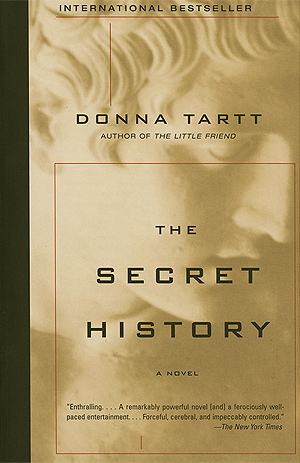
The Secret History Donna Tartt The Talented Mr Ripley Cover

I have decided to make my own detailed comparison between these two books – Donna Tartt’s bestseller of 1992 – The Secret History and Patricia Highsmith’s thriller The Talented Mr Ripley, published in 1955. Although they have completely different plot lines (though both deal with a murder and its cover-up), I also believe there are some very telling, nuanced similarities between the two books. It is not fantastic to suggest that, perhaps, when writing her first debut, Donna Tartt drew some inspiration from Highsmith’s genius. Continue reading “Donna Tartt’s “The Secret History” VS. Patricia Highsmith’s “The Talented Mr Ripley””

Unpopular Opinion: Hergé’s “Prisoners of the Sun (Le Temple du Soleil)” [1949]

I will begin by saying that I love The Adventures of Tintin comic albums. They are exciting and entertaining stories. I lived in Brussels for some time, and that is the place to be if you want to be converted into a fan of Franco-Belgian comics (for example, there is a Tintin shop in Brussels and murals depicting Tintin adventures). Even though I realise that the comics are products of their time, and are supposed to be fun, light-hearted stories not to be taken seriously, I still find Herge’s Prisoners of the Sun a problematic one, especially in what it ultimately suggests and implies, as well as in the main message it sends out in the end (for other articles hinting at the comics’ problematic nature, including allegations of racism, see here and here). Continue reading “Unpopular Opinion: Hergé’s “Prisoners of the Sun (Le Temple du Soleil)” [1949]”

The Turn of the Screw: A Ghost Story or A Tale of Mental Breakdown?

the turn of the screw book cover

<<This review will contain spoilers 👻>>  

Wasn’t it just a story-book over which I had fallen a-doze and a-dream?” [James, Ed. 2004: 33].  

This is a horror novella penned by James in 1898 at the invitation of Robert J. Collier for his magazine. First published as a series, it tells of a hired governess who comes to Bly, a country estate in Essex, to supervise two children, Miles and Flora. The children are orphans under the responsibility of their uncle who, in turn, does not have much time to spend with them and resides in London. The young governess willingly assumes her responsibilities, being totally delighted to be in charge of two beautiful, lovely and well-behaved children in such a grand estate. However, Bly soon opens its horrors to the governess, and she becomes aware that there are at least two ghosts in the house that haunt the children. The Turn of the Screw is now infamous for its multiple story interpretations and all kinds of meanings that can be read into the text. Nevertheless, whether one reads the story as a straightforward ghost tale or as a more complex psychological study of one nanny losing her mind, it is still a scary and intriguing read, which leaves much to think about and discuss upon finishing. 

Continue reading “The Turn of the Screw: A Ghost Story or A Tale of Mental Breakdown?”