
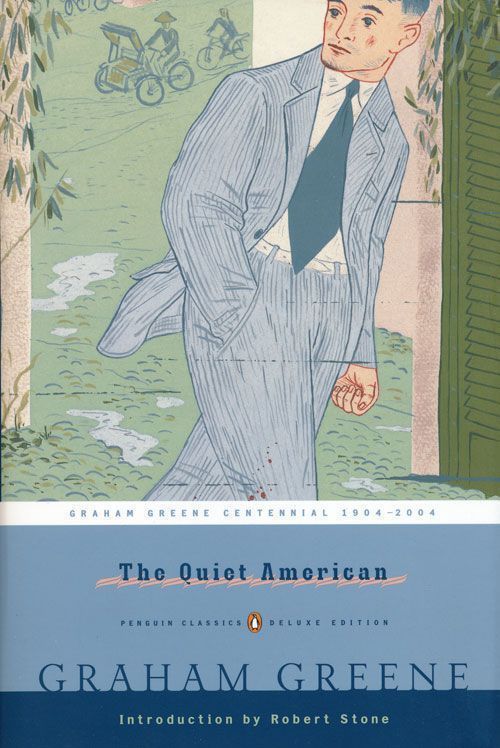
“Death was the only absolute value in my world. Lose life and one would lose nothing again forever… Death was far more certain than God, and with death there would be no longer the daily possibility of love dying. The nightmare of a future of boredom and indifference would lift. I could never have been a pacifist. To kill a man was surely to grant him an immeasurable benefit. Oh yes, people always, everywhere, loved their enemies. It was their friends they preserved for pain and vacuity”
Graham Greene, The Quiet American [1955].

 “Knowledge itself is power…but none of…knowledge is of the least use until it is informed by understanding. Knowledge is simply a kind of fuel; it needs the motor of understanding to convert it into power”
  “What a wee little part of a person’s life are his acts and his words! His real life is lead in his head, and is known to none but himself. All day long, and every day, the mill of his brain is grinding, and his thoughts, (which are but the mute articulation of his feelings,) not those other things are his history. His acts and his words are merely the visible thin crust of his world, with its scattered snow summits and its vacant wastes of water-and they are so trifling a part of his bulk! a mere skin enveloping it. The mass of him is hidden-it and its volcanic fires that toss and boil, and never rest, night nor day. These are his life, and they are not written, and cannot be written” [
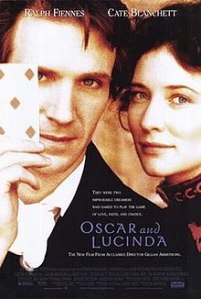 “There was, she thought, so much to be said in favour of a game of cards. One was not compelled to pretend, could be silent without being dull, could frown without people being overtly solicitous about one’s happiness, could triumph over a man and not have to giggle and simper when one did it. One could kill time, obliterate loneliness, have a friendship with strangers one would never see again and live on that sweet, oiled cycle of anticipation, the expectation that something delicious was about to happen”
  “Nothing is stranger or more ticklish than a relationship between people who know each other only by sight, who meet and observe each other daily – no hourly – and are nevertheless compelled to keep up the pose of an indifferent stranger, neither greeting nor addressing each other, whether out of etiquette or their own whim. Between them there exists a disquiet, a strained curiosity, the hysteria of an unsatisfied, unnaturally repressed need for recognition and exchange of thoughts – and also, especially, a sort of nervous respect. For one person loves and honours another only as long as he is unable to assess him, and yearning is a result of a lack of knowledge” (Thomas Mann, Death in Venice [1912:41]).
 Thoughts on Papyrus