Cassandra Edwards is a graduate student who is supposed to be finishing her thesis and enjoying her student life. Instead, she is an emotional and mental mess, a state that no one sees and only her twin sister Judith guesses. When the date of Judith’s wedding approaches near, Cassandra drops everything and goes back home to attend the event, but the homecoming is not altogether joyful as Cassandra (packed with her bitter-sweet memories, unrealised hopes, deep attachments and her neurotic fears of betrayal) starts to spiral out of control. Judith’s impending wedding may be a catalyst for Cassandra’s final unravelling. Baker’s novella is direct and unrelenting; a book that examines closely one unbreakable bond and one fractured mind, all from the point of view of one subversive, unforgettable narrator.
Like Vera Caspary’s Laura and Luigi Bartolini’s Bicycle Thieves, Grand Hotel is yet another novel that is likely best known as its ecranisation – the 1932 Oscar-winning film Grand Hotel, starring Greta Garbo, John Barrymore and Joan Crawford. And, indeed, the story is cinematic. Austria-born author Vicki Baum puts at its centre one of the most intriguing tourism inventions of the late nineteenth century – a grand hotel that, in its heyday, was the pinnacle of travelling luxury, providing all kinds of exclusive comforts for its rich clientele under one roof, creating “a home away from home”, and catering for each of their guests’ whims, rather than passively accepting them into the accommodation. Into this already intriguing institution, Baum puts the most diverse characters, from one capricious aging ballerina to a lowly bookkeeper suffering from an incurable illness who just so happens to find himself amidst all the luxury thanks to his life savings. Together, this cast of curious characters presents a microcosm of the Berlin society of the mid-to-late 1920s, a roller-coaster period of changes characterised by the questioning of moral norms and the gender roles shift. By juggling her colourful characters and their situations so skilfully in the novel, Baum delivers one of a kind, part tragic part comic exposé of lives lived.
You say the most important thing as indirectly as possible in your story, and that is how you truly capture the attention and interest of your reader. In this classic novel by Danish author Martin A. Hansen (1909-1955), our narrator is schoolmaster Johannes Vig (Lye) living on one very small Danish island of Sandø – “a molehill in the sea”, and we all become “Nathanael”, an imaginary addressee of the schoolmaster’s sporadic diary-entries. While teasing and taunting his reader, Johannes details the natural beauty of the island and comments on its most illustrious inhabitants and their relationships. Local beauty Annemari wants to break off from her long-term beau Olaf, who is now away from the island. Olaf has been involved in a tragic boat incident some years previously, where one man died, and is apparently not the same anymore. Meanwhile one engineer Harry takes Olaf’s place in Annemari’s life, but the situation appears complex as Olaf’s return is imminent. As the novel so insidiously progresses, the question becomes: what is the place or role of our narrator, mysterious Johannes Vig, in all these happenings? Is his narrative reliable?, and if not, can we differentiate truth from fiction? While evoking the best of the epistolary literary tradition, notably George Bernanos’s The Diary of a Country Priest and Hjalmar Soderberg’s Doctor Glas, Hansen penned an existential novel about the gradual finding of meaning in the fleetness of life, and coming to terms with the passage of time in a remote place where time has stood still.
“Look in my face; my name is Might-have been;/I am also call’d No-more, Too-late, Farewell;/Unto thine ear I hold the dead-sea shell/Cast up thy Life’s foam-fretted feet between;/…“The House of Life: A Superscription by Dante Gabriel Rossetti.
The first lines of this famous poem by Dante Gabriel Rossetti may be best in capturing the rich and sensuous spirit of Elsa Morante’s debut – novel Lies & Sorcery, first published in Italian in 1948. It is a highly ambitious coming-of-age/multi-generational family saga at the core of which are such themes as love and abandonment, romantic longing and self-deception, parental attachment that verges on obsessive devotion and the ultimate disillusionment. The main, larger-than-life characters are shy Anna, capricious Edoardo, downtrodden Francesco and voluptuous Rosaria, while Anna’s parents Cesira and Teodoro also figure in this story. The narrative is from Anna’s daughter Elisa, who, in her confessional tone, weaves a story-tapestry on which her relatives are forced to repeat the same mistakes from one generation to the next due to their inability to learn, adapt and make peace with the past. The result is ambitions gone astray, opportunities squandered, and life and love being constantly replaced by unreachable dreams, illusions and elaborate fantasies.
With a razor-sharp prose, Kristensen paints a vivid picture of an ordinary man on a swift ride to hell.
Franz Kafka wrote: “a book must be the axe for the frozen sea within us.” If we take this definition of a book then Kristensen’s Havoc comes out on top. Havoc is now considered a classic of Danish literature and, accordingly to one author, “one of the best novels to ever come out of Scandinavia”. The main character here is Ole Jastrau, a thirty-something literary critic living with his wife and small child in Copenhagen, Denmark, a city that is going through some kind of a political upheaval. Disillusioned with his work and desperately searching for meaning in his day-to-day existence, Jastrau starts to slowly succumb to the rhetoric of his eccentric friends (Catholics, communists and poets) and also to the only thing that starts to make sense in his life – alcohol. Jastrau sees his apartment being taken over by others, his addiction to the popular Bar des Artistes growing daily and his faithfulness to the core moral principles of life crumbling before his eyes. Will there be a limit to Jastrau’s “fall” and humiliation? Can there be hope amidst all the boundless despair?
The Six in Six meme or, as I call it, challenge, was first proposed and designed by The Book Jotter and now is in its tenth year. This is a challenge to list six bookish categories (the range of categories on offer is immense and can be found here), and, within each, to list six books that answer the question. The idea is that the books selected should reflect the blogger’s reading material of the past six months. As you can see below in my answers, I do not read many new releases and have included non-fiction books alongside fiction. The books listed are in no particular order and, apart from the “movie” categories below, were read by me in the past six months.
I. Six books I have read but not reviewed:
On Parole (1988) by Akira Yoshimura – Though not as good as the author’s Shipwrecks (1982), On Parole is still a thought-provoking book and a penetrating look at one man recently released from prison and trying to adjust to a society he longer recognises. The book was also loosely adapted into a film of 1997 (The Eel), which won the Palme d’Or at the Cannes Film Festival.
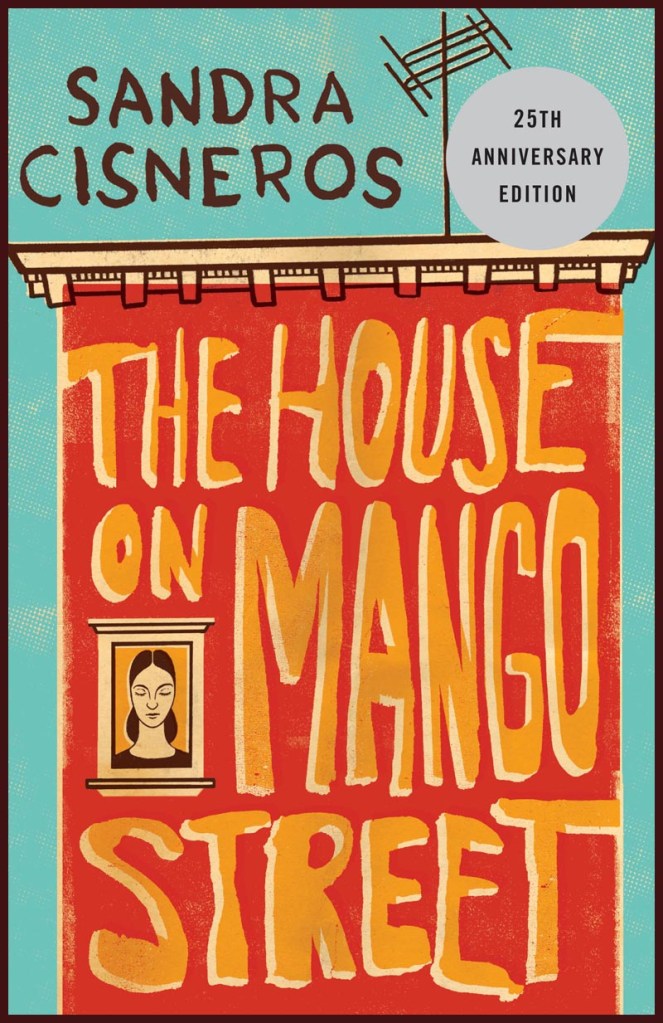
The House on Mango Street (1984) by Sandra Cisneros – This tale is from a little girl, Esperanza, originally from Latin America, who feels uncomfortable living where she does, in a poverty-stricken neighbourhood of Chicago. The merit of the book is the true voice of a child trying to make sense of the world around her.
Butcher’s Crossing (1960) by John Williams – John Williams may be known for his novel Stoner (1965), but he also has other good books beside it. Butcher’s Crossing follows one inexperienced young man circa the 1870s who leaves his comfortable surroundings and education to travel to one forgotten spot on earth – Butcher’s Crossing, Kansas. He soon befriends a local buffalo hunter and walks out to seek adventure in the open, but will he find what he is looking for? This novel has beautiful descriptions of nature and reminded me of Mayne Reid books featuring buffalos which I used to read as a child, but it is also said to be influenced by the philosophy of Ralph Waldo Emerson.