Mini-Review: The Cabinet by Kim Un-Su

Continue reading “Mini-Review: The Cabinet by Kim Un-Su”

Novels That Resemble Films By Hitchcock, Lynch & Burton

Continue reading “Novels That Resemble Films By Hitchcock, Lynch & Burton”

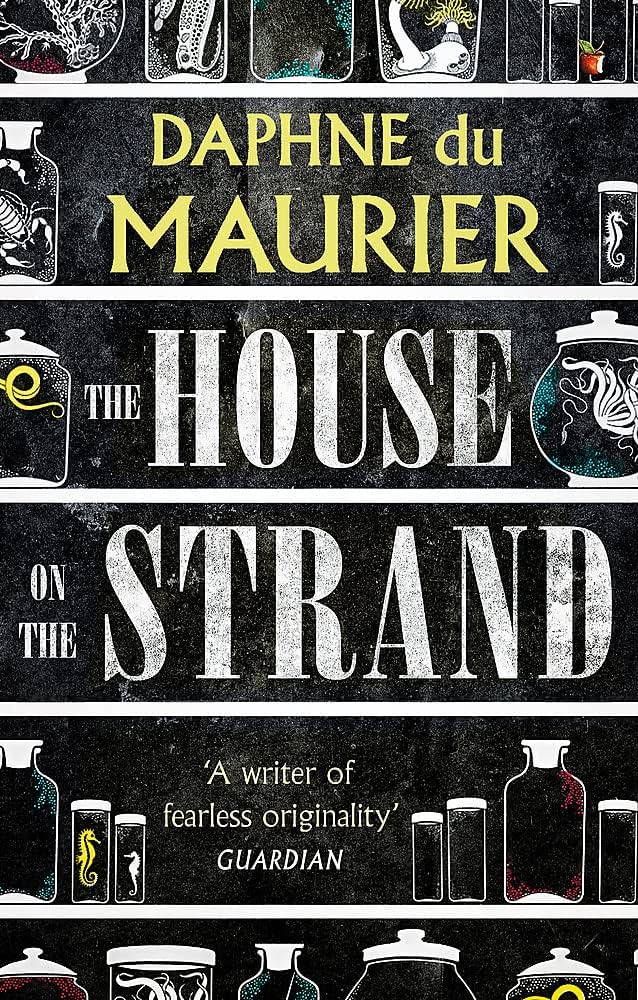
Review: The House on the Strand by Daphne du Maurier

Continue reading “Review: The House on the Strand by Daphne du Maurier”

Review: Catastrophe & Other Stories by Dino Buzzati

Catastrophe & Other Stories [1965] – ★★★★

This short story collection is from one of the most inventive minds of Italy – writer and poet Dino Buzzati (1906 – 1972). I liked this collection more than the one I read last year – Buzzati’s The Siren: A Selection of Short Stories. In Catastrophe & Other Stories, there are twenty stories overall, but I am reviewing only five below. Though this collection is a bit of a mixed bag, it is definitely worth a read, especially for those into absurdist, existentialist or Kafkaesque fiction.

I. Seven Floors – ★★★★★

This is the best story in the collection, in my opinion. In it, one Giuseppe Corte enters one unusual sanatorium and desperately wants to remain on its top floor – the seventh, but circumstances are not in his favour. Why such a desire? It so happens that this medical establishment is designed in such a way that its top floors are reserved for mild cases, and the further down you go, the more serious cases you encounter until eventually you hit floor one where the hopeless dying “convalesce”. One hero is soon torn by a dilemma: he does not want to be a serious medical case, but the lower floors also have better medical equipment and more knowledgeable doctors and nurses. What does one do? Seven Floors is a fine example of a purely Kafkaesque terror, and the story can also be viewed as a satire on illness, diagnosis, hypochondria, and medical establishment.

Continue reading “Review: Catastrophe & Other Stories by Dino Buzzati”

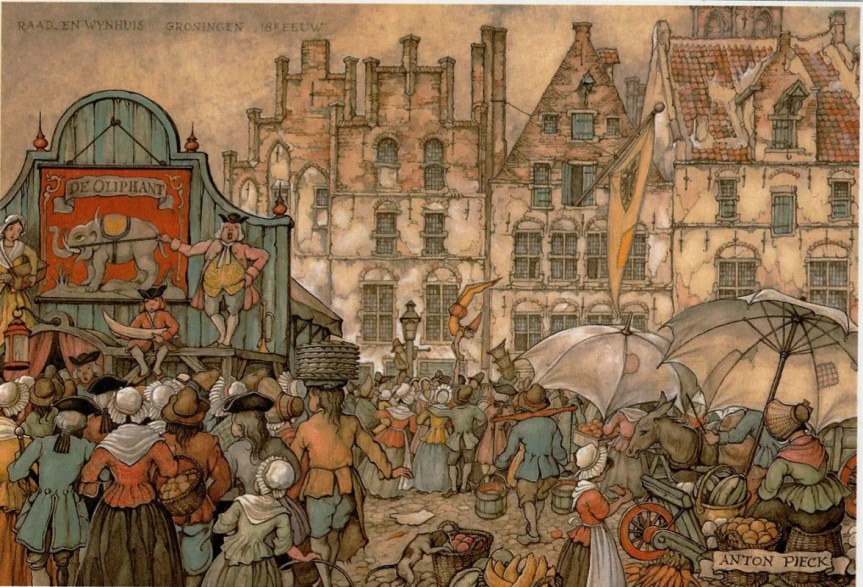
10 Fascinating Books about Circuses & Carnivals

For me, autumn is associated with circuses and carnivals, maybe because Halloween is approaching and I think of country fairs, masks, costumes, etc. Thus, I am presenting ten books, in no particular order and both fiction and non-fiction, that revolve around circuses or carnivals.

I. Nightmare Alley by William Lindsay Gresham

Nightmare Alley is a fast-paced pulp noir that tells a journey of ambitious and street-smart Stanton Carlisle, working as a mentalist, through all the dark sides of one second-rate carnival show. The structure of this book is dictated by a Tarot deck, and the novel has now been adapted twice – as a 1947 film noir starring Tyrone Power and as a 2021 film directed by Guillermo del Toro.

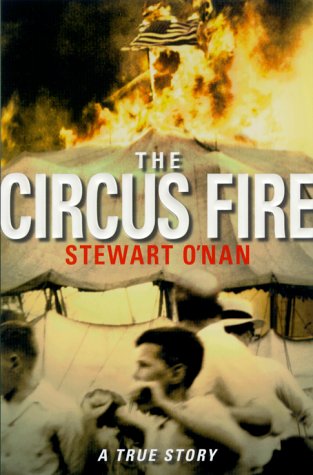
II. The Circus Fire: A True Story of An American Tragedy by Stewart O’Nan

This book is about the 6 July 1944 circus fire disaster that occurred in Hartford, Connecticut, when a big top of Ringling Bros. and Barnum & Bailey Circus caught fire in the middle of a performance with some 7000 people inside. At least 167 people died and another 700 were injured, and this book, filled with maps and photographs, painstakingly sets down all the circumstances leading up to the tragedy, including previous fires and circus arrangements, before talking about acts of heroism on the day and the aftermath, when the injured had to deal with PTSD.

Continue reading “10 Fascinating Books about Circuses & Carnivals”

Italian Children’s Literature

This week (on 1 June) is the International Children’s Day (also the Children’s Week in some countries) and I am dedicating this post to the Italian children’s literature.

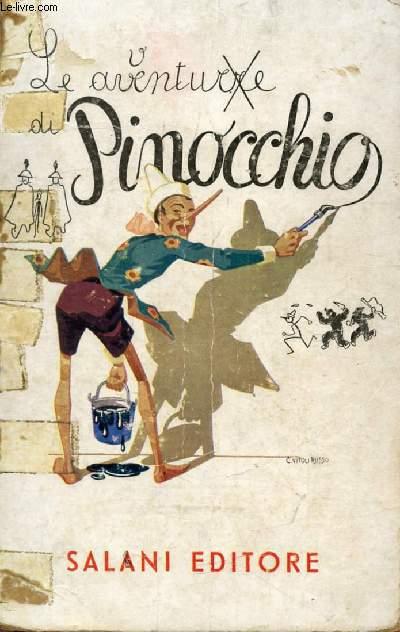
🤥 The Adventures of Pinocchio (Le avventure di Pinocchio) [1883] by Carlo Collodi

Pinocchio, a wooden boy who wants to be a real boy, has endeared himself into millions of people’s hearts. Collodi’s famous tale follows the adventure of a marionette who finds out early in his life that the world is not always just and that oppression exists alongside goodness and benevolence. Like Lewis Carroll’s original story of Alice in Wonderland [1865], some aspects of the original story of Pinocchio is quite disturbing and violent, but, then, what mid-nineteenth century fairy-tale has aged well? The Adventures of Pinocchio is the third most translated book in the world (after the Bible and The Little Prince) and no wonder – its messages of rising above oppression, trying to do one’s best despite adversary, bad influence and even one’s own trouble-making nature, and becoming the best person one could be, are truly universal. I do not have much hope for the following adaptations of the story, but it is still interesting to note that not just one, but two Pinocchio adaptations are coming out in 2022: Guillermo del Toro’s stop-motion animation Pinocchio and Robert Zemeckis’s live-action film Pinocchio.

Pinocchio near the entrance to a souvenir shop, Florence, Italy © Thoughts on Papyrus

🤥 Carlo Collodi (1826 – 1890) was born Carlo Lorenzini in Florence, Tuscany, later changing his name to Collodi to honour his mother’s birthplace. That was not the only instance of name-changing in his career as The Adventures of Pinocchio was first published as a series under the title Storia di un burattino (Adventures of a Marionette), and in fact, I have always known the story under this same title – The Adventures of Burattino (Russian: Приключе́ния Бурати́но). There are now some interesting Pinocchio attractions to explore in Tuscany, such as the Casa di Collodi in Florence and the Pinocchio Park in Collodi, and, of course, the Tuscany region is full of shops selling various Pinocchio souvenirs.

Continue reading “Italian Children’s Literature”

Review: The Baron in the Trees by Italo Calvino

Continue reading “Review: The Baron in the Trees by Italo Calvino”

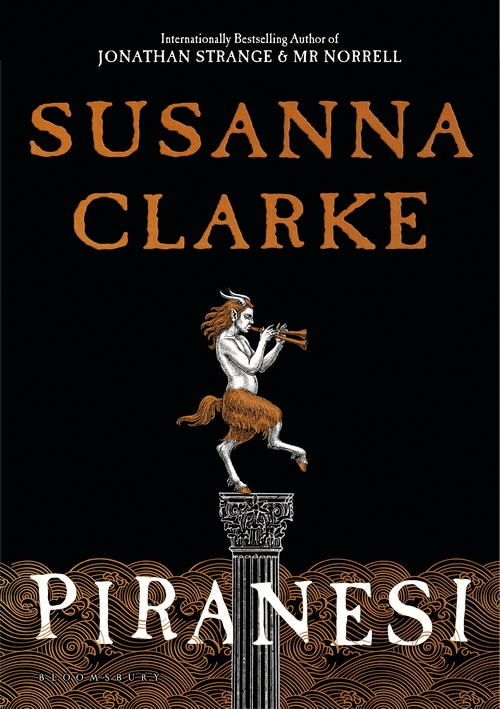
Review: Piranesi by Susanna Clarke

Piranesi is a new fantasy novel by the author of Jonathan Strange & Mr Norrell [2004]. This time, we have a diary-like narrative and our narrator observes, records and catalogues a curious World around him – the House. In the House, architectural splendours meet natural wonders – sea Tides, bringing marine life and vegetation, often flood the seemingly infinite number of opulent Halls, where numerous enigmatic statues of all sizes daze and confuse. Our narrator’s only human contact is the man only known as the Other, who also often frequents the Halls and who sees the World very differently from our narrator. Then, cryptic messages start to appear in some Halls, and our narrator witnesses strange visions. What other mysteries does the House hold, and is there really a Sixteenth Person who may be residing in the Far-Distant Halls? These are the questions that start to bother our narrator as he is slowly forced to question the very nature of his existence in this bewildering World of Tides and Architectural Beauty.

In Piranesi, Susanna Clarke invented one mysterious, otherworldly place whose pull is irresistible, powerful and inescapable, and whose charm works like magic, saturating the reading experience with endless wonder, delight and fascination. Amidst all the watery and architectural beauty, though, there is a want for slightly more meaning and depth, and it is unfortunate that the second part of the book falls into some very familiar and overused literary “thriller” tropes.

Continue reading “Review: Piranesi by Susanna Clarke”

Review: 1Q84 by Haruki Murakami

This is going to be a very honest review of Haruki Murakami’s twelfth novel. 1Q84 is presented as a whimsical romance epic with elements of magical realism, and, in its proportion, has been linked to such extremely ambitious works as Roberto Bolano’s 2666 and Don DeLillo’s Underworld. In 1Q84, the year is 1984 and the location is Tokyo, Japan. Aomame, a thirty year old woman, becomes entangled in one strange affair involving a manuscript titled Air Chrysalis, a charity that seeks to help battered women seek revenge, and a menacing and unrelenting religious cult called Sakigake. In parallel to her story, we read the story of Tengo, a thirty year old man and Aomame’s alleged lost “love” whom she has not seen in twenty years. Tengo inexplicably gets implicated in the same affair of “another world” when he agrees to re-write Air Chrysalis. His fateful encounter with beautiful Fuka-Eri, original author of Air Chrysalis, soon makes him question his reality, as well as makes him reconsider his relationship with his estranged father. Soon, we read about the world where the so-called Little People have the upper hand and where there are two moons in the sky. Pursued by dangerous forces, will Tengo and Aomame ever meet again?

Continue reading “Review: 1Q84 by Haruki Murakami”

Review: Melmoth by Sarah Perry

A15Zne-lCL Melmoth [2018] – ★★1/2 

First, I would like to say that I loved Sarah Perry’s The Essex Serpent [2016], its historical context, its beautiful prose, its main character, its plot – it read (almost, perhaps) like a modern classic, and it was a very enjoyable experience. Melmoth is Perry’s third book in which she focuses on the legend of Melmoth the Wanderer as it is seen through the eyes of modern-day characters living in Prague. In this story, Helen Franklin is a forty-something-year-old woman living in the Czech Republic in 2016 and working as a translator. She strikes up a friendship with one “posh” couple Karel and Thea, and it is through them that she reads a mysterious manuscript that details the confessions of certain people who allegedly had an encounter with Melmoth or Melmotka (a lonely woman who once denied the resurrection of Christ and is doomed to wander the Earth forever bearing witness to the humanity’s cruelty). The obsession with the manuscript soon makes Helen confront her own past. Even though there is an attempt made by the author to make this book deep and philosophical by touching upon such issues as sin, guilt, regret and atonement, these messages never get across in a compelling manner, and, overall, the book feels dull and very contrived. As in The Essex Serpent, Perry uses one intriguing and spooky legend here as a bait to entice her readers into picking up this “Gothic and unsettling” book only for those readers to then discover that they, instead, have been served with merely a collection of sad personal historical accounts that the author never even managed to bring convincingly together to make her final important point on history, witnessing and responsibility. Continue reading “Review: Melmoth by Sarah Perry”

The Totally Should’ve Book Tag

I saw this book tag at Nut Free Nerd and decided to have a go at it (I changed slightly the original tag). I am not nominating specific people for this tag and anyone who wishes to participate is free to do so.

jonathan strange & mr norrell book coverI. Totally should’ve gotten a sequel

This is easy – Susanna Clarke’s amazing fantasy book Jonathan Strange & Mr Norrell should get a sequel. There are still some questions that remain about the story and the story finished in such a way as to hint that there may be a continuation. 

Harry Potter and the Chamber of Secrets CoverII. Totally should’ve had a spin-off series

The Harry Potter book series. Ok, I know what everybody is thinking, but, please, hear me out. We had Harry’s story in seven books; we had additional books published by Rowling on quidditch and fantastic beasts; and we had screenplays that showed the magical world of America in the eighteenth century. But, I think it would be a great idea to have a spin-off series where we can see the magical world in a historical context. Hogwarts was founded in 990 A.D., and it will be interesting to see students studying at some historical point in time, such as maybe in the middle ages and to see how fashion changed and what spells were in fashion – to see the magical world as a historical fiction with new characters. Perhaps, references can be made to magical schools in Latin America or Africa, etc. The great thing about this is that the Harry Potter events would not be muddled with or changed since the action in any spin-off can take place centuries before Harry Potter.  Continue reading “The Totally Should’ve Book Tag”

Review: The Night Circus by Erin Morgenstern

The Night Circus Cover

The Night Circus [2011] – ★★★1/2 

The Harry Potter generation is growing up, becoming a dominant group of consumers, and it seems that those books that contain magic or fairy-tale elements have the biggest chance of success in the market (see also Jonathan Strange & Mr Norrell [2004]). The Night Circus can be considered as yet another book which was written on the back of the success of Harry Potter and its atmosphere of magic. The Night Circus was also originally written as part the NaNoWriMo competition, and contains non-linear, multiple viewpoints narrative. In this story, two “magicians” have arranged for their protégés to compete against each other in a mysterious magic competition. Hector has bound his young daughter Celia to compete against Marco, a protégé of a mysterious man named only as Alexander. Little the “magicians” suspect that Celia and Marco may grow up to be attracted to each other romantically, meaning that the competition may end up to be far from the battle it is meant to be. Meanwhile, Chandresh Lefèvre, a theatrical producer, has plans to set up a different kind of a circus, which functions as a completely “immersive entertainment” for the crowds, providing “a unique experience, a feast for the senses” [Morgenstern, 2011: 74].

Continue reading “Review: The Night Circus by Erin Morgenstern”

Review: Jonathan Strange & Mr Norrell by Susanna Clarke

jonathan strange & mr norrell book cover

Jonathan Strange & Mr Norrell [2004] – ★★★★★

Neil Gaiman called Jonathan Strange & Mr Norrellthe finest English novel of the fantastic written in the last seventy years”. This hits the mark. It is a very long book, but it is totally absorbing from the very first page. The novel begins in autumn 1806 with Mr Segundus, a theoretical magician, wanting to know why there was no more magic done in England. He is a new addition to the society of magicians in York, England. Practical magic has declined in England and there are apparently no practising magicians left in the country. The profession of a practising magician has fallen in reputation, and Mr Segundus comes to inquire of another magician who lives in Yorkshire why this is the case. He finds, however, that not only the reclusive Mr Norrell has an established library filled with rare books on the practice of magic, he also claims to be a practising magician himself! Mr Norrell soon desires to establish himself as the only practising magician in the country.

The episodic-in-nature plot is delightful to read, and, in style, reminds of Dickens’s Bleak House [1853]. Delving into the British folklore, Clarke opens up a fascinating magical world, which you will not want to leave. Inside the book, one will find a gripping adventure-mystery, great characterisation, unforgettable atmosphere, humorous sequences, and the masterful use of the language. The book’s story, format, style and language all give the impression as though the book was written back when it was set – in the 19th century. In sum, Jonathan Strange & Mr Norrell is quite brilliant in every respect, and, as I would like to discuss the book here in some depth, the following review will contain spoilers.

Continue reading “Review: Jonathan Strange & Mr Norrell by Susanna Clarke”