
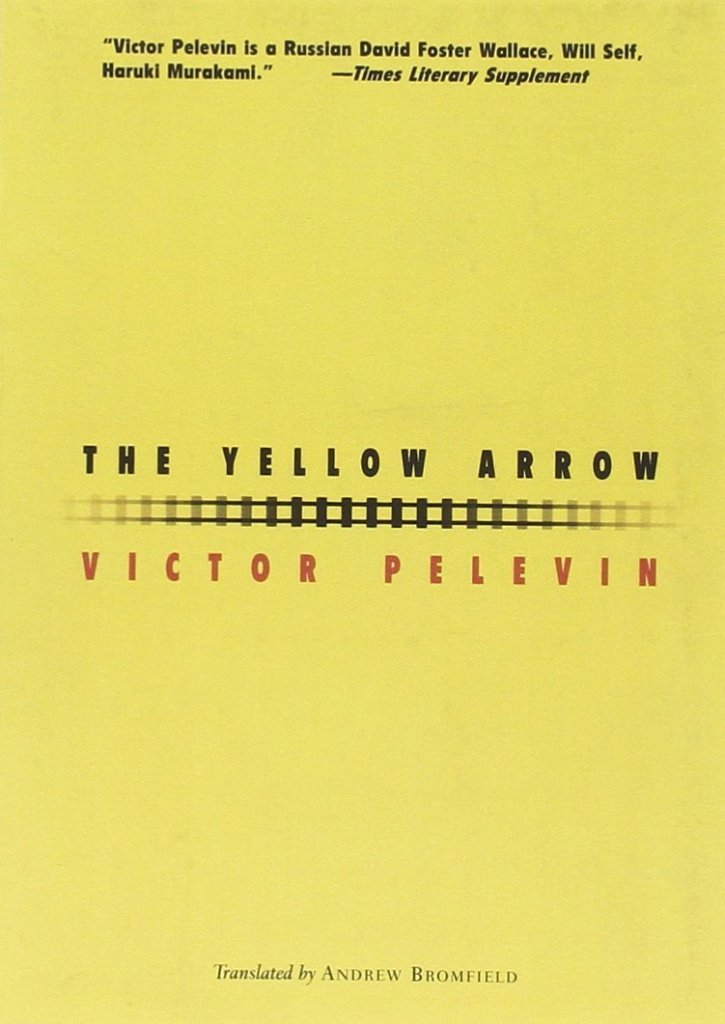
The Yellow Arrow [1993] – ★★★★1/2
“How could they see anything but the shadows if they were never allowed to move their heads?”, Plato, The Allegory of the Cave
This is a sci-fi gem from Russia that centres on Andrei, one of the passengers of the mysterious, seemingly endless, train The Yellow Arrow, that makes its way without stops. Its journey already numbers years, but the passengers inside the train seem to treat their endless trip as though it is the most natural course of events, and for them, it is simply their daily life. Andrei and his friend Khan are probably the only people who are slowly realising that something is amiss in their lives. However, other passengers are too distracted by daily trivialities to question anything or ponder over some fundamental questions: how they ended up on this train in the first place? Why their journey takes so long?, and when will they finally reach their destination, which some believe to be one collapsed bridge? And, then, Andrei discovers letters from unknown persons lying around that may have hidden meaning, shedding light on what their seemingly eternal journey actually means. Pelevin, once dubbed “Russian Vonnegut”, crafted an allegorical novella that is perceptive and deeply philosophical. It is a satire bold in content, but subtle in meaning – like the very best of them.
Perhaps inspired by Jacques Lob’s graphic novel Le Transperceneige (1982), Pelevin crammed into his story Bulgakovian irony, Kafkaesque absurdity, and his own fascination with Buddhism and doomed societies. In this way, the train in the story can be viewed as representing the human life itself (this is the Buddhism view of life as a constant change), where moments are fleeting and unrepeatable as life (train) moves forward, the next second is never guaranteed, and no person knows what form they will embody next. Pelevin drags into this world-view the idea of life as a trap, too, reality being just an illusion with no one really knowing what the truth really is. “How can they [the passengers] begin understanding what they already know only too well?” is a line from the book that strikes at the core of the knowledge paradox. Just like in Mann’s inescapable sanatorium (The Magic Mountain), where the guests are the willing “prisoners”, or in Buzzati’s fort (The Tartar Steppe), where oppressiveness and the wait became innate, the overcrowded train in Pelevin’s story is just a part and parcel of life, no matter how awe-inspiring the views outside the carriage windows may be. For the Yellow Arrow passengers, the absurdity has become the normality.
Taking this symbolism further, the sound of train wheels in the story is akin to the sound of our own breathing – we are so used to it, we do not notice it or even the fact that we take our breaths (meditation teaches us to focus on it and appreciate it as a way of capturing the moment – life itself). The passengers in the story take for granted the clickety-clack sound of the wheels, as they also never question long morning queues to get to the toilet, the infallible three-course menu in their cafeteria (always millet porridge, tea, and Azerbaijani cognac), and the already accepted-as-the-norm strange funeral rites (disposing of human cadavers by throwing them overboard with these people’s pillows and towels). And, that’s not to mention the black market running on the train and sprouts of new religion emerging among the passengers – those who are converts believe they would be miraculously saved when the train reaches the fabled collapsed bridge.
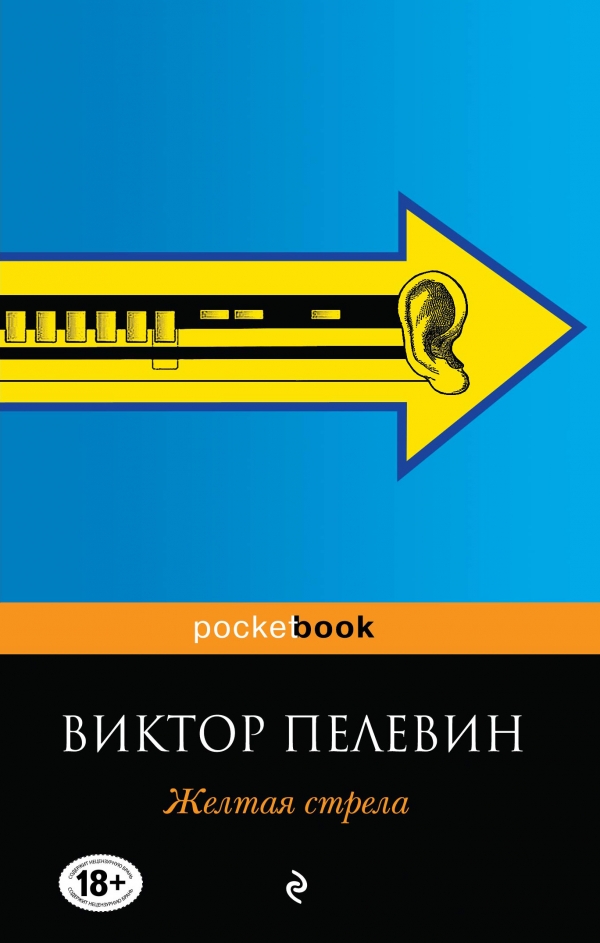
In the course of the book, Andrei tries to break free from the fatalistic loop, and starts gathering more information about the world around him. Pelevin uses the symbolism of the sun and its rays to show hope, light and clarity that remain just out of the reach for our eager protagonist, though sunshine rays start to fascinate him. “Listen, get it into your head”, Andrei is told at one point, “the passengers don’t know the name of the train which they ride. They don’t even know they are passengers. What do you expect of them?” Andrei may have given up on the passengers and their knowledge, but he still tries to find information in leaflets lying around the train, a vehicle whose sections bear witness to struggle and want, and similar to Lob’s comic Le Transperceneige, are segregated into distinct compartments for the wealthy and the destitute.
The train may also symbolically represent and satirise Russia in the early 1990s: economically devastated, clueless as to the future, but marching forward in the spirit of more or less communal, cautious optimism propelled by the western forces. The uncontrollable nature of the changes is represented by the train’s forward movement, which is steady, but completely ungovernable and unstoppable. The most ordinary people are bearing the harshest burden in economic terms, but they do not try to rebel or even show their discomfort. The train is too long, the supposed riches enjoyed by the elite at the train’s front seem distant and far-fetched, and these poor folks are too preoccupied with their own daily woes and petty squabbles to think hard about the politics of the place or some unjust redistribution of wealth.
“The crux of the matter is that we always embark on a journey that has ended just a second before we left for it” is another powerful line in this novella (the translation is mine), which also ends on an equally emotional ending that implies the need to take destiny into our own hands.
🚧 The Yellow Arrow is a dystopian novella to make one think. One character says in the story: “No one asks us whether we agree or not. We do not even remember how we got here. We just ride – that’s all.” Fatalism and apathy are the enemies of freedom and eventual happiness. We can read in this tale one incomprehensible Kafkaesque bureaucracy dictating the behaviour of those below, Sartre’s claustrophobia of existence (No Exit) breaking one’s spirit slowly, and Borges’s absurdity and irony underpinning it all. The story may be about a journey to regain the freedom lost, and about the traps that stand in the way. The characters are the most intelligent of men thinking the most intelligent of thoughts, but if there is no action taken by any of them, nothing will ever change.
 Thoughts on Papyrus
I don’t like bringing up movies all the time but you might like Bong Joon Ho’s movie Snowpiercer.
LikeLiked by 1 person
No problem, I love film as much as I love books. Thanks, I like Snowpiercer a lot, though I am not too convinced about its final scenes.
LikeLike
This sounds really interesting!
LikeLiked by 1 person
wow sounds fabulous, thanks so much. New to me, just added to my TBR
LikeLiked by 1 person