

Georg Friedrich Kersting (1785-1847) was a German painter associated with Romantic artist Caspar David Friedrich. His Biedermeier-style paintings usually captured people performing solitary activities in the interior, such as reading, sewing, or painting.
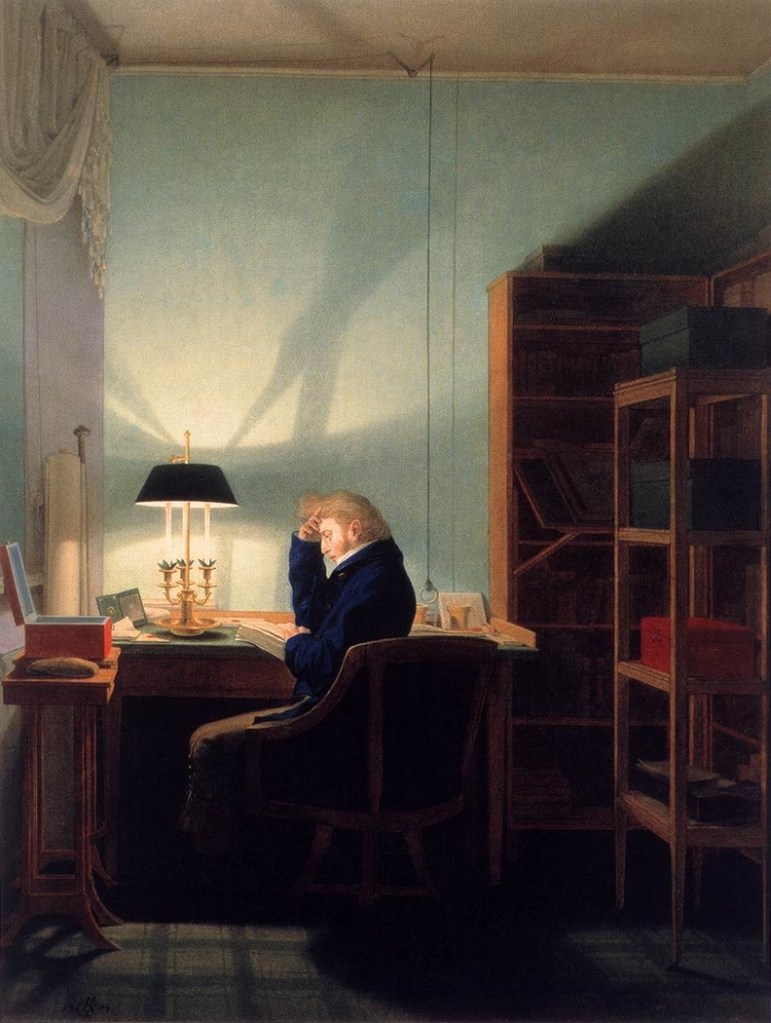
Man Reading by Lamplight
Kersting was known to portray upper or middle-class people going about their leisurely pursuits, and the painting to the right is an example of the uncanny sense of cosiness that the artist created within his art. A person here is reading a book, but it is not so much the man who seems to be the main subject here, but rather his focus, attention. The subject is reading itself. We can almost see the engrossed reader’s imaginative world being created. The fantastical shapes swirling in his mind are symbolically reflected by the fanciful play of light and shadow cast by the lamp. Though Kersting often showed solitary people, there is never a feeling of them being “alone” or lonely in his artworks. They seem at home, at peace and in the company of what they treasure and enjoy. In this case, a book.
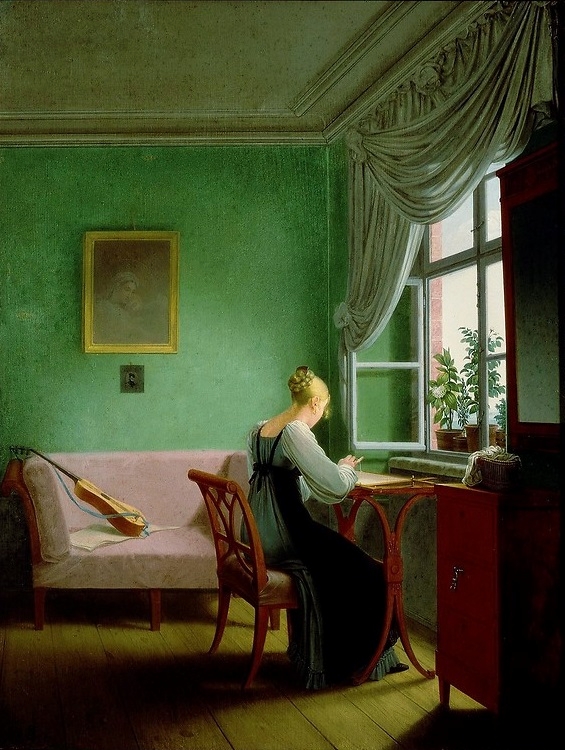
Embroidery Woman
This painting shows a woman at her needle-work. The green wallpaper, comfy pink sofa and the general atmosphere of repose create a soothing portrayal of being engrossed in a hobby. The painting’s arrangement is a typical Biedermeier, with its emphasis on aesthetics and order, but touches of Romanticism are also present. The woman is framed between two other subjects – music (represented by a guitar) and nature (represented by plants on the windowsill, also symbolising the Romantic idea of the presence of the exciting world beyond). This, together with an artwork on the wall, creates feelings of the person’s harmonious co-existence with nature and culture. As Caspar David Friedrich in his numerous paintings, Kersting desired to capture the stillness of a moment, its magic. The idea is never to make a person the main character. Rather, it is their relationship, their intimate, spiritual connection with their environment that takes the central stage.
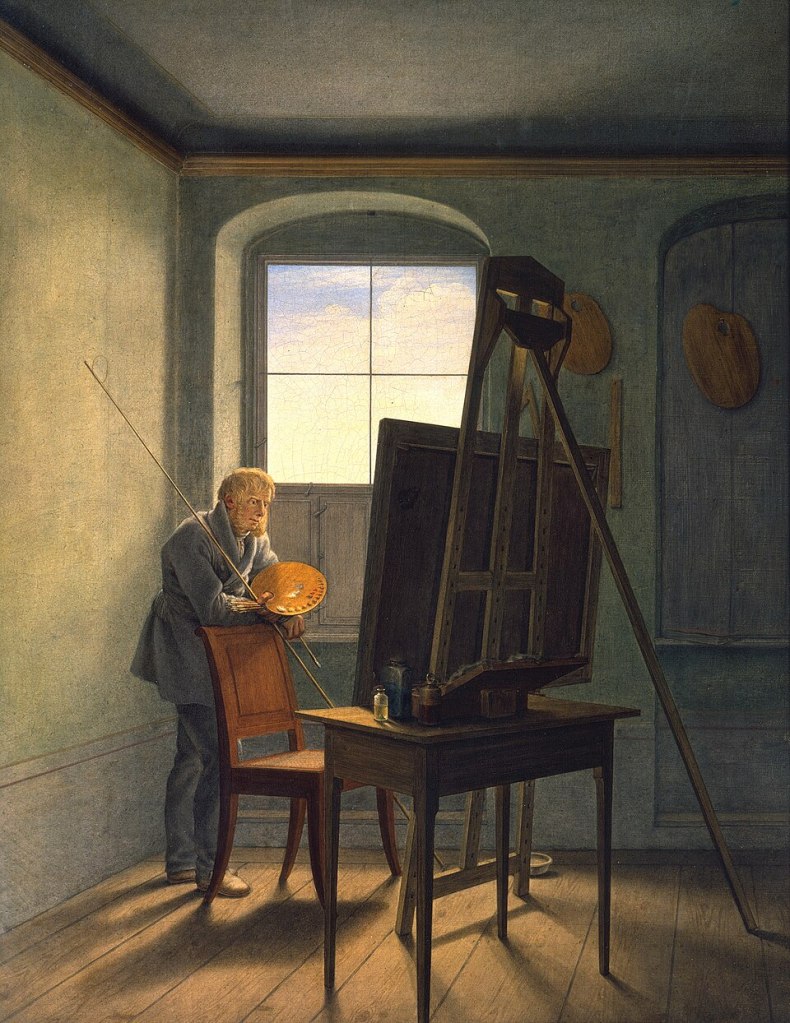
Caspar David Friedrich in his Studio
“Close your bodily eye, that you may see your picture first with the eye of the spirit. Then bring to light what you have seen in the darkness, that its effect may work back, from without to within.” Caspar David Friedrich
This is Kersting’s portrait of his friend, painter Caspar David Friedrich in his studio. The artist captures another artist in the moment of contemplation. Friedrich steps back from the easel to contemplate his art. The unseen work is shrouded in darkness, and the bareness of the room forces us to focus on the man with a colour palette in his hand. Does he await his inspiration before he begins, or considers different perspective to take in the artwork that he has already started? Is he at the very beginning of his journey in this painting, or has he finished and meditates on the result with the renewed colour palette in his hand? The window overhead casting light on the artist only underscores the divine moment of creative inspiration and “enlightenment” that follow him. There is a sense of quietness and lack of distractions that accompany the artistic genius.
 Thoughts on Papyrus
Oh I love this. The way you wrote this post gave me the same cozy feelings as the paintings!
LikeLiked by 1 person
We quite often see portraits of women in quietude, but men, not so often. These paintings show the side of humanity that I like best.
LikeLike