

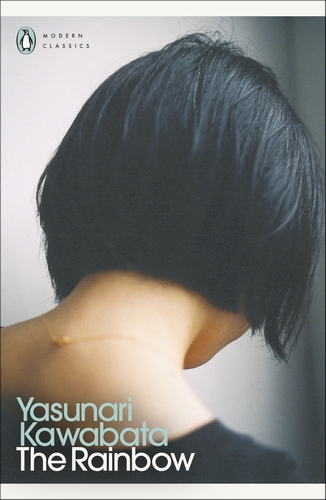
The Rainbow [1951/2023] – ★★★★
Some notable Japanese authors, including Tanizaki in The Makioka Sisters and Dazai in The Setting Sun, captured the traumatic, directionless period of Japan just after the WWII, and this is Kawabata’s contribution in distilling a curious period of time that was also not without a hope for the future. This is a story of architect Mizuhara and his two daughters by two different mothers, older and rebellious Momoko, and younger and dutiful Asako. Asako has just returned from Kyoto after searching for her other half-sister Wakako without her father knowing. As the family embarks on a travelling tour around Japan’s changed-by-the-war sights, unexpected meetings from the past open old wounds. There is suddenly a realisation that a distance between one’s heart and the next may be light years away, while the track from one’s heart to the past is just a blink of an eye. This unassuming story of one fragmented family is, nevertheless, full of surprising emotional depths.
Post-War State: Unhealed Wounds
The novel opens with Asako seeing a strange-to-her phenomenon outside her train window: a rainbow in winter. She is en route to her home in Tokyo from Kyoto, where her efforts to find her sister Wakako proved unsuccessful. The rainbow is also noticed by a man sitting opposite her. He is with a toddler, and they strike up a conversation. It will later transpire that that man has a direct connection to her family.
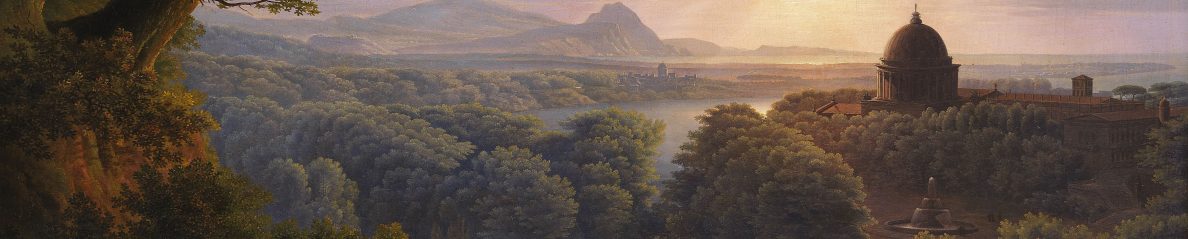
Mizuhara, Asako and Momoko later tour the sights of Japan, but the great mansions and castles, once symbols of Japanese power and importance, and which Mizuhara once helped to build, are reduced to a shadow of their former selves due to the extreme economic want. Many of them have now been converted to tourist guest-houses. The disintegrated, defeated state of Japan and the converted mansions also reflect Mizuhara’s own fractured family unit. The forced mobility, death and chaos during the war meant that now, there on his shoulders, are two daughters from two different women but no mother figure, and an encounter with a third woman from his past would send him down the memory lane. He does not really know his third daughter, Wakako, whose older sister is already an established geisha.
Kawabata’s writing of much subtlety brings to the surface Japan’s post-war guilt, shame, and confusion, capturing the essence of the country torn between its past glory and the brutal current reality as it faces the consequences of its past. As Kawabata’s characters try to pick up the pieces, the only familiar remaining point of reference for them seems to be the passage of time itself, natural phenomenon, and the changing seasons. The characters draw attention to some strange sightings in front of them, such as a rainbow or a winter cherry, an action that conveys bigger troubling issues brewing in the country and in their own hearts. The small is the reflection of the big. The rainbow, a sigh of hope for Asako on the train, also represents a bridge, a strong connection to the past that will always be there. It is also telling that, a rainbow, a beautiful natural phenomenon, is only possible after bad weather, rain or fog, symbolising a trial or a hardship.
After the war, class division lost its strength as much aristocracy became bankrupt. “I wonder whether anyone in today’s Japan can really claim to have a firm social status? It might only be people like you, carrying the weight of three other family members all by yourself, who truly know where they stand”, comments Momoko while observing a boarding house worker.
Kawabata’s prose may lull the reader into a sense of security, comforting naturalism and sentimentality, but this is quite deceptive. One may think that “nothing is happening”, and yet by the end of the book, it is evident that “everything was happening all along”. Disturbing things slither into the characters’ most innocuous conversations and pursue them into places of amusement as the past comes to haunt them. Like much of Japanese fiction, the aim here is the presentation of a situation, rather than some linear plot.
Family: The Fractured Dynamics
As in The Old Capital, Kawabata is interested in sisterly relationships and affection. The youngest family member, Asako, has the least to lose by reconnecting with the past and, therefore, is the most open to exploring the past. Among her family, she is the eagerest to explore the history and art behind the old mansions they family tours, and also wants to find her sister in Kyoto. Her innocence and inexperience are touching as she makes tentative steps to get close to Natsuji, the younger brother of Keita, Momoko’s sweetheart killed in the war. Asako represents the post-war Japan that still clings to its glorious past, honours all its traditions, and has hopes for the future.
In stark contrast, aimless, promiscuous Momoko is the reflection of Japan defeated and feeling apathetic about the future. Momoko’s affairs with numerous young men shock her family, but her erratic, self-destructive behaviour also has causes. The father, Mizuhara, explains: “when someone plays with danger, like chewing a knife, it’s because they’re harbouring a wound that’s eating them from inside”. Momoko is the one who has already experienced much since the war, including the deaths of her mother and lover. However, her past, filled with lasciviousness and carelessness, soon catches up with her, too, as she faces the consequences of her irresponsible lifestyle at the end of the novel.
Travel: Journey to the Heart
At many points throughout this novel, the characters’ travel is treated as a symbolic journeying to recapture the lost identity and make sense of the ever-evolving relationships between the characters. Father Mizuhara takes a journey into his past by reconnecting with Kikue, a mother of his third child. Momoko is also shocked to re-connect with the father of Keita, a man she loved before the war. The journeying is treated as both an escape and a reckoning. This may also explain the resistance to travel on the part of Momoko as she has the most to lose by reconnecting with her past.
Again, Kawabata’s sparse prose allows us to inhabit and savour each character’s moment and thought as the past hovers over all the characters’ actions: “with the passage of the years, he [Mizuhara] had come to doubt that joy and sorrow, pleasure and pain, were deep truths of human condition. They had began to seem to him no more than small, ephemeral waves in the flow of life”. The Japanese believe that, what is understood without words, need not to be voiced, and Kawabata, whose simple narrative hides much complexity, would not put into his writing that which we have already guessed is ongoing in each of his characters’ hearts. And, anyway, it is not what we say, but what we mean, that carries the greatest weight.

Kawabata’s writing is notoriously difficult to translate to capture the full intent of the author, but Haydn Trowell seemed to have struck a delicate balance: Kawabata’s simplicity is conveyed without compromising the depth of meaning behind his characters’ cursory glances at the world around them. This is a tenderly dramatised novel of coming to terms with one’s past and place in the world.
This review was written as part of the Japanese Literature Challenge 18 hosted by Dolce Bellezza. It had started in January, but will run throughout February, so it is still not too late to get on board!
<< Buy The Rainbow (affiliate link) >>

 Thoughts on Papyrus
Great review! I loved The Old Capital, and definitely want to try this one
LikeLiked by 1 person
Thanks! I don’t think it quite reaches the heights of the Old Capital, but I liked it even more than Kawabata’s Dandelions that was also good and which I read last year.
LikeLiked by 1 person
A comprehensive and interesting review. Thank you for posting.
LikeLiked by 1 person
Good to see you back!
LikeLiked by 1 person