
First of all, I would like to wish all my followers and readers a very Happy New Year (Year of the Wood Snake 🐍), and may this year bring each of you only the best. I think it is also fitting to open this year with some thoughts on books that detail correspondence or messaging, often signalling renewed hope or intrigue in books. Why would some authors pen their books in the epistolary format (in the format of a letter(s))? What is the meaning of this book format, and what purpose it serves? Below are 7 books that were written using this curious technique.
This format has many purposes and aims depending on a book and plot, for example to open a world from a curious perspective, but books where characters pen letters may also give an impression that these characters somehow would like to take the reader into their confidence, and, possibly, make them psychologically complicit in these characters’ thoughts and deeds. Letters, like diaries, in novels may also carry a purpose of eliciting sympathy for whoever writes them, and this is especially beneficial in plots where the main character is not altogether likeable, like Lady Susan below. At times, “epistolary” also means a novel written in a diary-format (Edith’s Diary, The Liar), but for the purposes of this list, I will only talk about letters and correspondence.
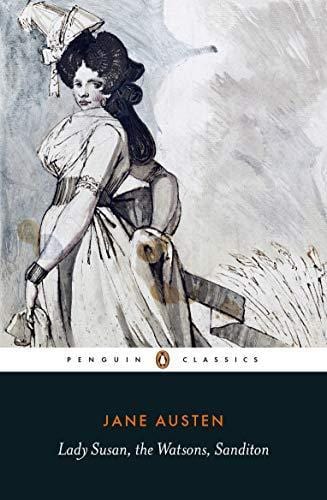
Lady Susan by Jane Austen
Lady Susan is probably the best-known example of a book written entirely in the format of letters. It suits the comedic plot, too, since the perspective is from charming, mischievous, slightly devious Lady Susan. She is a widow, and from her letters to her distant relatives and in-laws we deduce that she would like to maintain her luxurious style of living despite having “fallen on hard times”. She is after a husband yet again, and not only for her, but also for her daughter Francesca. The letter-format of this novel keeps us in suspense and also allows us a glimpse into the mental gymnastics of the main character, who has to survive through cunningness and deceit if she is to maintain her societal status.
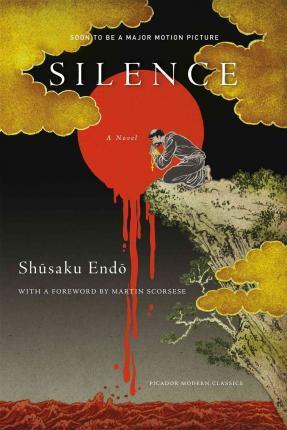
Silence by Shūsaku Endō
I will never stop recommending Shūsaku Endō on this blog, and this is his masterpiece. This novel is not wholly in a letter-format, but large chunks of it are. The letters are first from Ferreira, a Portuguese Jesuit Priest sent on a missionary trip to Japan, and then from Rodrigues, a younger and less experienced priest sent to Japan largely to find out what really happened to Ferreira. The letter-format here gives the novel a sense of documentary non-fiction since this historical fiction was based on true historical sources of a mission underwent by Catholic missionaries to Japan in the 17th century. This epic novel is about many things, among which are humanity, religious devotion, cultural clashes, and the limits – if any – of faith.
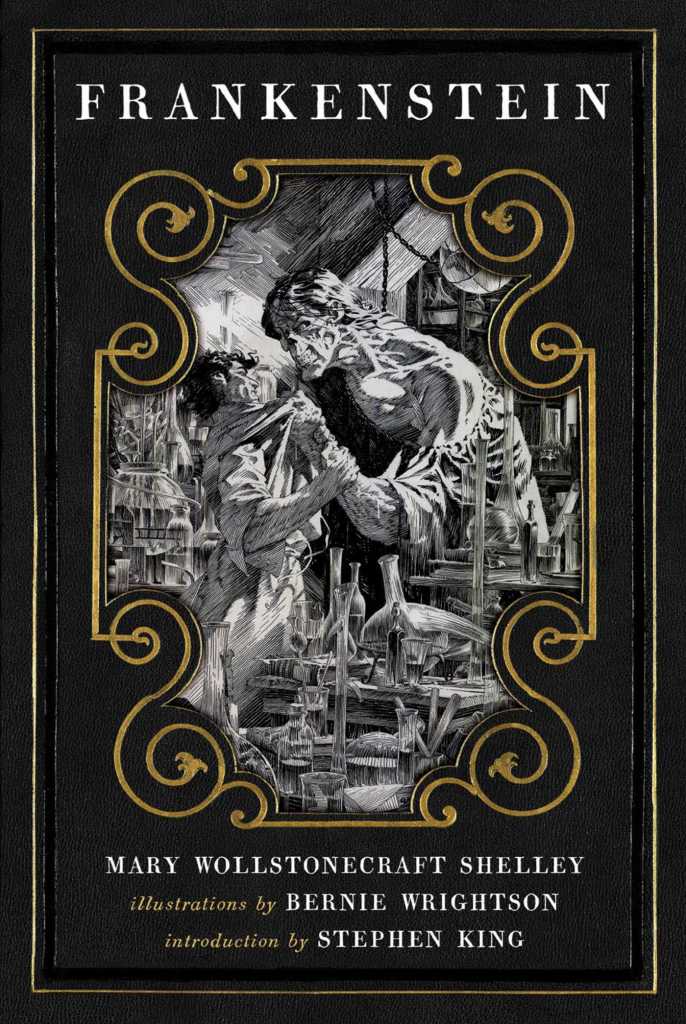
Frankenstein by Mary Shelley
Given a totally fantastical premise that the reader would encounter in the middle and end of this book, the epistolary, documentary-like technique chosen by Shelley in her novel works wonders in this book. It gives her book the needed elements of realism and intrigue. There is an introductory narrative given by Captain Walton, and we read letters exchanged between him and his sister. It turns out that Victor, a scientist who pursued a giant across the Artic Ocean, was discovered half-dead. His story works as a frame for the novel that is full of philosophical questions about the meaning of human creation, and the responsibility we must take for our scientific findings.
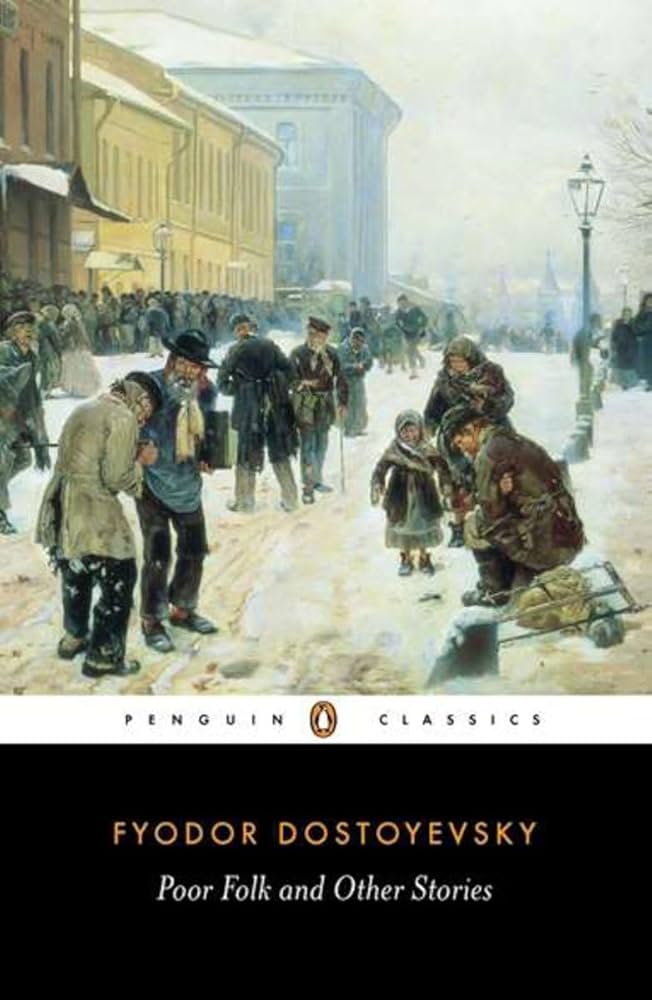
Poor Folk by Fyodor Dostoevsky
Fyodor Dostoevsky may be known as a giant of Russian literature largely for his masterpieces Brothers Karamazov, and Crime and Punishment, but his minor works are worth checking out, too (White Nights, The Meek One, etc.) Inspired by the social realist works of Gogol, Pushkin and Karamzin, Poor Folk details a correspondence between two “poor folks”: Makar Devushkin and Varvara Dobroselova. While Makar works a lowly copyist, Varvara hopes to work as a governess. Their coming together in letters and eventual untangling as Makar continues with spiritual values while Varvara settles for materialism, is the drama of the story.
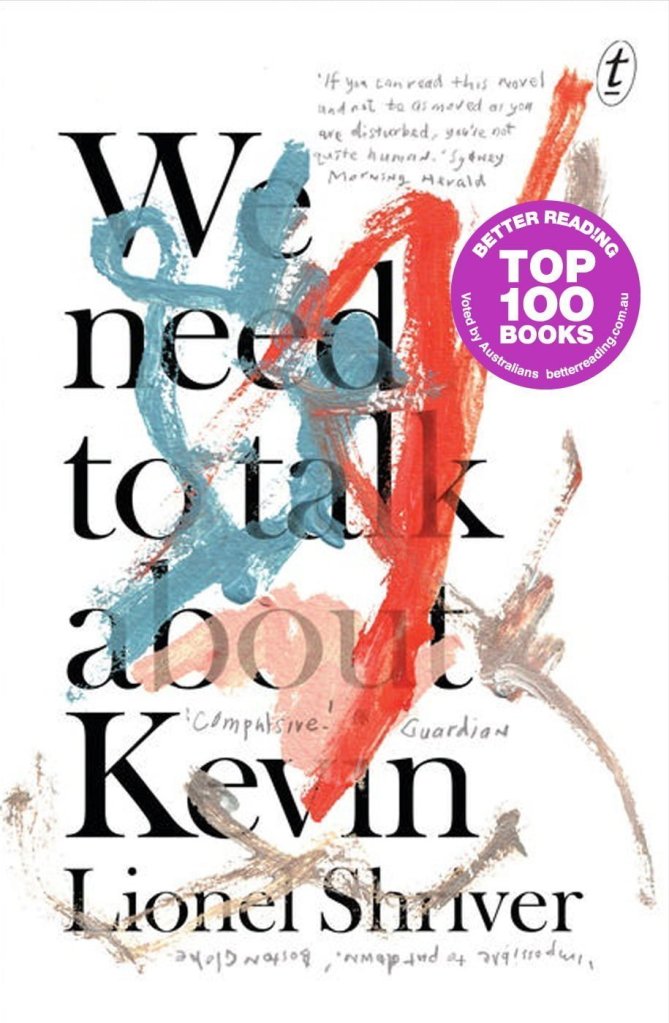
We Need To Talk About Kevin by Lionel Shriver
This novel is largely in a letter-format written by Eva, a mother, to Franklin, a father to boy Kevin who is arrested and imprisoned for murder after a school shooting. This is probably one of the examples where the letter-writing format serves a purpose of trying for us, the readers, to see the perspective we would not normally contemplate – that of a mother whose child is accused of a horrific crime. There are also some thought-provoking considerations in this book about nature vs. nurture with regards to criminality, and parental responsibility, and the film of 2011 based on this novel is also said to be good.
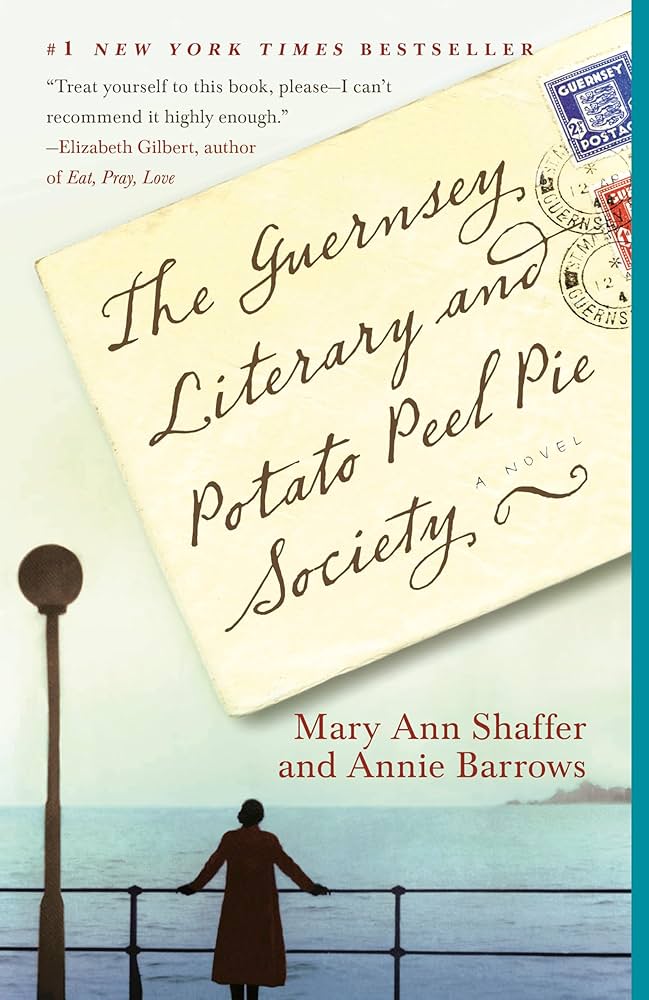
The Guernsey Literary & Potato Peel Pie Society by Mary Ann Shaffer and Annie Barrows
This story is set in post-war Guernsey, and tells of a number of islanders who once, at first as a joke, came up with the title for a reading society. Later, they started to attend meetings at the said society, and become unexpectedly and wholeheartedly involved in all things literary, especially after numerous letter exchanges with a London writer. This is a bitter-sweet story whose letter-format aids our full immersion in one intriguing post-war countryside world.
Julie ou La Nouvelle Heloise by Jean-Jacques Rousseau
Rousseau was allegedly inspired to write this novel by The Letters of a Portuguese Nun. The love story here is told largely through a series of letters exchanged between Julie, a noble woman, and Saint-Preux, her tutor and a commoner. The letter-format gives this haunting novel both a sense of intimacy, but also realism, and a confessional tone elicits sympathy for Julie in particular.
Have you read any other books written in the epistolary format? Do you enjoy them, or not? What do you think are the aims or benefits of writing novels in this way?
 Thoughts on Papyrus
Today, instead of the epistolary novel, we get the email exchange novel. I’m reading one of those now, ‘Dear Dickhead’ by Virginie Despentes.
LikeLiked by 2 people
Yes, I guess epistolary now has to do only with the domain of historical fiction if we are not talking about novels written in the past. Wow, an email exchange novel – how is it going? I don’t think I “get” Virginie Despentes, but my only experience with her was Vernon Subutex.
LikeLiked by 1 person
The parts of ‘Dear Dickhead’ I could relate to made good sense to me. However other parts, including hard drug use and Narcotics Anonymous, were too far out for me. I mainly read it because it is translated by Frank Wynne with whom I have had good luck in the past.
LikeLiked by 1 person
Good choices, Diana.
“Poor Folk” is one of the first Dostoevsky works I read and — as seems to be the case with many authors — is one of his best works, or at least most readable and affecting.
It is interesting that you chose to classify “Frankenstein” as an epistolary novel. The first time I read it, I couldn’t get into it. I reread at a later date, and, on the second reading, appreciated its brilliance (I should say Marty Shelly’s).
LikeLiked by 1 person
Thanks and it is great to hear from you! It is so interesting that one of your firsts Dostoyevsky’s was Poor Folk because I don’t know that many people who even know it let alone read it. I guess his other works and their promotion in different language greatly overshadow it. I had a similar experience to you with Frankenstein. I guess it is technically only part epistolary, and a story within a story. For my part, like most people, I thought knowing about it as this cultural concept is more or less enough and I went at first into the story with certain expectations. It surprised me in the very positive way.
LikeLike
I’ve only read the Austen and the Shelley from your selection, so thanks for your other recommendations.
Some of Austen’s teenage novellas and short stories are also epistolary, and I read and reviewed ‘Love and Freindship’, ‘The Three Sisters’ and ‘A Collection of Letters’ recently. Oh, and a lot of Stevenson’s Treasure Island is written as letters exchanged as well as in the form of extracts from journals.
LikeLiked by 1 person
In turn I have to read Austen’s other epistolary stories since I had no idea there were a number of others, and I am also not sure why they changed “Lady Susan” to “Love and Friendship” just to follow the film. And, I totally forgot that Treasure Island is partly epistolary! Love the intimacy that this report creates between the main character and us.
LikeLiked by 1 person
I just finished an epistolary….Kate & Frida (ARC) by Kim Fay….lovely and thoughtful!
LikeLiked by 1 person
Oh, really? Sounds great. I am happy this format is still used and popular.
LikeLiked by 1 person
I kind of thought Richardson’s Clarissa was the ultimate epistolary novel. It is enormous, and used to take up a huge slug of my bookshelf.
LikeLiked by 1 person
It looks huge. Is it really epistolary? Then I cannot even begin to imagine how difficult it must have been writing it (let alone reading it).
LikeLike
I struggle with this format (like diaries) unless it’s more of a conceit (I always forget We Need To Talk About Kevin is technically told through letters). I think it’s a difficult one to pull off because it takes away so many of the tools you have as a writer.
LikeLiked by 1 person
Yes, it is not easy to read or write. I guess to pull it off as you say it must only be used nowadays for specific purposes, like to confound plot or for unreliable narrators to have some space to vent their feelings or something, and then maybe lead us astray.
LikeLiked by 1 person
The first novel by the German author Johann Wolfgang Goethe was “Die Leiden des jungen Werthers” (The Sorrows of Young Werther), an epistolary novel that was first published in 1774 and went on to become one of the best-selling books of the eighteenth century. https://operasandcycling.com/goethe-house-and-werther/
LikeLiked by 1 person
Oh, yes! It is one of my favourite novels of all time – I absolutely adore it. More of a diary than strictly epistolary, isn’t it (if I recall correct), but still a great suggestion, thanks!
LikeLiked by 1 person
Nice theme!
I need to go back to Rousseau!
Here is mine: https://wordsandpeace.com/2025/02/01/six-degrees-of-separation-french-classics/
LikeLiked by 1 person
Letters are an interesting device for authors to use, as they can be revelatory or the converse – in that it is in what they don’t say which underpins the true nature of a character. Regarding the email exchange as Anokatony writes of, I am currently reading My Name is Mama, by Jessica George for my bookclub, which uses email and text exchange throughout. Unsure at first but quite enjoying it.
Haven’t read many on your list but seriously thought provoking.
LikeLiked by 1 person
You make so many fascinating points. I also think letters can hide things more than reveal, but I guess that’s where all the intrigue and interests lies. Come to think of it, I now recall I read quite a number of books written in either diary/letter-format where characters try to present themselves in a better light than they actually are. Like with Carol’s mentioned book above, I am amazed but also pleased there are notable new books out that use this “correspondence” style. It is definitely refreshing and with already over-saturated fiction market, a way to stand out for a book, too.
LikeLiked by 1 person
Happy New Year to you too Diana. Because letter writing is now so much a thing of the past this topic is really important. Who will be publishing books of correspondence in the future? Or it may just be emails or texts heaven forbid. Anyway, I love the sound of the Endo. I shall have to get a copy. Shriver’s book was shattering.
LikeLiked by 1 person
I do enjoy them (more often than not) in historical fiction, so I hope authors would continue using them at least in that category of books. It is certainly an interesting topic as new ways of communication emerge, you are right. Yes, mobile texts and emails somehow don’t feel the same for example because the level of tangibility and intimacy is lost by not having a concrete object – even if paper – physically exchange hands between people (not to mention trying to guess another’s person mood, personality, etc. by hand-writing, etc.) Sigh. I guess I am a bit of a hopeless old-fashioned traditionalist and nostalgic 🙂 And, yes, I really recommend Endo!
LikeLiked by 1 person
Interesting. I’ve read four of your books: Lady Susan, Frankenstein, Guernsey and Kevin, all very good. I’d say the last one is my favourite.
LikeLiked by 1 person
Is Endo available in English translation?
LikeLiked by 1 person
Silence? Yes, I have a translation by William Johnston, I believe.
LikeLiked by 1 person
Great list, Diana. I think you’re right that letters lend an intimacy to the narrative, as if the writer is taking readers into confidence. At least that’s the effect on those of us who remember writing and receiving letters. In future, who knows? I’ve seen emails, texts and tweets used successfully in novels, but only as brief interludes between more traditionally narrated chapters. I think a whole novel in that format would be tough to write, and to read.
I’d completely forgotten that We Need To Talk About Kevin was written in letter format. Will have to go back and look at that one. Another (fairly) recent epistolary novel that comes to mind is The White Tiger by Aravind Adiga, which one the Booker a while back. Here’s what I wrote in my post about it:
“The style grated initially. It’s written as a series of letters from an Indian entrepreneur to Chinese Premier Wen Jiabao, and starts off full of stuff like “Let me tell you about my admiration for the great nation of China…” Fortunately this tails off after a while, and you can forget about Wen Jiabao and listen to the story of Balram’s rise from servant to successful businessman. And in the end, the narrative device does have a clever effect: it allows Balram to talk naturally about his life while also explaining aspects of Indian life that might not otherwise be clear to a foreigner.”
LikeLiked by 1 person
Thanks, and for your thoughtful comment. Yes, I guess any modern-setting novel cannot nowadays avoid some form of this electronic communication, that’s the nature of any life now. And, yes, only its sporadic use appears palatable. When I finished the list I also thought I remembered the usage of emails in Eleanor Catton’s latest book Birnam Wood, though I cannot be sure.
Your insight into The White Tiger is also fascinating. I want to read more writers from India, so I think I will check it out. That’s one clever opening device, you describe. I now recall something similar in The Reluctant Fundamentalist and Life of Pi – though, not letters, but telling a story post factum, so to speak. In the former, a protagonist tells his story to an American tourist (it becomes a story within a story “I am a lover of America”, he says, and then became disillusioned, he implies), and in the latter, the Author’s Note makes us uneasy about everything that follows. All this adds naturalness to the prose, as you say (there is a “confessional freedom” also), and in this way, it also becomes easier for us, readers, to associate with a listener or a person on the receiving end of a letter/communication – and thus, sympathy for the main character is also effortlessly established very early on.
LikeLike
Oh, that’s interesting about Birnam Wood – yes, I think I do remember quite a few emails flying around, although I think they were mostly just used to move the plot forward rather than as a storytelling technique. But it’s been a while since I read it, so I’d have to go back and check that one too.
Yes, those framing devices can be very effective, can’t they? Maybe in that Reluctant Fundamentalist example, we get to feel as if we’re eavesdropping on that conversation with the tourist, in the same way that in epistolary novels we’re sneaking a look at the normally private medium of a personal letter. Helps pique our curiosity, perhaps, as well as relating more easily to the characters involved.
LikeLiked by 1 person
I immediately remembered Stefan Zweig’s tragic novella “Letter from an Unknown Woman”. I remember that the work caused a storm of feelings in me. In youth, you really want to dot the “i’s” and cross the “t’s” and divide everything into black and white. But the novella is so good that it does not allow this – confusion remains in the young soul.
LikeLiked by 1 person
A great suggestion – one of the prime examples, for sure, thanks! As the complexities emerge, and the youthful maximalism abates, suddenly everything looks and is perceived differently.
LikeLiked by 1 person
🌞
LikeLiked by 1 person
Great list!
LikeLiked by 1 person
It has never really occurred to me you can use the epistolary format to tell a story differently, but now you’ve got me thinking. I recently finished The Color Purple, where I think the format works well, although I did prefer the letters from the protagonist Celia over those from her sister.
LikeLiked by 1 person
A great suggestion! This novel completely slipped my mind compiling this list. I think that the letter-format there works to establish some documentary feel to certain aspects of the novel since it deals with some heavy topics (plus heightened sympathy, of course).
LikeLike