


Schoolgirl [1939/2011] by Osamu Dazai (trans. Allison Markin Powell) – ★★★★
The green of a May cucumber has a sadness like an empty heart, an aching, ticklish sadness. Schoolgirl is a short novella where we follow the thoughts of one Japanese schoolgirl for just one day, from the moment she opens her eyes in the morning (“Almost the same. Absolutely empty”) to her concluding “Goodnight”. While she exhibits the usual teenage angst, telling us of her frustrations, anxieties and insecurities, tinged with doses of depression and apathy, her existence also momentarily turns to true delight as she finds small things to appreciate around her throughout the day.
As usual, Dazai (No Longer Human) holds a mirror to the Japanese society, and its fault are glaring as seen through the eyes of this slightly haughty, self-absorbed teenage girl. We become privy to her curious train of thought that also indirectly ridicules the societal hypocrisy and conformity. It is a very short novella with highly personal musings, but Dazai’s usual broader themes of shame, alienation and identity are also clearly sticking out. Though young, the schoolgirl is already experiencing some kind of an existential exhaustion, as well as searches for her identity, awakening to all the flaws around her and inside her, and even pining for the past when her sister still lived in the house and her father was still alive. While trying to win the affection of her distant mother who devotes herself to others, the heroine also wonders what it would take for her to preserve her sense of individuality in this society so clearly obsessed with conforming to the expectations of others and “keeping up appearances”. Will this attempt to stick to the ideals of her childhood be worth it at all in the end?
“Nobody in the world understood our suffering. In time, when we became adults, we might look back on this pain and loneliness as a funny thing, perfectly ordinary, but – but how were we expected to get by, to get through this interminable period of time until that point when we were adults? There was no one to teach us how.” [Dazai/Powell, 1939/2011]
Written in a poignant, confessional tone, Schoolgirl is a novel of lucid introspection akin to that displayed by such authors as Sylvia Plath and Clarice Lispector, whose narrative voice seems to originate from somewhere deep inside our own consciousness. It is admirable to see such a short work packing so much truth and conveying it so casually and indirectly, while also leaving a strong impression. This is a “daydream” of a psychological novella full of curious insights and observations.
<< Buy Schoolgirl (affiliate link) >>
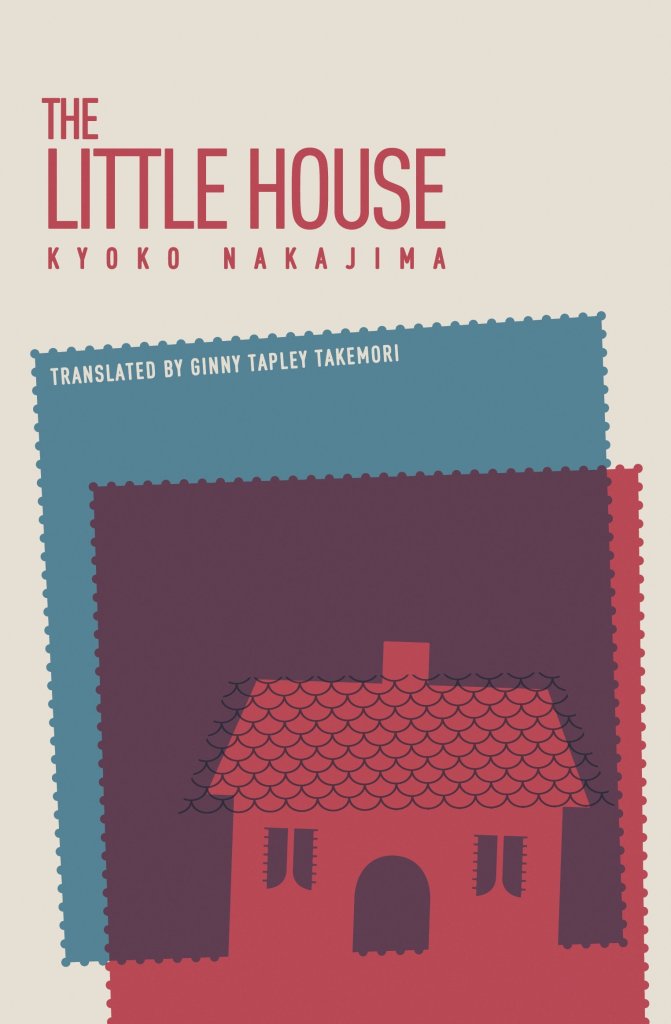
The Little House [2010/19] by Kyōko Nakajima (trans. Ginny Tapley Takemori) – ★★★
I will never forget the scent of the seasonal daphne and osmanthus blossoms in the garden, or how the beautiful red roof was complemented by the dazzling fall colours of the maple tree and crimson-fruited rowanberry beside the front door. The Little House is a nostalgic look at life in pre and post-war Japan through the eyes of one devoted housemaid (Taki) who describes her past life serving the Hirai family in Tokyo. She entered her service while still being an impressionable teenager from the countryside, and quickly grew close to her beautiful, young Mistress Tokiko. The Hirai make an odd couple, and it is not long before Tokiko displays affection towards another, younger man, Mr. Itakura. What role, if any, will Taki play in her Mistress’s outside interest? Nakajima sweeps us through the turmoils of Japan, showing how the approaching war changes the quiet household, with each crisis of the 1930s and 1940s destabilising the Hirai family.
Japan’s hope for the future is first pinned on its relative economic prosperity and the preparation for the 1940 Summer Olympics (also a part of the talk in the Hirai household), but then, as the years roll by, the war makes itself felt, and Taki has to become more inventive in her work, including regarding food shortages. Her unquestionable loyalty to her Master and Mistress may remind of Ishiguro’s butler Stevens from The Remains of the Day, but there are perhaps deeper secrets hidden in plain sight in this novel, which sets it apart. The final chapter sheds some light on the matter, forcing us to re-evaluate certain aspects of the story. Though The Little House lacks a strong narrative propulsion, it still unveils historical aspects from a curious perspective, and, therefore, is largely worth a read.
 Thoughts on Papyrus
The introspective, ‘day in the life (of), Schoolgirl” sounds interesting!
LikeLiked by 1 person
It is! 🙂
LikeLike
Excellent reviews. I added Little House to my TBR for Japaneses Lit this winter.
LikeLiked by 2 people
I recommend it with reservations. Still, it was a gentle read.
LikeLiked by 1 person
The Little House was already on my TBR, adding Schoolgirl. I like Dazai, but haven’t read this one yet!
LikeLiked by 1 person
It was a surprise discovery for me as well. I hope you enjoy it.
LikeLiked by 1 person
Dazai is my favourite Japanese author, and I love your comparison with Clarice Lispector (another favourite) for this particular novella. I haven’t read Little House but it sounds interesting.
LikeLiked by 2 people
It’s so good to meet a fellow world reader! =)
I was checking your list for the Around the World in 50 Books and we have a lot of authors in common: Naguib Mahfouz, Min Jin Lee, Clarice Lispector, Mario Vargas Llosa… I’ll add your list to my reference material, to go back whenever I need inspiration for a new country.
I already have a few Japanese titles on my read list but The Little House seems really interesting. Have you read Yōko Ogawa? I really enjoyed The Memory Police and The Housekeeper and the Professor.
LikeLiked by 1 person
Thank you for this connection, and, in turn, I Iove your site. There are so many gems in world literature that I cannot imagine how anyone would not be reading around the world. I am especially intrigued by your choice of Asian authors. I have Man Tiger by Eka Kurniawan on my TBR since I read and liked Beauty Is a Wound. And, yes, I read both of these novels by Ogawa, you can check out my review of The Memory Police here – Review: The Memory Police by Yōko Ogawa – Thoughts on Papyrus, if you are interested. I absolutely loved it. I found The Little House a much quieter novel and also less thought-provoking, but still relatively curious. If there is one Japanese author I recommend it is Fumiko Enchi. I think her novel The Waiting Years is a masterpiece.
Actually, only yesterday I decided to expand my list of 50 Books Around the World to 80 Books Around the World, so I want to read another 30 books for this challenge, and that means my list is definitely in progress and you own list would surely be my ongoing inspiration as well! The only caveat is that I tackle books set in different countries, but more often than not they are by authors from these countries.
LikeLike