


I. In Praise of Shadows [1933] by Junichiro Tanizaki
This persuasive essay by Japanese author Jun’ichirō Tanizaki illuminates the darkest corners of cultural and aesthetic Japan, explaining the country’s traditional preference for imperfection. Tanizaki says that there is an eerie beauty to be distilled from things that at first seem “dark”, “small” or “imperfect” (such as special charm emanating from lacquerware illuminated by candles). Those who are open to experience the imperfect and not afraid to crouch in the dark, will find that special delight. It now appears to me that Tanizaki might have also been influenced by the writings of Yoshida Kenkō, a Buddhist monk.
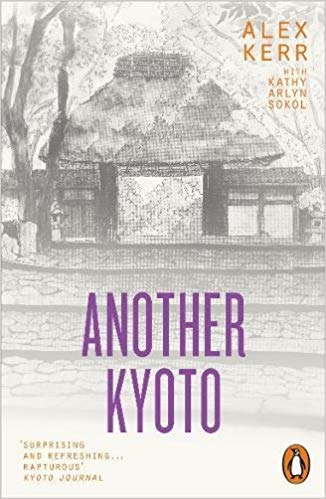
II. Another Kyoto [2016] by Alex Kerr & Kathy Arlyn Sokol
In this book, Alex Kerr and Kathy Sokol capture and explain the nuances of the Japanese culture by focusing on seemingly mundane objects of the Japanese society, such as walls, gates, tatami mats and screens, opening to us a whole new way of perceiving these attributes of the Japanese culture. In Kerr and Sokol’s book, Kyoto never felt as intimate nor its most distinguishing features better explained.

III. The Japanese: A History in Twenty Lives [2020] by Christopher Harding
I thought this was an exciting read, presenting Japanese history through the lives of twenty distinguished citizens, from mythical Princess Himiko (“Shaman Queen”), who lived in the year 200, to Empress Owada Masako (1963-), an intelligent, well-educated woman, but once a very unlikely contender to the title. It is possible that Harding based his book on Gen Itasaka’s 100 Japanese (People) You Should Know, and those who want to read a more linear history of Japan, can pick up Andrew Gordon’s A Modern History of Japan: From Tokugawa Times to the Present [2019].

IV. The Idea of Japan: Western Images, Western Myths [1996] by Ian Littlewood
This insightful book traces the history of perception of Japan through the ages. Littlewood talks about travel accounts from the sixteenth century, the impressions of notable writers on Japan (from Lafcadio Hearn to Ian Fleming) and the presentation of Japan in present-day film industry, making clear the origin of many Japanese stereotypes and prejudices.

V. Home Life in Tokyo [1910/85] by Jukichi Inouye
This account has opened my eyes on many things about Japan that “I did not know I did not know”. It is written by a native Japanese who describes the life in Tokyo in the 1890s/1910s. From the city’s streets, shops, festivities and food to manners, marriage and children, this book elucidates many things about the Japanese way of life to a foreigner. This is a historic account, but we see many echoes of this history in present-day Japan.
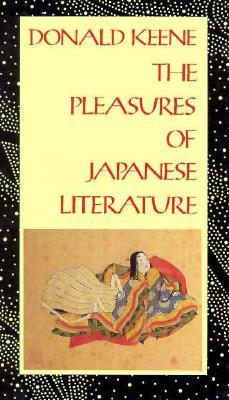
VI. The Pleasures of Japanese Literature [1988] by Donald Keene
I had to put at least one book on this list by Donald Keene (1922 – 2019), an eminent scholar of Japan. In this essay, Keene sheds light on Japan and its culture through the exploration of its literature, poetry and theatre, focusing, for example, on the Japanese concept of the transience of all things, and see also Donald Keene’s books Anthology of Japanese Literature: From the Earliest Era to the Mid-Nineteenth Century [1955] and Chronicles of My Life: An American in the Heart of Japan [2008].
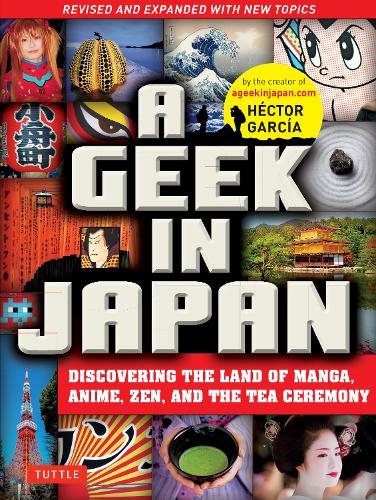
VII. A Geek in Japan: Discovering the Land of Manga, Anime, Zen, and the Tea Ceremony [2011/19] by Hector Garcia
It never stops to amaze people how seamlessly Japan blends past and future, the preservation of centuries-old traditions and the newest advances of the digital age. The country is both steeped in tradition and displays amazing futuristic tendencies. This fun book is rather introductory, but it explains well those Japanese concepts that are usually hidden from first-time visitors to Japan, including the otaku culture, Japanese “train culture” and role-playing. There are such chapters in the books as “Modern Japanese Music” and “Video Games”, while the books also takes the reader through Tokyo and Kyoto’s prefectures, explaining subcultures.

VIII. Hokkaido: A History of Ethnic Transition and Development on Japan’s Northern Island [2009] by Ann B. Irish
One way to understand a country is through the exploration of its furthest, most distant parts and indigenous communities. Hokkaido is Japan’s northern island and, traditionally, a home to the Ainu people. Perhaps this book is on the academic side, but it explains well the island population’s ethnology, as well as the history of its foreign exploration.
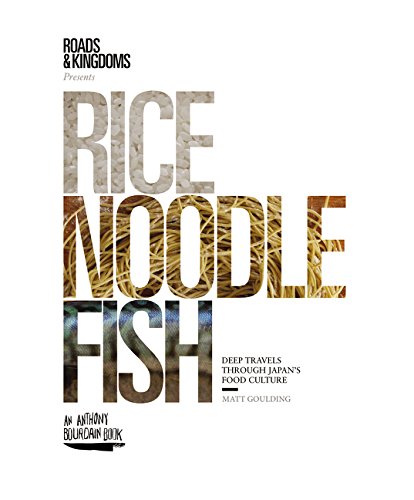
IX. Rice Noodle Fish: Deep Travels Through Japan’s Food Culture [2015] by Matt Goulding (ed.)
Japan has a very intimate relationship with food and culinary process, and I think it is quite impossible to understand this country without delving deep into its food. Food is far more than just sustenance for Japan: it forms part of its very old aesthetic tradition, and features prominently in a Japanese person’s daily life. From a modern sushi bar and cosy izakaya to “food-centred” manga (see my review of Oishinbo (1983 – 2014)) and Japanese TV full of culinary shows, no other country has such a deep philosophical/religious relationship with its food. Rice Noodle Fish “decodes Japan’s food culture, [combining] literary storytelling, insider information and photography”.

X. The Narrow Road to the Deep North and Other Travel Sketches [1702] by Matsuo Bashō
What better way to comprehend the mystery that is Japan for many people than through its unique poetry of great subtleties originally influenced by Zen Buddhism? Matsuo Bashō was a Japanese poet of the Edo period, and this book combines Bashō’s travel writing and haiku poems. Kenji Miyazawa, Japanese writer, once said of this book: “it was as if the very soul of Japan had itself written it.”
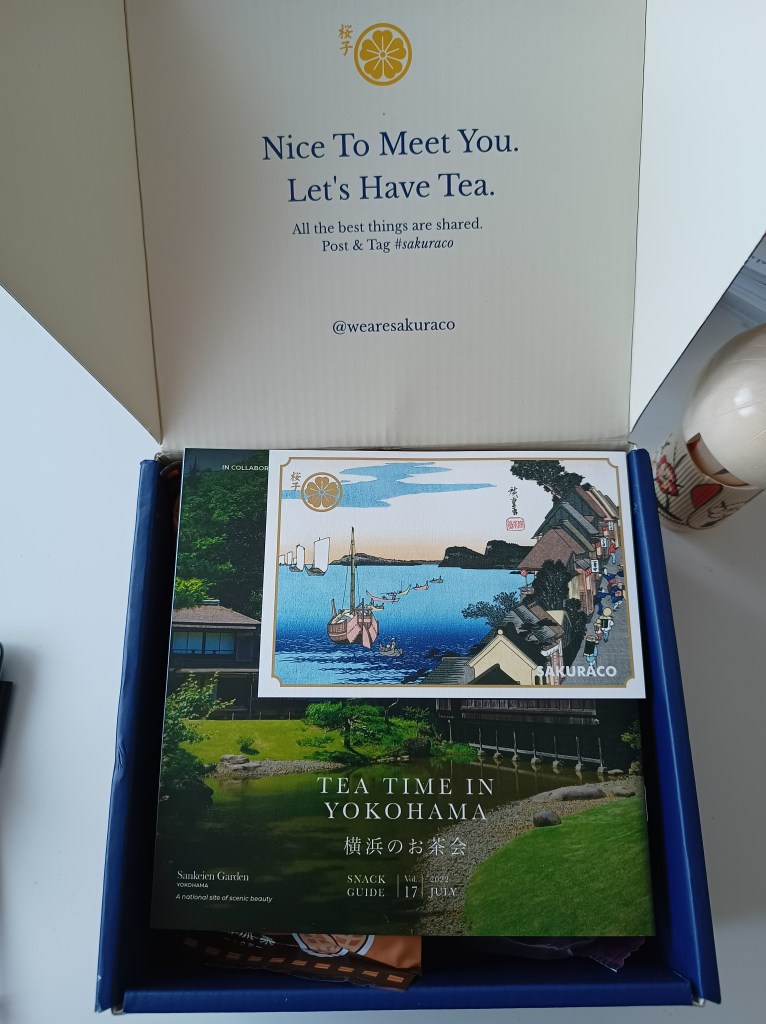
This list is non-exhaustive, in no particular order and includes my personal, subjective recommendations. There are some very popular books on Japan that I did not include because I simply did not get along with them, including books by Alan Booth, Alan Macfarlane and Matt Alt. On a more positive note, I have recently subscribed to one unique monthly Japanese subscription service Sakuraco and am simply delighted with their offerings. Each month they send out to their subscribers a box full of traditional Japanese treats (including traditional cutlery or souvenirs, together with explanations) from different parts of the country, covering such regions as Okinawa, Hokkaido and Shikoku – see my pictures below of the box covering tea treats from the Japanese city of Yokohama that historically experienced the biggest influence from American, European and Chinese traders.


Adorant la culture japonaise, je garde en lien ton article ! Merci pour ces recommandations.
LikeLiked by 2 people
Merci pour le lien!
LikeLiked by 1 person
Avec plaisir !
LikeLiked by 1 person
Oh that box looks marvellous! My BFF is a huge fan of Japanese culture so I may have to point her in its direction!
LikeLiked by 1 person
Yes, I recommend, was pleasantly surprised by it!
LikeLiked by 1 person
Thank you, a helpful list to guide me through the wonderful complex that is Japan and its people.
LikeLiked by 1 person
The subscription box is so cool! I’d love to read more books that focus on Japan and Japanese culture, especially by Japanese authors. Love your list as a starting point
LikeLiked by 1 person
A fascinating list. Thank you Diana. I love Basho’s poetry.
LikeLiked by 1 person
An excellent selection. very interesting.
LikeLiked by 1 person
Do you have the link to the subscription box? I don’t seem to see it. Or maybe I shouldn’t, lol
LikeLiked by 1 person
lol, yes, it is found when you click Sakuraco link above – https://sakura.co/. There is another one competing at the same high quality level with them – Bokksu, but it is generally believed that Sakuraco is the best value for money.
LikeLike
thanks for the link. I must be still quite sick. I can’t even find the word Sakuraco in your post, and no link, just in tags
LikeLike
Strange, it is the last paragraph above, in the sentence with “Sakuraco” in red: “On a more positive note, I have recently subscribed to one unique monthly Japanese subscription service Sakuraco and am simply delighted with their offerings.” If we are on the same line? 🙂 I really don’t know it it looks any different on mobile or wordpress-reader – it might.
LikeLike
I only see the word Sakuraco in the comment, your answer to my question.
Beside that, the only thing in red after your short reviews is Matt Alt.
And again, for me the name Sakuraco does not appear in the body of your post.
This is the sentence as I see it, all in black font,, nothing in red: “On a more positive note, I have recently subscribed to one unique monthly Japanese subscription service and am simply delighted with their offerings”. So the name is not there. I double checked every word of that sentence, to see there was a hidden hyperlink. None.
I’m not even using the reading, just directly through the browser, on a a PC.
weird stuff.
Anyway, I checked their website, and realized I had already visited it before. But it’s way above my budget. Good to know though
LikeLiked by 1 person
Yes, very strange – I will have to investigate this issue further, thank you very much again for drawing my attention to it or otherwise I would not have spotted it. Sakurako is the external link, so perhaps there is some trouble translating that, as in “external links blocked from viewing” or something. I now wonder if everyone else sees it as you do, which means no external link or even words appear on the site (hmm). Last year I had some major issues with how my content looks and some aspects of WordPress work – I guess that’s just another one to chase up.
LikeLike
have you tried viewing it yourself from other browsers/device, where you would not be logged in to wordpress?
LikeLiked by 1 person
Yes, thanks, I don’t see any problem for now, but that was just my mobile (without logging in).
LikeLike