
Review: Shamans, Healers & Medicine Men by Holger Kalweit

Shamans, Healers, and Medicine Men [1987/92]★★★★★

A comprehensive, endlessly perceptive, & inspiring book on shamanism.

“Shamanism…is not a somehow obscure or incomprehensible or mysterious magical path, but a simple heightening of the emotional experience of the world; “the goal of the shamanic path of initiation is to broaden and deepen the normal emotionality that we all know” [Kalweit, Shambhala Publications, 1987/92: 219].

This book, translated from the German, is by Holger Kalweit, a German ethnologist and psychologist who studied shamans and shamanism in different corners of the world, including Hawaii, the American Southwest, Mexico and Tibet. With concrete examples drawn from the Ainu, Siberian, Yahgan and other shamanic traditions, Kalweit delves into the very heart of shamanism and explains detailly the nature of being a shaman, “a possessor of profound knowledge that cannot be grasped in words”. From shamanic training, testing and rituals inducing trance to shamanic healing powers, and duels and competitions, Kalweit touches on many topics and hardly stops there, elucidating further on such concepts as consciousness, reality, dreaming and on a variety of parapsychological phenomena, including “magic”, visions and near-death experience.

Continue reading “Review: Shamans, Healers & Medicine Men by Holger Kalweit”

Mini-Review: A Year in Marrakesh by Peter Mayne

A Year in Marrakesh [1953] – ★★★

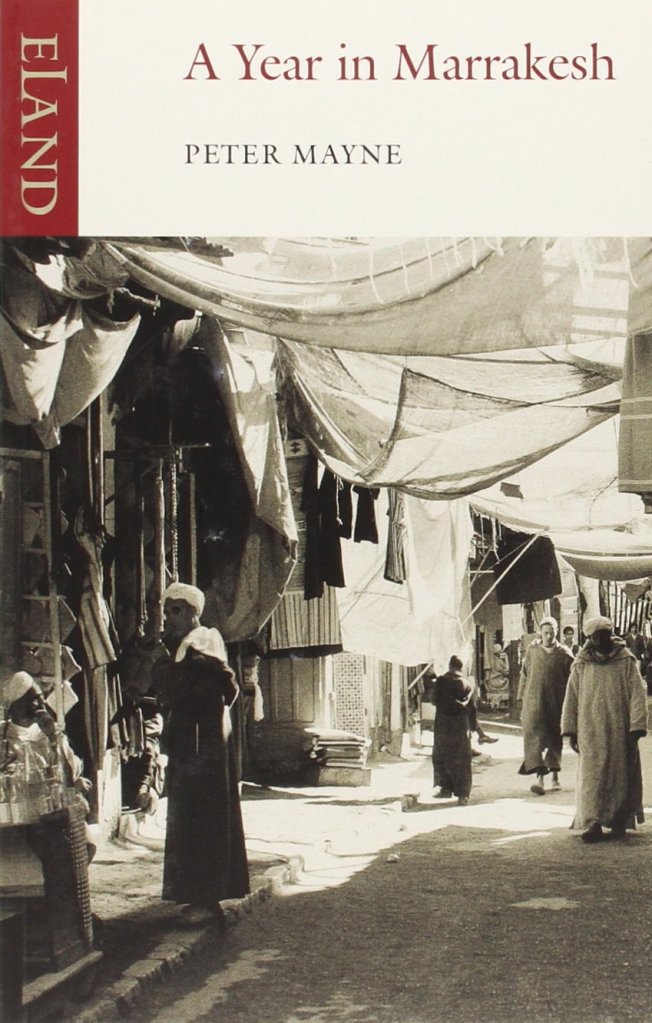
This non-fiction book is Peter Mayne’s account of his life in Marrakesh, Morocco in the 1950s. Mayne recounts his bewilderment and mishaps as he tries to live the life of a local in a country that is very different from his own. He tries to learn Arabic and make friends with local people only to find that his attempts lead him to the myriad of unsaid etiquette rules and cultural intricacies still to be learnt. Though Mayne tries his best to capture the mentality of people living in Morocco and their culture, his account turns out to be predictable and exasperating, though with welcoming doses of humour.

Continue reading “Mini-Review: A Year in Marrakesh by Peter Mayne”

Review: Shamanism: Archaic Techniques of Ecstasy by Mircea Eliade

shamanism eliadeShamanism [1951/64] – ★★★★

Mircea Eliade’s book is a fascinating, albeit dated, account of shamanism that focuses on the application of the tradition in different world regions.

Shamanism is by Romanian historian and author Mircea Eliade (1907 – 1986), and is considered to be one of the first proper attempts to approach shamanism systematically and scholarly. From costumes and drums to spirit animals and dreams, Eliade elucidates one of the most misunderstood practices/traditions in the world. The great thing about the book is that it talks about shamanism as it is applicable in different regions of the world, from Siberia and India, to South America and Oceania, attempting to draw parallels between them and talking about their general concepts, including similarities in initiation processes.  Continue reading “Review: Shamanism: Archaic Techniques of Ecstasy by Mircea Eliade”

Review: Miracle in the Andes by Nando Parrado

Miracle in the Andes Miracle in the Andes [2006] – ★★★★

“…the mountains showed me there were many forms of bravery, and, for me, even the quietest ones among us showed great courage simply by living from day to day” [Nando Parrado, 2006: 79].

The author of this book – Nando Parrado – is one of the sixteen survivors of the crash of the Uruguayan Air Force Flight 571 deep in the Andes in 1972. After the crash, twenty-eight survivors battled inhumane conditions high in the mountains to survive and only sixteen made it alive after seventy-two days. Even though the previous book Alive [1974] detailed the story, Parrado’s book, which came out in 2006, is a completely different account of this experience which enables us to understand what it is really like to face death every minute of one’s life period, and then  – after surviving the unsurvivable –  do it all again twice. Paying a special tribute to the determination and courage of others, Parrado’s moving and personal book is a “must-read” for everyone – so life-changing its observations and conclusions can be for a reader. Continue reading “Review: Miracle in the Andes by Nando Parrado”

Review: A Visit to Don Otavio: A Mexican Odyssey by Sybille Bedford

A Visit to Don Otavio Book Cover A Visit to Don Otavio: A Mexican Odyssey [1953] – ★★★★1/2

“The first impact of Mexico City is physical, immensely physical. Sun, Altitude, Movement, Smells, Noise. And it is inescapable. There is no taking refuge in one more insulating shell, no use sitting in the hotel bedroom fumbling with guide books: it is here, one is in it” [Bedford, 1953: 39].

Sybille Bedford wrote about her year-long adventure in Mexico in 1953, and her book, initially titled The Sudden View: A Mexican Journey, became a classic in travel writing. In it, Bedford portrays colourfully her stay with her friend E. all over Mexico, taking journeys from Mexico City to Morelia and Guadalajara, and then to Oaxaca. At one point, Bedford visits a hacienda of one Don Otavio, situated near Lake Chapala, a place of both natural beauty and local intrigue. This is no ordinary travel writing, however – the book is written with humour and certain pathos, and Bedford ensures that there are many insightful observations on the history, geography and social conditions of the area. Even though now dated, A Visit to Don Otavio is still a very pleasurable read, not least because it often reads like an exciting adventure novel set in Mexico, rather than one’s usual travel log. Continue reading “Review: A Visit to Don Otavio: A Mexican Odyssey by Sybille Bedford”

Travel Non-Fiction: “The Innocent Anthropologist”, & “Magic & Mystery in Tibet”

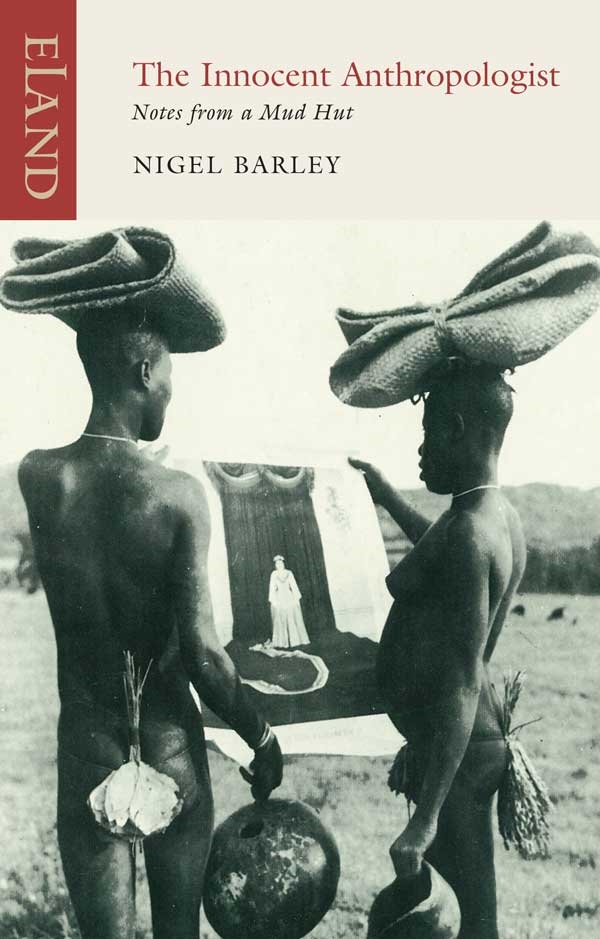
the innocent anthropologist coverThe Innocent Anthropologist: Notes from a Mud Hut [1983] by Nigel Barley – ★★★★

Barley’s “anthropological exploits” in Africa are honestly and humorously presented, even if the book’s more serious observations on the Dowayos should probably now be viewed with a grain of salt.

In the late 1970s, Nigel Barley went to North Cameroon to study the Dowayos, choosing most “ferocious” mountain tribe existing at that time. This is his debut non-fiction account of his travels and exploration in Africa as he embarks on his fieldwork. In this book, Barley is really an “innocent” anthropologist, an idealistic young man who is a bit ignorant about what to expect in the real world outside the academia. Barley tells us how he encountered the mind-boggling bureaucracy, got lost in “the vast range of loose kingship” in the country, overcame malaria, as well as survived a horror-trip to a local dentist, among his other stories. Barley’s style of writing is appealingly “laid-back”, and this concise book turns out to be quite engaging as a result. It may not be the book on the Dowayos, but part of its charm is that it is surprisingly honest and humorous. Continue reading “Travel Non-Fiction: “The Innocent Anthropologist”, & “Magic & Mystery in Tibet””