

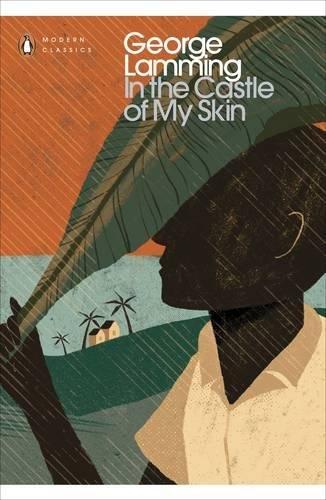
In the Castle of My Skin [1953] – ★★★1/2
G is a boy growing up in a fishing village in colonial Barbados in the 1930s. Living in poverty with only his mother, who is the sole provider, he spends his days causing mischief around the village with his friends: Bob, Trumper and Boy Blue. At the centre of this world is an English landlord who resides in a large brick house surrounded by a high wall. He represents the strict divide between the two different “worlds” of the village: G’s world of poverty, where people live in shacks, and the realm of “the Great” or white people, who live on clean, well-trimmed avenues patrolled by overseers. The days pass unnoticeably for the residents of the village, but trouble may soon be brewing as Mr Slime, a popular ex-schoolteacher, is gathering around himself a crowd and has revolutionary ideas on how to improve the lives of “small people”. There isn’t a single strong narrative thread in the story, but Lamming is still observant and captures poetically the rhythmic life of the village, from its bathhouses to its markets, dotting his story with references to the injustices stemming from colonialism. This is a compassionate, nostalgic account and a glimpse into another world.
The novel opens with two events: the narrator turns nine and rain showers descend upon the village. Rain showers mean flooding, and flooding means houses being submerged, or even washed away. In this uncertain environment, G still has a relatively carefree childhood. While their mothers spend their days gossiping, the boys (G, Bob, Trumper and Boy Blue) play around areas near the ocean and railway, gatecrash religious gatherings, and devise ways to trespass onto the landlord’s territory. Little by little, however, they start to grapple with their own identities on the island, and their place in it. The landlord’s mansion on the hill fascinates them, but they are also too aware of the strict hierarchy that governs their lives, with the Great (white people) being at the very top, calling the island of Barbados – “Little England”: “the obedient lived in the hope that the Great might not be offended, the uncertain in the fear that it might have been”/“the villagers had no power. They were weak in everything except their trust” [Lamming, Penguin Books, 1953/2017: 25, 68].
In school and in their history lessons, G, Bob, Trumper and Boy Blue are also taught about Queen Victoria, and the greatness of the monarchy and the Empire, but not about slavery: “It was too far back for anyone to worry about teaching it as history. That’s really why it wasn’t taught. It was too far back…And nobody knew where this slavery business took place. The teacher had simply said, not here, somewhere else. Probably it never happened at all” [Lamming, Penguin Books, 1953/2017: 58]. When in fact, Barbados was England’s first profitable, systematic chattel slave society and the blueprint for the British Caribbean sugar economy built entirely on the brutal forced labour of enslaved people from Africa.
The author contrasts the impressions of the youngsters who rebel against the religious and other authorities of the island with the narrative of the village’s oldest residents – an elderly couple who puts their own view forward as to what it is like to live in the small fishing community. The couple, who are devoted tenants of the landlord, is slowly coming to terms with their old age and approaching death, bemoaning the changing times: “If you’re young, you go out an’ drink an’ live as the rest live ‘cause ‘tis the only way to get away, but when you aint young you find after a time there ain’t nowhere to go”/“the riches o’ this life is as naught in the sight of my Savior” [Lamming, Penguin Books, 1953/2017: 81, 94]. They generally welcome the activities of Mr Slime because, if he is successful, people can finally own their own land, but are still too loyal to the landlord to take any action themselves.
🦜 Lamming writes with a certain degree of potency, and the story feels real, befitting an autobiographical account. However, his narrative is also in the mode of “expectation” throughout, and the descriptive elements outweigh the narrative ones. The story struggles to emerge from all the background descriptions and “life in the village” episodes. So, as a piece of fiction, it often reads rather stale, but as an account of the life in a village at that time, it is poetic and transportive.
This review is part of my Reading Around the World Challenge, a reading challenge for me to increase my list of “read” countries from 50 to 80; country this time: Barbados 🇧🇧
 Thoughts on Papyrus
This sounds excellent. I’d never heard of him so I looked him up and from this debut novel he went on to write other things including six novels and to have academic posts as a visiting professor. Thank you for introducing him to me:)
LikeLike