
I have recently returned from my trip to Paris, and thought I would talk about the three museums I managed to fit into my itinerary.
Grande Galerie de l’Évolution
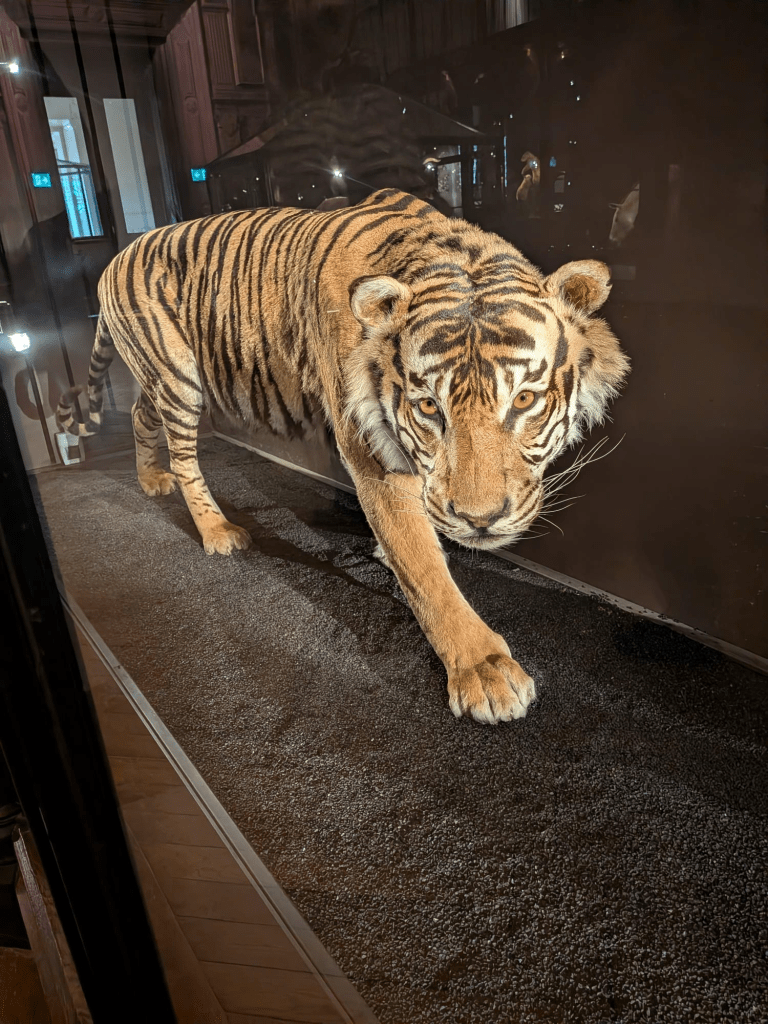
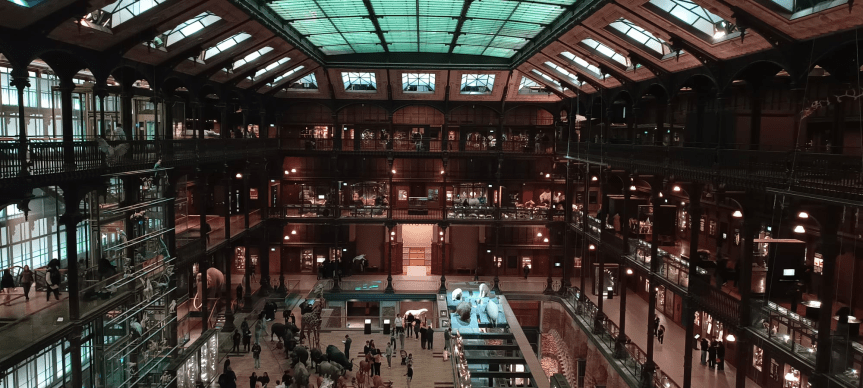
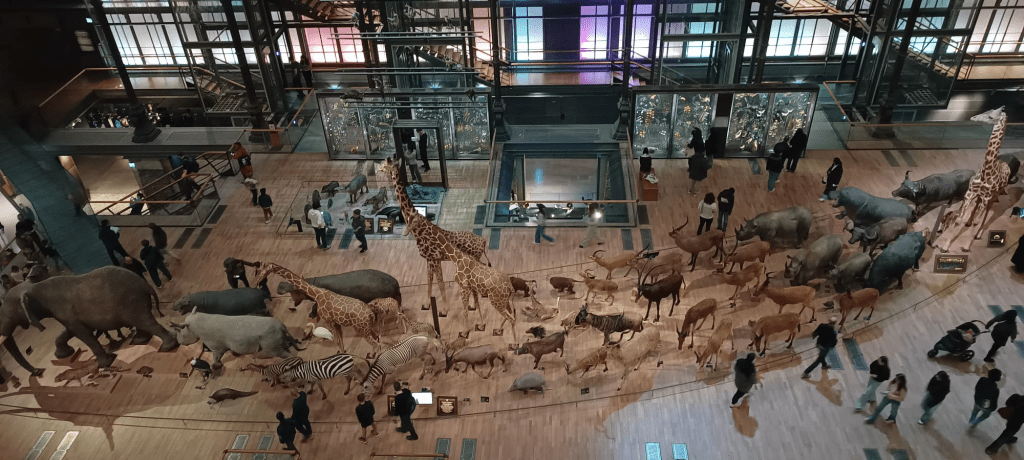
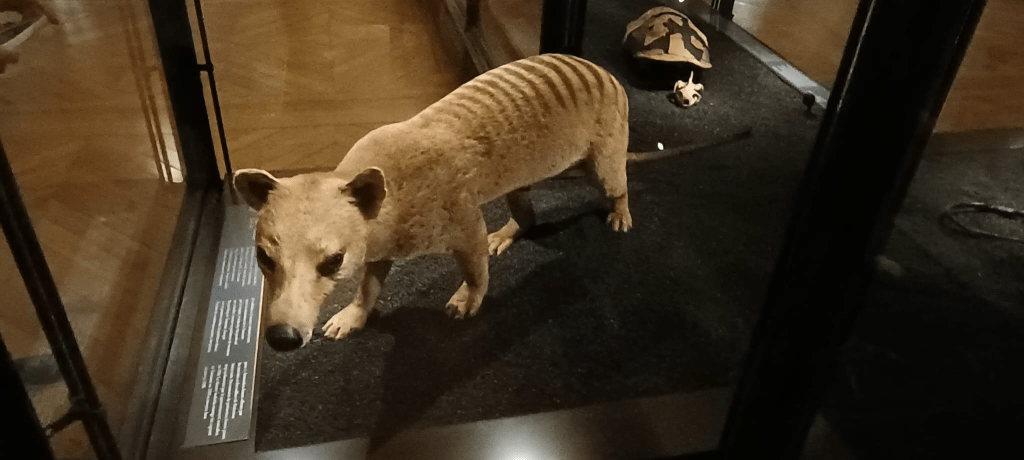
Situated inside the Jardin des Plantes, Paris’s botanical garden, the Gallery of Evolution has its roots in the seventeenth century France and was reopened in its present state in 1994. It is an exhibition across four expansive floors displaying 7.000 specimens categorised by the steps in evolution. The focus is on biodiversity, evolution of life, marine life, human inventions and humanity’s impact on the environment. Not to be missed is also the cabinet of extinct and disappearing species, where there are on display such extinct species as the thylacine or Tasmanian tiger, once native to Australia (land), Tasmania and New Guinea (see the picture below), and the quagga, an extinct subspecies of the plains zebra. I thought it was a lovely place with a modern feel, impressive immersive elements, such as natural sound effects (storm, insects sounds), and a well-curated collection.
Address: 36 Rue Geoffroy Saint-Hilaire, 75005 Paris.
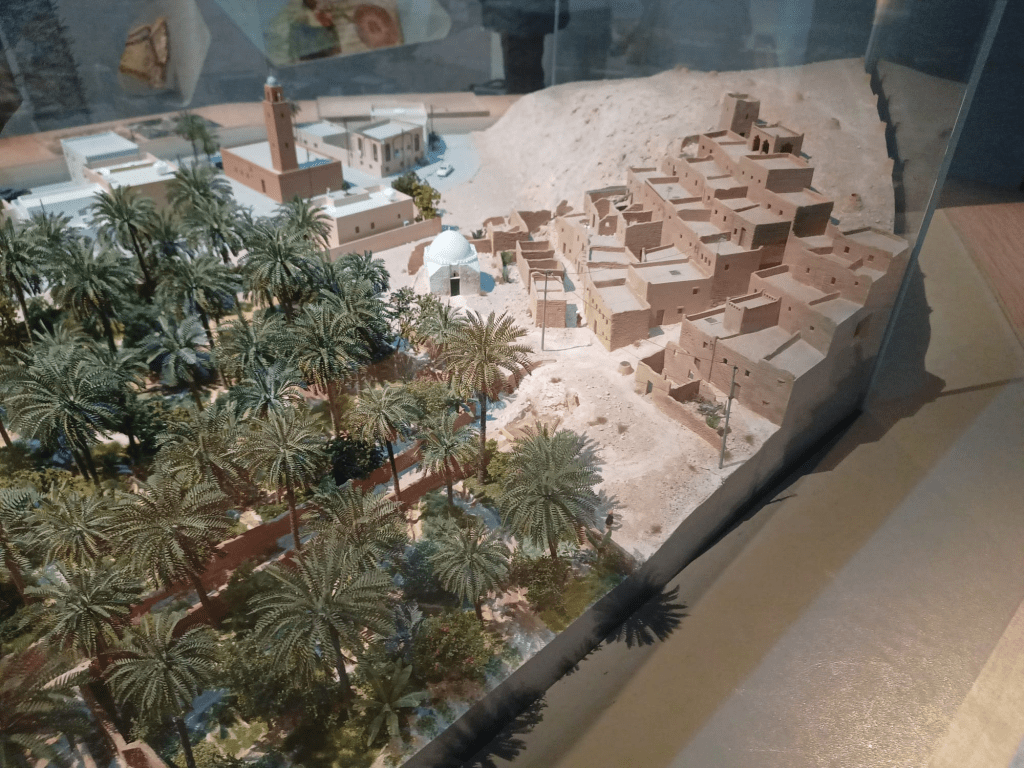
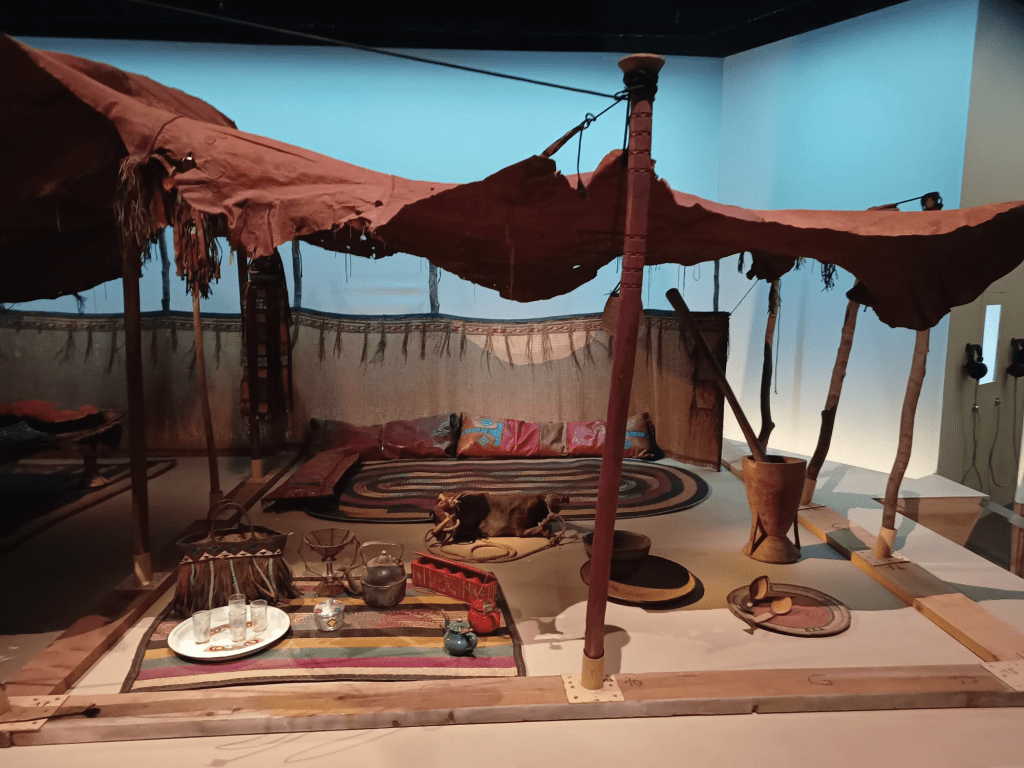
🐫 While I was there, I also visited the museum’s temporary Deserts exhibition, which was educational and fun. It tells the story of how animals and humans have adapted to living in one of the most extreme environments on the planet. There were stuffed specimens to view and interactive displays to engage with, and the exhibition covered many places, “from the iconic Sahara to the polar deserts”. New to me was the life and Sahara desert discoveries of French naturalist Théodore André Monod (1902-2000), who is credited with discovering the Asselar man, a 6.000-year-old skeleton, in 1927. A few of Monod’s personal possessions were on display, including his diary-sketch book.
Musée de l’Armée
This is the museum inside Les Invalides complex that traces military history from Louis XIV to the last stages of the Second World War.
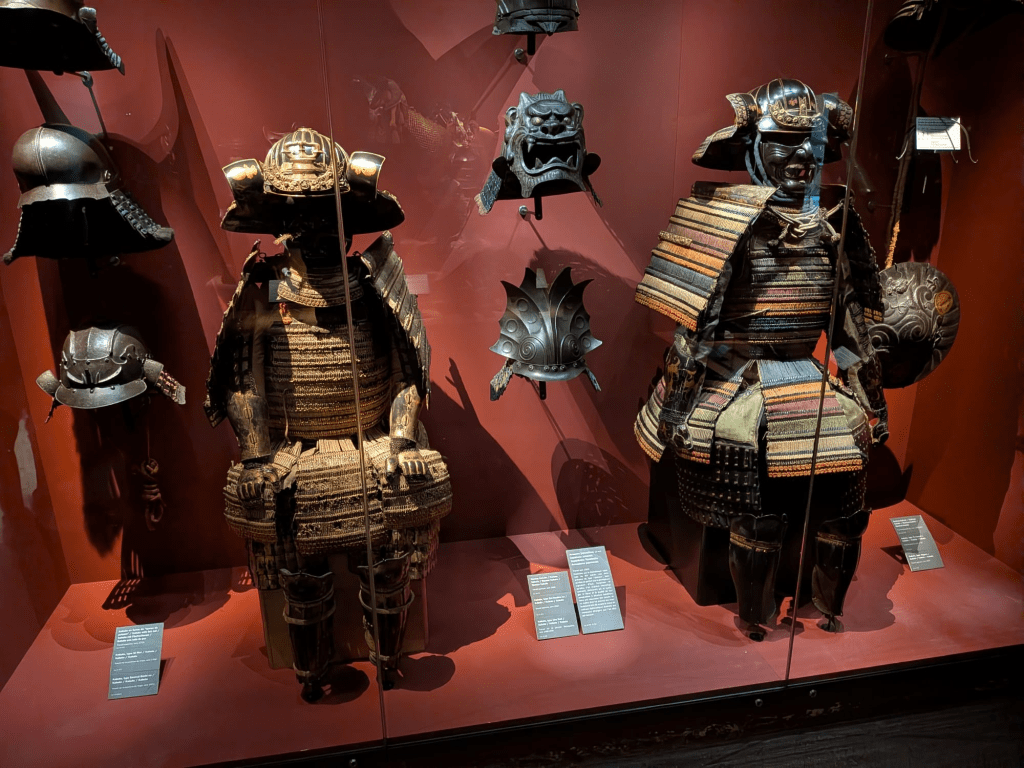
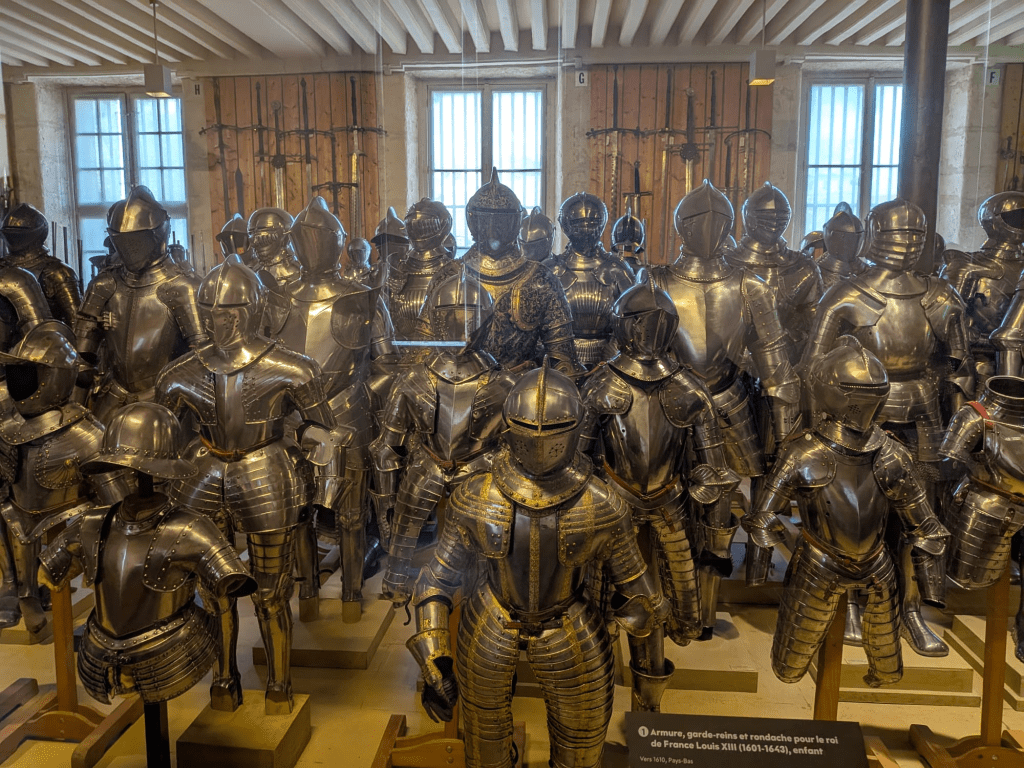
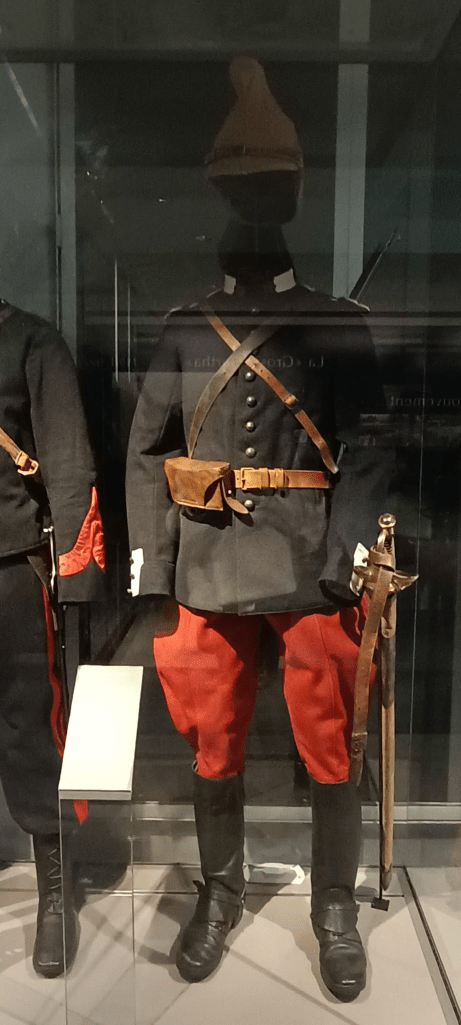
There was a big section dedicated to armoury, and one room displaying Japanese armour and weaponry, including various katana. I did not expect the sections of the museum dedicated to the Two World Wars to be so large. There are whole separate floors for the the First World War, the early years of the Second World War, and the years 1942/43 and 1944/45. Since I have recently finished Gabriel Chevallier’s passionate anti-war novel Fear, that focused on the First World War from the perspective of a French soldier, this section of the museum was of a particular interest to me. There were many objects on display from that period, including uniforms. To the right is the characteristic 1914 French uniform featuring pantalon rouge or red trousers that contributed to high casualties for the army because it can be spotted easily. From 1915 onwards, the French army wore more subdued colours and had better camouflage.
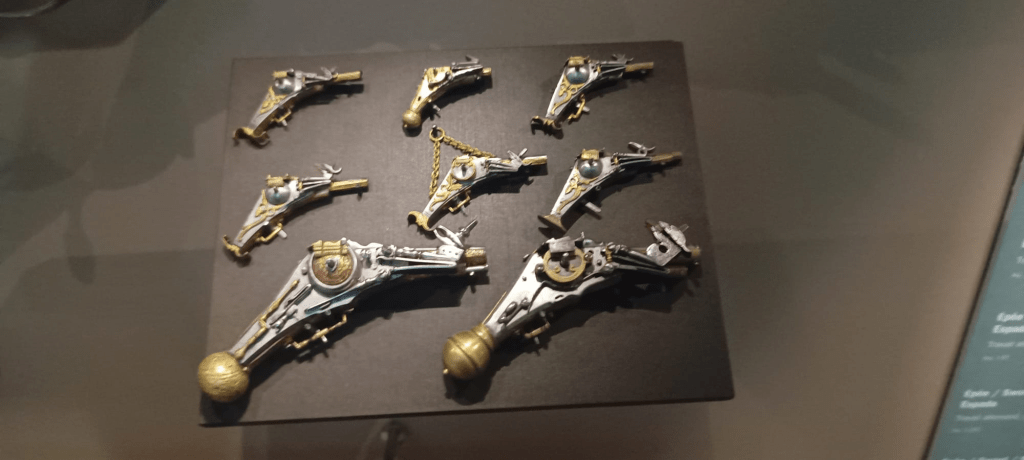
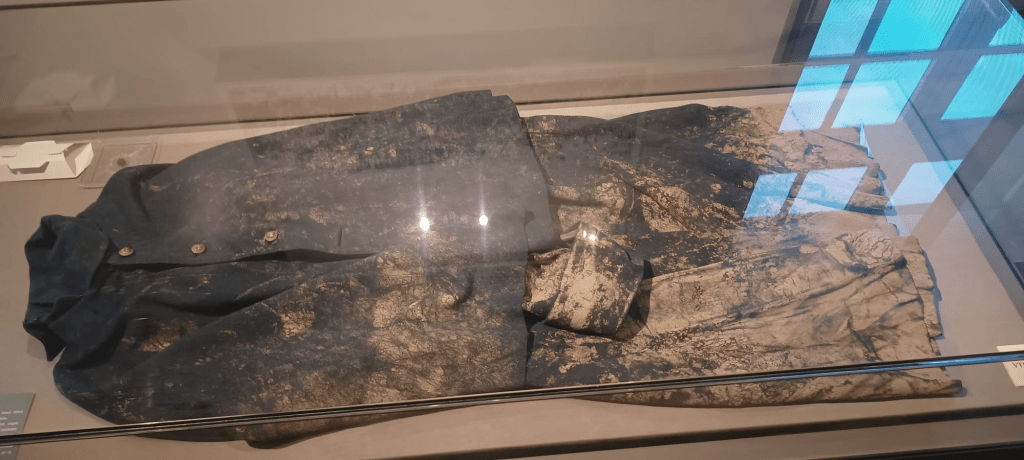
The image above is the sixteenth century miniature (pocket) wheel-lock pistols in the German style. These were extensively decorated, with embedded clock-like mechanics. Above to the right is the coat covered in mud once belonging to French Lieutenant Henri Gastaldi, who died from his wounds in 1915. The state of the uniform gives some idea of the horrors that transpired in the trenches of the First World War. The images just below are the Japanese samurai armour of the seventeenth century and the armour from the time of Louis XIII (1601-1643).
Address: Hotel National des Invalides, 129 Rue de Grenelle, 75007 Paris.
🕊️ Next to the military history collection, there is also Le Musée de l’Ordre de la Libération, with over 2.000 original objects and documents that focus on such topics as deportations and internal resistance. Overall, the museum was a great, informative experience.
Musée du quai Branly
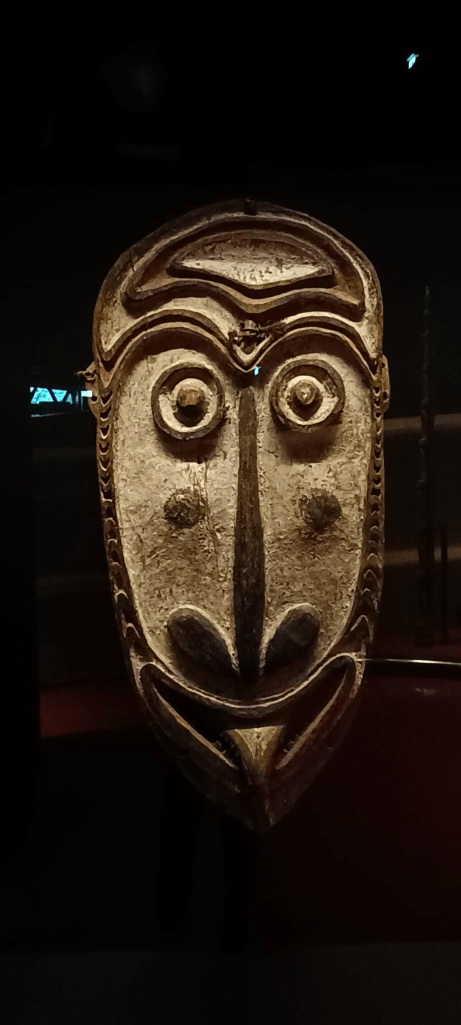
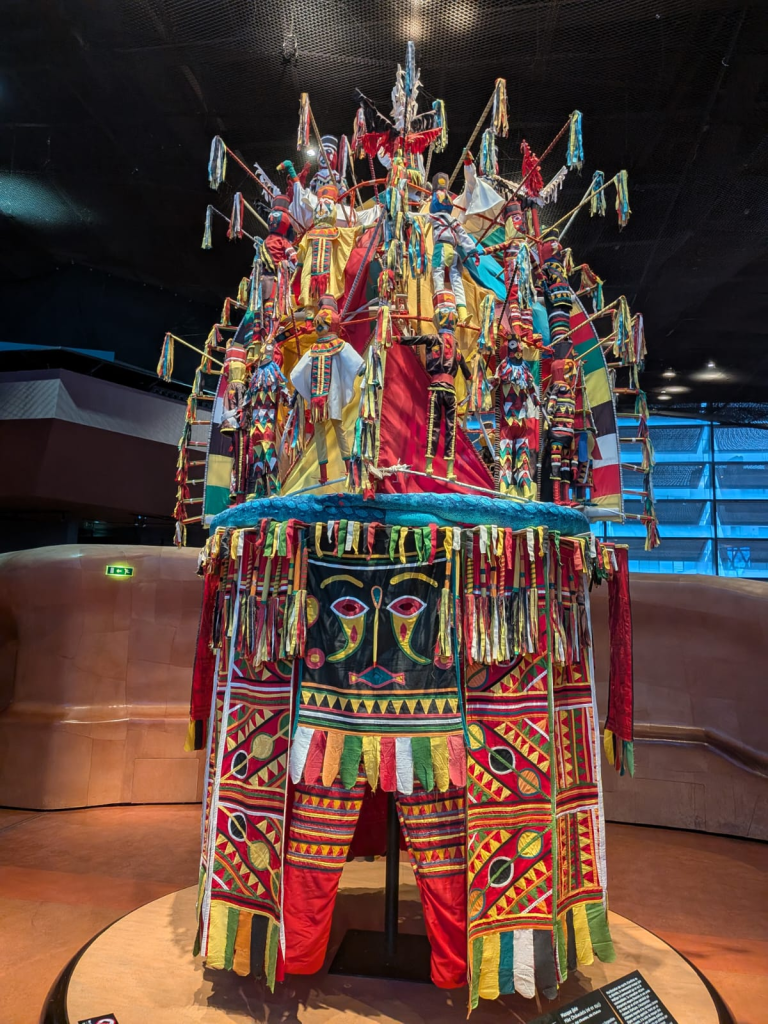
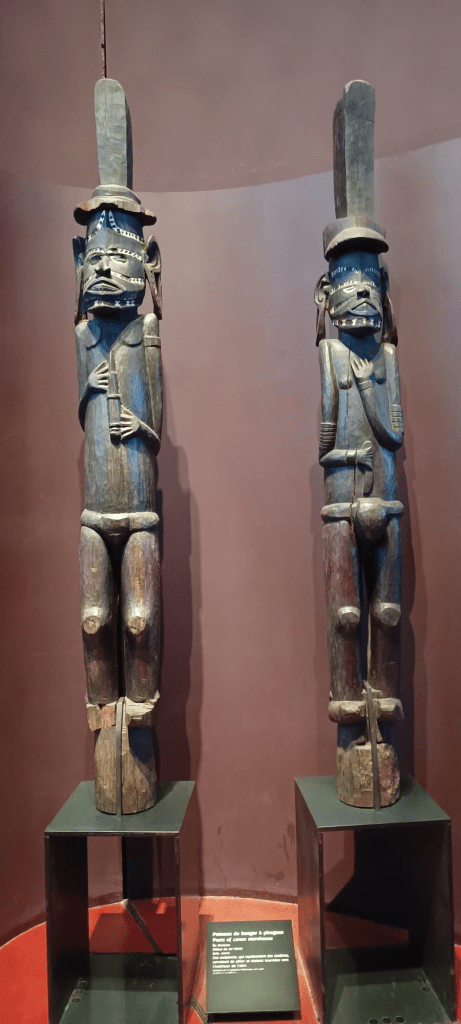
This is an anthropological museum that showcases indigenous artefacts. It is divided into five sections: Oceania, Asia, North Africa/Middle East, Africa and the Americas, and the Main Collection floor exhibits around 3.000 works (though I understand that the museum holds more than 300.000 items overall). Some of the examples of pieces on display are the Moai sculpture (early nineteenth century) from Oceania, the Inca figurine (sixteenth century) from the Americas, and demon king exorcism mask (early twentieth century) from Asia. For me, Oceania and the Americas were the most fascinating sections. The image below is a mask from the Chambri tribe of Papua New Guinea. They are known for their so-called “Crocodile” initiation ritual whereby young men are transitioning to adulthood through learning oral histories and songs, and creating permanent patterns on their skin that resemble crocodile scales. Next to it is the image of a mask construction used in the Ijele Masquerade of the Igbo people of Nigeria. The mask has upper and lower levels, and marks both festive and solemn occasions. The final image are wooden ancestral sculptures from the Solomon Islands used by the Roviana people and found in canoe storehouses.
I found the museum an exciting place to be, and relatively educational, but I also honestly thought that it could have been brighter, and better planned and organised, with more signs, guidance and partitions between the different geographical sections provided. Many exhibits would also have benefited from more explanations.
Address: 37 Quai Branly, 75007 Paris.
⚱️The museum is a big complex, and on the premises there are also a rose garden, a restaurant, a café, an open air theatre, a media library, and a large souvenir shop. For the London equivalent of this museum, check out my post A Trip to London’s Anthropological Museum.
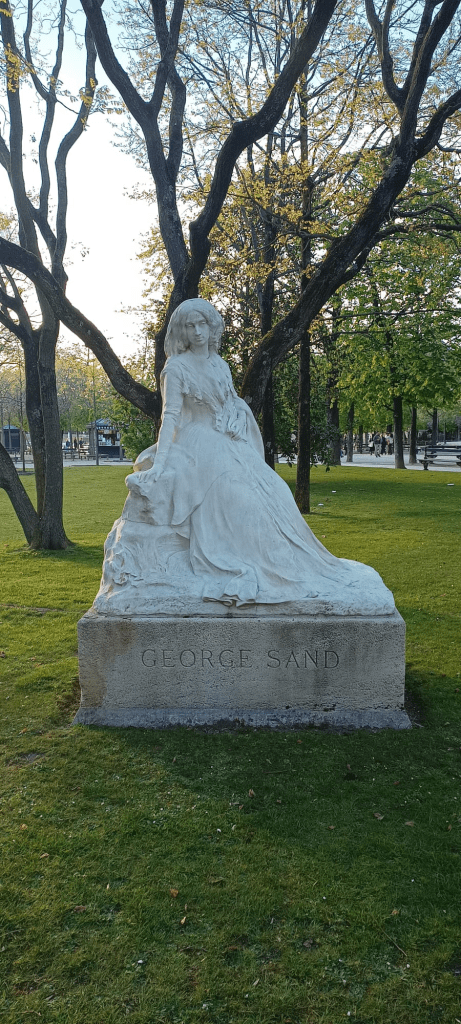
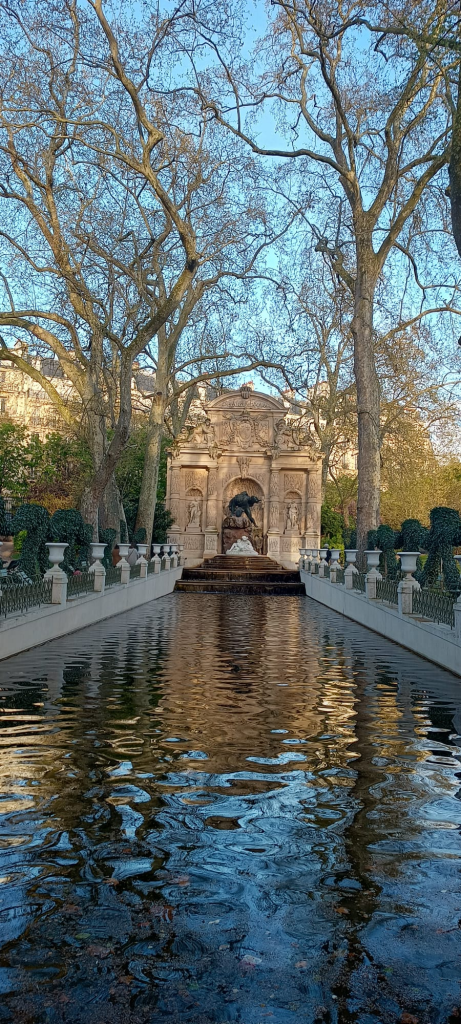
Finally, I spent quite some time at the Luxembourg Garden (Jardin du Luxembourg), something that I have always wanted to do not least because its origin traces back to 1612 and Marie de’ Medici, who wanted to build something in Paris that would remind of the Palazzo Pitti and the Boboli Gardens of her native Florence. The Garden features the Medici Fountain (see the photo below), and I also found the statue of novelist George Sand (1804-1876).
 Thoughts on Papyrus
Fascinating! Thanks for sharing, I love museums and I haven’t been to these ones in Paris.
LikeLike