The novels of Charles Dickens are characterised by gripping plots, complex characters, and wondrous descriptions. But, what are some of the contemporary authors who also tried approaching their books in a Dickensian mode? Below are ten great books by contemporary authors who were either directly inspired by Dickens, imitating his plot structure or tone, or wrote their books having a truly Dickensian ambition.


The Luminaries [2013] by Eleanor Catton – In this highly ambitious, sophisticated, atmospheric and beautifully-written novel, Catton presents through an astrological chart mysterious events, including a disappearance and a possible murder, happening in Hokitika, New Zealand in the 19th century. Even Dickens himself never thought of doing something that eccentric with a book structure.
A Fine Balance [1995] by Rohinton Mistry – This book spins a powerful, heart-wrenching tale of four individuals whose lives intersect in the time of political and social upheaval in India in the 1970s. Recalling Dickens can feel almost an understatement to what Mistry really tried to achieve in this 600-page epic.
Jonathan Strange & Mr Norrell [2004] by Susanna Clarke – “Dickens meets Harry Potter” is the best way to describe this ambitious alternative history fantasy that is about friendship between two very different magicians living in the 19th century England. Dickensian through and through, especially in its structure, characterisation, and language, it is probably the best fantasy novel I have ever read.
The Goldfinch [2013] by Donna Tartt – Since Tartt is such a huge admirer of Charles Dickens, it is no wonder that her books remind us of the work of the great British author. In this bildungsroman, Theodore Decker is our modern Oliver Twist, and the story revolves around Fabritius’s painting The Goldfinch.
Jack Maggs [1997] by Peter Carey – An obvious reworking of Great Expectations, this novel tells of Maggs (Magwitch)’s quest to find his son Henry Phipps (Pip) in the 19th century London. The class collision and the corrupting power of money are just some of the themes in common with Dickens’s creations.
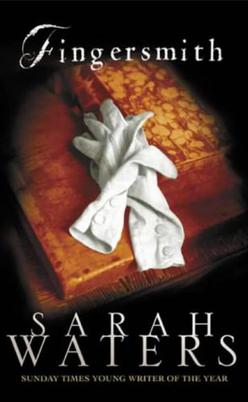
Fingersmith [2002] by Sarah Waters – Set in the Victorian era, Fingersmith tells of orphan Sue Trinder who attempts to become a maid to gentlewoman Maud Lilly through the help of one thief. With its clever structure that features class conflict, old mysterious house and promises of riches to come for the downtrodden, Fingersmith is that novel from a contemporary writer that most evidently captures the Dickensian spirit.
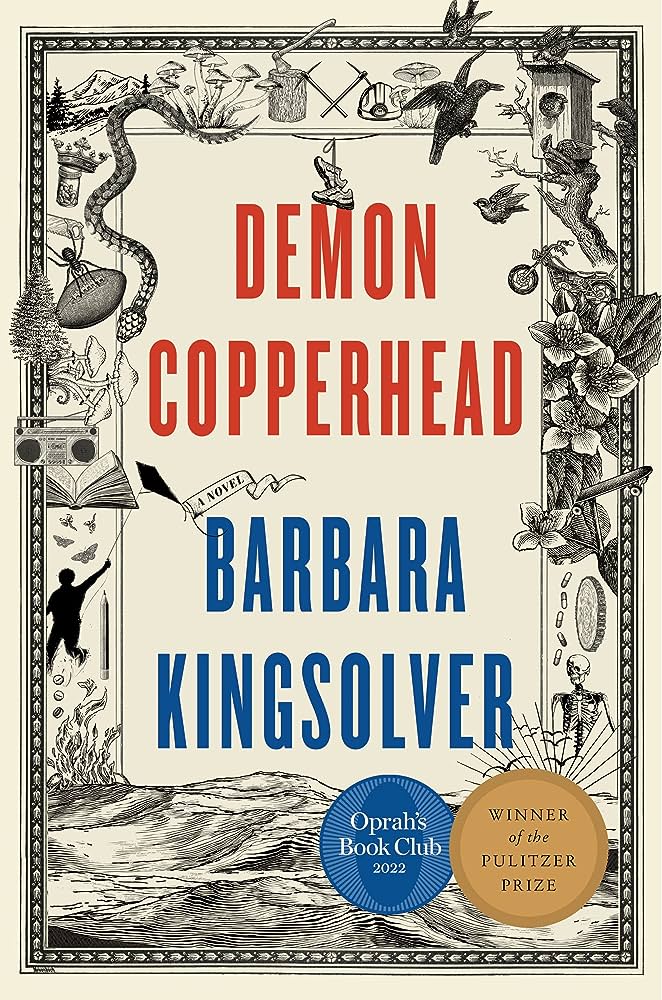
Demon Copperhead [2022] by Barbara Kingsolver – For the David Copperfield admirers, Demon Copperhead transports readers to the Appalachian mountains of Virginia and to the life of Demon, a boy born into an impoverished family. Kingsolver (The Poisonwood Bible)‘s vivid tale of childhood hardship shines with a strong first-person narration.
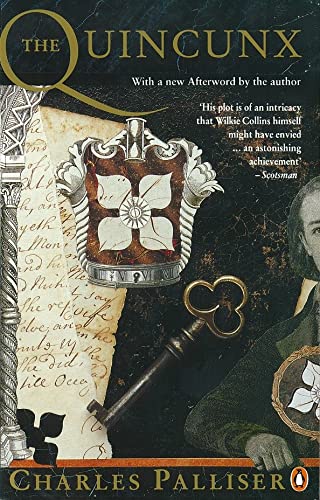
The Quincunx [1989] by Charles Palliser – “I learned that you didn’t have to write a 21st-century novel if you didn’t want to; you could write a 19th-century one.” That was what Susanna Clarke learnt from international bestseller The Quincunx, and so she wrote Jonathan Strange – we are all very glad she did. This is a mammoth mystery debut novel that echoes the works of Charles Dickens throughout, from Great Expectations and Little Dorrit, to The Pickwick Papers and Oliver Twist.
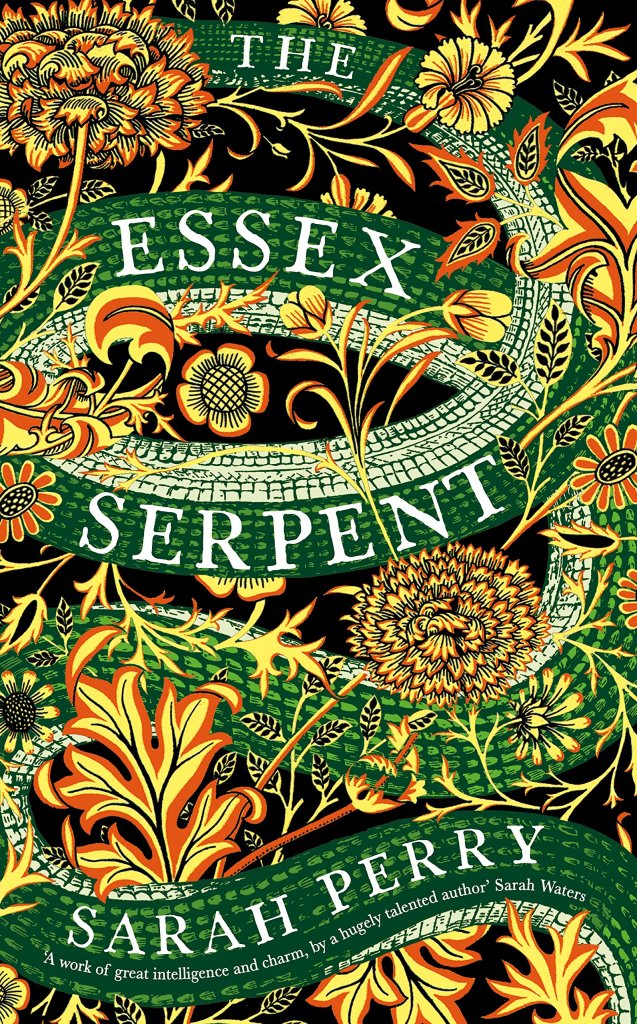
The Essex Serpent [2016] by Sarah Perry – I found Perry’s language and narrative construction too beautiful to leave this novel off the list. Like many Charles Dickens books, The Essex Serpent is part mystery, part an observation on the 19th century life in England, and part an emotional tale of the clash between duty and love.
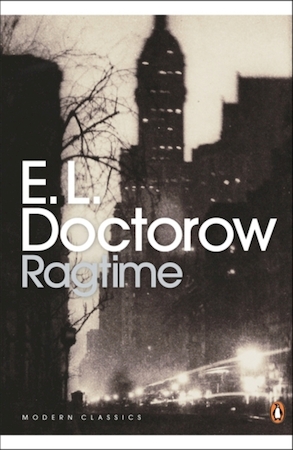
Ragtime [1975] by E. L. Doctorow – Doctorow’s novels are often compared to the works of Dickens, and the author was even once named America’s “very own Charles Dickens”. Ragtime is set in New York in the early 20th century, presenting one rich family and a kaleidoscopic vision of America before the World War I.
The above novels are immersive Dickensian tomes, and winter in general is the perfect time to read Charles Dickens. “Dickens, it may truly be said, is Christmas,” said once literature scholar V.H. Allemandy. Whether picking up Dombey and Son for the first time on a frosty afternoon or tucking in with A Christmas Carol on a snowy evening, good times ahead are guaranteed!☃️
 Thoughts on Papyrus
Thanks for the recommendations! Look forward to reading over the winter holidays.
LikeLiked by 1 person
The only one of these I’ve read is Ragtime, which I enjoyed.
LikeLiked by 2 people
Loosely interpreted, you’ve just done part of my marketing research for me – so thanks.
Modern readers don’t always have the patience to read, say, Jane Eyre for pleasure – but those who do will find there are even now being produced the same kind of complex, multilayered, connected novels they might enjoy, and not just from the traditionally published authors. It may be even more possible to create such a ‘universe’ – as our SFF fellow writers do – if you are indie, partly because you don’t have to immediately sell enough copies to keep multinational corporate executives in Manhattan office space.
That world has put itself on one track – the hard-pushed instant ‘bestseller’.
I’ll leave it to readers to state if they are actually getting water from that rock.
LikeLiked by 1 person
I’m pleased to help out, then! And, yes, books are being produced with intricate stories – one just needs to search a bit and dig deeper for them, I guess. It is interesting that you mentioned Jane Eyre as the one requiring patience. I would think it should require the least amount to derive pleasure, especially in comparison to other much more difficult and less accessible classics. If Bronte or maybe even Austen’s works now require effort, it horrifies me to think how the world would fare with others.
Oh, yes, an “instant best-seller”… I hope for discerning readers it became a bit of a dirty word, like “Hollywood box-office” success, something that hardly, rarely equates with a truly enduring quality anymore, or actually with any kind of quality for that matter. Yes, money and “this hour”’s fame. My comparisons are rather crude, I know, but isn’t like a piece of news on the BBC website, really – sure, millions of people do read it every day, but would they print it, put it on the wall and re-read it voraciously ten years from now? The only positive quality seems to be that it is “new” and “everybody reads it”. No to few people wanted to hear Beethoven’s later work or see van Gogh paintings in their lifetime, and where do people flock to now, in the 21st century, paying extraordinary sums for an entrance? That’s one topsy-turvy world.
LikeLike
Let me know if you’d like an electronic ARC of the first book in my mainstream trilogy – no obligation. This is exactly my bailiwick.
LikeLiked by 1 person
These books all look amazing! I’m especially interested in The Goldfinch. Have had excellent things about it and have it on my list!
LikeLiked by 1 person
I do prefer Tartt’s two other books over it, but it is still great! I hope you enjoy it!
LikeLiked by 1 person
I’ll definitely be checking some of these out!
LikeLiked by 1 person
Have heard*
LikeLike
This was interesting to read as somebody who loathes Dickens but has enjoyed a lot of these novels! I was pleasantly surprised by Demon Copperhead and loved The Luminaries and Fingersmith.
LikeLiked by 1 person
That’s interesting that you loathe Dickens, but loved most of these. These novelists definitely brought much of their own to their stories, even Dickens’s influence is still felt.
LikeLiked by 1 person
I really enjoyed the Susanna Clarke (and the TV adaptation too) and would read anything new by her. I was briefly tempted by The Quincunx having known the term from Browne’s The Garden of Cyrus, but never acquired a copy – I should really remedy that. And I’m ashamed to say I still haven’t read the Sarah Perry even though my partner pinched my copy off me before I got to it!
LikeLiked by 1 person
Yes, Jonathan Strange is brilliant, isn’t it? Perhaps it is the strongest tribute here being so similar in scope, language, structure (episodic format) and character presentation to Dickens’s, which is also a bit paradoxical, since hers is the only one which is a fantasy here and does not focus on the plight of London’s poorest. I am still waiting for her continuation to the story. I think Clarke did say she started the Jonathan Strange sequel but the pressure and her illness meant she did not progress very far. I do so wish she would write it one day.
I do recommend The Quincunx. It is a very long book, but worth it.
LikeLiked by 1 person
I liked her short stories in the JS&MN universe, The Ladies of Grace Adieu, which she wrote before the novel but which I believe Gaiman encouraged her to pursue. And of course Piranesi was an instant modern classic. I must push myself back to reading Dickens though – but maybe after quincuncial matters…
LikeLiked by 1 person
sorry about that!
This is such a great list, the only one I’ve read is Fingersmith and is perfect winter reading!
LikeLiked by 1 person
No problem, and thanks!
LikeLiked by 1 person
A wonderful list, I’ve very much enjoyed Jonathan Strange & Mr Norrell, The Essex Serpent, and The Quincunx, but somehow never got on with The Goldfinch. Another author I’d add is Dorothy Dunnett who is highly thought of by other writers especially those who write good historical fiction. Best known are her two series, the Lymond Chronicles which starts with The Game of Kings, and the House of Niccolò series which starts with Niccolò Rising. Very addictive books.
LikeLiked by 1 person
Thank you for your comment and the Dorothy Dunnett recommendation! I think Niccolò Rising would appeal to me more than The Game of Kings, so I added that one to read for now. Exciting stuff!
LikeLike
Lovely to see so many of my favourite authors and books.
LikeLiked by 1 person
I have only read Demon Copperhead from this list. I have a copy of A Fine Balance, Fingersmith, The Goldfinch and The Luminaries so I hope to get to them soon. I’ll find copies of the rest. Whew! Thanks for this wonderful list. 🙂
LikeLiked by 1 person
Oh, then, you have the most amazing and exciting reading times ahead! Thanks for stopping by!
LikeLike