

Some of the world’s most powerful stories concern a scenario whereby a single, often eccentric, lonely or misunderstood, individual is pinned against a society that is often too uncaring, rigid or self-interested to accommodate or acknowledge their unique spirit, character or life outlook. These fictional characters often find themselves at sea with numerous societal expectations, rules or people around them, striving for understanding and meaning, while also perhaps battling prejudice. The list below comprises novels, both contemporary and classic, about such characters who are all trying to understand how they fit into this thing called Life, and why their outlook or personality appears so different from that of others. The surprising conclusion from the list below is that many of these stories are semi-autobiographical, dictated by the authors’ own real-life experiences.
Pnin (1957) by Vladimir Nabokov
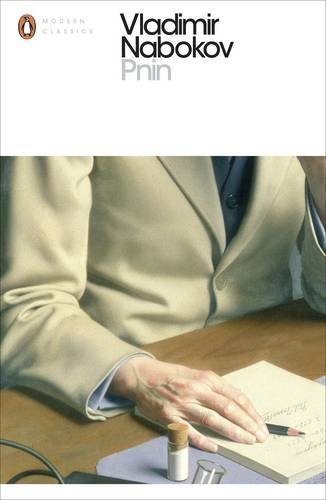
One eccentric émigré professor finds himself increasingly out of depth in his own classroom and his new country of residence – this is the premise of Vladimir Nabokov’s witty novella, which he wrote relying on his own experience of teaching Russian literature at Cornell University in the 1950s. In an episodic fashion, the story presents the character of Professor Timofey Pavlovich Pnin in various situations as he tries to navigate the academic life of one university in the United States – Waindell College (a fictitious establishment). Professor Pnin confronts a language barrier, culture clash, and painful memories from his past as he tries to make sense of the increasingly-confusing-to-him life around him. Pnin might not have achieved its mainstream popularity the way Nabokov’s novel Lolita (1957) had, but it is still as sharp-witted and as brilliantly told. Nabokov’s observational powers in fiction were second to one, and they are on full display here, in this bitter-sweet story about trying to fit into a new environment.
Martin Eden (1909) by Jack London

In this story, Martin Eden is a poor and uneducated sailor who feels out of place at the prosperous and cultured home of one middle class family, the Morses. The situation is that he set a goal of becoming a writer and got acquainted with one beautiful girl named Ruth Morse from one well-to-do family. His infatuation with the girl further strengthened his resolve to join the ranks of the bourgeois elite. However, nothing is as easy as it sounds. Penned by London when he was going through a disheartening period in his life, making a voyage through the South Pacific, but already after the success of The Seal-Wolf and White Fang, Martin Eden shines with a penetrating study of an outsider, and is a fine classic on artistic struggles and the ultimate disillusionment.
The Bell Jar (1963) by Sylvia Plath
“The silence depressed me. It wasn’t the silence of silence. It was my own silence.”
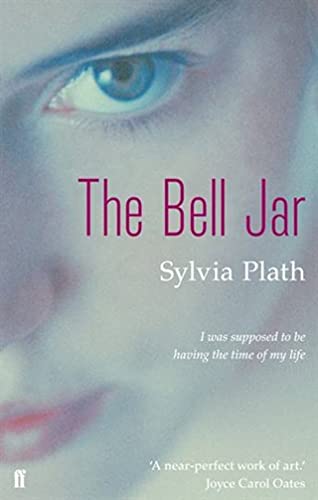
This is another semi-autobiographical novel which never seems to lose either its potency or relevance as years roll by. The only novel of American poet and writer Sylvia Plath, Bell Jar tells of Esther Greenwood, a girl who was awarded a journalistic internship at a prominent magazine in New York City. Her attempts to fit into her new environment do not go smoothly as Esther notices that her outlook on life is different from those around her. Initially published under a pseudonym “Victoria Lucas”, the novel is a powerful portrayal of copying with depression and societal expectations. A modern classic does not get better than this.
Jude the Obscure (1895) by Thomas Hardy

Thomas Hardy’s classic novel is about the thwarting of individual spirit by societal prejudice and expectations. In this story, Jude Fawley is a stonemason from humble origins who desires to pursue academic studies. However, his societal position and then a series of bad decisions as he forges relationship with two women, one farmer’s sly daughter Arabella Donn and his freedom-loving cousin Sue Bridehead, get the better of him. Hardy’s compassionate novel has a lot to say about unbridgeable class boundaries and the relationship between men and women at that time. It is a rather sorrowful tale of kindness and intelligence being at the mercy of one self-interested and cunning society, but also a masterful, beautiful evocation of one unrealised human potential.
A Little Life (2015) by Hanya Yanagihara
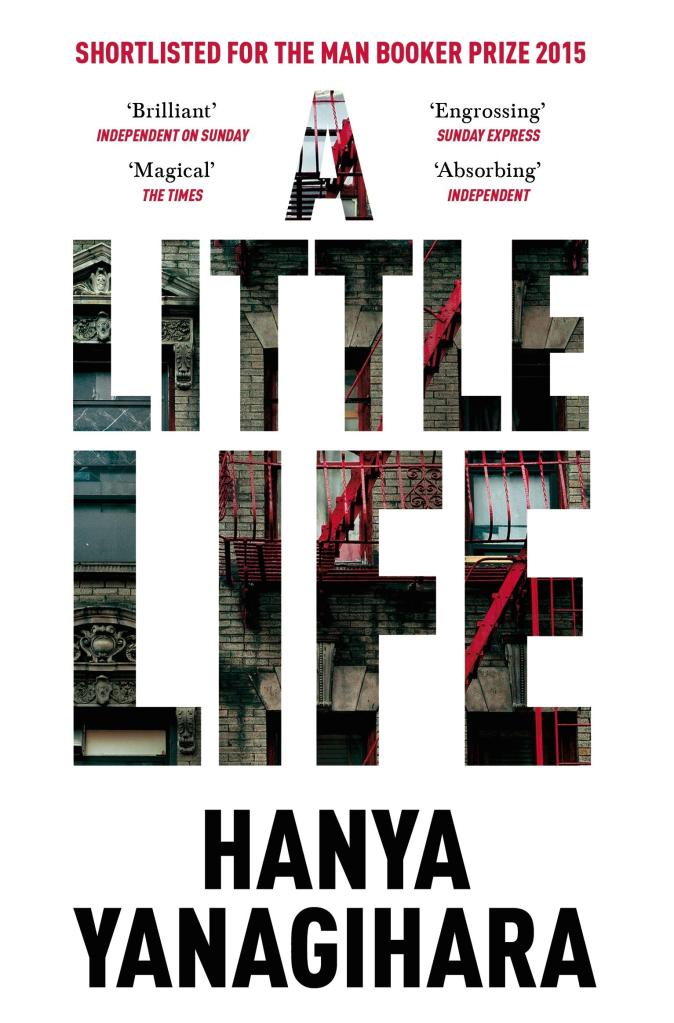
Hanya Yanagihara once described her second book as a “fairy tale set in a contemporary time and place”, but if it is, then it also has a hefty dose of true nightmare thrown in. The story tells of four friends: aspiring actor Willem, carefree artist JB, disillusioned architect Malcolm and brilliant lawyer Jude, who all try to realise their dreams in New York City, and it is Jude who becomes the focus of the story as his traumatic past soon takes over his whole life and the majority of the book’s narrative. Through her brilliantly-penned narrative, Yanagihara makes a number of powerful points about the isolation, shame and loneliness of someone battling shame and emotional pain connected to their past, and how our increasingly inter-connected world would be quite incapable of coming to aid. A Little Life is a touching tribute to the power, loyalty and sacrifices of friendship and love, and is as disturbing as it is unputdownable.
Steppenwolf (1927/29) by Hermann Hesse

This is my favourite book by Hermann Hesse, even considering his magnum opus The Glass Bead Game and popular Siddhartha. Steppenwolf details the journey of self-discovery of one intellectual man who thinks he is half-wolf. Harry Haller is reclusive, cautious and suspicious, but his mindset may be about to change when he meets free-spirited woman Hermine. Hesse considered this novel misunderstood by his readers because they focused on all the misanthropy stemming from the main character, rather than on any attempts by the author to show transcendence and redemption. One just has to read it to find out. And, for those who are interested in Hesse’s work, I also highly recommend his collection of fairy tales – The Fairy Tales of Hermann Hesse (1919/95).
No Longer Human (1948/58) by Osamu Dazai

I would confidently say that Osamu Dazai (1909 – 1948) was one of the greatest Japanese existentialist writers. He wrote many short stories and, apart from No Longer Human, may also be now known in the English-speaking world for his novel The Setting Sun (1947/56). His semi-autobiographical novel No Longer Human is about a narrator’s increasing alienation and loneliness in the world that is becoming meaningless and foreign to him. Ōba Yōzō is twenty-seven, misanthropic and suffers from social anxiety. Not only he finds it hard to fit in with others, but he also takes active steps to emphasise his individuality, difference, indifference and, finally, disgust. This haunting novel of great insights was also adapted to film (2009), manga (2009) and anime (2019).
Stoner (1965) by John Williams
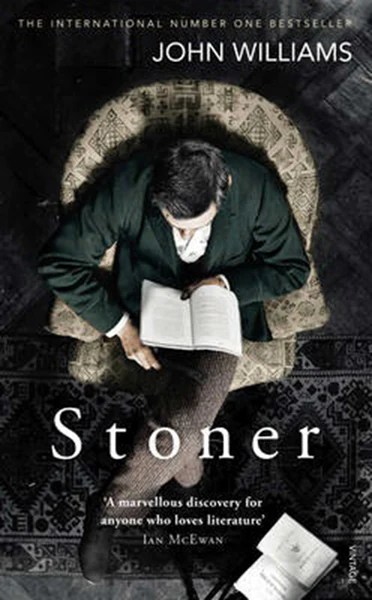
Stoner has had a long path to success – it became a best-seller only some fifty years after the writer first wrote to his agent about the book. However, the wait is not the reflection of the book’s quality, and this American novel is a great, even if heart-breaking read. It tells the story of a university professor named William Stoner as he finds his way through life, encountering many disappointments along the way. Perhaps, not exactly justly or accurately, but I like to compare this novel with the books of Willa Cather (1873 – 1947), another prominent American author. As in her works, Williams dramatises his material in Stoner so quietly, yet powerfully, so unpretentiously and unassumingly, and yet, movingly and convincingly, that there can be nothing but praise for this modern classic.
Convenience Store Woman (2016/18) by Sayaka Murata

Sayaka Murata strikes at the very heart of one important social issue of Japan when she presents in her story one unassuming young woman who works in one supermarket as a customer assistant. Murata’s heroine Keiko is 36, single and “going nowhere”, but she is happy and has no problem with that, and it is the others in her life that find this situation quite unacceptable. It appears that Keiko stands out from the crowd by simply being who she is most comfortably being – her own person. This short novella may appear like a quick and light read, but it packs a powerful punch as the author makes many observations in her story about the current position of women in Japan, the loss of individuality, and the dangers of discrimination and societal expectations. The book is also the winner of the prestigious Akutagawa Prize, an award that was previously given to such renowned Japanese authors as Shūsaku Endō (Silence), Kōbō Abe (The Woman in the Dunes) and Yasushi Inoue (The Hunting Gun).
A Man Called Ove (2012/14) by Fredrik Backman

“You only need one ray of light to chase all the shadows away.”
It seems impossible to make a bestseller out of a book about one grumpy 59-year old widower, but Swedish writer Fredrik Backman did it. After losing his wife and job, Ove should be a man on the mission to make sense of his life and try to turn it around, but it is not as simple as it looks, especially when his new next-door neighbours seem to just know how to make Ove’s life even more unbearable than it already is. Backman slowly unveils his character and we see his core, and one of the book messages is that a person does not just exist in a vacuum – there are stories behind their character and actions. This is a touching novel full of surprises and discoveries about life.
 Thoughts on Papyrus
A Man Called Ove is one of my favorite contemporary novels.
LikeLiked by 2 people
I also like the film, but appalled that Hollywood decided to remake!
LikeLiked by 1 person
I didn’t know that there was a Hollywood version of the film.
LikeLiked by 1 person
Yes, with Tom Hanks playing “Otto” instead of Ove. It is good, but hard to dislike Tom Hanks in the beginning of the film because… who can dislike Tom Hanks?
LikeLiked by 2 people
You make a good point about Tom Hanks.
LikeLiked by 1 person
Oh, yes (2022) and with Tom Hanks, of all the people.
LikeLiked by 1 person
Stranger things have happened in Hollywoodland, I suppose. 🙂
LikeLiked by 1 person
Wow it’s rare that books which influenced me as a youth crop up in these lists but I did really enjoy reading Steppenwolfe, Jude the Obscure and The Bell Jar as a teenager. Or maybe not necessarily enjoy it given the dark theme but it left an impact. Thanks for the reviews!
LikeLiked by 1 person
Steppenwolf and The Bell Jar were my teenage reads too, but I regret that I did come to Jude rather late.
LikeLiked by 1 person
Terrific post and premise for a post, Diana! I’ve read six of the 10 books you listed, and agree with your take on all six. I think “Martin Eden” is the best novel Jack London wrote, and he wrote some great ones. It’s of course a bit semi-autobiographical — Martin Eden’s initials are “me” for a reason. 🙂
LikeLiked by 2 people
Thank you, Dave! I am so glad to hear that you think so of Martin Eden. I agree. Incidentally, as you may know, the book is also mentioned in Pnin, which is curious.
LikeLiked by 1 person
What a great post! I’ve only read The Bell Jar but will add others to my list especially I think A man called Ove
LikeLiked by 1 person
Thanks! Yes, all of them are super-great books.
LikeLiked by 1 person
I’ve read the Murata and the Hesse novels and got much from them, Diana, though in different ways, and have a copy of the Plath waiting. I remember reading chunks of Colin Wilson’s The Outsider, a study of loners in fiction including Camus’s L’Étranger (which I also read at the time).
There’s certainly a bleak romanticism about much of this kind of literature, making their protagonists tragic and misunderstood heroes which I think certainly appealed to me as a youngster – and maybe still does?!
LikeLiked by 1 person
Very interesting, I wasn’t aware of Wilson’s book, I may check it out asap, thanks for pointing me to it. And yes, who did not go through some form of “existentialism” in their teenage years? I have realised it is still my favourite theme in books.
LikeLiked by 1 person
Oh, I do love a good misfit! I loved Convenience Store Woman and A Little Life. (Jude, not so much…)
LikeLiked by 1 person
There is nothing like a misfit in a book, isn’t it? I do agree about Jude.
LikeLiked by 1 person
What a perfect topic for an interesting reading list! Especially as writers so often see themselves as misfits.
LikeLiked by 2 people
Yes, I am surprised how many semi-autobiographical novels ended up on this list, and even regarding those that are not, I am sure their authors were not unfamiliar with some of the themes in their fiction, including the dichotomy between the intellectual and material worlds and the striving for recognition or understanding.
LikeLiked by 1 person
“Notes from Underground ” by Fyodor Dostoyevsky also fits the theme! It is much more focused on the prejudice and bitterness of the intellectual than of the world around him.
LikeLiked by 1 person
A great addition, thank you!
LikeLike
Great list. I have read a couple: Steppenwolf, The Bell Jar and No Longer Human, and have a couple of others on my TBR. A very interesting theme to focus on. Which is your favourite?
LikeLiked by 1 person
Thanks. It is hard to choose my favourite, I guess I made a list out of my favourites, but if pressed, I guess the first four!
LikeLiked by 1 person
I do have a soft spot for misfits in books. I loved the four books I’ve read from your list and may pick up a few more incl Stoner which many people have recommended. On the other hand A Little Life has never appealed to me. Great topic for a post!
LikeLiked by 1 person
I highly recommend Stoner, and yes, A Little Life isn’t for everyone by any stretch.
LikeLike
Thank you so much for this list! I don’t know what it says about me, but somehow, I love reading about lonely and misunderstood intellectual characters 😅 And there are already so many books I love on here – I basically sobbed my way through A Little Life, so of course, I adore it with my entire being now. Even if I’m definitely more on the nightmare than fairy tale front 😂
But I’ll definitely have to check out some more of these!
LikeLiked by 1 person
Ahh yes. I recognize the cover of Stoner. That book could also be placed under a meme on ice cold marriages, LoL. Here’s my thoughts: https://www.thecuecard.com/?s=stoner
I’ve read a few on the list. Convenience Store Woman is quite a good misfit and Esther in the Bell Jar. I still need to read A Little Life. was I scared to pick this up?
LikeLiked by 1 person
Thanks for the comment. A Little Life is a challenge emotionally and mentally, but worth it, I believe!
LikeLike
I adored A Man Called Ove, Stoner and A Little Life. Thanks for this list, I’ll be reading the rest.
LikeLiked by 1 person