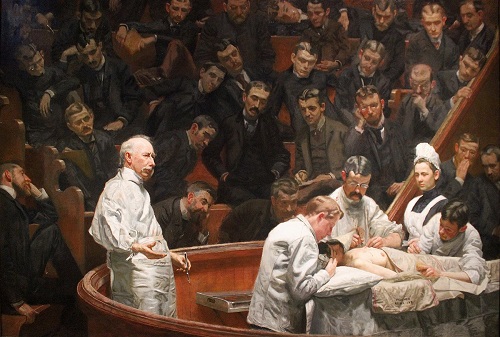
Doctors of the Past: Satirical Medical Art

Continue reading “Doctors of the Past: Satirical Medical Art”
Top 10 History Non-Fiction I Read

From all non-fiction out there, I often find history non-fiction the most interesting and, actually, the best written (historians can write!). This is a list of ten history non-fiction books that I wholly recommend, and, yes, my list does gravitate towards medieval history and the history of medicine. I am also excluding autobiographical memoirs, and this list is in no particular order.

I. History of Madness [1961/2009] by Michel Foucault 

Men are so necessarily mad, that not being mad would constitute another form of madness” (Blaise Pascal). I have read a number of books on the history of psychiatry, but this one is still the one. It is an ambitious, monumental work of eminent French philosopher Michel Foucault (1926 – 1984), and in it, he examines the changing meaning, perception and treatment of “madness” through the centuries, commenting on many cultural, societal, scientific and political transformations.

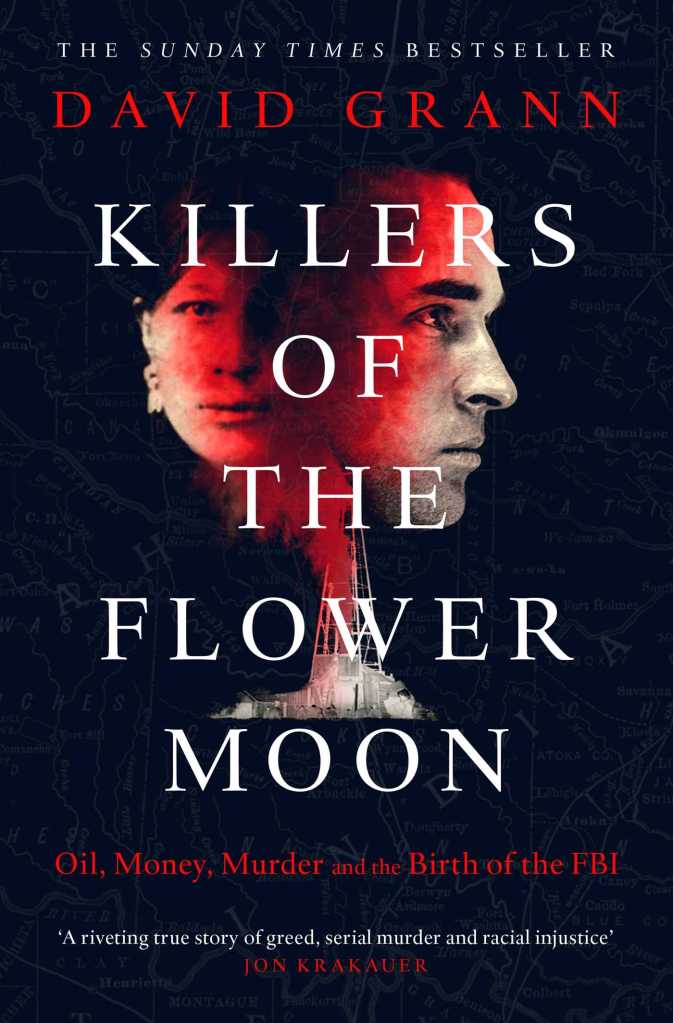
II. Killers of the Flower Moon [2017] by David Grann

This entry cannot be more timely – Martin Scorsese’s film based on this book is currently debuting at the Cannes Film Festival 2023. This is the story of the brutal murders of the Osage people in Oklahoma in the 1920s after oil deposits were found on their land. Corruption and deception are rife, but can an independent police force untangle the web of deception and cover-ups, and ensure justice? This is an entrancing read that will haunt you for days. My first book by David Grann was The Lost City of Z [2009], which I also highly recommend.

Continue reading “Top 10 History Non-Fiction I Read”

Review: Medicine & Society in Later Medieval England by Carole Rawcliffe

Medicine & Society in Later Medieval England [1995] – ★★★★

Magic was…an integral component of medieval medicine”, tells us historian Carole Rawcliffe in this book on the state of medicine in later medieval England. And, not only magic. Religion, astrology and even art were all tied up in the practice of medicine in the Middle Ages, and this non-fiction sheds much light on how the medieval society in England viewed illness, and its diagnosis and treatment. What was the difference between the medieval professions of physician, surgeon, apothecary and barber? Why the state of medicine in England at that time lagged behind other European countries? What was the general attitude towards women connected to the practice of medicine? And, what methods were used when no proper methods of anaesthesia and sanitation were yet available to the medical personnel? Relying much on the contemporary accounts, Rawcliffe proves to be an expert guide on these questions and many more, and her book is a scholarly, but also highly readable, journey into England’s medieval past.

Continue reading “Review: Medicine & Society in Later Medieval England by Carole Rawcliffe”

Review: Mad in America by Robert Whitaker

Mad in America: Bad Science, Bad Medicine and the Enduring Mistreatment of the Mentally Ill [2002] ★★★★1/2

Robert Whitaker opens his book with this quote by David Cohen: “We are still mad about the mad. We still don’t understand them and that lack of understanding makes us mean and arrogant, and makes us mislead ourselves, and so we hurt them”. His book is an engaging overview of the methods to treat mentally ill patients through centuries (starting in the pre-1750s period and continuing to the present day), and how changes in societal attitudes and perceptions, as well as in psychiatry politics and business considerations impacted the treatment. “Scientific” and “therapeutic” approaches to treating mentally ill had competed with each other for centuries, and Whitaker shows how politics of this or that time period ultimately dictated what mentally ill patients were supposed “to need”, with mentally ill people often caught in a trap of doctors and businesses’ ambitions to make a mark in science or earn money respectively.

Continue reading “Review: Mad in America by Robert Whitaker”

7 Fascinating History of Medicine Non-Fiction Books

I am continuing my contribution to the Non-Fiction November Initiative with the list below of seven most fascinating “history of medicine” non-fiction books. 

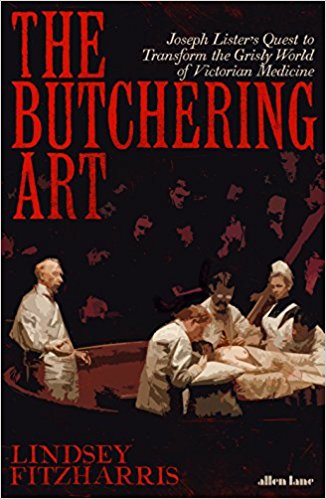
The Butchering Art CoverI. The Butchering Art: Joseph Lister’s Quest to Transform the Grisly World of Victorian Medicine by Lindsey Fitzharris

Lindsey Fitzharris’s book on British surgeon Joseph Lister and the transformation of the Victorian medicine is an unputdownable book that introduces the reader to the astonishing medical practices that people expected in the 19th century. In times when the “germ” theory was deemed “implausible” and when hospitals were places with unsanitary conditions, one man challenged the traditional way of looking at operations and diseases that follow open wounds. I cannot praise this book highly enough. 

Continue reading “7 Fascinating History of Medicine Non-Fiction Books”

A Trip to Edinburgh, Scotland

thumbnail_IMG_20191106_111534764_HDR

This November I visited Edinburgh, Scotland, enjoying the medieval city centre in particular and exploring the city’s history and literary tradition. Below are my highlights from this fantastic trip (all photos are mine).

IMG_0738[9128]I. Edinburgh Castle

Situated on the Castle Rock, Edinburgh Castle “has been the centre of Scottish life for more than 900 years, serving as a royal palace, arsenal, gun foundry, state prison and infantry barracks”. Now, it hosts a number of museums, showcasing Scotland’s rich, complicated and dramatic history. I thought the experience of Edinburgh Castle was just amazing, and it is worth its entry price. There is much to explore inside, from the Royal Palace (where Mary Queen of Scots gave birth to James VI), the magnificent Great Hall and the museum that preserves the crown jewels to the National War Museum, Museum of the Royal Scots and the new barracks. Continue reading “A Trip to Edinburgh, Scotland”

The Non-Fiction Book Tag

I read a lot of non-fiction books (see also my list of 10 Fascinating Non-Fiction Books), so I decided to create this tag to draw attention to some fascinating books in the non-fiction genre. As usual, I do not tag specific bloggers and, if you read non-fiction, feel free to participate.

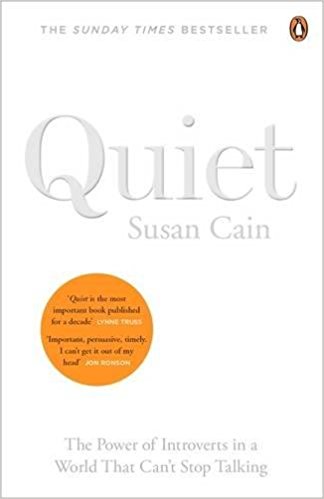
QuietI.  What non-fiction book would you recommend to everyone? 

Quiet [2012] by Susan Cain; introverts will feel at home with this book – more so than with any other book out there. This book is about introversion and how introverts can make a real impact in this world, especially if others differentiate them from shy people and let introverts flourish and achieve things in an environment that suits them best. Modern society is so preoccupied with “fast-business”, “first impressions” and with “immediate, loud success” that there is often no place for the quietness of thought, and deep analysis and insight that come from prolonged thinking and solitude. Our modern, commercialised society also does not seem to concern itself that much with honesty or loyalty (something that can only be seen through long-term relationships – a forte of introverts), but is all about expert communication skills, fast advertising and the “right” kind of external presentation (a forte of extroverts). Susan Cain makes it clear that, unlike in the West, Asian countries regard silence as a sign of deep intelligence, while talking is a sign of that in the West, and makes examples of introverted people who revolutionised the world or became leaders. The thesis of Susan Cain is that introverts have much to offer, including in the positions of leadership, if only others can shed stigma concerning “quiet” people and realise that they too can make an invaluable societal contribution.  Continue reading “The Non-Fiction Book Tag”