
Top 10 History Non-Fiction I Read

From all non-fiction out there, I often find history non-fiction the most interesting and, actually, the best written (historians can write!). This is a list of ten history non-fiction books that I wholly recommend, and, yes, my list does gravitate towards medieval history and the history of medicine. I am also excluding autobiographical memoirs, and this list is in no particular order.

I. History of Madness [1961/2009] by Michel Foucault 

Men are so necessarily mad, that not being mad would constitute another form of madness” (Blaise Pascal). I have read a number of books on the history of psychiatry, but this one is still the one. It is an ambitious, monumental work of eminent French philosopher Michel Foucault (1926 – 1984), and in it, he examines the changing meaning, perception and treatment of “madness” through the centuries, commenting on many cultural, societal, scientific and political transformations.
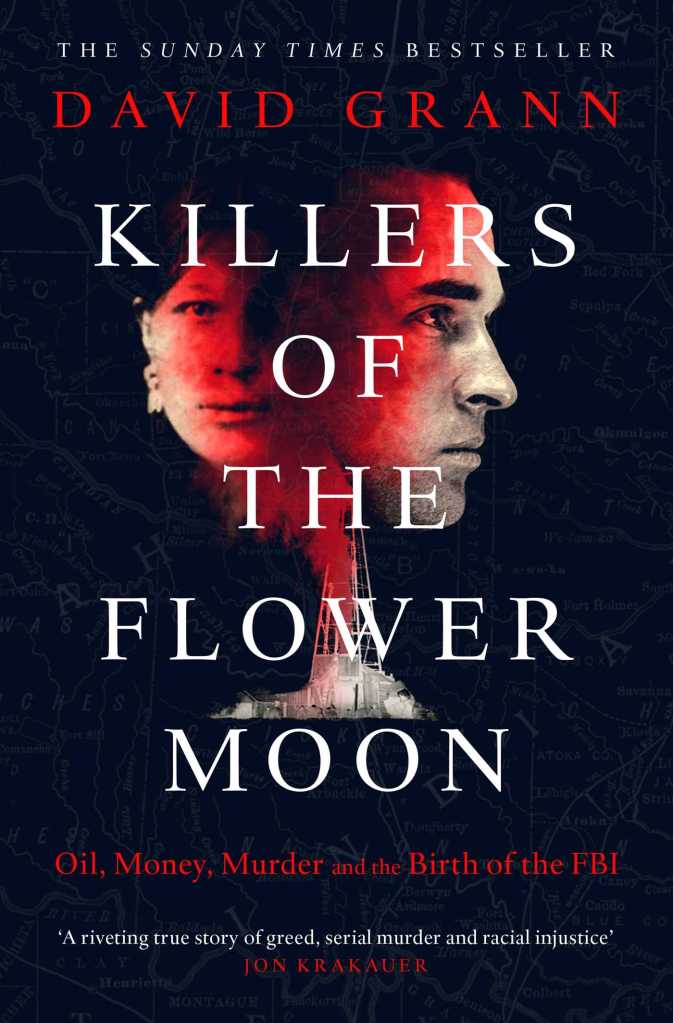
II. Killers of the Flower Moon [2017] by David Grann

This entry cannot be more timely – Martin Scorsese’s film based on this book is currently debuting at the Cannes Film Festival 2023. This is the story of the brutal murders of the Osage people in Oklahoma in the 1920s after oil deposits were found on their land. Corruption and deception are rife, but can an independent police force untangle the web of deception and cover-ups, and ensure justice? This is an entrancing read that will haunt you for days. My first book by David Grann was The Lost City of Z [2009], which I also highly recommend.

Continue reading “Top 10 History Non-Fiction I Read”

Review: Mad in America by Robert Whitaker

Mad in America: Bad Science, Bad Medicine and the Enduring Mistreatment of the Mentally Ill [2002] ★★★★1/2

Robert Whitaker opens his book with this quote by David Cohen: “We are still mad about the mad. We still don’t understand them and that lack of understanding makes us mean and arrogant, and makes us mislead ourselves, and so we hurt them”. His book is an engaging overview of the methods to treat mentally ill patients through centuries (starting in the pre-1750s period and continuing to the present day), and how changes in societal attitudes and perceptions, as well as in psychiatry politics and business considerations impacted the treatment. “Scientific” and “therapeutic” approaches to treating mentally ill had competed with each other for centuries, and Whitaker shows how politics of this or that time period ultimately dictated what mentally ill patients were supposed “to need”, with mentally ill people often caught in a trap of doctors and businesses’ ambitions to make a mark in science or earn money respectively.

Continue reading “Review: Mad in America by Robert Whitaker”

7 Fascinating Books on Human Mind & Mental Illness

Since it is Non-Fiction November, I thought I would make a list of non-fiction book recommendations on some of my favourite subjects to explore – the human mind, mental illness and psychiatry. Even though some of the books below border academic and are dated, they still reman very insightful. Some of them were also initially seminal works that opened a new way of thinking about the topic. This list is in no particular order.

Goffman AsylumsI. Asylums [1961] by Erving Goffman 

Erving Goffman (1922 – 1982) is considered to be “the most influential American sociologist of the twentieth century”. His work Asylums is a compelling study on mental institutions, in particular, which he terms “total institutions” since, in his view, they insist on certain patterns of behaviour making people inside to conform to certain roles, such as “guards” or “captors”. This is a thought-provoking book which gave way to the whole new theory behind the confinement of mentally ill. 

History of Melancholy BookII. History of Melancholy [2009/2011] by Karin Johannisson 

History of Melancholy talks about melancholic feelings throughout history – how people viewed melancholy and what forms it took through the ages. It has always been my favourite book on the subject, because it dips into history, literature, psychology and modern psychiatry. It also talks about fugue states, amnesia, anxiety, loneliness and fatigue, emphasising how people were diagnosed with that or this illness depending which one of them was also “in vogue” at that time. I read this book translated (from Swedish) to Russian, and I am not sure whether it is available in the English translation.  Continue reading “7 Fascinating Books on Human Mind & Mental Illness”