


I have recently visited the Horniman Museum & Gardens in Forest Hill, London. This is a museum established in 1901 and dedicated to anthropology and natural history. It is situated in a quiet, leafy area of London, and also boasts extensive gardens and an aquarium. Below are my highlights from this trip, with some excursions-snippets into topics and themes I found the most interesting.
- The World Gallery section of the museum is probably the most jaw-dropping, presenting various cultures through different elaborate displays of artefacts. I was drawn to learning about the cultures of people living in the Himalayan mountains, Africa, and North and South America. For example, it was interesting for me to find out more about the Wai-wai and Tuareg people. The Wai-wai are indigenous people of Guyana and northern Brazil. They nurture their children to become “real human beings” by sharing food, time and love. For them, “a real human is someone balanced, calm and beautiful, and knowledgeable about the world”.
- The Tuareg people are a Berber ethnic group, that mainly identify themselves as “the free people of the Western Sahara”. They are Muslim, and “though not politically united, they express a shared identity through a “powerful creative tradition”, with their clothes, camels, swords, etc. having distinctive patterns and colours.
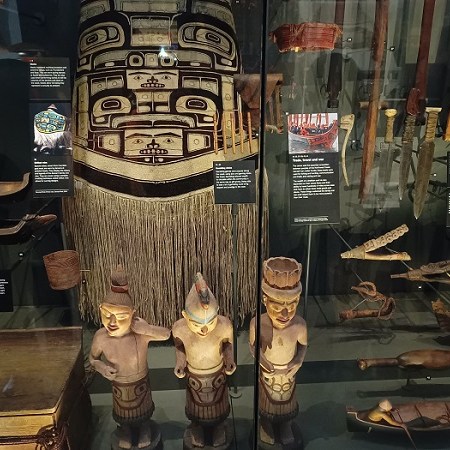


- The culture of Arctic people is also given plenty of room. The Inuit and other similar groups share the belief in the powerful being called Sila (the Breath of the World). The being is experienced as weather conditions, giving life at birth with the first breath, and then, leaving the body with the last one at death.


- There was also a great display on world superstitions and various charms used around the world to bring luck or ward off evil spirits that may damage one’s chances in life. For example, in countryside England 100 years ago, a farmer could be carrying “a dried mole’s foot to ease his toothache or a stone with a hole so as to ensure his animals are protected from witchcraft”. There were various charms on display carried by soldiers during the World War I, largely comprising of buttons and amulet-trinkets (see the image below).
- It was also rather nice for me to reacquaint myself with the Nordic countries’ tradition of holding a crayfish party in summer (see the photo below). The tradition originates in Sweden (called kräftskiva) and, during it, people gather together to eat and drink to mark the end of summer. The event takes place “when the moon is at its largest”, and it usually takes place outdoors by moonlight (I would definitely be up for something like that!). And, yet another window showed off the items used in the Japanese Doll Festival, which takes place each year on 3 March, and during which families pray for the well-being and health of young girls.


- Moving on, the Natural History Gallery was also pretty exciting, but I hardly took any photos there. It is full of taxidermy, skeletons and fossils, tracing the evolution of animals and people.
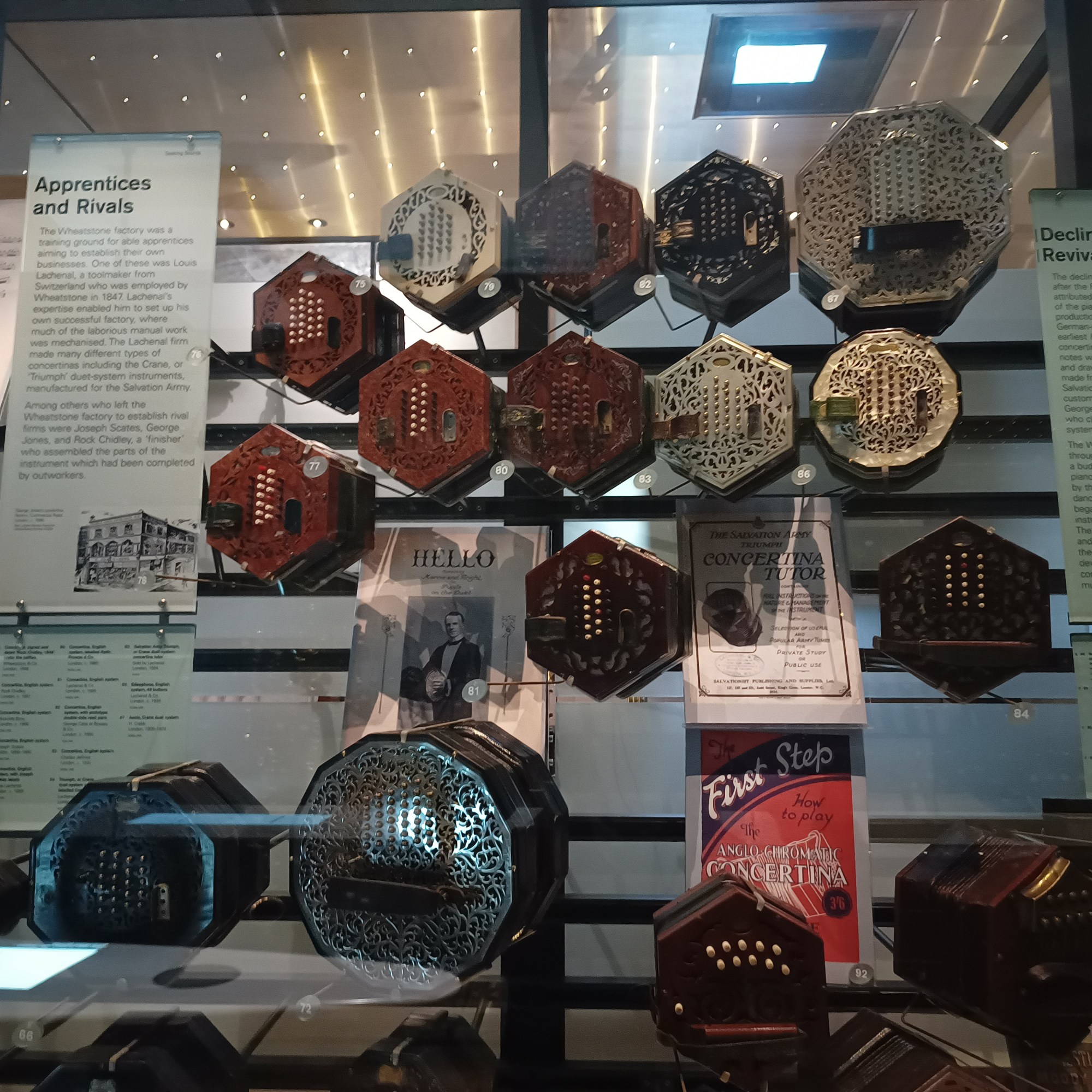
- The museum also hosts a collection of world musical instruments (there are some 9.500 objects on display), as well as provides some exciting history information on many. From bone clappers that appeared in Ancient Egypt 3.500 years ago to modern electric guitars and synthesizers, there is plenty to see, and there is also a separate spacious room to “try out” some unusual instruments for yourself.
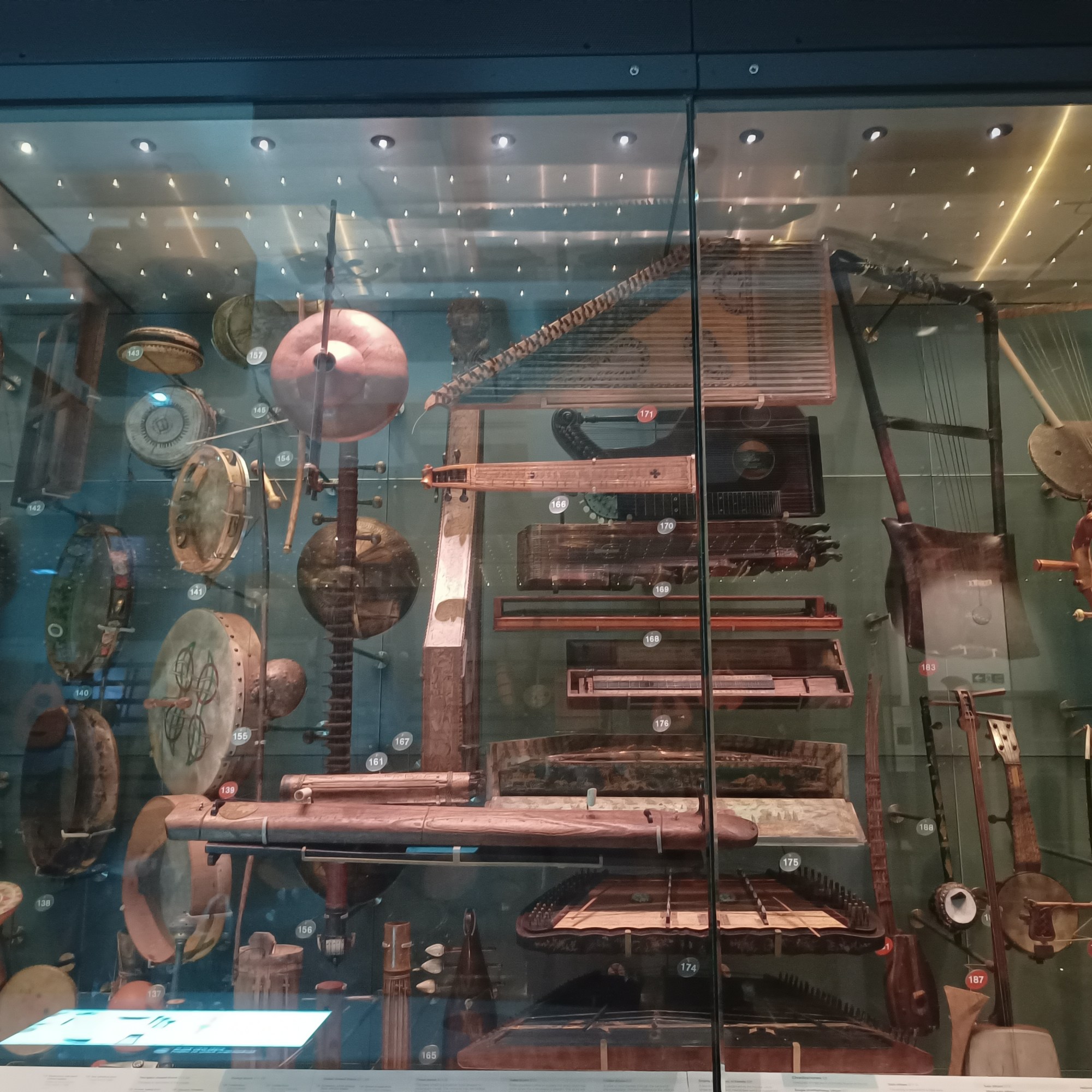

- Being such a lover of the piano, I was obviously drawn to the collection of harpsichords, spinets (the family of harpsichord), virginals (the family of harpsichord), clavichords and chamber organs. Unlike with the modern piano, the clavichord’s strings are struck not by hammers, but by metal blades called tangents. I also found out that the Blanchet family business based in Paris were the most influential makers of musical instruments in the 17th and 18th century France, and “by 1756, the firm had become harpsichord makers to the King of France.” Unlike the English spinets of the 18th century, the French ones were often lavishly decorated, featuring gilded finishes. The image below is Blanchet’s spinet from the year 1709, together with the photo of a German octave virginal (c. 1625-50).


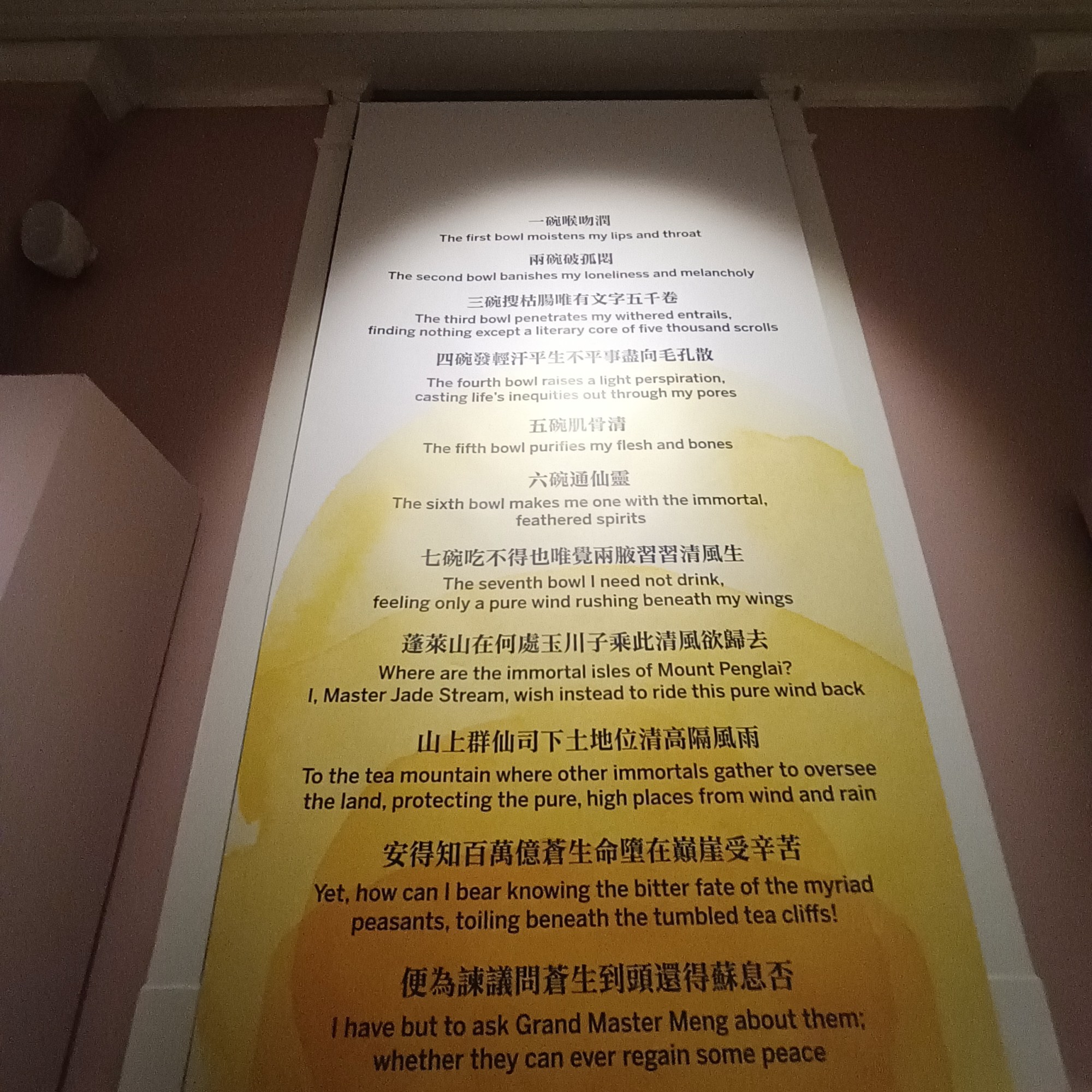
- A nice surprise for my visit was the free Tea exhibition inside the museum (it lasts until July 2024). “The stories of tea are simultaneously political, global yet deeply personal. It is a valuable commodity that was used to justify colonial violence and subjugation. Yet, it is also a cultural pillar that roots us, invigorates us and connects us”, says the exhibition banner. This was a well-curated gallery, telling of the significance of tea around the world and placing in its geographical and historical context, from the origin of tea in China to the present world’s craze for bubble-tea.
- Tea comes from the leaves of the Camellia sinensis plant, and “psychoactive compounds in it work together to create a balanced state of alertness and relaxation.” Related to this topic, “Opium pipes and addiction” and “Japanese tea culture” were also exhibition sections attracting my attention. The opium pipes on display below are crafted using a range of materials, including ceramics and bamboo.


My overview above is just a tiny fraction of what the Horniman museum has to offer, and overall, I really recommend visiting it. It is a real gem, being so well-organised, informative and fun, and definitely worth a travel from Central London.
 Thoughts on Papyrus
How fascinating. Would love to visit.
LikeLiked by 1 person
Thank you for sharing your fascinating museum visit with us!
LikeLiked by 1 person
Gorgeous pics and commentary. Just one query – did you mean to highlight all your text?
LikeLiked by 1 person
Thanks! Do you mean as it appears in the WordPress reader? I don’t know why it happens.
LikeLike
Yes, in the WP Reader, with yellow highlighter!
LikeLiked by 1 person
i would like to see the collection of world musical instruments!
LikeLiked by 1 person
I love the Horniman, haven’t been for years but when I lived in London I lived within easy reach of it for a good while. My favourite part was the musical instruments. Thank you for sharing this!
LikeLiked by 1 person
Thank you for stopping by and commenting! It is unbelievable what a blind spot it was for me, but now I am so happy I have discovered it. Spring comes I would love to visit their gardens too – I have heard so much how amazing they are! Can’t wait!
LikeLike